NAD+
NAD+ is a coenzyme central to cellular energy production, DNA repair, and anti-aging sirtuin activation. Injectable NAD+ restores declining levels directly.
Evidence-led profile
Research snapshot
- Evidence stage
- Extensive research record
- References
- 5 linked sources
- Research coverage
- 4 areas
Published by the PepGuide Editorial Team using our research methodology.
Overview
NAD+ participates in over 500 enzymatic reactions and is essential for mitochondrial electron transport chain function. Age-related NAD+ decline of 10-50% across tissues has been linked to metabolic dysfunction, neurodegeneration, and accelerated aging.
Research
Anti-Aging & Longevity
NAD+ decline of 10-50% during aging. Supplementation restores sirtuin activity and DNA repair.
- Age-related decline across tissues
- Sirtuin activation extends lifespan
- PARP DNA repair restored
Neuroprotection
Reduces neuroinflammation and supports neurotransmitter synthesis.
- Intranasal NAD+ protected hippocampal neurons in TBI
- NR-SAFE trial positive in Parkinsons
Metabolic Health
Central to glucose and lipid metabolism via mitochondrial function.
- NMN RCT: dose-dependent performance improvements
- Improved insulin sensitivity
Cognitive Enhancement
Supports neuronal energy, synaptic plasticity, and neurotransmitter optimization.
- Enhanced mitochondrial function in neurons
- SIRT1 promotes neuronal survival
Safety and Limitations
Start with lower doses (50mg) to evaluate tolerance. IV requires medical supervision. Avoid alcohol during therapy. Refrigerate reconstituted solution and use within 14 days.
Common Side Effects
- Injection site redness or irritation
- Mild nausea
- Warmth or flushing sensation
- Mild headache
Contraindications
- Active cancer
- Pregnancy or breastfeeding
- Known hypersensitivity to NAD+ or nicotinamide
Drug Interactions
- Alcohol substantially depletes NAD+ levels — avoid
- May interact with chemotherapy agents targeting NAD+ metabolism
Uncommon
- Chest tightness during IV infusion
- Muscle cramping
- Lightheadedness
Mechanism of Action
NAD+ restores cellular energy production through mitochondrial electron transport, activates sirtuins (SIRT1-7) for DNA repair and longevity signaling, and supports PARP-mediated genome maintenance.
- Mitochondrial Electron Transport: Primary electron carrier in respiratory chain, driving ATP synthesis
- Sirtuin Activation (SIRT1-7): Essential co-substrate for all seven mammalian sirtuins regulating gene expression and DNA repair
- PARP-Mediated DNA Repair: Consumed by PARP enzymes to catalyze DNA break repair and genome maintenance
- CD38 / NAD+ Homeostasis: Counteracts age-related NAD+ depletion driven by increased CD38 activity
- Circadian Rhythm Regulation: NAD+ oscillations drive SIRT1-mediated regulation of CLOCK/BMAL1
Research protocol summary
- Typical Dose
- 100mg daily (after 2-week ramp-up)
- Frequency
- Once daily
- Route
- Subcutaneous injection
- Timing
- Morning preferred
- Cycle Length
- 8-16 weeks
- Break Between Cycles
- 4-8 weeks
- Storage
- Refrigerate 2-8°C, use within 14 days
These values summarize cataloged research protocols. They are not personal dosing instructions or medical guidance.
Reconstitution Calculator
Pharmacokinetic Profile
NAD+ — Pharmacokinetic Curve
Subcutaneous injectionIllustrative model from the listed half-life and time to peak, not measured concentration data.
Molecular Structure
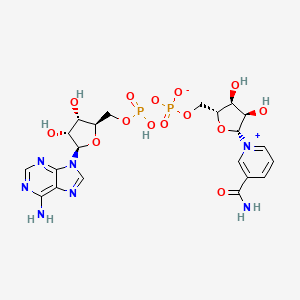
- Formula
- C21H27N7O14P2
- Weight
- 663.43 Da
- Length
- 2 amino acids
- CAS
- 53-84-9
- PubChem CID
- 5892
Research Indications
Primary
Directly restores declining NAD+ levels
Supports neuronal energy and neuroprotection
Central role in mitochondrial function
Secondary
Restores mitochondrial ATP production
Early clinical trials in Parkinsons
Enhanced mitochondrial recovery
Research Protocols
Subcutaneous Injection
100mg daily subcutaneous injection. Ramp up: 50mg week 1, 75mg week 2, then 100mg daily.
| Goal | Dose | Frequency | Duration |
|---|---|---|---|
| 100mg | Daily | —(After 2-week ramp-up) |
Intramuscular Injection
250-500mg IM injection 1-2x weekly. 80-90% bioavailability.
| Goal | Dose | Frequency | Duration |
|---|---|---|---|
| 250-500mg | 1-2x weekly | —(Higher single doses) |
Intravenous Injection
500-1000mg IV infusion 1-2x weekly. Clinical setting required. 100% bioavailability.
| Goal | Dose | Frequency | Duration |
|---|---|---|---|
| 500-1000mg | 1-2x weekly | —(Slow infusion to avoid flushing) |
Intranasal Injection
25-50mg intranasal 1-2x daily. Bypasses blood-brain barrier.
| Goal | Dose | Frequency | Duration |
|---|---|---|---|
| 25-50mg | 1-2x daily | —(Olfactory/trigeminal pathway) |
Interactions
Peptide Interactions
Enhances cellular repair and energy production
Complementary tissue regeneration and mitochondrial support
GH pathways benefit from improved cellular energy
Both target mitochondria via complementary mechanisms
Reported Research Timeline
Initial energy improvements, enhanced mental clarity, possible mild flushing
Enhanced physical performance and faster recovery
Sustained energy, improved sleep quality
Optimized metabolic function, cumulative cognitive benefits
Quality Indicators
What to look for
- White to off-white lyophilized powder
- Dissolves to clear colorless solution
- Third-party COA with HPLC purity ≥98%
- Shipped with cold packs
Caution
- Yellow tint may indicate degradation
- Use within 14 days of reconstitution
Red flags
- Cloudy or discolored solution
- Visible particles
- Stored at room temperature
- No COA available
Frequently Asked Questions
References (5)
- [1]Won SJ et al. Intranasal NAD+ for traumatic brain injury Journal of Neurotrauma (2012)
→ Protected hippocampal neurons
- [2]Martens CR et al. Chronic NR supplementation elevates NAD+ Nature Scientific Reports (2019)
→ Safe NAD+ elevation in adults
- [3]Massudi H et al. Age-associated NAD+ metabolism changes PLoS ONE (2012)
→ NAD+ decreases 10-50% with age
- [4]Trammell SA et al. NR augments human blood NAD+ Nature Communications (2016)
→ Dose-dependent NAD+ elevation
- [5]
Continue researching NAD+
Keep scientific evidence separate from commercial availability. Review how claims are evaluated, explore question-led research paths, or inspect disclosed source records without changing the editorial conclusions on this page.