Ginsenoside Rg1
Ginsenoside Rg1 is a protopanaxatriol-type saponin from Panax ginseng that promotes neurogenesis, enhances cognitive function, and modulates the HPA axis, making it one of the most neuroprotective ginsenosides identified.
Evidence-led profile
Research snapshot
- Evidence stage
- Emerging research
- References
- 4 linked sources
- Research coverage
- 1 area
- Editorial review
- Mar 8, 2026
Published by the PepGuide Editorial Team using our research methodology.
Overview
Ginsenoside Rg1 is one of the most abundant and extensively studied ginsenosides found in Panax ginseng, classified as a protopanaxatriol (PPT)-type saponin with a four-ring dammarane backbone and sugar moieties attached at the C-6 and C-20 positions. It is considered one of the principal bioactive compounds responsible for ginseng's adaptogenic and cognitive-enhancing reputation. Rg1 readily crosses the blood-brain barrier, which accounts for its pronounced central nervous system effects compared to many other ginsenosides.
The neuroprotective properties of Rg1 have been demonstrated across numerous experimental models of neurodegeneration, stroke, and cognitive decline. It promotes neurogenesis in the hippocampal dentate gyrus by activating the Wnt/β-catenin signaling pathway and enhances synaptic plasticity through upregulation of BDNF (brain-derived neurotrophic factor). In models of Alzheimer's disease, Rg1 has been shown to reduce amyloid-beta accumulation, attenuate tau hyperphosphorylation, and suppress neuroinflammation mediated by activated microglia.
Beyond neuroprotection, ginsenoside Rg1 modulates the hypothalamic-pituitary-adrenal (HPA) axis, helping to normalize cortisol responses under chronic stress conditions. It has demonstrated cardioprotective effects by promoting angiogenesis and reducing myocardial ischemia-reperfusion injury, and it supports hematopoietic stem cell proliferation. Anti-aging research has highlighted Rg1's ability to activate telomerase and reduce cellular senescence markers. Its favorable safety profile and multisystem effects make it a leading candidate among ginseng-derived compounds for therapeutic development.
Research
Reported Effects
Rapid Onset:: Many users report noticeable effects within 1-2 days, though some question if early benefits are placebo. Cognitive Benefits:: Strong evidence for improvements in memory, learning, focus, and overall cognitive function across user reports. Depression Relief:: Particularly effective for depression-related symptoms including anhedonia, low motivation, and mood instability. Synergistic Effects:: Users report enhanced effectiveness when stacked with other adaptogens like ashwagandha, rhodiola, and bacopa
Safety and Limitations
Safety Profile: Ginsenoside Rg1
Common Side Effects
- Generally well tolerated when used as a purified ginsenoside at standard doses (10–40 mg/day)
- Mild insomnia and restlessness, particularly when taken later in the day (stimulatory effects)
- Headache, especially during the first few days of use
- Gastrointestinal symptoms: nausea, diarrhea, and mild abdominal discomfort
- Mild increase in blood pressure in some individuals (less pronounced than with whole ginseng extracts)
- Breast tenderness due to mild estrogenic activity
Serious Adverse Effects
- Hypertension: Rg1 has sympathomimetic properties and may elevate blood pressure; cases of hypertensive crisis reported with high-dose ginseng products (relevance to isolated Rg1 is dose-dependent)
- Estrogenic effects: Rg1 activates estrogen receptor-alpha; may stimulate hormone-sensitive conditions including breast and endometrial cancer
- Hypoglycemia: Rg1 enhances insulin sensitivity and glucose uptake; risk increases with concurrent antidiabetic medications
- Bleeding risk: ginsenosides have antiplatelet activity; post-surgical and spontaneous bleeding events reported with ginseng products
- Manic episodes: case reports of mania in patients with bipolar disorder using ginseng products
- Drug-induced hepatitis: rare cases reported with whole ginseng extract; unclear if attributable to Rg1 specifically
Contraindications
- Known allergy to Panax ginseng or Araliaceae family plants
- Uncontrolled hypertension (Rg1 may exacerbate blood pressure elevation)
- Estrogen-receptor-positive breast cancer or hormone-sensitive conditions
- Bipolar disorder or schizophrenia (risk of manic or psychotic episodes)
- Active bleeding disorders
- Pregnancy (estrogenic and stimulatory effects; insufficient safety data)
Drug Interactions
- Warfarin and anticoagulants: ginsenosides reduce platelet aggregation; case reports of decreased INR with ginseng (paradoxical, possibly due to other ginsenoside effects), yet bleeding events also reported; close monitoring required
- Antidiabetic medications (insulin, metformin, sulfonylureas): additive hypoglycemic effect
- MAO inhibitors: concurrent use may cause headache, tremor, and manic symptoms
- Stimulants (caffeine, amphetamines, methylphenidate): additive CNS stimulation; may cause insomnia, tachycardia, or anxiety
- Estrogen-containing medications (oral contraceptives, HRT): additive estrogenic effects
- Immunosuppressants: Rg1 has immunostimulatory properties that may counteract immunosuppressive therapy
- CYP3A4 substrates: Rg1 may inhibit CYP3A4 at high concentrations, potentially raising levels of numerous drugs
- Antihypertensives: complex interaction; Rg1 may either raise or lower blood pressure depending on dose and context
Population-Specific Considerations
- Pregnant women: avoid due to estrogenic activity and stimulatory effects; insufficient safety data for isolated Rg1
- Breastfeeding: insufficient data; avoid concentrated supplements
- Children and adolescents: not recommended; no pediatric safety data for isolated ginsenosides
- Elderly: popular for cognitive support; start at low doses and monitor blood pressure, blood glucose, and bleeding parameters
- Diabetic patients: monitor blood glucose closely; may require dose adjustment of antidiabetic medications
- Patients with hypertension: use only under medical supervision with blood pressure monitoring
Common Side Effects
- Minimal Reported:: Very few side effects mentioned, with most users reporting excellent tolerability compared to prescription alternatives
- Digestive Upset:: Some users experience mild stomach irritation if taken without food
- Blood Thinning Concerns:: Users combining with ginkgo and other supplements express concern about cumulative blood-thinning effects
- Individual Variation:: Effects appear highly individual, with some users experiencing no benefits while others report dramatic improvements
Mechanism of Action
Ginsenoside Rg1 is a protopanaxatriol-type ginsenoside and one of the most pharmacologically active compounds in Panax ginseng. Its mechanism centers on the activation of three major cytoprotective signaling cascades: PI3K/Akt, AMPK, and Nrf2, which together produce broad neuroprotective, cardioprotective, and metabolic effects.
The PI3K/Akt pathway is a primary mediator of Rg1's pro-survival effects. In neurons, Rg1 activates this cascade to promote functional recovery after spinal cord injury and stimulate cerebral angiogenesis following ischemic stroke. In the cardiovascular system, PI3K/Akt activation protects cardiomyocytes from hypoxia-induced damage and stimulates eNOS to produce nitric oxide for vasodilation. Rg1 also promotes osteogenesis through Akt phosphorylation modulated by the G protein-coupled estrogen receptor (GPER).
The AMPK pathway mediates Rg1's metabolic benefits, including enhanced glucose uptake in insulin-resistant muscle cells and renal protection against ischemia/reperfusion injury through AMPKα1 upregulation. In the pancreas, Rg1 activates AMPK while suppressing mTOR-mediated autophagy. The Nrf2 antioxidant pathway is activated when Rg1 promotes dissociation of Nrf2 from its inhibitor Keap1, enabling Nrf2 nuclear translocation and upregulation of antioxidant enzymes. This mechanism protects against diabetic nephropathy, lipopolysaccharide-induced liver damage, and neuronal ferroptosis through the AIM2-Nrf2 axis, while simultaneously inhibiting the pro-inflammatory NF-κB and p38 MAPK pathways.
Research protocol summary
- Typical Dose
- Common dosing is 500mg of Panax ginseng extract containing 100mg ginsenosides (20% standardization), though higher concentrations (40-45% ginsenosides) are available
These values summarize cataloged research protocols. They are not personal dosing instructions or medical guidance.
Molecular Structure
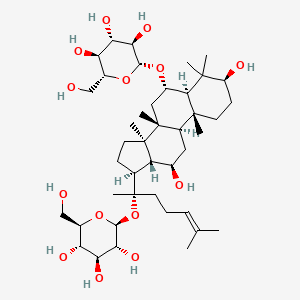
- Formula
- C42H72O14
- Weight
- 801.0 Da
- PubChem CID
- 441923
- Exact Mass
- 800.4922 Da
- LogP
- 2.7
- TPSA
- 239 Ų
- H-Bond Donors
- 10
- H-Bond Acceptors
- 14
- Rotatable Bonds
- 10
- Complexity
- 1410
Identifiers (SMILES, InChI)
InChI=1S/C42H72O14/c1-20(2)10-9-13-42(8,56-37-34(52)32(50)30(48)25(19-44)55-37)21-11-15-40(6)28(21)22(45)16-26-39(5)14-12-27(46)38(3,4)35(39)23(17-41(26,40)7)53-36-33(51)31(49)29(47)24(18-43)54-36/h10,21-37,43-52H,9,11-19H2,1-8H3/t21-,22+,23-,24+,25+,26+,27-,28-,29+,30+,31-,32-,33+,34+,35-,36+,37-,39+,40+,41+,42-/m0/s1
YURJSTAIMNSZAE-HHNZYBFYSA-NReferences (4)
- [1]Antidepressant-like effects of ginsenoside Rg1 are due to activation of the BDNF signaling pathway and neurogenesis in the hippocampus
→ Rg1 demonstrated antidepressant-like effects in forced swimming and tail suspension tests through BDNF pathway activation and promotion of neurogenesis in the hippocampus.
- [2]Ginsenoside Rg1 in neurological diseases: From bench to bedside
→ Comprehensive review showing Rg1's potential in treating neuropsychiatric disorders through inhibition of HPA axis hyperfunction, regulation of synaptic plasticity, and modulation of gut microbiota, particularly effective for depression and Alzheimer's disease.
- [3]Ginsenoside Rg1 improves cognitive capability and affects the microbiota of large intestine in tree shrew model for Alzheimer's disease
→ Rg1 improved cognitive function in an Alzheimer's disease model and beneficially modulated gut microbiota composition, suggesting a gut-brain axis mechanism of action.
- [4]Protective Effects and Target Network Analysis of Ginsenoside Rg1 in Cerebral Ischemia and Reperfusion Injury
→ Network analysis revealed Rg1's neuroprotective effects in cerebral ischemia through anti-inflammatory, antioxidant, and anti-apoptotic mechanisms involving multiple molecular pathways.
Continue researching Ginsenoside Rg1
Keep scientific evidence separate from commercial availability. Review how claims are evaluated, explore question-led research paths, or inspect disclosed source records without changing the editorial conclusions on this page.