Sarcosine
Sarcosine research profile covering evidence quality, proposed mechanisms, safety considerations, regulatory status, and linked primary sources.
Evidence-led profile
Research snapshot
- Evidence stage
- Emerging research
- References
- 6 linked sources
- Research coverage
- 1 area
- Editorial review
- Jul 7, 2026
Published by the PepGuide Editorial Team using our research methodology.
Overview
Sarcosine (N-methylglycine) is the simplest N-methylated amino acid, formed endogenously by the methylation of glycine via glycine N-methyltransferase (GNMT) using SAMe as the methyl donor, or by the oxidative demethylation of dimethylglycine in the one-carbon folate cycle. It also occurs naturally in foods including egg yolks, turkey, legumes, and various vegetables. Sarcosine occupies a unique position in neuropsychopharmacology due to its action as an inhibitor of the glycine transporter type 1 (GlyT1), the primary reuptake mechanism for glycine at glutamatergic synapses. By blocking GlyT1, sarcosine increases glycine concentrations in the synaptic cleft, enhancing NMDA receptor activation at the glycine co-agonist binding site — a mechanism directly relevant to the glutamate hypofunction hypothesis of schizophrenia.
Clinical trials of sarcosine as adjunctive therapy for schizophrenia have yielded encouraging results. Multiple randomized, double-blind, placebo-controlled studies conducted primarily in Taiwan demonstrated significant improvements in positive symptoms, negative symptoms, and cognitive function when sarcosine (1-2 grams/day) was added to antipsychotic regimens. Notably, sarcosine showed greater efficacy than D-serine, another NMDA glycine-site agonist, in head-to-head comparison, possibly because GlyT1 inhibition provides more sustained and physiologically regulated enhancement of glycine signaling than direct agonist supplementation. A meta-analysis confirmed moderate-to-large effect sizes for negative symptom improvement. However, sarcosine should not be combined with clozapine, as clozapine itself possesses GlyT1 inhibitory properties and the combination showed no additional benefit.
Beyond neuropsychiatry, sarcosine has attracted attention in oncology as a potential biomarker and metabolic player in prostate cancer. Metabolomic studies identified elevated sarcosine levels in prostate cancer tissue and urine, with concentrations correlating with disease aggressiveness and metastatic potential. The enzyme sarcosine dehydrogenase (SARDH), which converts sarcosine back to glycine, is downregulated in prostate cancer, while GNMT and dimethylglycine dehydrogenase (which produce sarcosine) are upregulated, suggesting active metabolic reprogramming. Sarcosine may promote cancer cell invasion through modulation of DNA methylation patterns and one-carbon metabolism. In the context of methylation biochemistry, sarcosine connects to the broader network of methyl donors and acceptors including SAMe, betaine (trimethylglycine), folate, and vitamin B12.
Mechanism of Action
Sarcosine (N-methylglycine) is an endogenous amino acid and intermediate in one-carbon metabolism that has gained significant attention for its neuromodulatory properties. Its primary mechanism of action is competitive inhibition of the type 1 glycine transporter (GlyT1), which is responsible for reuptake of glycine from the synaptic cleft at glutamatergic synapses. By blocking GlyT1, sarcosine increases the extracellular concentration of glycine in the vicinity of NMDA receptors. Since glycine is an obligatory co-agonist at the glycine (GlycineB) binding site of the NMDA receptor, elevated glycine levels enhance NMDA receptor activation, improving glutamatergic neurotransmission.
In addition to GlyT1 inhibition, sarcosine itself acts as a co-agonist at the NMDA receptor glycine binding site, providing a dual mechanism for enhancing NMDA receptor function. This is particularly relevant in schizophrenia, where NMDA receptor hypofunction is a central pathophysiological hypothesis. Clinical trials have demonstrated that adjunctive sarcosine improves positive, negative, and cognitive symptoms in schizophrenia patients, supporting the glutamate hypothesis of the disease. Sarcosine has also been shown to be an agonist at inhibitory glycine receptors (GlyRs), producing strychnine-sensitive chloride currents, which may contribute to its overall effects on excitatory/inhibitory neurotransmission balance.
Metabolically, sarcosine is formed from glycine by glycine N-methyltransferase (GNMT) using SAMe as the methyl donor, and is demethylated back to glycine by sarcosine dehydrogenase in mitochondria, linking it to folate one-carbon metabolism. Elevated sarcosine levels have been identified as a biomarker for aggressive prostate cancer, where sarcosine may promote cell invasion through modulation of the glycine/serine metabolic network.
Research
Reported Effects
Depression and Anhedonia:: Highly effective for treatment-resistant depression and anhedonia, particularly when combined with NAC, with users reporting return of emotional range and motivation. Schizophrenia Symptoms:: Shows promise for both positive and negative symptoms of schizophrenia, with research and user reports supporting efficacy particularly in combination with standard medications. Dosage-Dependent Response:: Effects appear strongest at 1-2 grams daily, with higher doses potentially causing overstimulation and requiring cycling rather than continuous use. Individual Variation:: Works exceptionally well for some users but may cause overstimulation or require careful dosing adjustments, with effects sometimes being too strong for daily continuous use
- Highly effective for treatment-resistant depression and anhedonia, particularly when combined with NAC, with users reporting return of emotional range and motivation
- Shows promise for both positive and negative symptoms of schizophrenia, with research and user reports supporting efficacy particularly in combination with standard medications
- Effects appear strongest at 1-2 grams daily, with higher doses potentially causing overstimulation and requiring cycling rather than continuous use
- Works exceptionally well for some users but may cause overstimulation or require careful dosing adjustments, with effects sometimes being too strong for daily continuous use
Safety and Limitations
Safety Profile: Sarcosine
Common Side Effects
- Mild gastrointestinal discomfort: nausea and bloating
- Insomnia when taken later in the day
- Mild headache
- Body odor changes (methylamine metabolism)
Serious Adverse Effects
- Very limited human clinical data outside schizophrenia trials
- Theoretical risk of prostate cancer promotion (elevated sarcosine levels have been observed as a biomarker in aggressive prostate cancer, though causation is unestablished)
- Possible excitotoxicity at very high doses due to NMDA receptor coagonism (glycine site)
- Unknown long-term safety profile at supplemental doses
Contraindications
- Active prostate cancer or high risk of prostate cancer (until the sarcosine-prostate cancer association is clarified)
- Concurrent use of D-cycloserine (overlapping NMDA glycine site activity)
- Known hypersensitivity to sarcosine or glycine derivatives
- Pregnancy and lactation (no safety data)
Drug Interactions
- Clozapine: Sarcosine may be less effective when combined with clozapine (which already affects NMDA signaling); some studies show reduced benefit
- D-cycloserine: Competing glycine site partial agonist; avoid combination
- Other NMDA modulators: Additive effects on glutamatergic signaling; monitor for neurotoxicity
- Antipsychotics: May augment effects of antipsychotics (often the intended use)
Population-Specific Considerations
- Schizophrenia patients: Most studied population; used as adjunctive therapy at 1–2 g/day with some evidence of benefit for negative symptoms
- Depression: Preliminary research suggests potential as a novel antidepressant; further trials needed
- Men over 50: Monitor prostate health markers given the biomarker association
- Not FDA-approved: Used as a dietary supplement; quality varies between manufacturers
Common Side Effects
- Overstimulation:: At higher doses or with continuous use, some users experience excessive mental energy, restlessness, and difficulty sleeping if taken too late in the day
- Prostate Cancer Marker:: Can show up in urine tests as a potential prostate cancer indicator, requiring disclosure to healthcare providers to avoid misdiagnosis
- Potential Progression Concern:: Some research suggests sarcosine may play a role in prostate cancer progression, though this remains debated in the scientific literature
- Individual Sensitivity:: Some users report feeling 'weird' or experiencing side effects that don't occur with similar compounds like glycine, suggesting individual variation in response
Research protocol summary
- Typical Dose
- 1-2 grams daily appears to be the most commonly effective range, taken either as single morning dose or split between morning and afternoon
These values summarize cataloged research protocols. They are not personal dosing instructions or medical guidance.
Reconstitution Calculator
Pharmacokinetic Profile
Molecular Structure
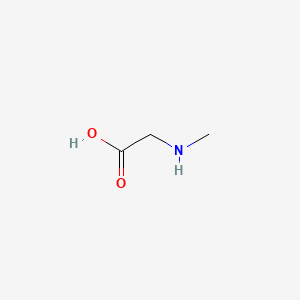
- Formula
- C3H7NO2
- Weight
- 89.09 Da
- PubChem CID
- 1088
- Exact Mass
- 89.0477 Da
- LogP
- -2.8
- TPSA
- 49.3 Ų
- H-Bond Donors
- 2
- H-Bond Acceptors
- 3
- Rotatable Bonds
- 2
- Complexity
- 52
Identifiers (SMILES, InChI)
InChI=1S/C3H7NO2/c1-4-2-3(5)6/h4H,2H2,1H3,(H,5,6)
FSYKKLYZXJSNPZ-UHFFFAOYSA-NReferences (6)
- [1]A possible role for sarcosine in the management of schizophrenia
→ Editorial highlighting that sarcosine has pharmacological activity to boost NMDA receptor functioning and shows evidence for efficacy in treating schizophrenia symptoms, suggesting psychiatrists could consider its use for patients.
- [5]Effects of sarcosine and N, N-dimethylglycine on NMDA receptor-mediated excitatory field potentials
→ Research examining the mechanisms by which sarcosine enhances NMDA receptor function through glycine site potentiation, supporting its role as a glycine transporter-1 inhibitor.
- [2]Sarcosine (N-methylglycine) treatment for acute schizophrenia: a randomized, double-blind study
→ Study of 20 acutely symptomatic patients found that those receiving 2g daily sarcosine were more likely to respond with 20% or more reduction in symptoms, particularly among antipsychotic-naive patients, with minimal side effects.
- [3]Efficacy and safety of add-on sarcosine in patients with major depressive disorder: A randomized controlled trial
→ Randomized controlled trial demonstrating that sarcosine as add-on therapy to conventional antidepressants showed efficacy and safety benefits for patients with major depressive disorder.
- [4]Efficacy of N-methyl-D-aspartate receptor modulator augmentation in schizophrenia: A meta-analysis of randomised, placebo-controlled trials
→ Meta-analysis of 40 trials involving 4,937 patients found that NMDA receptor modulators including sarcosine showed efficacy for improving symptoms of schizophrenia when used as augmentation therapy.
- [6]In Vitro and In Vivo Neuroprotective Effects of Sarcosine
→ Study demonstrating neuroprotective properties of sarcosine both in laboratory and animal models, suggesting potential therapeutic applications for neurological conditions.
Continue researching Sarcosine
Keep scientific evidence separate from commercial availability. Review how claims are evaluated, explore question-led research paths, or inspect disclosed source records without changing the editorial conclusions on this page.