LIRAGLUTIDE
Liraglutide is a long-acting GLP-1 receptor agonist studied for its effects on glucose homeostasis, appetite regulation, cardiovascular protection, and neuroprotection. It is a modified analogue of human GLP-1 with a half-life of approximately 13 hours.
Evidence-led profile
Research snapshot
- Evidence stage
- Emerging research
- References
- 23 linked sources
- Research coverage
- 8 areas
- Editorial review
- Mar 8, 2026
Published by the PepGuide Editorial Team using our research methodology.
Overview
GLP-1 is a short peptide hormone of 30-31 amino acids whose primary physiologic function is to lower blood sugar by enhancing insulin secretion. It also promotes insulin gene transcription, protects beta cell insulin stores, and has been linked with neurotrophic effects in the brain. In the GI system, GLP-1 decreases appetite by delaying gastric emptying and reducing intestinal motility. Liraglutide was engineered to overcome the extremely short half-life (~2 minutes) of native GLP-1 through acylation with a C16 fatty acid, enabling once-daily dosing. Research from Holst (2019) traces the history from the incretin concept to modern GLP-1-based therapies.
Research
The Incretin Effect
The most important effect of GLP-1 is the "incretin effect" -- incretins are metabolic hormones released by the GI tract that decrease blood glucose levels. GLP-1 is one of the two most important incretin hormones (the other being GIP). Though GIP circulates at roughly 10 times higher levels, GLP-1 appears to be the more potent of the two, particularly at elevated blood glucose levels.
A GLP-1 receptor identified on pancreatic beta cells confirms that GLP-1 directly stimulates insulin exocytosis. When combined with sulfonylurea drugs, GLP-1 boosts insulin secretion enough to cause mild hypoglycemia in up to 40% of subjects Holst (2007). Increased insulin secretion is associated with trophic effects including enhanced protein synthesis, reduced protein breakdown, and increased amino acid uptake by skeletal muscle.
Beta Cell Protection
Research in animal models suggests that GLP-1 stimulates growth and proliferation of pancreatic beta cells and may promote differentiation of new beta cells from progenitors in the pancreatic duct epithelium. GLP-1 also inhibits beta cell apoptosis Holst (2007). These effects shift the balance of beta cell growth and death toward growth, suggesting utility in treating diabetes and protecting the pancreas.
In a compelling trial, GLP-1 inhibited beta cell death caused by elevated inflammatory cytokines. Mouse models of type 1 diabetes have revealed that GLP-1 protects islet cells from destruction and may be useful in preventing onset of type 1 diabetes Ogawa et al. (2004).
Appetite and Weight Loss
Administration of GLP-1 into the brains of mice reduces the drive to eat and inhibits food intake Tang-Christensen et al. (2000). GLP-1 appears to enhance feelings of satiety, helping individuals feel fuller and reducing hunger indirectly. Clinical studies have shown that twice-daily administration of GLP-1 receptor agonists causes gradual, linear weight loss. Over time, this weight loss is associated with significant improvement in cardiovascular risk factors and reduction in hemoglobin A1C levels Blonde et al. (2006).
Cardiovascular Benefits
GLP-1 receptors are distributed throughout the heart and act to improve cardiac function by boosting heart rate and reducing left ventricular end-diastolic pressure Gros et al. (2003). Increased LV end-diastolic pressure is associated with LV hypertrophy, cardiac remodeling, and eventual heart failure.
Evidence suggests that GLP-1 improves cardiac muscle glucose uptake independent of insulin, helping ischemic heart muscle cells obtain nutrition to continue functioning and avoid programmed cell death Bose et al. (2005). Large infusions of GLP-1 in dogs improve LV performance and reduce systemic vascular resistance, which can help reduce blood pressure and ease cardiac strain Nikolaidis et al. (2004).
Neuroprotection
GLP-1 enhances associative and spatial learning in mice and improves learning deficits in mice with specific gene defects. In rats overexpressing the GLP-1 receptor in certain brain regions, learning and memory are significantly enhanced compared to controls During et al. (2003).
GLP-1 protects against excitotoxic neuronal damage, completely preventing glutamate-induced apoptosis in rat models of neurodegeneration, and can stimulate neurite outgrowth in cultured cells Perry et al. (2002). GLP-1 and its analogue exendin-4 have been shown to reduce levels of amyloid-beta in the brain and beta-amyloid precursor protein in neurons. Amyloid beta is the primary component of plaques observed in Alzheimer's disease, and while causation is not established, these plaques correlate with disease severity Perry et al. (2003).
Clinical Research Protocols
Liraglutide has been evaluated across multiple large-scale clinical trial programs spanning type 2 diabetes, obesity, cardiovascular outcomes, and emerging indications:
LEADER Trial (NCT01179048): The Liraglutide Effect and Action in Diabetes: Evaluation of Cardiovascular Outcome Results trial was a landmark randomized, double-blind, placebo-controlled cardiovascular outcomes study enrolling 9,340 patients with type 2 diabetes and high cardiovascular risk. Patients were randomized to liraglutide 1.8 mg or placebo once daily in addition to standard care, with a median follow-up of 3.8 years. The primary endpoint was time to first occurrence of the 3-point MACE composite (cardiovascular death, nonfatal myocardial infarction, nonfatal stroke). Liraglutide reduced MACE by 13% (HR 0.87, 95% CI 0.78-0.97, p=0.01), driven primarily by a 22% reduction in cardiovascular death. All-cause mortality was also significantly reduced (HR 0.85, p=0.02). Marso SP et al. (2016) — N. Engl. J. Med. 375, 311-322. PMID: 27295427
SCALE Program (Obesity)
-
SCALE Obesity and Prediabetes (NCT01272219): Randomized, double-blind, placebo-controlled, 56-week trial in 3,731 adults with BMI ≥30 (or ≥27 with comorbidities) without T2DM. Liraglutide 3.0 mg daily achieved mean weight loss of −8.0% versus −2.6% with placebo. Co-primary endpoints included ≥5% weight loss (63.2% vs 27.1%) and ≥10% weight loss (33.1% vs 10.6%). Among participants with prediabetes at baseline, liraglutide reduced progression to T2DM by 79% over 3 years in the extension study. Pi-Sunyer X et al. (2015) — N. Engl. J. Med. 373, 11-22. PMID: 26132939
-
SCALE Diabetes (NCT01272232): 56-week trial in 846 adults with T2DM and BMI ≥27. Liraglutide 3.0 mg produced weight loss of −6.0% versus −2.0% with placebo, with concurrent HbA1c reduction of −1.3% versus −0.3%. Davies MJ et al. (2015) — JAMA 314, 687-699. PMID: 26284720
-
SCALE Maintenance (NCT01272232): Evaluated liraglutide 3.0 mg for weight maintenance after initial diet-induced weight loss. Participants who lost ≥5% body weight during a low-calorie diet lead-in were randomized to liraglutide or placebo for 56 weeks. The liraglutide group lost an additional −6.2% versus −0.2% with placebo, demonstrating liraglutide's utility in preventing weight regain.
-
SCALE Teens (NCT02918279): The first large randomized trial of a GLP-1 RA for adolescent obesity (12-17 years). Liraglutide 3.0 mg reduced BMI-SDS by −0.22 versus +0.16 with placebo over 56 weeks, leading to FDA approval for adolescent obesity management. Kelly AS et al. (2020) — N. Engl. J. Med. 382, 2117-2128. PMID: 32233338
LIRA-NAFLD Study: A 26-week randomized, active-controlled trial comparing liraglutide 1.2 mg to a reference treatment in T2DM patients with NAFLD. Liraglutide significantly reduced hepatic steatosis measured by magnetic resonance spectroscopy (−31% relative reduction) and improved liver enzymes, supporting investigation in metabolic liver disease. Petit JM et al. (2017) — J. Clin. Endocrinol. Metab. 102, 407-415. PMID: 27732327
Dosing Protocols:
- Type 2 diabetes (Victoza): Initiate at 0.6 mg daily for 1 week (tolerability dose, not effective for glycemic control) → increase to 1.2 mg daily → may increase to 1.8 mg daily if additional glycemic control is needed.
- Obesity (Saxenda): Initiate at 0.6 mg daily for 1 week → 1.2 mg for 1 week → 1.8 mg for 1 week → 2.4 mg for 1 week → 3.0 mg maintenance dose. Discontinue if <4% weight loss at 16 weeks on full dose.
Ongoing & Future Research
-
LEADER Extension & Post-Hoc Analyses (NCT01179048): Continued post-hoc analyses from the LEADER trial dataset continue to yield insights into liraglutide's effects on renal outcomes (22% reduction in new-onset macroalbuminuria), heart failure hospitalization (trend toward reduction), and subgroup-specific cardiovascular benefits. Mann JFE et al. (2017) — N. Engl. J. Med. 377, 839-848. PMID: 28854085
-
Pediatric Obesity (NCT02918279): The SCALE Teens trial led to FDA approval of liraglutide 3.0 mg for adolescents aged 12-17 with obesity (BMI ≥30 kg/m² or 95th percentile). Ongoing post-marketing surveillance is evaluating long-term safety and efficacy in this population, including effects on linear growth, pubertal development, and metabolic parameters through adulthood. Kelly AS et al. (2020) — PMID: 32233338
-
NAFLD/NASH (NCT03036800): The LEAN trial (Liraglutide Efficacy and Action in Non-alcoholic steatohepatitis) was a Phase 2, 48-week, double-blind, placebo-controlled trial in 52 patients with biopsy-confirmed NASH. Liraglutide 1.8 mg daily achieved NASH resolution in 39% of patients versus 9% with placebo (p=0.019), with 83% vs 45% showing no fibrosis progression. These results have stimulated larger trials of GLP-1 RA class agents in NASH. Armstrong MJ et al. (2016) — Lancet 387, 679-690. PMID: 26608256
-
Alzheimer's Disease — ELAD Trial (NCT01843075): The Evaluating Liraglutide in Alzheimer's Disease trial was a Phase 2b, 12-month, randomized, double-blind, placebo-controlled study in 204 patients with mild Alzheimer's disease. The trial assessed whether liraglutide 1.8 mg daily could slow cerebral glucose metabolic decline (measured by 18F-FDG PET). Published results showed liraglutide prevented the decline in cerebral glucose metabolism observed in the placebo group, particularly in the temporal lobe, posterior cingulate, and parietal regions. These findings support the neurometabolic hypothesis that GLP-1 RA agents may have disease-modifying potential in neurodegeneration. Edison P et al. (2024) — eClinicalMedicine 67, 102382. DOI: 10.1016/j.eclinm.2023.102382
-
Polycystic Ovary Syndrome (PCOS): Multiple smaller trials are evaluating liraglutide's effects on weight loss, insulin resistance, and reproductive outcomes in women with PCOS, a condition characterized by hyperandrogenism and metabolic dysfunction. Preliminary data suggest liraglutide improves menstrual regularity, reduces androgen levels, and enhances ovulation rates in obese women with PCOS, potentially through weight-dependent and weight-independent mechanisms.
-
Post-Bariatric Weight Regain: Active investigation is underway for liraglutide as a treatment for weight regain after bariatric surgery, with several registered clinical trials exploring this indication. Initial data suggest liraglutide can produce 5-8% additional weight loss in patients who have regained weight after Roux-en-Y gastric bypass or sleeve gastrectomy.
Comparison to Related Compounds
| Parameter | Liraglutide 3.0 mg (Saxenda) | Semaglutide 2.4 mg (Wegovy) | Tirzepatide 15 mg (Zepbound) | Exenatide ER 2 mg (Bydureon) |
|---|---|---|---|---|
| Receptor targets | GLP-1 only | GLP-1 only | GIP + GLP-1 | GLP-1 only (exendin-4 based) |
| Dosing frequency | Once daily | Once weekly | Once weekly | Once weekly |
| Half-life | ~13 hours | ~7 days | ~5 days | ~2 weeks (sustained release) |
| Weight loss (obesity) | −8.0% (56 wk) | −15.8% (68 wk) | −22.5% (72 wk) | −5.3% (24 wk) |
| HbA1c reduction | −1.1 to −1.5% | −1.5 to −1.8% | −2.0 to −2.5% | −1.3 to −1.5% |
| CV outcomes | MACE ↓13% (LEADER) | MACE ↓20% (SELECT) | Non-inferior (SURPASS-CVOT) | Neutral (EXSCEL) |
Liraglutide vs. Semaglutide: The SUSTAIN-10 trial (NCT03191396) directly compared subcutaneous semaglutide 1.0 mg weekly versus liraglutide 1.2 mg daily in T2DM patients. Semaglutide achieved superior HbA1c reduction (−1.7% vs −1.0%) and weight loss (−5.8 kg vs −1.9 kg) over 30 weeks, with similar GI adverse event rates. While not a comparison at obesity doses, the data illustrate semaglutide's enhanced potency per GLP-1 receptor engagement, attributed to structural modifications that confer higher receptor binding affinity and resistance to DPP-4 degradation. Capehorn MS et al. (2020) — Diabetes Metab. 46, 100-109. PMID: 31539622
Liraglutide vs. Tirzepatide: No direct head-to-head trial exists. Cross-trial comparisons indicate tirzepatide produces approximately 2-3 times the weight loss of liraglutide (~22% vs ~8%) and greater HbA1c reduction (~2.4% vs ~1.3%). Tirzepatide's dual GIP/GLP-1 mechanism and once-weekly dosing represent pharmacological advantages. However, liraglutide has longer real-world safety data, established pediatric indications, and proven cardiovascular mortality reduction (LEADER), which semaglutide and tirzepatide CV outcomes trials have not demonstrated to the same degree for mortality specifically.
Liraglutide vs. Exenatide: Exenatide is derived from exendin-4 (Gila monster venom peptide) and shares ~53% homology with human GLP-1, versus liraglutide's ~97% homology. The LEAD-6 trial (NCT00518882) compared liraglutide 1.8 mg daily versus exenatide 10 µg twice daily over 26 weeks. Liraglutide produced greater HbA1c reduction (−1.12% vs −0.79%, p<0.0001), with similar weight loss. Liraglutide also caused less nausea and fewer injection-site reactions. Buse JB et al. (2009) — Lancet 374, 39-47. PMID: 19515413
Safety and Limitations
Liraglutide's most common side effects in clinical trials include nausea, vomiting, diarrhea, and constipation, particularly during dose titration. These gastrointestinal effects typically diminish over time. Mild hypoglycemia can occur when combined with sulfonylureas or insulin. Pancreatitis has been reported rarely, and monitoring is recommended. In animal studies, thyroid C-cell tumors were observed at high doses, leading to contraindication in individuals with personal or family history of medullary thyroid carcinoma or MEN2 syndrome. The LEADER trial demonstrated cardiovascular safety with a significant reduction in major adverse cardiovascular events.
Common Side Effects
- Gastrointestinal Effects:: Nausea, vomiting, diarrhea, and constipation are most common, particularly during dose escalation, typically improving over time
- Rare Hepatotoxicity:: Case reports document autoimmune hepatitis and liver enzyme elevation, requiring monitoring of liver function
- Dependency Concerns:: Users report difficulty maintaining weight loss after discontinuation, with appetite returning to baseline or higher
- Long-Term Unknowns:: Limited data on effects of multi-year use, with concerns about pancreatic health, thyroid effects, and unknown metabolic adaptations
Mechanism of Action
Liraglutide binds to the GLP-1 receptor on pancreatic beta cells, directly stimulating insulin exocytosis in a glucose-dependent manner. This means insulin secretion is enhanced primarily when blood glucose is elevated, reducing the risk of hypoglycemia compared to non-incretin-based therapies. Additionally, liraglutide suppresses glucagon secretion, delays gastric emptying, and acts on hypothalamic appetite centers to reduce food intake. The palmitoyl modification allows liraglutide to bind to albumin in the bloodstream, protecting it from DPP-4 degradation and extending its circulating half-life.
Research protocol summary
- Route
- Subcutaneous injection
These values summarize cataloged research protocols. They are not personal dosing instructions or medical guidance.
Reconstitution Calculator
Pharmacokinetic Profile
LIRAGLUTIDE — Pharmacokinetic Curve
Subcutaneous injectionIllustrative model from the listed half-life and time to peak, not measured concentration data.
Molecular Structure
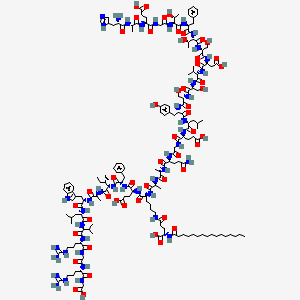
- Formula
- C172H265N43O51
- Weight
- 3751.24 Da
- CAS
- 204656-20-2
- PubChem CID
- 16134956
- Exact Mass
- 3749.9498 Da
- LogP
- -3.4
- TPSA
- 1510 Ų
- H-Bond Donors
- 54
- H-Bond Acceptors
- 55
- Rotatable Bonds
- 132
- Complexity
- 8760
Identifiers (SMILES, InChI)
InChI=1S/C172H265N43O51/c1-18-20-21-22-23-24-25-26-27-28-29-30-37-53-129(224)195-116(170(265)266)59-64-128(223)180-68-41-40-50-111(153(248)199-115(62-67-135(232)233)154(249)204-120(73-100-44-33-31-34-45-100)159(254)214-140(93(11)19-2)167(262)192-97(15)146(241)201-122(76-103-79-183-108-49-39-38-48-106(103)108)157(252)203-118(72-90(5)6)158(253)212-138(91(7)8)165(260)200-110(52-43-70-182-172(177)178)149(244)184-81-130(225)193-109(51-42-69-181-171(175)176)148(243)187-84-137(236)237)196-144(239)95(13)189-143(238)94(12)191-152(247)114(58-63-127(174)222)194-131(226)82-185-151(246)113(61-66-134(230)231)198-155(250)117(71-89(3)4)202-156(251)119(75-102-54-56-105(221)57-55-102)205-162(257)124(85-216)208-164(259)126(87-218)209-166(261)139(92(9)10)213-161(256)123(78-136(234)235)206-163(258)125(86-217)210-169(264)142(99(17)220)215-160(255)121(74-101-46-35-32-36-47-101)207-168(263)141(98(16)219)211-132(227)83-186-150(245)112(60-65-133(228)229)197-145(240)96(14)190-147(242)107(173)77-104-80-179-88-188-104/h31-36,38-39,44-49,54-57,79-80,88-99,107,109-126,138-142,183,216-221H,18-30,37,40-43,50-53,58-78,81-87,173H2,1-17H3,(H2,174,222)(H,179,188)(H,180,223)(H,184,244)(H,185,246)(H,186,245)(H,187,243)(H,189,238)(H,190,242)(H,191,247)(H,192,262)(H,193,225)(H,194,226)(H,195,224)(H,196,239)(H,197,240)(H,198,250)(H,199,248)(H,200,260)(H,201,241)(H,202,251)(H,203,252)(H,204,249)(H,205,257)(H,206,258)(H,207,263)(H,208,259)(H,209,261)(H,210,264)(H,211,227)(H,212,253)(H,213,256)(H,214,254)(H,215,255)(H,228,229)(H,230,231)(H,232,233)(H,234,235)(H,236,237)(H,265,266)(H4,175,176,181)(H4,177,178,182)/t93-,94-,95-,96-,97-,98+,99+,107-,109-,110-,111-,112-,113-,114-,115-,116-,117-,118-,119-,120-,121-,122-,123-,124-,125-,126-,138-,139-,140-,141-,142-/m0/s1
YSDQQAXHVYUZIW-QCIJIYAXSA-NResearch Indications
Cardiovascular
FDA-approved indication to reduce risk of major adverse cardiovascular events (MACE) in adults with T2DM and established cardiovascular disease. LEADER trial evidence.
Metabolic
FDA-approved (Victoza, 2010) as adjunct to diet and exercise for glycemic control. Reduces HbA1c up to 1.14%. Approved for adults and children 10+.
FDA-approved (Saxenda, 2014) for chronic weight management in adults with BMI ≥30 or ≥27 with comorbidity, and pediatric patients 12+. Phase III trials showed 60% achieved >5% weight loss.
Research Protocols
subcutaneous Injection
Semaglutide**: The SUSTAIN-10 trial (NCT03191396) directly compared subcutaneous semaglutide 1.0 mg weekly versus liraglutide 1.2 mg daily in T2DM patients.
| Goal | Dose | Frequency | Duration |
|---|---|---|---|
| LEADER Trial (NCT01179048) | 1.8 mg | Once daily | — |
| SCALE Obesity and Prediabetes | 3.0 mg | Daily | — |
| SCALE Diabetes | 3.0 mg | Per protocol | — |
| SCALE Maintenance | 3.0 mg | Per protocol | 56 weeks |
| SCALE Teens | 3.0 mg | Per protocol | 56 weeks |
| LIRA-NAFLD Study | 1.2 mg | Per protocol | — |
| Dosing Protocols | 0.6 mg, 1.2 mg, 1.8 mg, 2.4 mg, 3.0 mg | Daily | 1 week |
Interactions
Peptide Interactions
A GLP-1 receptor identified on pancreatic beta cells confirms that GLP-1 directly stimulates insulin exocytosis.
Reported Research Timeline
Effects begin within hours of administration based on half-life of ~13 hours
Liraglutide 3.0 mg reduced BMI-SDS by −0.22 versus +0.16 with placebo over 56 weeks, leading to FDA approval for adolescent obesity management.
Due to short half-life (~13 hours), effects are expected per-dose; consistent daily administration maintains therapeutic levels
Patients were randomized to liraglutide 1.8 mg or placebo once daily in addition to standard care, with a median follow-up of 3.8 years.
Regular administration schedule required; effects are dose-dependent and do not persist between doses
Quality Indicators
What to look for
- Human clinical trials conducted
- Naturally occurring compound
- Extensive peer-reviewed research base
Caution
- Short half-life may require frequent dosing
- Injection site reactions reported
Frequently Asked Questions
References (23)
- [23]
- [24]Batista et al — Neuroprotective effects of GLP-1 receptor agonists in neurodegenerative diseases (2024)
- [19]Holst *Front Front. Endocrinol. (2019)
- [22]Noyan-Ashraf et al — Liraglutide and cardioprotection: systematic review of preclinical and clinical evidence (2023)
- [13]
- [16]
- [17]Perry et al *J J. Pharmacol. Exp. Ther. (2002)
- [1]Liraglutide improves senescence and ameliorating diabetic sarcopenia via the YAP-TAZ pathway
→ Liraglutide demonstrated protective effects against diabetic sarcopenia in rat models, improving muscle health and reducing cellular senescence through the YAP-TAZ pathway, beyond its established glucose-lowering and weight-reducing benefits.
- [9]
- [10]Ogawa et al *Diabetes*, 53(7), 1700-1705 Diabetes (2004)
- [11]Tang-Christensen et al *Int Int. J. Obes. (2000)
- [12]Blonde et al *Curr Curr. Med. Res. Opin. (2006)
- [2]Liraglutide prevents high glucose level induced insulinoma cells apoptosis by targeting autophagy
→ Liraglutide protected pancreatic beta cells from high glucose-induced apoptosis by modulating autophagy pathways, suggesting a mechanism for preserving beta cell function in type 2 diabetes.
- [3]Effect of GLP-1 receptor agonists on waist circumference among type 2 diabetes patients: a systematic review and network meta-analysis
→ Network meta-analysis found liraglutide 1.8mg daily reduced waist circumference by 5.24cm and 1.2mg daily by 4.73cm in type 2 diabetes patients, demonstrating significant effects on abdominal obesity beyond weight loss.
- [4]Effects of liraglutide on body composition in people living with obesity or overweight: A systematic review
→ Systematic review of 15 RCTs showed liraglutide consistently reduced total weight, fat mass, and visceral adipose tissue by 12.49-23% compared to placebo, effectively targeting visceral fat associated with cardiometabolic risk.
- [5]Liraglutide, a glucagon-like peptide-1 analog, inhibits high glucose-induced oxidative stress and apoptosis in neonatal rat cardiomyocytes
→ Liraglutide protected cardiomyocytes from high glucose-induced damage by reducing oxidative stress and apoptosis, demonstrating cardioprotective effects that may help prevent diabetic cardiomyopathy.
- [6]Liraglutide and resveratrol alleviated cyclosporin A induced nephrotoxicity in rats through improving antioxidant status, apoptosis and pro-inflammatory markers
→ Liraglutide demonstrated renoprotective effects by improving kidney function, reducing inflammation, and enhancing antioxidant status in rats with drug-induced nephrotoxicity.
- [7]Effects of liraglutide on metabolic syndrome in WBN/Kob diabetic fatty rats supplemented with a high-fat diet
→ Liraglutide reduced body weight gain, food intake, hyperglycemia, and improved glucose tolerance in a dose-dependent manner in a severe metabolic syndrome rat model.
- [8]Liraglutide-induced autoimmune hepatitis
→ Case report documented a rare instance of marker-negative autoimmune hepatitis associated with liraglutide therapy, highlighting the importance of monitoring liver function during treatment.
- [20]
- [21]
- [14]
- [15]Nikolaidis et al *Circulation*, 110(8), 955-961 Circulation (2004)
Continue researching LIRAGLUTIDE
Keep scientific evidence separate from commercial availability. Review how claims are evaluated, explore question-led research paths, or inspect disclosed source records without changing the editorial conclusions on this page.