Leucine
A branched-chain essential amino acid and the most potent dietary activator of the mTOR signaling pathway, critical for muscle protein synthesis, anabolic signaling, and metabolic regulation.
Evidence-led profile
Research snapshot
- Evidence stage
- Emerging research
- References
- 8 linked sources
- Research coverage
- 1 area
- Editorial review
- Mar 8, 2026
Published by the PepGuide Editorial Team using our research methodology.
Overview
Leucine is one of the three branched-chain amino acids (BCAAs), alongside isoleucine and valine, and is widely regarded as the most anabolically significant amino acid in human nutrition. Its unique capacity to directly activate the mechanistic target of rapamycin complex 1 (mTORC1) — the master regulator of protein synthesis — sets it apart from all other amino acids. Leucine stimulates mTORC1 through the Rag GTPase–Ragulator pathway and the leucine-sensing protein Sestrin2, triggering downstream phosphorylation of p70S6K and 4E-BP1, which initiate ribosomal translation and muscle protein synthesis (MPS). This "leucine trigger" concept has become foundational in sports nutrition, with research demonstrating that approximately 2–3 g of leucine per meal is the threshold required to maximally stimulate MPS in young adults, while older adults may require higher amounts (3–4 g) due to anabolic resistance.
Beyond its role as an mTOR activator, leucine serves as both a metabolic fuel and signaling molecule in skeletal muscle. It is transaminated to alpha-ketoisocaproate (KIC) and further metabolized to HMB (beta-hydroxy-beta-methylbutyrate), a bioactive metabolite with anti-catabolic and muscle-protective properties — though only about 5% of ingested leucine is converted to HMB, supporting direct HMB supplementation for anti-catabolic goals. Leucine also stimulates insulin secretion from pancreatic beta cells, contributing to its anabolic effects through insulin-mediated amino acid uptake and anti-proteolytic signaling. Clinical studies in elderly populations, burn patients, and individuals with muscle-wasting conditions demonstrate that leucine-enriched nutrition attenuates muscle loss and improves recovery outcomes.
For practical supplementation, leucine is commonly consumed as part of BCAA blends (typically in a 2:1:1 leucine:isoleucine:valine ratio), essential amino acids formulations, or as free-form leucine added to protein meals. It pairs synergistically with creatine-monohydrate for combined anabolic and energy-system support, whey-protein (which is naturally leucine-rich at ~11% by weight), and vitamin-d3 for optimizing muscle function in aging populations. The amino acid is generally well-tolerated at supplemental doses of 3–10 g/day, though excessive intake without adequate isoleucine and valine may theoretically deplete the other BCAAs through competitive transport mechanisms.
Research
Reported Effects
Context-Dependent Benefits:: Leucine appears most effective for older adults with sarcopenia, athletes during injury recovery, or those in caloric deficits; benefits are less clear for healthy individuals with adequate protein intake. Protein Quality Matters:: Studies show leucine works best when combined with complete protein sources (whey protein) rather than in isolation; total protein intake remains the primary factor for muscle growth. Dosage Threshold:: Research indicates 2-3g of leucine per meal is needed to maximize muscle protein synthesis, with 25-30g total protein per meal being optimal. Limited Standalone Value:: User consensus and research suggest that isolated leucine or BCAA supplementation provides minimal benefit if total daily protein needs (1.6-2.2g/kg bodyweight) are already met through diet
Safety and Limitations
Safety Profile: Leucine
Common Side Effects
- Generally well-tolerated at doses of 2–10 g/day in healthy adults
- Gastrointestinal symptoms: nausea, bloating, stomach cramps, and diarrhea at higher single doses (>5 g)
- Mildly bitter taste that may cause reluctance in some users
- Transient elevation in blood ammonia levels after high-dose bolus intake
- Mild hypoglycemia reported in some individuals due to leucine-stimulated insulin secretion
Serious Adverse Effects
- Hyperammonemia: leucine is deaminated to produce ammonia; in individuals with urea cycle disorders, this can precipitate dangerous hyperammonemia and encephalopathy
- Maple Syrup Urine Disease (MSUD) exacerbation: leucine is the primary toxic metabolite in MSUD; supplementation is ABSOLUTELY CONTRAINDICATED
- Pellagra risk: chronic high-dose leucine intake may interfere with niacin (B3) synthesis from tryptophan, potentially leading to pellagra-like symptoms (dermatitis, diarrhea, dementia)
- mTOR pathway overstimulation: chronic supraphysiologic leucine intake may theoretically promote cell proliferation; relevance to cancer risk in humans is unproven but warrants consideration
Contraindications
- Maple Syrup Urine Disease (MSUD): absolute contraindication — leucine accumulation causes severe neurological damage
- Urea cycle disorders: risk of hyperammonemia and metabolic crisis
- Known hypersensitivity to leucine or branched-chain amino acid supplements
- Advanced hepatic encephalopathy (impaired ammonia clearance)
- Isovaleric acidemia and other organic acidemias involving leucine metabolism
Drug Interactions
- Antidiabetic agents (insulin, sulfonylureas, metformin): leucine stimulates insulin secretion from pancreatic beta cells; additive hypoglycemia risk
- Diazoxide: opposes leucine-stimulated insulin secretion; may reduce diazoxide efficacy or create unpredictable glucose responses
- Levodopa: leucine competes with levodopa for transport across the blood-brain barrier via the L-type amino acid transporter; may reduce levodopa efficacy in Parkinson's patients
- Other BCAAs (isoleucine, valine): excessive leucine relative to other BCAAs may deplete isoleucine and valine levels, causing amino acid imbalance
- Niacin (vitamin B3): high leucine may antagonize niacin status; consider co-supplementation
Population-Specific Considerations
- Pregnancy: leucine is an essential amino acid obtained through normal dietary protein; supplemental doses beyond dietary needs lack specific safety data in pregnancy
- Lactation: present in breast milk as part of normal amino acid composition; excessive supplementation not studied
- Children: appropriate as part of balanced protein intake; avoid isolated high-dose supplementation unless medically supervised (e.g., in metabolic conditions)
- Elderly: leucine supplementation (2–4 g/day with meals) is studied for sarcopenia prevention and shows good tolerability; may support muscle protein synthesis
- Athletes: well-studied at 2–10 g/day for exercise recovery; best taken with other BCAAs to prevent amino acid imbalances; ensure adequate hydration
Common Side Effects
- Taste and Mixability:: Users frequently report leucine powder tastes bitter, greasy, or like 'powdered batteries' and does not mix well with water, often forming foam or clumps
- Digestive Issues:: Some users report bloating or nausea, particularly when taking large doses or in combination with whey protein products
- Minimal Serious Effects:: Research and user reports indicate leucine is generally safe with few serious side effects when used at recommended doses
- Amino Acid Imbalance:: Some experts suggest isolated leucine supplementation without other essential amino acids may create temporary imbalances, though clinical significance appears limited
Mechanism of Action
Leucine is the most potent branched-chain amino acid (BCAA) activator of the mTORC1 signaling pathway, which serves as the master regulator of cell growth and protein synthesis. Leucine activates mTORC1 through a well-characterized intracellular sensing mechanism: at sufficient concentrations, leucine binds to Sestrin2, releasing its inhibition of the GATOR2 complex. GATOR2 then inhibits GATOR1, allowing the Rag GTPases to recruit mTORC1 to the lysosomal surface where it is activated by Rheb-GTP. Activated mTORC1 phosphorylates key downstream effectors p70S6 kinase (S6K1) and eukaryotic translation initiation factor 4E-binding protein 1 (4E-BP1), initiating cap-dependent mRNA translation and ribosomal biogenesis.
Leucine also plays an important role in glucose homeostasis through its insulinotropic effects. In pancreatic beta cells, leucine metabolism generates ATP that closes ATP-sensitive potassium channels, triggering membrane depolarization and calcium-dependent insulin exocytosis. Leucine additionally allosterically activates glutamate dehydrogenase (GDH), amplifying the generation of alpha-ketoglutarate and subsequent ATP production from the TCA cycle, further potentiating insulin secretion.
Beyond protein synthesis stimulation, leucine regulates protein turnover by suppressing proteolytic pathways. mTORC1 activation inhibits autophagy through phosphorylation of ULK1 and suppresses the ubiquitin-proteasome system. Leucine's primary metabolite, alpha-ketoisocaproate (KIC), can be converted to beta-hydroxy-beta-methylbutyrate (HMB), which independently supports muscle preservation by upregulating the PI3K/Akt pathway and inhibiting caspase-mediated proteolysis.
Research protocol summary
- Typical Dose
- 2-3g of leucine per serving, typically consumed 2-3 times daily with meals or around workouts
These values summarize cataloged research protocols. They are not personal dosing instructions or medical guidance.
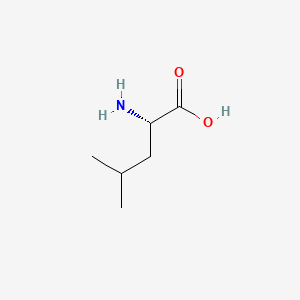
Molecular Structure
- Formula
- C6H13NO2
- Weight
- 131.17 Da
- PubChem CID
- 6106
- Exact Mass
- 131.0946 Da
- LogP
- -1.5
- TPSA
- 63.3 Ų
- H-Bond Donors
- 2
- H-Bond Acceptors
- 3
- Rotatable Bonds
- 3
- Complexity
- 101
Identifiers (SMILES, InChI)
InChI=1S/C6H13NO2/c1-4(2)3-5(7)6(8)9/h4-5H,3,7H2,1-2H3,(H,8,9)/t5-/m0/s1
ROHFNLRQFUQHCH-YFKPBYRVSA-NReferences (8)
- [6]De-Training Effects Following Leucine-Enriched Whey Protein Supplementation and Resistance Training in Older Adults with Sarcopenia: A Randomized Controlled Trial with 24 Weeks of Follow-Up
→ This 24-week randomized trial evaluated the effectiveness of leucine-enriched whey protein supplementation combined with resistance training on skeletal muscle mass and strength in older adults with sarcopenia, including de-training effects.
- [2]Isolated Leucine and Branched-Chain Amino Acid Supplementation for Enhancing Muscular Strength and Hypertrophy: A Narrative Review
→ This narrative review concludes that while leucine stimulates the initial anabolic response, substantial research shows that isolated BCAA or leucine supplementation alone may not significantly enhance muscle strength and hypertrophy without adequate total protein intake.
- [3]Effects of Whey Protein, Leucine, and Vitamin D Supplementation in Patients with Sarcopenia: A Systematic Review and Meta-Analysis
→ Meta-analysis of three studies with 637 patients showed that whey protein, leucine, and vitamin D supplementation significantly improved appendicular muscle mass in sarcopenia patients, though grip strength and physical performance scores did not differ significantly.
- [4]Effects of adequate dietary protein with whey protein, leucine, and vitamin D supplementation on sarcopenia in older adults: An open-label, parallel-group study
→ This open-label study demonstrated that adequate dietary protein combined with whey protein, leucine, and vitamin D supplementation improved sarcopenia outcomes in older adults.
- [5]Rehabilitation Nutrition for Injury Recovery of Athletes: The Role of Macronutrient Intake
→ Research indicates that nutritional strategies including leucine supplementation are feasible and effective in offsetting anabolic resistance and maintaining muscle mass during injury recovery in athletes.
- [7]Dietary protein recommendations and the prevention of sarcopenia
→ Research suggests that ingesting approximately 25-30g of protein per meal maximally stimulates muscle protein synthesis in both young and older individuals, and supplementing meals with leucine may enhance the muscle protein synthetic response in elderly populations.
- [1]Effects of a vitamin D and leucine-enriched whey protein nutritional supplement on measures of sarcopenia in older adults, the PROVIDE study: a randomized, double-blind, placebo-controlled trial
→ A randomized controlled trial found that vitamin D and leucine-enriched whey protein supplementation improved measures of sarcopenia in older adults when combined with resistance training.
- [8]No Significant Differences in Muscle Growth and Strength Development When Consuming Soy and Whey Protein Supplements Matched for Leucine Following a 12 Week Resistance Training Program in Men and Women: A Randomized Trial
→ A 12-week randomized trial found that soy and whey protein supplements matched for leucine content (2g leucine per serving) produced comparable strength increases and muscle growth when combined with resistance training.
Continue researching Leucine
Keep scientific evidence separate from commercial availability. Review how claims are evaluated, explore question-led research paths, or inspect disclosed source records without changing the editorial conclusions on this page.