Epicatechin
Epicatechin research profile covering evidence quality, proposed mechanisms, safety considerations, regulatory status, and linked primary sources.
Evidence-led profile
Research snapshot
- Evidence stage
- Emerging research
- References
- 3 linked sources
- Research coverage
- 1 area
- Editorial review
- Mar 8, 2026
Published by the PepGuide Editorial Team using our research methodology.
Overview
Epicatechin ((-)-epicatechin) is a monomeric flavan-3-ol belonging to the broader family of flavonoid polyphenols. It is one of the most abundant bioactive compounds in cacao (Theobroma cacao), and is also present in significant quantities in green tea, apples, grapes, and berries. Epicatechin exists as four stereoisomers, with (-)-epicatechin being the most biologically active and prevalent dietary form. Its bioavailability is relatively high for a polyphenol, with plasma concentrations peaking approximately 2 hours after oral ingestion and metabolites detectable for up to 8 hours.
The cardiovascular benefits of epicatechin are primarily mediated through enhanced nitric oxide (NO) bioavailability. Epicatechin activates endothelial nitric oxide synthase (eNOS) via phosphorylation of the PI3K/Akt pathway and simultaneously inhibits NADPH oxidase, reducing superoxide-mediated NO degradation. This dual mechanism explains the blood pressure-lowering and flow-mediated dilation improvements observed in clinical trials with cacao consumption. In skeletal muscle, epicatechin has attracted attention for its ability to inhibit myostatin and increase follistatin, a ratio change that favors muscle growth and regeneration. Animal studies have demonstrated increased mitochondrial biogenesis, improved exercise capacity, and enhanced muscle structure with epicatechin supplementation.
Emerging research highlights epicatechin's neuroprotective potential through enhancement of brain-derived neurotrophic factor (BDNF) expression, improved cerebral blood flow, and reduction of neuroinflammatory markers. In metabolic health, epicatechin improves insulin sensitivity by modulating GLUT4 translocation and protecting pancreatic beta cells from oxidative stress. The compound also exhibits cardioprotective effects against ischemia-reperfusion injury through activation of mitochondrial KATP channels and the SAFE (survivor activating factor enhancement) pathway, mimicking aspects of ischemic preconditioning.
Mechanism of Action
Nitric Oxide–Mediated Vascular and Muscular Effects
(-)-Epicatechin is a flavan-3-ol monomer and the principal bioactive catechin in dark chocolate, green tea, and grape seeds. It enhances endothelial nitric oxide synthase (eNOS) activity through dual mechanisms: (1) activation of PI3K/Akt signaling leading to phosphorylation of eNOS at Ser1177, and (2) inhibition of NADPH oxidase (NOX2) which reduces superoxide (O2•-) generation and prevents NO scavenging to form peroxynitrite. The resulting increase in NO bioavailability produces vasodilation, reduced blood pressure, and improved flow-mediated dilation (FMD) by 2–3% at doses of 50–200 mg/day. In skeletal muscle, NO activates soluble guanylyl cyclase → cGMP → PKG signaling that enhances calcium handling and muscle contractile efficiency (PMID: 20091554).
Myostatin Inhibition and Muscle Growth Signaling
Epicatechin decreases myostatin (GDF-8) expression and increases follistatin levels in skeletal muscle, shifting the myostatin:follistatin ratio in favor of muscle growth. Myostatin normally activates ActRIIB → Smad2/3 signaling that suppresses muscle protein synthesis and satellite cell proliferation. By reducing myostatin and increasing its endogenous antagonist follistatin, epicatechin derepresses the Akt/mTORC1/p70S6K anabolic pathway. In aged mice, 15 days of epicatechin treatment (1 mg/kg) increased grip strength by 18% and stimulated mitochondrial biogenesis via PGC-1alpha and TFAM upregulation. Human studies in heart failure patients showed improved hand grip strength and increased skeletal muscle follistatin:myostatin ratio (PMID: 22437137).
Mitochondrial Biogenesis and Metabolic Enhancement
Epicatechin activates AMPK through CaMKKbeta and LKB1-dependent phosphorylation at Thr172, which deacetylates and activates PGC-1alpha via SIRT1-dependent mechanisms. PGC-1alpha drives transcription of nuclear respiratory factors (NRF-1/2) and mitochondrial transcription factor A (TFAM), stimulating mitochondrial DNA replication and organelle biogenesis. In skeletal muscle, this increases mitochondrial volume density, cristae density, and oxidative phosphorylation capacity. Epicatechin also activates Nrf2-ARE antioxidant signaling, upregulating HO-1, NQO1, and glutathione synthetase. These combined effects improve cellular energy metabolism and redox homeostasis, with particular relevance to age-related mitochondrial dysfunction and sarcopenia (PMID: 24770425).
Research
Reported Effects
Acute Effects:: Most effective for immediate improvements in vascular function and blood flow within hours of consumption. Individual Variation:: Response appears highly variable, with some individuals experiencing pronounced effects while others notice minimal changes. Dose-Dependent:: Research indicates clear dose-response relationship for vascular benefits, with higher doses producing more pronounced effects. Chronic Use:: Long-term benefits require consistent daily intake, with effects on muscle growth and cardiovascular health accumulating over weeks to months
- Most effective for immediate improvements in vascular function and blood flow within hours of consumption
- Response appears highly variable, with some individuals experiencing pronounced effects while others notice minimal changes
- Research indicates clear dose-response relationship for vascular benefits, with higher doses producing more pronounced effects
- Long-term benefits require consistent daily intake, with effects on muscle growth and cardiovascular health accumulating over weeks to months
Safety and Limitations
Common Side Effects
- Generally well-tolerated at typical dietary and supplemental doses (50–200 mg/day)
- Mild gastrointestinal discomfort including nausea, bloating, or stomach upset, particularly on an empty stomach
- Headache reported occasionally at higher doses
- Potential for mild blood pressure reduction, which may cause lightheadedness in sensitive individuals
Serious Adverse Effects
- No serious adverse events have been reported in clinical trials at standard doses
- Theoretical risk of excessive vasodilation at very high doses, potentially causing hypotension
- High-dose flavanol intake may interfere with iron absorption over time, though this is poorly documented for epicatechin specifically
Contraindications
- Individuals with known hypersensitivity to cacao-derived compounds or catechins should avoid supplementation
- Caution advised in individuals with hypotension or those prone to low blood pressure episodes
- Pregnant and breastfeeding women should limit intake to amounts commonly found in food, as safety of supplemental doses has not been established
- Individuals scheduled for surgery should discontinue use at least two weeks prior due to mild antiplatelet activity
Drug Interactions
- May enhance the effects of antihypertensive medications, increasing the risk of hypotension
- Potential interaction with antiplatelet and anticoagulant drugs (warfarin, aspirin, clopidogrel) due to mild blood-thinning properties
- May affect cytochrome P450 enzyme activity (particularly CYP3A4), potentially altering metabolism of various pharmaceuticals
- Could theoretically potentiate the effects of PDE5 inhibitors (sildenafil, tadalafil) through overlapping nitric oxide signaling pathways
- Iron supplements or iron-rich meals may have reduced absorption when taken concurrently
Population-Specific Considerations
- Older adults should start with lower doses and monitor blood pressure
- Individuals with diabetes should monitor blood glucose, as epicatechin may improve insulin sensitivity
- Those with kidney disease should consult a physician before supplementation
Common Side Effects
- Minimal Reported:: Generally well-tolerated with few adverse effects in clinical trials at standard doses
- Digestive Issues:: Some users may experience mild gastrointestinal discomfort at higher doses
- Blood Pressure:: Potential for mild blood pressure lowering effects due to vasodilation, which may be beneficial or concerning depending on baseline
- No Major Concerns:: Research indicates excellent safety profile with no serious adverse events in healthy populations
Research protocol summary
- Typical Dose
- Clinical studies typically use 50-200mg of pure epicatechin daily for vascular benefits
These values summarize cataloged research protocols. They are not personal dosing instructions or medical guidance.
Reconstitution Calculator
Pharmacokinetic Profile
Molecular Structure
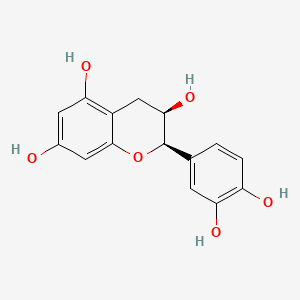
- Formula
- C15H14O6
- Weight
- 290.27 Da
- PubChem CID
- 72276
- Exact Mass
- 290.0790 Da
- LogP
- 0.4
- TPSA
- 110 Ų
- H-Bond Donors
- 5
- H-Bond Acceptors
- 6
- Rotatable Bonds
- 1
- Complexity
- 364
Identifiers (SMILES, InChI)
InChI=1S/C15H14O6/c16-8-4-11(18)9-6-13(20)15(21-14(9)5-8)7-1-2-10(17)12(19)3-7/h1-5,13,15-20H,6H2/t13-,15-/m1/s1
PFTAWBLQPZVEMU-UKRRQHHQSA-NReferences (3)
- [2]Effects of the pure flavonoids epicatechin and quercetin on vascular function and cardiometabolic health: a randomized, double-blind, placebo-controlled, crossover trial
→ Randomized controlled trial examining the isolated effects of pure epicatechin on vascular function and cardiometabolic parameters in humans, providing evidence for its role independent of other cocoa compounds.
- [1](–)-Epicatechin mediates beneficial effects of flavanol-rich cocoa on vascular function in humans
→ Study demonstrated that epicatechin and its metabolite epicatechin-7-O-glucuronide independently predicted vascular effects after cocoa ingestion, with oral administration of pure epicatechin closely emulating acute vascular benefits including enhanced flow-mediated vasodilation through NO-dependent mechanisms.
- [3]The Impact of Epicatechin on Human Cognition: The Role of Cerebral Blood Flow
→ Review examining how epicatechin's effects on cerebral blood flow may contribute to cognitive benefits, supporting the connection between flavanol consumption and improved brain function through vascular mechanisms.
Continue researching Epicatechin
Keep scientific evidence separate from commercial availability. Review how claims are evaluated, explore question-led research paths, or inspect disclosed source records without changing the editorial conclusions on this page.