TAURINE
A conditionally essential amino acid and organic osmolyte abundant in the brain, heart, and muscles that supports bile acid conjugation, membrane stabilization, antioxidant defense, and neurotransmitter regulation.
Evidence-led profile
Research snapshot
- Evidence stage
- Emerging research
- References
- 9 linked sources
- Research coverage
- 1 area
- Editorial review
- Jul 7, 2026
Published by the PepGuide Editorial Team using our research methodology.
Overview
Taurine is a sulfur-containing amino acid that acts as a modulator of cellular function throughout the body. It supports GABA receptor activity, regulates calcium signaling in cells, and plays roles in cardiovascular function, neuroprotection, and cellular stress response. Taurine is found naturally in the body and obtained through diet, but can also be supplemented for various health benefits including exercise performance, metabolic health, and potentially longevity.
Research
Reported Effects
Rapid Onset:: Many users notice effects within the first day of supplementation, with consistent benefits building over weeks. Longevity Benefits:: Based on 2023 Science paper showing 10-12% lifespan increase in mice, users are taking it specifically for anti-aging. Exercise Performance:: Users report improved recovery, reduced soreness, increased strength, and better endurance during workouts. Individual Variation:: While majority report positive effects, some users notice minimal to no effects, suggesting genetic or metabolic variability
Safety and Limitations
Safety Profile: Taurine
Common Side Effects
- Generally very well tolerated at standard supplemental doses (500–3000 mg/day)
- Mild gastrointestinal discomfort: nausea and diarrhea at higher doses
- Drowsiness or sedation (taurine is a mild GABA agonist)
- Mild hypotension in sensitive individuals
- Headache (uncommon)
Serious Adverse Effects
- Very few serious adverse events reported in human studies at doses up to 6 g/day
- Theoretical concern: excessive taurine may exacerbate bile acid metabolism abnormalities in cholestatic liver disease
- High doses in animal studies (far exceeding human supplementation) showed no significant organ toxicity
- Rare case reports of pruritus at high doses
- Energy drinks containing taurine have been associated with cardiac events, but these are attributed to caffeine and other stimulants rather than taurine
Contraindications
- Known hypersensitivity to taurine
- Bipolar disorder (some anecdotal reports of mood destabilization, though evidence is weak)
- Severe cholestatic liver disease (altered bile acid conjugation)
- Caution in epilepsy patients (GABAergic effects may interact with seizure medications)
Drug Interactions
- Antihypertensives: Taurine lowers blood pressure; additive hypotensive effects
- Lithium: Taurine may affect renal lithium excretion; monitor levels
- Antidiabetic medications: Taurine may enhance insulin sensitivity and lower blood glucose; monitor for hypoglycemia
- Sedatives and anxiolytics: Additive CNS depressant effects via GABA modulation
- Cytochrome P450: Taurine is not significantly metabolized by CYP enzymes; minimal pharmacokinetic interactions
Population-Specific Considerations
- Cardiovascular health: Emerging evidence for blood pressure reduction (meta-analysis supports ~3 mmHg systolic reduction at 1.5–6 g/day)
- Athletes: Common sports nutrition ingredient; may reduce exercise-induced oxidative stress
- Diabetics: Some evidence of benefit for diabetic complications; generally safe alongside diabetes management
- Elderly: May help preserve cardiac and muscular function; well tolerated in aging populations
- Energy drinks: Taurine content (typically 1000 mg per can) is generally safe; adverse effects are usually from caffeine and sugar
- Pregnancy/lactation: Taurine is conditionally essential in neonates; supplementation beyond dietary levels lacks safety data in pregnancy
Common Side Effects
- Tolerance Development:: Some users report rebound anxiety or diminished effects with daily use due to GABA receptor downregulation
- Vivid Dreams:: Occasional reports of unusually vivid or intense dreams, particularly when combined with magnesium glycinate
- Stimulation Paradox:: While most find it calming, some users report it keeps them awake or causes alertness rather than sedation
- Generally Well-Tolerated:: The majority report no serious side effects at doses up to 3g daily, with most issues being mild
Mechanism of Action
Taurine (2-aminoethanesulfonic acid) is a sulfur-containing beta-amino acid that is the most abundant free amino acid in excitable tissues including the heart, brain, retina, and skeletal muscle. Unlike most amino acids, taurine is not incorporated into proteins. Its primary physiological role is as an organic osmolyte, regulating cell volume by modulating chloride and potassium flux through volume-sensitive ion channels. This osmoregulatory function is critical in the brain, where taurine release during cell swelling prevents excitotoxic damage.
In the central nervous system, taurine acts as an inhibitory neuromodulator by activating GABA-A receptors (particularly extrasynaptic delta-subunit-containing receptors mediating tonic inhibition) and glycine receptors. It modulates intracellular calcium homeostasis by regulating calcium release from the sarcoplasmic/endoplasmic reticulum and mitochondria, and by modulating L-type calcium channel activity. In the heart, this calcium-regulatory action underlies taurine's antiarrhythmic and positive inotropic effects. Taurine also conjugates with bile acids to form taurocholate and taurochenodeoxycholate, essential for lipid digestion and cholesterol metabolism.
Taurine exerts antioxidant effects not through direct radical scavenging but by stabilizing mitochondrial electron transport chain function (particularly Complex I and III), reducing electron leak and superoxide generation. It also reacts with hypochlorous acid to form the anti-inflammatory taurine chloramine. A landmark 2023 study in Science demonstrated that taurine deficiency is a driver of aging across species, and taurine supplementation extended healthspan and lifespan in mice by approximately 10-12%, with improvements in bone density, immune function, glucose tolerance, and mitochondrial function.
Research protocol summary
- Typical Dose
- 500mg-1000mg is the most commonly reported effective dose for anxiety and general benefits
These values summarize cataloged research protocols. They are not personal dosing instructions or medical guidance.
Molecular Structure
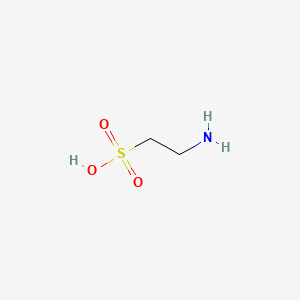
- Formula
- C2H7NO3S
- Weight
- 125.15 Da
- PubChem CID
- 1123
- Exact Mass
- 125.0147 Da
- LogP
- -4.1
- TPSA
- 88.8 Ų
- H-Bond Donors
- 2
- H-Bond Acceptors
- 4
- Rotatable Bonds
- 2
- Complexity
- 120
Identifiers (SMILES, InChI)
InChI=1S/C2H7NO3S/c3-1-2-7(4,5)6/h1-3H2,(H,4,5,6)
XOAAWQZATWQOTB-UHFFFAOYSA-NReferences (9)
- [3]The Effects of an Oral Taurine Dose and Supplementation Period on Endurance Exercise Performance in Humans: A Meta-Analysis
→ Meta-analysis showing that taurine supplementation significantly improves endurance exercise performance, with effects varying by dose and supplementation period.
- [1]Taurine deficiency as a driver of aging
→ Taurine supplementation increased median lifespan in mice by 10-12% and demonstrated that taurine deficiency may be a key driver of aging processes across multiple species.
- [2]Functional Role of Taurine in Aging and Cardiovascular Health: An Updated Overview
→ Comprehensive review demonstrating taurine's beneficial effects on cardiovascular pathophysiology, metabolic regulation, and aging-related processes.
- [4]Taurine reduces the risk for metabolic syndrome: a systematic review and meta-analysis of randomized controlled trials
→ Systematic review finding that taurine supplementation significantly reduces risk factors associated with metabolic syndrome including triglycerides and cholesterol.
- [5]Effect of Long-Term Taurine Supplementation on the Lipid and Glycaemic Profile in Adults with Overweight or Obesity
→ Taurine supplementation significantly decreased triglycerides, total cholesterol, and fasting insulin levels in adults with overweight or obesity.
- [6]Effects of taurine supplementation on cognitive function: a systematic review and meta-analysis of randomised controlled trials
→ Meta-analysis showing taurine alone did not significantly improve cognitive scores, but combination with therapeutic drugs enhanced Mini-Mental State Examination performance in some populations.
- [7]Taurine and skeletal muscle function
→ Review establishing that normal taurine levels are essential for proper skeletal muscle function, including calcium-dependent excitation-contraction processes and cellular volume regulation.
- [8]Mitigation of aging-related plasticity decline through taurine supplementation and environmental enrichment
→ Study demonstrating that taurine supplementation helps mitigate age-related declines in brain plasticity and can restore neural function in aging animals.
- [9]Maleki V, Alizadeh M, Esmaeili F, Mahdavi R Protective and therapeutic effectiveness of taurine supplementation plus low calorie diet on metabolic parameters and endothelial markers in patients with diabetes mellitus: a randomized, clinical trial Nutrition & Metabolism (2022)
→ RCT gave 1000 mg taurine three times daily (3 g/day) for 8 weeks, improving insulin and HOMA-IR in type 2 diabetes.
Continue researching TAURINE
Keep scientific evidence separate from commercial availability. Review how claims are evaluated, explore question-led research paths, or inspect disclosed source records without changing the editorial conclusions on this page.