Menthol
Menthol research profile covering evidence quality, proposed mechanisms, safety considerations, regulatory status, and linked primary sources.
Evidence-led profile
Research snapshot
- Evidence stage
- Emerging research
- References
- 4 linked sources
- Research coverage
- 1 area
- Editorial review
- Mar 8, 2026
Published by the PepGuide Editorial Team using our research methodology.
Overview
Menthol is an organic compound (C10H20O) and cyclic monoterpenoid alcohol that occurs naturally in the essential oils of Mentha species, particularly peppermint (Mentha x piperita) and cornmint (Mentha arvensis). It exists as eight possible stereoisomers, with (-)-menthol (L-menthol) being the naturally predominant and most biologically active form. Menthol's characteristic cooling sensation is mediated through activation of TRPM8 (transient receptor potential melastatin 8), a cold-sensitive ion channel expressed in sensory neurons, skin keratinocytes, and mucosal epithelial cells. TRPM8 activation triggers calcium influx and membrane depolarization in thermosensory neurons, producing a perceived cooling effect at temperatures far above the actual activation threshold of cold receptors — effectively "tricking" the nervous system into sensing cold.
As a topical analgesic, menthol is one of the most widely used over-the-counter pain relief agents globally, found in products ranging from muscle rubs and patches to oral rinses and cough drops. Its analgesic mechanism involves both the TRPM8-mediated counter-irritant effect (gate control theory — cold sensation competes with and suppresses pain signals) and direct desensitization of TRPA1 nociceptive channels at higher concentrations. At low concentrations (1–5%), menthol produces cooling and mild analgesia; at higher concentrations (5–16%), it provides more significant pain relief through deeper nociceptor modulation. Clinical studies support menthol's efficacy for tension headache (applied to the forehead), musculoskeletal pain, arthritis, and neuropathic pain conditions. As a nasal decongestant, menthol stimulates cold receptors in the nasal mucosa, creating a subjective sensation of improved airflow without actually reducing nasal resistance — a perception-based mechanism that nonetheless provides meaningful symptomatic relief.
Beyond its classical applications, menthol demonstrates anti-inflammatory activity through suppression of pro-inflammatory mediators (PGE2, LTB4, IL-1beta) and inhibition of NF-kB signaling. It also possesses antimicrobial properties against a range of bacteria and fungi, contributing to its inclusion in oral hygiene and wound care products. Menthol enhances the transdermal penetration of co-applied drugs, making it a valued permeation enhancer in pharmaceutical formulations. It is generally recognized as safe (GRAS) at typical use levels, though concentrated menthol can cause mucosal irritation or contact sensitization in susceptible individuals. In comprehensive pain management protocols, topical menthol preparations complement systemic anti-inflammatory compounds and work synergistically with other topical agents such as camphor, capsaicin, and MSM.
Mechanism of Action
Menthol is a cyclic monoterpene alcohol that exerts its characteristic cooling sensation and analgesic effects primarily through activation of transient receptor potential melastatin 8 (TRPM8), a cold- and menthol-sensitive cation channel. Menthol binds to a specific pocket within TRPM8, using its hydroxyl group to interact with residue R842 and its isopropyl group to anchor against I846 and L843 in the channel's transmembrane domain. This binding induces conformational changes that open the channel pore, allowing calcium and sodium influx, which depolarizes sensory neurons and triggers the perception of coolness.
Beyond TRPM8, menthol acts on multiple additional molecular targets. It positively modulates GABA-A receptors, enhancing inhibitory neurotransmission and contributing to its anxiolytic and analgesic properties. Menthol blocks voltage-gated sodium channels (particularly Nav1.8 and Nav1.9) in a use-dependent manner, reducing neuronal excitability and providing local anesthetic effects. It also activates TRPA1 channels at higher concentrations, which may contribute to its irritant properties, and inhibits voltage-gated calcium channels, reducing neurotransmitter release.
Menthol additionally interacts with nicotinic acetylcholine receptors (as an allosteric inhibitor), kappa opioid receptors, and serotonin 5-HT3 receptors. Its blockade of sodium channels in nociceptive neurons, combined with TRPM8-mediated counter-irritation and GABA-A potentiation, produces its well-known topical analgesic and counterirritant effects.
Research
Reported Effects
Surface vs Deep Pain:: Most effective for surface-level pain and acute discomfort; users report limited effectiveness for deep joint pain, with recommendations to try oral supplements like collagen or boswellia for deeper issues. Rapid Onset:: Effects are typically felt within minutes of application, making it useful for acute flare-ups and immediate symptom management. Complement to Other Therapies:: Works best when combined with other modalities like heat therapy, exercise, or oral anti-inflammatory supplements rather than as a standalone treatment. Individual Variability:: Effectiveness varies significantly between users, with some finding dramatic relief while others report minimal benefits beyond temporary cooling sensation
- Most effective for surface-level pain and acute discomfort; users report limited effectiveness for deep joint pain, with recommendations to try oral supplements like collagen or boswellia for deeper issues
- Effects are typically felt within minutes of application, making it useful for acute flare-ups and immediate symptom management
- Works best when combined with other modalities like heat therapy, exercise, or oral anti-inflammatory supplements rather than as a standalone treatment
- Effectiveness varies significantly between users, with some finding dramatic relief while others report minimal benefits beyond temporary cooling sensation
Safety and Limitations
When applied topically, menthol can cause a cooling or burning sensation and skin irritation, especially on sensitive skin. It is contraindicated for use on open wounds or damaged skin, and heat should not be applied over the treated area as it increases absorption. Accidental ingestion can be toxic, and inhalation may cause respiratory issues in some individuals.
Common Side Effects
- Potential Irritation:: High concentrations can cause skin irritation or paradoxical burning sensations in some users, particularly with prolonged or excessive application
- Respiratory Effects:: When inhaled (e.g., in vapor form), can cause severe coughing and gagging in sensitive individuals, especially if accidentally aspirated
- Limited Deep Tissue Penetration:: Users note that while surface cooling is effective, menthol may not adequately address underlying deep tissue inflammation or joint issues
- Tolerance Development:: Some concern about reduced effectiveness with very long-term continuous use, though this is less documented than with other pain relief compounds
Reconstitution Calculator
Pharmacokinetic Profile
Molecular Structure
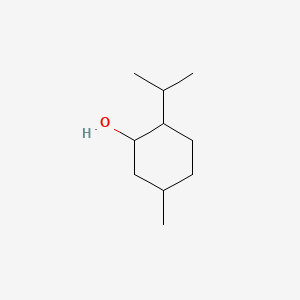
- Formula
- C10H20O
- Weight
- 156.26 Da
- PubChem CID
- 1254
- Exact Mass
- 156.1514 Da
- LogP
- 3
- TPSA
- 20.2 Ų
- H-Bond Donors
- 1
- H-Bond Acceptors
- 1
- Rotatable Bonds
- 1
- Complexity
- 120
Identifiers (SMILES, InChI)
InChI=1S/C10H20O/c1-7(2)9-5-4-8(3)6-10(9)11/h7-11H,4-6H2,1-3H3
NOOLISFMXDJSKH-UHFFFAOYSA-NReferences (4)
- [1]The distinctive role of menthol in pain and analgesia: Mechanisms, practices, and advances
→ Menthol activates TRPM8 receptors to provide cooling sensations at low concentrations and attenuates mechanical allodynia and thermal hyperalgesia following nerve injury, with recent findings showing involvement of central mGluR and κ-opioid signaling pathways in its analgesic effects.
- [2]Menthol can be safely applied to improve thermal perception during physical exercise: a meta-analysis of randomized controlled trials
→ Meta-analysis found menthol improves thermal sensation and comfort during exercise without compromising thermoregulation or causing adverse changes in body temperature, sweat production, or heart rate, confirming its safety for athletic use.
- [3]Current Knowledge on the Vascular Effects of Menthol
→ Menthol acts on vascular endothelium and smooth muscle through multiple mechanisms including nitric oxide and EDHF release, increasing perfusion in directly exposed areas while potentially decreasing it in distant vascular beds through sympathetic vasoconstriction.
- [4]Menthol: A simple monoterpene with remarkable biological properties
→ Comprehensive review showing menthol exhibits antibacterial, antifungal, antipruritic, anticancer, and analgesic effects both in vitro and in vivo, with worldwide demand exceeding 30,000 metric tonnes annually for pharmaceutical, cosmetic, food, and tobacco applications.
Continue researching Menthol
Keep scientific evidence separate from commercial availability. Review how claims are evaluated, explore question-led research paths, or inspect disclosed source records without changing the editorial conclusions on this page.