Linalool
Linalool research profile covering evidence quality, proposed mechanisms, safety considerations, regulatory status, and linked primary sources.
Evidence-led profile
Research snapshot
- Evidence stage
- Emerging research
- References
- 5 linked sources
- Research coverage
- 1 area
- Editorial review
- Mar 8, 2026
Published by the PepGuide Editorial Team using our research methodology.
Overview
Linalool is an acyclic monoterpene alcohol with a floral, slightly spicy aroma that occurs naturally in over 200 plant species, including lavender (Lavandula angustifolia), basil, coriander, rosewood, and cinnamon. It exists as two enantiomers: (R)-(-)-linalool (licareol, predominant in lavender) and (S)-(+)-linalool (coriandrol, predominant in coriander and sweet basil), with the R-form demonstrating more potent anxiolytic activity. As the primary bioactive constituent of lavender essential oil (comprising 20–45% of the oil), linalool is largely responsible for lavender's clinically validated calming effects. It is one of the most extensively studied terpenes in neuropharmacology, with mechanisms of action spanning GABAergic modulation, glutamatergic inhibition, and voltage-gated ion channel effects.
The anxiolytic mechanism of linalool has been elucidated through elegant research. Inhalation studies in rodents demonstrate that linalool vapor activates olfactory neurons that project to the limbic system, producing anxiolytic effects that are abolished by anosmia (loss of smell) — confirming that the calming effect is primarily olfactory-mediated rather than dependent on systemic absorption. However, linalool also has direct pharmacological activity when absorbed systemically: it potentiates GABA-A receptor function (through a binding site distinct from benzodiazepines and barbiturates), inhibits voltage-gated calcium channels in cortical neurons (reducing glutamate release), blocks NMDA receptor currents, and modulates serotonin 5-HT1A receptors. These combined mechanisms produce anxiolysis without the sedation, cognitive impairment, or dependence risk of conventional anxiolytics. Clinical studies of Silexan (the standardized lavender oil preparation containing ~35% linalool) demonstrate anxiolytic efficacy comparable to lorazepam and paroxetine in generalized anxiety disorder.
Beyond neuropsychiatric applications, linalool exhibits significant analgesic and anti-inflammatory effects. It reduces inflammatory pain through inhibition of the NF-kB pathway, suppression of pro-inflammatory cytokines, and opioid-receptor mediated mechanisms (naloxone partially reverses linalool analgesia in animal models). Topical linalool application reduces edema and hyperalgesia in inflammatory models. Its local anesthetic properties — including reversible blockade of voltage-gated sodium channels — have prompted investigation as a potential adjunct in pain management. Linalool synergizes with other anxiolytic terpenes including limonene and with botanical compounds such as lemon-balm, passionflower, and l-theanine in calming formulations. Its favorable safety profile and GRAS status make it a versatile component of both aromatherapy and oral botanical preparations.
Mechanism of Action
Linalool is a naturally occurring monoterpene alcohol found in lavender, basil, coriander, and over 200 other plant species. Its primary neurological mechanism involves positive allosteric modulation of GABA-A receptors, where it enhances the binding of GABA and increases chloride ion conductance through the receptor channel. This potentiation of inhibitory neurotransmission produces dose-dependent anxiolytic, sedative, and anticonvulsant effects. Notably, linalool's anxiolytic action has been demonstrated to occur through olfactory input as well, activating GABAergic neurons in the prefrontal cortex via olfactory-limbic circuits.
Linalool simultaneously reduces excitatory neurotransmission by inhibiting glutamate release from presynaptic terminals and attenuating NMDA receptor-mediated currents. This dual mechanism of enhancing inhibition while reducing excitation provides robust neuroprotective effects against excitotoxic damage. Additionally, linalool blocks voltage-gated sodium channels in a use-dependent manner similar to local anesthetics, and inhibits voltage-gated calcium channels, which collectively reduce nociceptive signal transmission and contribute to its analgesic properties.
The anti-inflammatory activity of linalool is mediated through suppression of NF-kappaB nuclear translocation and inhibition of p38 MAPK and ERK1/2 phosphorylation in activated macrophages and neutrophils. This reduces transcription and release of pro-inflammatory cytokines (TNF-alpha, IL-1beta, IL-6), prostaglandins (via COX-2 inhibition), and nitric oxide (via iNOS suppression). Linalool also demonstrates antimicrobial activity by disrupting bacterial cell membrane integrity through its interaction with membrane lipids.
Research
Reported Effects
Rapid Onset:: Effects are typically noticed quickly, with users reporting benefits within 20 minutes of inhalation or shortly after oral consumption. Dose-Dependent Response:: Effectiveness varies significantly with dosage; lower doses provide calming without excessive sedation, while higher doses can be overwhelming. Individual Variability:: Some users find the effects too potent or sedating, requiring adjustment of dose or timing to avoid daytime drowsiness. Synergistic Potential:: Multiple linalool-containing supplements (lavender, coriander, basil) may work together, though users are cautious about excessive combined dosing
- Effects are typically noticed quickly, with users reporting benefits within 20 minutes of inhalation or shortly after oral consumption
- Effectiveness varies significantly with dosage; lower doses provide calming without excessive sedation, while higher doses can be overwhelming
- Some users find the effects too potent or sedating, requiring adjustment of dose or timing to avoid daytime drowsiness
- Multiple linalool-containing supplements (lavender, coriander, basil) may work together, though users are cautious about excessive combined dosing
Safety and Limitations
Safety Profile: Linalool
Common Side Effects
- Generally Recognized as Safe (GRAS) by the FDA as a food flavoring agent; widely present in lavender, basil, and other botanicals
- Skin sensitization: oxidized linalool (linalool hydroperoxides) is a well-documented contact allergen; estimated to affect 2–7% of dermatitis patients
- Mild sedation and drowsiness with aromatherapy or oral exposure at higher doses
- Skin irritation, redness, or itching from topical application of undiluted or poorly stored products
- Mild gastrointestinal discomfort (nausea, bloating) at high oral doses
Serious Adverse Effects
- Allergic contact dermatitis: oxidized linalool is classified as a significant fragrance allergen by the EU (Cosmetics Regulation EC 1223/2009); patch test positivity rates are increasing
- Respiratory sensitization: inhalation of aerosolized linalool in poorly ventilated spaces may trigger bronchospasm in asthmatics or fragrance-sensitive individuals
- Neurotoxicity at extreme doses: animal studies show CNS depression, ataxia, and respiratory depression at doses far exceeding normal human exposure (>500 mg/kg in rodents)
- Aspiration hazard if liquid essential oil containing linalool is accidentally inhaled into lungs
Contraindications
- Known allergy to linalool, lavender oil, or fragrance compounds
- Active allergic contact dermatitis involving fragrance allergens
- Severe asthma or fragrance-triggered respiratory conditions
- Open wounds or damaged skin (avoid topical application of undiluted linalool-containing products)
Drug Interactions
- CNS depressants (benzodiazepines, opioids, barbiturates, alcohol): linalool has demonstrated GABAergic and glutamate-inhibiting activity; additive sedation possible
- Anticonvulsants (phenobarbital, carbamazepine): potential additive CNS depression; monitor for excessive sedation
- CYP enzyme modulation: linalool has shown mild CYP3A4 and CYP2B6 modulation in vitro; clinical significance at normal exposure levels is likely minimal
- Anticoagulants: some evidence of mild antiplatelet activity; monitor if using concentrated oral supplements alongside warfarin or similar agents
- Topical drug absorption: linalool acts as a skin penetration enhancer; may increase transdermal absorption of co-applied medications
Population-Specific Considerations
- Pregnancy: dietary exposure through food and spices is considered safe; avoid ingestion of concentrated essential oils; aromatherapy use of lavender (major linalool source) is generally accepted in pregnancy with proper ventilation
- Lactation: present in many common foods and spices; dietary levels are considered safe; avoid concentrated supplementation
- Children: safe in foods; avoid topical application of undiluted essential oils on children; keep essential oil products out of reach due to ingestion and aspiration risk
- Elderly: may be beneficial for anxiety and sleep via aromatherapy; increased sensitivity to sedative effects; use well-ventilated spaces
- Fragrance industry workers: occupational exposure to oxidized linalool is the primary sensitization risk; proper storage (nitrogen blanketing, antioxidants) and PPE reduce risk
Common Side Effects
- Excessive Sedation:: Most commonly reported issue, with users describing overwhelming drowsiness if dose is too high
- Headaches:: Some users report headaches as a side effect, particularly with higher doses
- Estrogenic Effects:: Lavender noted to have potential estrogenic activity, with caution advised for testosterone-dominant individuals
- Operating Impairment:: Users warn against driving or operating machinery until effects are known due to significant sedating properties
Reconstitution Calculator
Pharmacokinetic Profile
Molecular Structure
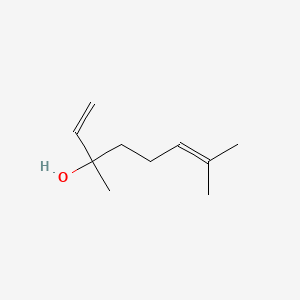
- Formula
- C10H18O
- Weight
- 154.25 Da
- PubChem CID
- 6549
- Exact Mass
- 154.1358 Da
- LogP
- 2.7
- TPSA
- 20.2 Ų
- H-Bond Donors
- 1
- H-Bond Acceptors
- 1
- Rotatable Bonds
- 4
- Complexity
- 154
Identifiers (SMILES, InChI)
InChI=1S/C10H18O/c1-5-10(4,11)8-6-7-9(2)3/h5,7,11H,1,6,8H2,2-4H3
CDOSHBSSFJOMGT-UHFFFAOYSA-NReferences (5)
- [3]Olfactory Stimulation with Volatile Aroma Compounds of Basil Essential Oil and Linalool Ameliorates White Fat Accumulation and Dyslipidemia
→ Study showing that inhalation of basil essential oil (rich in linalool) reduced white fat accumulation and improved lipid profiles in chronically stressed rats.
- [1]Recent updates on bioactive properties of linalool
→ Comprehensive review showing linalool exhibits anticancer, antimicrobial, neuroprotective, anxiolytic, antidepressant, anti-stress, and organ protective activities through multiple mechanisms including oxidative stress modulation and anti-inflammatory pathways.
- [2]Linalool: Therapeutic Indication And Their Multifaceted Biomedical Applications
→ Review demonstrating linalool's therapeutic attributes including anti-nociceptive effects, anxiolytic properties, and behavioral modulation in dementia patients, with applications in various formulations.
- [4]The Effect of Ocimum basilicum L. and Its Main Ingredients on Respiratory Disorders
→ Review of basil and linalool showing therapeutic effects on respiratory disorders including COPD, asthma, bronchitis, and lung cancer through anti-inflammatory and immunomodulatory mechanisms.
- [5]Linalool in chronic diseases: A comprehensive review of its pharmacological potential and delivery aspects
→ Comprehensive review of linalool's therapeutic potential across chronic diseases, examining its pharmacological mechanisms and optimal delivery methods for clinical application.
Continue researching Linalool
Keep scientific evidence separate from commercial availability. Review how claims are evaluated, explore question-led research paths, or inspect disclosed source records without changing the editorial conclusions on this page.