Oxiracetam
Oxiracetam research profile covering evidence quality, proposed mechanisms, safety considerations, regulatory status, and linked primary sources.
Evidence-led profile
Research snapshot
- Evidence stage
- Emerging research
- References
- 7 linked sources
- Research coverage
- 1 area
- Editorial review
- Mar 8, 2026
Published by the PepGuide Editorial Team using our research methodology.
Overview
Oxiracetam (4-hydroxy-2-oxo-1-pyrrolidineacetamide) is a water-soluble racetam nootropic and a hydroxylated derivative of piracetam, developed in the 1970s by ICF (Istituto De Angeli) in Italy. Among the classical racetams — which include piracetam, aniracetam, and pramiracetam — oxiracetam is distinguished by its mild psychostimulant properties and particular efficacy in tasks requiring logical reasoning and spatial memory. It is approved as a prescription cognitive enhancer in several European countries and is widely used internationally as a nootropic research compound. Oxiracetam is 3–5 times more potent than piracetam on a per-milligram basis and exhibits a cleaner stimulatory profile than aniracetam, which tends toward anxiolytic and mood-modulating effects.
The cognitive-enhancing effects of oxiracetam are mediated through positive allosteric modulation of AMPA-type glutamate receptors, increasing the excitatory postsynaptic current duration and thereby facilitating long-term potentiation (LTP) — the molecular correlate of memory formation. Oxiracetam also enhances cholinergic neurotransmission by increasing hippocampal acetylcholine release, upregulating high-affinity choline uptake, and stimulating protein kinase C (PKC) activity in neural membranes. PKC phosphorylation cascades are critical for synaptic plasticity, receptor trafficking, and the transition from short-term to long-term memory. In animal models, oxiracetam reverses scopolamine-induced amnesia, improves performance in radial arm maze and passive avoidance tasks, and demonstrates neuroprotective effects against hypoxic and excitotoxic insults. The mild psychostimulant activity — manifesting as increased alertness and mental energy without amphetamine-like peripheral sympathomimetic effects — is attributed to enhanced glutamatergic tone and downstream dopamine modulation.
Oxiracetam is typically dosed at 800–2400 mg daily, divided into 2–3 doses, with higher doses reserved for acute cognitive demand. It is commonly stacked with choline donors such as alpha-GPC or CDP-choline to support increased acetylcholine turnover and prevent racetam-associated headaches. Complementary combinations include aniracetam for added anxiolytic and creative effects, lion's mane for NGF-mediated neuroplasticity, and caffeine plus L-theanine for alertness without jitteriness. Side effects are uncommon and dose-dependent, including headache (typically from inadequate choline), insomnia with late-day dosing, and occasional gastrointestinal discomfort. Oxiracetam has an excellent safety profile with no known serious adverse effects at recommended doses.
Mechanism of Action
Mechanism of Action
Oxiracetam is a water-soluble pyrrolidone derivative classified as an ampakine nootropic. Its primary mechanism centers on enhancing excitatory neurotransmission through multiple complementary pathways.
AMPA Receptor Modulation
Oxiracetam acts as a positive allosteric modulator of AMPA receptors, the primary mediators of fast excitatory synaptic transmission. By slowing receptor desensitization, it prolongs excitatory postsynaptic potentials and enhances signal propagation through hippocampal and cortical networks. This ampakine activity is considered the primary driver of its cognitive-enhancing effects.
Cholinergic System
A key distinguishing feature of oxiracetam among racetams is its robust effect on acetylcholine release. It increases acetylcholine efflux in the hippocampus and cortex, supporting the cholinergic circuits essential for attention and memory encoding. This effect appears to be mediated through modulation of presynaptic calcium dynamics and vesicle release probability.
PKC and Synaptic Plasticity
Oxiracetam activates protein kinase C (PKC), particularly the membrane-bound isoforms involved in long-term potentiation. PKC phosphorylates substrates including MARCKS and GAP-43, which regulate cytoskeletal reorganization at synapses. This molecular cascade supports the structural changes underlying memory consolidation.
Glutamatergic Transmission
Beyond AMPA modulation, oxiracetam increases hippocampal D-aspartate release, which serves as an NMDA receptor co-agonist. The combined enhancement of both AMPA and NMDA receptor-mediated signaling creates a synergistic boost to glutamatergic plasticity mechanisms.
Research
Reported Effects
Consistent Effects:: Reliable cognitive enhancement for most users.. More Stimulating:: Provides more noticeable 'boost' than piracetam.. Choline Synergy:: Works best with adequate choline intake.
- Reliable cognitive enhancement for most users.
- Provides more noticeable 'boost' than piracetam.
- Works best with adequate choline intake.
Safety and Limitations
Common side effects include headaches (often mitigated by choline supplementation), nervousness, insomnia, and mild gastrointestinal upset. It is contraindicated in individuals with severe renal impairment, as it is excreted primarily through the kidneys. Oxiracetam should be avoided during pregnancy and breastfeeding, and caution is advised when combining it with other stimulants.
Common Side Effects
- Headaches:: Common if choline intake inadequate.
- Insomnia:: May disrupt sleep if taken late.
- Overstimulation:: Some find it too stimulating.
- Generally Safe:: Well-tolerated at normal doses.
Research protocol summary
- Typical Dose
- 800-2400mg daily, divided into 2-3 doses.
These values summarize cataloged research protocols. They are not personal dosing instructions or medical guidance.
Reconstitution Calculator
Pharmacokinetic Profile
Molecular Structure
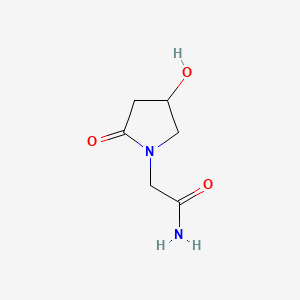
- Formula
- C6H10N2O3
- Weight
- 158.16 Da
- PubChem CID
- 4626
- Exact Mass
- 158.0691 Da
- LogP
- -2.2
- TPSA
- 83.6 Ų
- H-Bond Donors
- 2
- H-Bond Acceptors
- 3
- Rotatable Bonds
- 2
- Complexity
- 192
Identifiers (SMILES, InChI)
InChI=1S/C6H10N2O3/c7-5(10)3-8-2-4(9)1-6(8)11/h4,9H,1-3H2,(H2,7,10)
IHLAQQPQKRMGSS-UHFFFAOYSA-NReferences (7)
- [2]Safety, tolerability, and pharmacokinetics of oral (S)-oxiracetam in Chinese healthy volunteers
→ The (S)-oxiracetam variant was safe and well-tolerated in healthy Chinese participants, demonstrating favorable absorption and dose-proportional exposure.
- [3]Oxiracetam in dementia: a double-blind, placebo-controlled study
→ Over 12 weeks, oxiracetam improved quality of life and specific cognitive domains compared to placebo, though some participants experienced mild adverse events.
- [4]Oxiracetam in the treatment of primary degenerative and multi-infarct dementia
→ Among 289 participants with various dementia types, oxiracetam treatment produced measurable improvements on dementia rating scales with minimal adverse effects.
- [5]Oxiracetam in the treatment of multi-infarct dementia and primary degenerative dementia
→ Testing on 73 patients demonstrated significant word fluency improvements in both patient groups, though daily functioning declined in primary degenerative dementia cases.
- [6]Effects of Oxiracetam and Physical Activity in Preventing Post-Stroke Cognitive Decline
→ Oxiracetam did not meaningfully prevent post-stroke cognitive decline, whereas regular exercise maintained cognitive performance and improved quality-of-life measures.
- [7]Bone Marrow Stromal Cells Combined with Oxiracetam Influences the Expression of B-cell Lymphoma 2 in Rats with Ischemic Stroke
→ Combining bone marrow stromal cells with oxiracetam enhanced neurological recovery in stroke-affected rats by increasing protective protein expression and reducing cell death.
- [1]Co-administration of Nanowired Oxiracetam and Neprilysin with Monoclonal Antibodies to Amyloid Beta Peptide and p-Tau Thwarted Exacerbation of Brain Pathology in Concussive Head Injury at Hot Environment
→ Heat exposure worsens concussion-related brain injury. Combining oxiracetam with specific antibodies and enzymes significantly enhanced neuroprotection under elevated temperatures.
Continue researching Oxiracetam
Keep scientific evidence separate from commercial availability. Review how claims are evaluated, explore question-led research paths, or inspect disclosed source records without changing the editorial conclusions on this page.