Beta-Sitosterol
Beta-Sitosterol research profile covering evidence quality, proposed mechanisms, safety considerations, regulatory status, and linked primary sources.
Evidence-led profile
Research snapshot
- Evidence stage
- Emerging research
- References
- 4 linked sources
- Research coverage
- 1 area
- Editorial review
- Mar 8, 2026
Published by the PepGuide Editorial Team using our research methodology.
Overview
Beta-sitosterol is a phytosterol — a plant-derived sterol that is structurally analogous to cholesterol but features an additional ethyl group at the C-24 position of its side chain. It is one of the most prevalent sterols in the human diet, found in foods such as avocados, soybeans, wheat germ, peanuts, and various vegetable oils. Like other phytosterols, beta-sitosterol is poorly absorbed in the intestine compared to cholesterol, with absorption rates typically below 5%.
The primary clinical application of beta-sitosterol is in the management of hypercholesterolemia. Phytosterols compete with cholesterol for incorporation into mixed micelles in the intestinal lumen, thereby reducing cholesterol absorption and lowering circulating LDL cholesterol levels. Daily intake of 2–3 grams of plant sterols, including beta-sitosterol, has been shown to reduce LDL cholesterol by approximately 6–15%, and phytosterol-enriched foods are recommended by several cardiovascular guidelines as a dietary adjunct to statin therapy.
Beta-sitosterol has also been investigated for its effects on benign prostatic hyperplasia (BPH). Several randomized controlled trials have demonstrated improvements in urinary flow rates and symptom scores in men with BPH who supplemented with beta-sitosterol. The proposed mechanisms include inhibition of 5-alpha-reductase activity, anti-inflammatory effects, and modulation of prostaglandin metabolism in prostatic tissue. Beta-sitosterol supplements are available in standalone form and are also found in combination products with saw palmetto for prostate support.
Mechanism of Action
Cholesterol Absorption Inhibition
Beta-sitosterol is the most abundant dietary phytosterol (plant sterol), differing from cholesterol only by an ethyl group at C-24 on the side chain. It competes with cholesterol for incorporation into mixed micelles in the intestinal lumen, reducing cholesterol solubilization and absorption by enterocytes. At the enterocyte level, beta-sitosterol is preferentially effluxed back into the intestinal lumen by the ABCG5/ABCG8 heterodimer transporter (ATP-binding cassette transporters) on the apical membrane, while NPC1L1 imports both sterols non-selectively (PMID: 12672739).
ABCG5/ABCG8 & Sterol Selectivity
The body's selective retention of cholesterol over plant sterols depends on the ABCG5/ABCG8 transporter system. These transporters preferentially pump phytosterols (including beta-sitosterol) out of enterocytes and hepatocytes back into the intestinal lumen and bile, respectively. Beta-sitosterol absorption is typically <5% compared to ~50% for cholesterol. By occupying micellar space and competing at NPC1L1, phytosterols reduce dietary and biliary cholesterol absorption by 30-50% (PMID: 15051633).
LDL Receptor Upregulation
Reduced intestinal cholesterol delivery to the liver depletes hepatic cholesterol pools, activating SREBP-2 cleavage and nuclear translocation. SREBP-2 upregulates LDL receptor (LDLR) gene transcription, increasing hepatic LDL-C clearance from plasma. Meta-analyses demonstrate 6-10% LDL cholesterol reductions with 2-3 g/day phytosterol intake (PMID: 12600848).
Anti-Inflammatory & Prostatic Effects
Beta-sitosterol inhibits 5-alpha-reductase activity, reducing conversion of testosterone to dihydrotestosterone (DHT) in prostatic tissue. It also binds to prostaglandin E2 receptors and inhibits COX-2 and 5-lipoxygenase activity, reducing prostatic inflammation. Clinical trials demonstrate improved urinary flow and symptom scores in benign prostatic hyperplasia (BPH) (PMID: 10591061).
Immune Modulation
Beta-sitosterol and its glycoside enhance T-cell proliferation and NK cell cytotoxicity while normalizing the Th1/Th2 cytokine balance, suggesting adaptogenic immunomodulatory properties.
Research
Reported Effects
BPH Symptom Relief:: Most effective for mild to moderate benign prostatic hyperplasia, with measurable improvements in urinary symptom scores and flow measures. Individual Variability:: Effectiveness varies significantly between individuals, with some experiencing substantial relief while others report no noticeable changes. Prostate Size:: Does not reduce actual prostate size despite improving symptoms and urinary flow parameters. Long-term Data:: Limited evidence on long-term effectiveness, safety, and ability to prevent BPH complications beyond 26 weeks
- Most effective for mild to moderate benign prostatic hyperplasia, with measurable improvements in urinary symptom scores and flow measures
- Effectiveness varies significantly between individuals, with some experiencing substantial relief while others report no noticeable changes
- Does not reduce actual prostate size despite improving symptoms and urinary flow parameters
- Limited evidence on long-term effectiveness, safety, and ability to prevent BPH complications beyond 26 weeks
Safety and Limitations
Common Side Effects
- Gastrointestinal effects are the most commonly reported adverse events, including nausea, indigestion, diarrhea, constipation, bloating, and flatulence. These typically affect 5-10% of users and are often transient.
- Erectile dysfunction has been reported anecdotally with plant sterol supplementation, though a causal mechanism has not been firmly established.
- Darkening of stool color, which is benign.
- Mild headache and dizziness in isolated reports.
Contraindications
- Sitosterolemia (phytosterolemia): This rare autosomal recessive condition (ABCG5/ABCG8 mutations) causes dramatically elevated plant sterol absorption and reduced biliary excretion, leading to tendon xanthomas, premature atherosclerosis, and hemolytic anemia. Beta-sitosterol supplementation is absolutely contraindicated and can be life-threatening in these patients.
- Known hypersensitivity to plant sterols or stanols.
- Fat malabsorption syndromes: Beta-sitosterol requires bile acid-mediated micellar solubilization for absorption; conditions affecting fat absorption may lead to gastrointestinal intolerance.
Drug Interactions
- Fat-soluble vitamins (A, D, E, K): Beta-sitosterol reduces absorption of fat-soluble vitamins by 10-20% through competitive micellar incorporation. Supplementation with fat-soluble vitamins may be necessary with chronic use, especially vitamin E and carotenoids.
- Ezetimibe: Both compounds inhibit intestinal cholesterol absorption via NPC1L1 transporter modulation. Concurrent use may produce additive cholesterol-lowering effects but also increase risk of fat-soluble vitamin depletion.
- Statins: Additive LDL cholesterol-lowering effects (additional 5-15% reduction). Generally considered beneficial but monitor for myopathy symptoms.
- Pravastatin specifically: Some evidence of enhanced bioavailability when co-administered with plant sterols.
- Oral contraceptives: Theoretical reduction in absorption of steroid hormones, though clinical significance has not been demonstrated.
- Cyclosporine: Plant sterols may reduce cyclosporine absorption; monitor trough levels.
Special Populations
- Pregnancy and lactation: Insufficient safety data for supplemental doses. Dietary intake from normal food sources is not a concern, but concentrated supplements should be avoided.
- Pediatric use: Not recommended for children unless under medical supervision for familial hypercholesterolemia. Long-term effects on fat-soluble vitamin status in growing children are a concern.
- Elderly: Increased vigilance for fat-soluble vitamin depletion, particularly vitamin D, which is already commonly deficient in older populations.
Monitoring
- Lipid panel (LDL, HDL, total cholesterol, triglycerides) at baseline and every 3-6 months to assess efficacy.
- Serum levels of fat-soluble vitamins (especially vitamin E, beta-carotene, and vitamin D) every 6-12 months with chronic use.
- Plasma plant sterol levels if sitosterolemia is suspected (campesterol and beta-sitosterol concentrations).
- Liver function tests if combining with statin therapy.
Common Side Effects
- Generally Well-Tolerated:: Withdrawal rates in clinical trials were similar to placebo (7.8% vs 8.0%), indicating good tolerability
- Minimal Adverse Effects:: Side effects are rare and typically mild when they occur
- Hormone-Related Concerns:: Theoretical concerns about DHT reduction effects, though clinical significance remains unclear
- Drug Interactions:: Potential interactions with medications metabolized similarly to cholesterol due to structural similarities
Research protocol summary
- Typical Dose
- Clinical trials typically used preparations delivering specific amounts of beta-sitosterol, often combined with other phytosterols from saw palmetto extract
These values summarize cataloged research protocols. They are not personal dosing instructions or medical guidance.
Reconstitution Calculator
Pharmacokinetic Profile
Molecular Structure
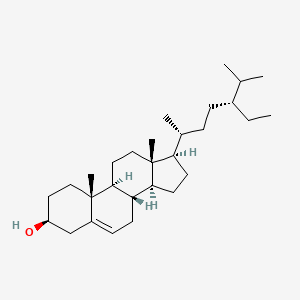
- Formula
- C29H50O
- Weight
- 414.7 Da
- PubChem CID
- 222284
- Exact Mass
- 414.3862 Da
- LogP
- 9.3
- TPSA
- 20.2 Ų
- H-Bond Donors
- 1
- H-Bond Acceptors
- 1
- Rotatable Bonds
- 6
- Complexity
- 634
Identifiers (SMILES, InChI)
InChI=1S/C29H50O/c1-7-21(19(2)3)9-8-20(4)25-12-13-26-24-11-10-22-18-23(30)14-16-28(22,5)27(24)15-17-29(25,26)6/h10,19-21,23-27,30H,7-9,11-18H2,1-6H3/t20-,21-,23+,24+,25-,26+,27+,28+,29-/m1/s1
KZJWDPNRJALLNS-VJSFXXLFSA-NReferences (4)
- [1]Herbal medicines containing beta-sitosterols may help to relieve the urinary symptoms and urinary flow problems caused by an enlarged prostate gland (benign prostatic hyperplasia)
→ Cochrane systematic review found that beta-sitosterol treatments were well tolerated and improved urinary symptoms and flow measures in men with mild to moderate BPH, though long-term effects require further research.
- [2]Beta-sitosterols for benign prostatic hyperplasia
→ Meta-analysis of 519 men across 4 randomized controlled trials showed beta-sitosterols improved urinary symptom scores (IPSS), peak urine flow, and residual volume without reducing prostate size, with withdrawal rates similar to placebo.
- [4]The use of beta-sitosterol for the treatment of prostate cancer and benign prostatic hyperplasia
→ Review examining beta-sitosterol's role in herbal supplements for prostate health, showing anti-tumorigenic effects in prostate cancer cells and 5α-reductase inhibition similar to finasteride and dutasteride for BPH treatment.
- [3]Exploring the Inhibitory Potential of Phytosterols β-Sitosterol, Stigmasterol, and Campesterol on 5-Alpha Reductase Activity in the Human Prostate: An In Vitro and In Silico Approach
→ In vitro and computational studies demonstrated that beta-sitosterol inhibits 5α-reductase type 2 enzyme activity, the key mechanism in converting testosterone to DHT, which is crucial in benign prostatic hyperplasia development.
Continue researching Beta-Sitosterol
Keep scientific evidence separate from commercial availability. Review how claims are evaluated, explore question-led research paths, or inspect disclosed source records without changing the editorial conclusions on this page.