Beta-Alanine
Beta-alanine is a non-essential, non-proteinogenic amino acid that serves as a precursor to carnosine, a dipeptide concentrated in skeletal muscle and brain tissue. It is widely used as a sports supplement to buffer intracellular pH and delay muscular fatigue during high-intensity exercise.
Evidence-led profile
Research snapshot
- Evidence stage
- Emerging research
- References
- 9 linked sources
- Research coverage
- 1 area
- Editorial review
- Mar 8, 2026
Published by the PepGuide Editorial Team using our research methodology.
Overview
Beta-alanine (3-aminopropanoic acid) is a naturally occurring beta-amino acid in which the amino group is located at the beta position rather than the alpha position typical of most amino acids. Unlike alpha-alanine, beta-alanine is not incorporated into proteins. Instead, its primary physiological role is as a rate-limiting precursor to carnosine (beta-alanyl-L-histidine), a dipeptide found in high concentrations in skeletal muscle, cardiac tissue, and certain regions of the brain.
Carnosine functions as an intracellular buffer, helping to maintain pH homeostasis during anaerobic glycolysis when hydrogen ions accumulate. Supplementation with beta-alanine has been shown to significantly increase muscle carnosine concentrations, which may improve exercise capacity during bouts of high-intensity activity lasting 1–4 minutes. Research supports modest improvements in repeated sprint performance and total work done during resistance training protocols.
Beta-alanine is commonly consumed in doses of 3–6 grams per day, often divided into smaller portions to reduce paresthesia, a harmless tingling sensation of the skin that is its most recognized side effect. It is found naturally in foods such as poultry, meat, and fish, and is also produced endogenously in the liver. Beta-alanine is frequently combined with other ergogenic aids such as creatine and sodium bicarbonate in sports nutrition formulations.
Research
Reported Effects
Loading Period Required:: Effectiveness requires consistent daily dosing for 3-5 weeks to saturate muscle carnosine stores; immediate pre-workout effects are minimal beyond the tingling sensation. Activity-Specific Benefits:: Most effective for high-intensity, anaerobic activities lasting 60 seconds to 4 minutes; less beneficial for pure strength training or long-duration endurance activities. Individual Response Variation:: While research strongly supports efficacy, some users report minimal subjective performance improvements despite the physiological mechanism being well-established. Comparable to Creatine:: Frequently mentioned alongside creatine as one of the most evidence-based, reliable sports supplements available, with consistent research backing
Safety and Limitations
Common Side Effects
- Paresthesia (tingling, prickling, or "pins and needles" sensation) is the most characteristic and frequently reported side effect, affecting the face, neck, hands, and trunk. This occurs due to beta-alanine binding to MrgprD receptors on sensory neurons and is dose-dependent, typically manifesting at single doses above 800 mg. The sensation is harmless and resolves within 60-90 minutes.
- Flushing and skin warmth accompanying the paresthesia.
- Gastrointestinal discomfort including nausea, stomach cramping, and diarrhea, particularly when taken on an empty stomach.
- Mild headache, though this is infrequently reported in controlled trials.
Contraindications
- Known hypersensitivity to beta-alanine or formulation excipients.
- Taurine deficiency or conditions requiring taurine supplementation: Beta-alanine competes with taurine for renal reabsorption via the same transporter (TauT/SLC6A6). Chronic high-dose beta-alanine supplementation (>6.4 g/day) has been shown to reduce plasma and tissue taurine levels by up to 50% in animal models, which may be clinically significant for individuals dependent on adequate taurine status (e.g., those with heart failure or epilepsy).
- Severe cardiac conduction disorders: Taurine depletion from chronic high-dose use could theoretically affect cardiac electrophysiology, though this has not been confirmed clinically.
Drug Interactions
- Taurine supplements: Competitive absorption and renal transport; space administration by at least 2 hours for optimal uptake of both compounds.
- Cardiac glycosides (digoxin): Theoretical concern that taurine depletion may alter cardiac sensitivity to digoxin; monitor closely.
- Anti-epileptic medications: Taurine acts as an inhibitory neuromodulator; beta-alanine-induced taurine depletion could theoretically lower seizure threshold, though evidence is limited to preclinical data.
- Pre-workout supplements containing other stimulants: Additive effects on heart rate and blood pressure when combined with caffeine, synephrine, or other sympathomimetics.
- No significant cytochrome P450 interactions have been identified.
Special Populations
- Pregnancy and lactation: Insufficient human safety data for supplemental doses. The potential for taurine depletion is particularly concerning during pregnancy, as taurine is critical for fetal neurodevelopment. Avoidance is recommended.
- Pediatric use: Not studied in children; not recommended under 18 years.
- Elderly: The paresthesia response does not appear to differ by age. Sustained-release formulations are preferred to minimize paresthesia severity.
- Athletes: Well-studied for exercise performance at 3.2-6.4 g/day over 4-12 weeks with an acceptable safety profile when taurine status is maintained.
Monitoring
- Plasma taurine levels with chronic supplementation exceeding 4 weeks, particularly at doses above 3.2 g/day.
- Serum carnosine levels (via muscle biopsy or proton MRS) to confirm efficacy if desired.
- Cardiac monitoring in individuals with pre-existing cardiac conditions.
- Subjective paresthesia severity using a visual analog scale to guide dosing adjustments.
Common Side Effects
- Paresthesia (Tingling):: The most universally reported effect - tingling, itching sensation in face, neck, and extremities occurring 15-30 minutes after ingestion; intensity dose-dependent and typically subsides within an hour
- Minimal Serious Side Effects:: Users consistently report beta-alanine as very safe with virtually no concerning adverse effects beyond the tingling sensation
- Potential Taurine Depletion:: Some users mention concerns about beta-alanine competing with taurine for absorption, though clinical significance is debated
- Gastrointestinal Tolerance:: Generally well-tolerated; some users report mild stomach discomfort with higher single doses, which can be mitigated by splitting doses throughout the day
Mechanism of Action
Carnosine Synthesis — Rate-Limiting Precursor
Beta-alanine is a non-proteinogenic amino acid that serves as the rate-limiting substrate for carnosine (beta-alanyl-L-histidine) synthesis. The dipeptide is formed in skeletal muscle by carnosine synthase (ATPGD1, ATP-grasp domain-containing protein 1), which ligates beta-alanine to L-histidine in an ATP-dependent reaction. Muscle carnosine concentrations are directly determined by beta-alanine availability, as histidine is abundant from dietary protein (PMID: 20479615).
Intracellular pH Buffering
Carnosine's primary physiological role is intracellular pH buffering during high-intensity exercise. The imidazole ring of histidine in carnosine has a pKa of 6.83, ideally positioned to buffer H⁺ ions in the intramuscular pH range (7.0-6.5) during intense glycolytic activity. Carnosine contributes approximately 7-15% of total intramuscular buffering capacity, and beta-alanine supplementation (3.2-6.4 g/day for 4-10 weeks) increases muscle carnosine by 40-80%, proportionally enhancing this buffering reserve (PMID: 17690198).
Calcium Sensitivity & Muscle Contraction
Carnosine enhances calcium sensitivity of the contractile apparatus by increasing the calcium-induced calcium release from the sarcoplasmic reticulum and sensitizing myofilaments to Ca²⁺. It also modulates the coupling efficiency between the dihydropyridine receptor (DHPR) and ryanodine receptor (RyR1) at the T-tubule/SR junction, improving excitation-contraction coupling (PMID: 23439427).
Antioxidant & Anti-Glycation Activity
Carnosine scavenges reactive oxygen and nitrogen species, chelates transition metals (Cu²⁺, Zn²⁺), and quenches reactive carbonyl species (methylglyoxal, HNE) that form advanced glycation and lipoxidation end-products. These anti-glycation properties are particularly relevant in diabetic and aging tissues (PMID: 15772055).
Paresthesia Mechanism
The characteristic tingling (paresthesia) from beta-alanine ingestion results from activation of Mrgprd receptors on sensory neurons, a transient and harmless effect that can be mitigated with sustained-release formulations.
Research protocol summary
- Typical Dose
- 2-6 grams per day is most commonly used, with many splitting doses (e.g., 2.5g twice daily) to minimize tingling intensity
These values summarize cataloged research protocols. They are not personal dosing instructions or medical guidance.
Pharmacokinetic Profile
- Half-life
- 0.4166666666666667 h
- Tmax
- 0.6666666666666666 h
Molecular Structure
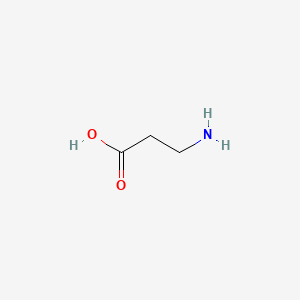
- Formula
- C3H7NO2
- Weight
- 89.09 Da
- PubChem CID
- 239
- Exact Mass
- 89.0477 Da
- LogP
- -3
- TPSA
- 63.3 Ų
- H-Bond Donors
- 2
- H-Bond Acceptors
- 3
- Rotatable Bonds
- 2
- Complexity
- 52
Identifiers (SMILES, InChI)
InChI=1S/C3H7NO2/c4-2-1-3(5)6/h1-2,4H2,(H,5,6)
UCMIRNVEIXFBKS-UHFFFAOYSA-NReferences (9)
- [1]β-alanine supplementation to improve exercise capacity and performance: a systematic review and meta-analysis
→ This comprehensive meta-analysis found that β-alanine supplementation significantly improves exercise capacity and performance, particularly for high-intensity activities. The effect was most pronounced in exercises lasting 60-240 seconds that rely heavily on anaerobic metabolism.
- [9]Dietary Supplements for Athletic Performance in Women: Beta-Alanine, Caffeine, and Nitrate
→ Research on beta-alanine in female athletes is severely limited, with only nine studies identified in healthy women under 40, highlighting the need for more sex-specific research given physiological differences and hormonal fluctuations.
- [2]International society of sports nutrition position stand: Beta-Alanine
→ The ISSN position stand concludes that beta-alanine supplementation (4-6g daily for at least 2-4 weeks) increases muscle carnosine content and improves performance in high-intensity exercise, with particular benefits for trained athletes and military personnel.
- [3]Role of beta-alanine supplementation on muscle carnosine and exercise performance
→ Beta-alanine supplementation increases muscle carnosine content by up to 80%, improving muscle buffer capacity. Studies demonstrated performance improvements in high-intensity exercise lasting more than 60 seconds and during multiple bouts of intense activity.
- [4]Effects of β-alanine supplementation on exercise performance: a meta-analysis
→ Meta-analysis of 15 studies showed β-alanine supplementation significantly improved exercise outcomes compared to placebo, with median effect sizes of 0.374 for beta-alanine versus 0.108 for placebo, demonstrating clear ergogenic benefits.
- [5]The Effect of β-Alanine Supplementation on Performance, Cognitive Function and Resiliency in Soldiers
→ Beyond athletic performance, β-alanine may enhance resilience to PTSD, mild traumatic brain injury, and heat stress by elevating carnosine in the brain, though more human research is needed to confirm these neuroprotective effects.
- [6]Effect of Beta-Alanine Supplementation on Maximal Intensity Exercise in Trained Young Male Individuals: A Systematic Review and Meta-Analysis
→ Systematic review specifically in trained young males confirmed beta-alanine's effectiveness for maximal and supramaximal intensity exercise, supporting its use as an ergogenic aid for athletes performing short-duration, high-intensity activities.
- [7]Effects of β-Alanine Supplementation on Subjects Performing High-Intensity Functional Training
→ Four weeks of β-alanine supplementation significantly reduced neuromuscular fatigue and improved performance in subjects performing high-intensity functional training (HIFT), with measurable improvements in both central and peripheral fatigue markers.
- [8]Effect of creatine and beta-alanine supplementation on performance and endocrine responses in strength/power athletes
→ Combining creatine with beta-alanine produced greater improvements in lean body mass and body composition compared to creatine alone or placebo during a 10-week resistance training program in collegiate football players.
Continue researching Beta-Alanine
Keep scientific evidence separate from commercial availability. Review how claims are evaluated, explore question-led research paths, or inspect disclosed source records without changing the editorial conclusions on this page.