Oleuropein
Oleuropein research profile covering evidence quality, proposed mechanisms, safety considerations, regulatory status, and linked primary sources.
Evidence-led profile
Research snapshot
- Evidence stage
- Emerging research
- References
- 4 linked sources
- Research coverage
- 1 area
- Editorial review
- Mar 8, 2026
Published by the PepGuide Editorial Team using our research methodology.
Overview
Oleuropein is a bitter secoiridoid glycoside and the most abundant phenolic compound in olive tree (Olea europaea) tissues, found at the highest concentrations in unripe olives (up to 14% of dry weight) and olive leaves (60–90 mg/g dry weight), with lower levels in extra-virgin olive oil (EVOO) where it partially converts to other phenolics during processing. Structurally, oleuropein consists of a hydroxytyrosol moiety esterified to elenolic acid glucoside, and its biological activity derives from both the intact molecule and its hydrolysis products — particularly hydroxytyrosol, one of the most potent natural antioxidants known (ORAC value approximately 10 times that of green tea and 2 times that of quercetin). Oleuropein is considered a primary mediator of the health benefits associated with the Mediterranean diet and olive leaf extract, which has been used therapeutically since ancient Egyptian and Greco-Roman medicine.
The pharmacological activities of oleuropein are extensive and multisystemic. Its antioxidant effects include direct free radical scavenging (DPPH, superoxide, hydrogen peroxide, hypochlorous acid), metal chelation (Fe2+, Cu2+), inhibition of LDL oxidation (a critical step in atherogenesis), and upregulation of endogenous antioxidant enzymes through Nrf2/ARE pathway activation. Cardiovascular protection extends beyond antioxidant activity to include vasodilation through increased nitric oxide (NO) bioavailability, anti-atherogenic effects through inhibition of monocyte adhesion and foam cell formation, anti-thrombotic activity, and direct negative chronotropic and antiarrhythmic effects on cardiac tissue. Clinical trials with olive leaf extract (standardized to oleuropein) have demonstrated significant reductions in blood pressure, with efficacy comparable to captopril (an ACE inhibitor) in a head-to-head randomized trial. Metabolic benefits include improvement of insulin sensitivity, reduction of hepatic lipogenesis, and protection of pancreatic beta cells — relevant to type 2 diabetes management.
Oleuropein also exhibits notable antimicrobial activity against a broad spectrum of bacteria (including H. pylori, Staphylococcus aureus, and E. coli), viruses (influenza, HIV-1 integrase inhibition), and fungi — mechanisms that may have originally evolved as the olive tree's chemical defense system. Anti-cancer research has demonstrated oleuropein's ability to inhibit proliferation, induce apoptosis, and suppress angiogenesis in multiple cancer cell lines through modulation of HER2, NF-kB, and mTOR signaling. Oleuropein is typically consumed through olive leaf extract supplements standardized to 15–25% oleuropein content (doses of 500–1,000 mg extract daily), EVOO consumption, or as isolated oleuropein supplements. Bioavailability is moderate, with significant first-pass conversion to hydroxytyrosol in the gut and liver. It pairs synergistically with oleic acid (as found naturally in olive oil), other polyphenols like resveratrol, and cardiovascular-support compounds such as CoQ10. Side effects are rare and mild.
Mechanism of Action
Oleuropein is a secoiridoid glycoside found abundantly in olive leaves and unripe olives that is hydrolyzed in vivo to its primary active metabolite hydroxytyrosol and elenolic acid. Oleuropein and hydroxytyrosol exert potent antioxidant activity through direct scavenging of superoxide, hydroxyl, and peroxyl radicals via their catechol (ortho-dihydroxyphenyl) moiety, which donates hydrogen atoms to free radicals and chelates transition metals (Fe2+, Cu2+) that catalyze Fenton reactions. Oleuropein activates the Nrf2/Keap1 pathway by electrophilic modification of Keap1 cysteine residues, promoting nuclear translocation of Nrf2 and transcription of antioxidant response element (ARE)-driven genes including HO-1, NQO1, glutathione synthetase, and glutamate-cysteine ligase.
Oleuropein inhibits NF-kB signaling through suppression of IKK phosphorylation and IkB-alpha degradation, reducing expression of pro-inflammatory cytokines (TNF-alpha, IL-1beta, IL-6), chemokines (MCP-1), adhesion molecules (ICAM-1, VCAM-1), and inflammatory enzymes (COX-2, iNOS, 5-LOX). It activates AMPK through an upstream LKB1-dependent mechanism, promoting autophagy via ULK1 phosphorylation and mTORC1 inhibition. This autophagic activation facilitates clearance of protein aggregates and damaged organelles, with particular relevance to amyloid-beta and tau in neurodegenerative contexts. Oleuropein also modulates the MAPK cascade, inhibiting ERK1/2 and p38 phosphorylation in inflammatory cells while promoting JNK-mediated apoptosis in cancer cells.
Therapeutically, oleuropein demonstrates cardioprotective effects through inhibition of LDL oxidation, improvement of endothelial function via eNOS upregulation, and antihypertensive activity mediated by ACE inhibition and L-type calcium channel antagonism. Its antimicrobial properties involve disruption of bacterial cell membranes and viral envelope glycoprotein interactions. Preclinical studies show anti-diabetic effects through alpha-glucosidase inhibition and pancreatic beta-cell protection from oxidative damage. Oleuropein's ability to induce autophagy and proteasome activity positions it as a promising compound for age-related diseases characterized by proteostatic decline.
Research
Reported Effects
Individual Variability:: Effectiveness appears highly individual, with some users experiencing significant benefits while others cannot tolerate it at all. Immune Support:: Commonly used by users seeking immune system enhancement, particularly during illness or preventive health routines. Research-Backed Benefits:: Clinical trials support specific benefits for joint health, vascular function, and metabolic markers in targeted populations. Underrated Compound:: Some users and emerging research suggest olive polyphenols may be underrated compared to more popular antioxidants like green tea or resveratrol
- Effectiveness appears highly individual, with some users experiencing significant benefits while others cannot tolerate it at all
- Commonly used by users seeking immune system enhancement, particularly during illness or preventive health routines
- Clinical trials support specific benefits for joint health, vascular function, and metabolic markers in targeted populations
- Some users and emerging research suggest olive polyphenols may be underrated compared to more popular antioxidants like green tea or resveratrol
Safety and Limitations
Side effects are typically mild and may include gastrointestinal discomfort and dizziness. Oleuropein may lower blood pressure and blood sugar, so individuals on antihypertensive or antidiabetic medications should monitor levels closely. It is not recommended during pregnancy or breastfeeding due to insufficient safety data.
Common Side Effects
- Severe Gastrointestinal Distress:: Some users experience violent nausea, vomiting to the point of bringing up bile, and explosive diarrhea
- Physical Reactions:: Reported symptoms include spasms, shaking, hot and cold sensations accompanying gastrointestinal upset
- Reproducible Reactions:: Users who experience severe side effects report identical symptoms upon re-exposure to olive leaf extract
- Generally Well-Tolerated:: Many users incorporate it into regular stacks without reporting adverse effects, suggesting tolerance is highly individual
Research protocol summary
- Typical Dose
- Commercial supplements typically provide 30mg oleuropein as part of comprehensive health stacks
These values summarize cataloged research protocols. They are not personal dosing instructions or medical guidance.
Reconstitution Calculator
Pharmacokinetic Profile
Molecular Structure
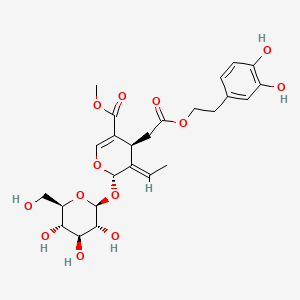
- Formula
- C25H32O13
- Weight
- 540.5 Da
- PubChem CID
- 5281544
- Exact Mass
- 540.1843 Da
- LogP
- -0.4
- TPSA
- 202 Ų
- H-Bond Donors
- 6
- H-Bond Acceptors
- 13
- Rotatable Bonds
- 11
- Complexity
- 873
Identifiers (SMILES, InChI)
InChI=1S/C25H32O13/c1-3-13-14(9-19(29)35-7-6-12-4-5-16(27)17(28)8-12)15(23(33)34-2)11-36-24(13)38-25-22(32)21(31)20(30)18(10-26)37-25/h3-5,8,11,14,18,20-22,24-28,30-32H,6-7,9-10H2,1-2H3/b13-3+/t14-,18+,20+,21-,22+,24-,25-/m0/s1
RFWGABANNQMHMZ-ZCHJGGQASA-NReferences (4)
- [1]An oleuropein-based dietary supplement may improve joint functional capacity in older people with high knee joint pain: findings from a multicentre-RCT and post hoc analysis
→ A multicentre randomized controlled trial found that oleuropein supplementation improved joint functional capacity in older adults experiencing significant knee pain, suggesting potential benefits for joint health and mobility.
- [2]Olive Leaf Extract Supplementation Improves Postmenopausal Symptoms in Women
→ Olive leaf extract supplementation improved postmenopausal symptoms, body composition, handgrip strength and blood lipid profiles in postmenopausal women in a randomized, double-blind study.
- [3]Secoiridoids delivered as olive leaf extract induce acute improvements in human vascular function and reduction of an inflammatory cytokine
→ A randomized, double-blind, placebo-controlled crossover trial demonstrated that olive leaf extract containing secoiridoids improved vascular function and reduced inflammatory cytokines in human subjects.
- [4]Oleuropein Supplementation Increases Resting Skeletal Muscle Fractional Pyruvate Dehydrogenase Activity in Healthy, Older Males
→ A randomized, double-blind, placebo-controlled trial found that oleuropein supplementation increased skeletal muscle pyruvate dehydrogenase activity in older males, though it did not significantly influence whole-body metabolism.
Continue researching Oleuropein
Keep scientific evidence separate from commercial availability. Review how claims are evaluated, explore question-led research paths, or inspect disclosed source records without changing the editorial conclusions on this page.