L-Citrulline
A non-essential amino acid that serves as a potent precursor to L-arginine and nitric oxide, supporting vasodilation, exercise performance, and cardiovascular health.
Evidence-led profile
Research snapshot
- Evidence stage
- Emerging research
- References
- 8 linked sources
- Research coverage
- 1 area
- Editorial review
- Mar 8, 2026
Published by the PepGuide Editorial Team using our research methodology.
Overview
L-Citrulline is a non-proteinogenic amino acid named after Citrullus lanatus (watermelon), from which it was first isolated. While not incorporated into proteins directly, citrulline plays a pivotal role in the urea cycle and, more importantly for supplementation purposes, serves as the most effective oral precursor to arginine and nitric oxide (NO). Paradoxically, oral L-citrulline raises plasma arginine levels more effectively than oral arginine itself, because citrulline bypasses hepatic first-pass metabolism and intestinal arginase degradation. Once absorbed, citrulline is converted to arginine primarily in the kidneys by argininosuccinate synthase and argininosuccinate lyase, providing sustained substrate for endothelial nitric oxide synthase (eNOS) to produce the vasodilator NO.
The nitric oxide-boosting properties of L-citrulline have been extensively studied in exercise and cardiovascular contexts. Clinical trials demonstrate that supplementation with 3–8 g/day of L-citrulline (or the popular citrulline-malate form at 6–8 g) improves exercise performance by enhancing blood flow to working muscles, reducing perceived exertion, and accelerating lactate clearance and phosphocreatine recovery. In cardiovascular applications, L-citrulline improves endothelial function, reduces arterial stiffness, and lowers blood pressure — effects particularly pronounced in hypertensive and heart failure populations. The amino acid also supports the urea cycle's ammonia detoxification capacity, which is relevant during intense exercise and in hepatic insufficiency.
L-Citrulline's versatility extends to erectile function (through the NO-mediated penile vasodilation pathway), immune support (as a marker and modulator of arginine availability in inflammatory states), and gut health (intestinal citrulline production reflects enterocyte mass and function). It synergizes naturally with beetroot-extract (which provides nitric oxide through the nitrate-nitrite-NO pathway, complementing the arginine-NO pathway), grape-seed-extract for endothelial support, and magnesium-citrate for combined vascular relaxation. The malate salt form offers additional benefit through Krebs cycle intermediate support. L-citrulline is one of the most well-evidenced ergogenic and cardiovascular supplements available, with a favorable safety profile at standard doses.
Research
Reported Effects
Dosage-Dependent:: Effects are most noticeable at 3-8g daily doses; lower doses (500-1000mg) often insufficient for significant benefits. Time to Effect:: Most users notice blood flow improvements within 24-48 hours, with erectile benefits often appearing as next-day morning wood; cognitive effects may take 1-2 weeks. Individual Variation:: Highly effective for those with circulation issues or erectile dysfunction; those with already optimal blood flow may notice minimal effects. Synergistic Potential:: Many users report enhanced effects when combined with other nitric oxide boosters, though some find citrulline alone sufficient
Safety and Limitations
Safety Profile: L-Citrulline
Common Side Effects
- Generally well-tolerated at doses up to 6–10 g/day in clinical studies
- Gastrointestinal discomfort: mild stomach upset, nausea, bloating, and diarrhea, particularly at higher doses (>6 g/day)
- Heartburn or acid reflux in some individuals
- Headache (possibly related to increased nitric oxide–mediated vasodilation)
- Mild dizziness or lightheadedness, especially in individuals with lower baseline blood pressure
Serious Adverse Effects
- Hypotension: significant blood pressure reduction when combined with antihypertensive medications or PDE5 inhibitors; may cause symptomatic hypotension, dizziness, or syncope
- Allergic reactions: rare; urticaria and angioedema reported with watermelon-derived citrulline products in individuals with cucurbit allergies
- No significant organ toxicity documented in human studies at recommended doses
- Theoretical concern for increased ammonia handling demands in individuals with urea cycle disorders
Contraindications
- Urea cycle disorders (citrullinemia, argininosuccinic aciduria): citrulline supplementation can worsen hyperammonemia — absolute contraindication
- Known hypersensitivity to L-citrulline or watermelon-derived products (if source is relevant)
- Concurrent use with PDE5 inhibitors (sildenafil, tadalafil) without medical supervision (risk of severe hypotension)
- Severe hypotension or hemodynamic instability
Drug Interactions
- PDE5 inhibitors (sildenafil, tadalafil, vardenafil): citrulline increases nitric oxide via the arginine-NO pathway; additive vasodilation and potentially dangerous hypotension
- Antihypertensives (ACE inhibitors, ARBs, calcium channel blockers): additive blood pressure–lowering effects
- Nitrates (nitroglycerin, isosorbide): synergistic vasodilation; risk of severe hypotension
- Anticoagulants/antiplatelets: nitric oxide has antiplatelet properties; theoretical additive bleeding risk
- Arginine supplements: additive nitric oxide production; may increase side effects without proportional benefit
Population-Specific Considerations
- Pregnancy: limited human safety data; avoid supplemental doses beyond dietary intake; arginine pathway alterations may affect placental blood flow
- Lactation: unknown excretion in breast milk; caution advised
- Children: safe at dietary levels; supplemental use should be medically supervised; absolutely contraindicated in urea cycle disorders
- Elderly: may be beneficial for vascular health but requires blood pressure monitoring; start at lower doses
- Kidney disease: citrulline-to-arginine conversion occurs primarily in the kidneys; efficacy and safety may be altered in renal impairment; consult nephrologist
- Pre-surgery: discontinue at least 48 hours before surgery due to hypotensive potential
Common Side Effects
- Gastrointestinal Issues:: Most common side effect is stomach upset, bloating, or diarrhea, especially at higher doses or when combined with other supplements
- Hypotension:: Excessive vasodilation can cause dizziness, lightheadedness, or headaches in some users, particularly when combined with other vasodilators
- Viral Reactivation:: Important warning that arginine/citrulline can fuel virus replication (HSV, shingles); users with herpes history should balance with lysine supplementation
- Minimal Long-Term Concerns:: Users report safe long-term use for years when properly dosed, with no tolerance build-up or serious adverse effects
Mechanism of Action
L-Citrulline is a non-essential amino acid that serves as a critical intermediate in the urea cycle and the citrulline-nitric oxide (NO) cycle, with its primary therapeutic mechanism centered on enhancing nitric oxide bioavailability. When orally ingested, L-citrulline bypasses hepatic first-pass metabolism (unlike L-arginine, which is extensively catabolized by arginase in the liver and gut) and is efficiently absorbed in the intestine, transported to the kidneys, and converted to L-arginine by the sequential action of argininosuccinate synthase (ASS) and argininosuccinate lyase (ASL). This renal conversion effectively raises plasma arginine levels more efficiently than direct L-arginine supplementation, providing sustained substrate for endothelial nitric oxide synthase (eNOS).
eNOS catalyzes the oxidation of L-arginine to L-citrulline and nitric oxide (NO) in a reaction requiring molecular oxygen, NADPH, and cofactors tetrahydrobiopterin (BH4), FAD, FMN, and calmodulin. The generated NO diffuses to adjacent vascular smooth muscle cells where it activates soluble guanylyl cyclase (sGC), catalyzing the conversion of GTP to cyclic GMP (cGMP). Elevated cGMP activates protein kinase G (PKG), which phosphorylates multiple targets leading to smooth muscle relaxation: myosin light chain phosphatase activation (dephosphorylating myosin), inhibition of IP3-mediated calcium release, activation of large-conductance calcium-activated potassium channels (BKCa), and reduced calcium sensitization through RhoA/Rho kinase inhibition. The net effect is vasodilation, reduced peripheral vascular resistance, and improved blood flow.
Beyond the NO-mediated vasodilatory pathway, L-citrulline participates in the urea cycle where it is condensed with aspartate by ASS to form argininosuccinate, which is then cleaved by ASL to yield arginine and fumarate. This cycle is essential for detoxification of ammonia generated by amino acid catabolism. During exercise, L-citrulline supplementation enhances ammonia clearance through upregulated urea cycle flux, reducing exercise-induced hyperammonemia that contributes to central and peripheral fatigue. L-citrulline also stimulates muscle protein synthesis through activation of the mTORC1 signaling pathway and may enhance mitochondrial efficiency. The recycling of citrulline back to arginine creates a self-sustaining NO production cycle (the citrulline-NO cycle) that maintains endothelial function during sustained demand, making L-citrulline particularly effective for improving exercise performance, cardiovascular function, and erectile function.
Research protocol summary
- Typical Dose
- 3-6 grams daily is most commonly recommended and reported effective for vasodilation and performance benefits
These values summarize cataloged research protocols. They are not personal dosing instructions or medical guidance.
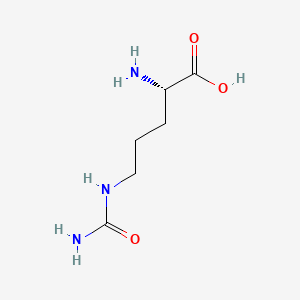
Molecular Structure
- Formula
- C6H13N3O3
- Weight
- 175.19 Da
- PubChem CID
- 9750
- Exact Mass
- 175.0957 Da
- LogP
- -4.3
- TPSA
- 118 Ų
- H-Bond Donors
- 4
- H-Bond Acceptors
- 4
- Rotatable Bonds
- 5
- Complexity
- 171
Identifiers (SMILES, InChI)
InChI=1S/C6H13N3O3/c7-4(5(10)11)2-1-3-9-6(8)12/h4H,1-3,7H2,(H,10,11)(H3,8,9,12)/t4-/m0/s1
RHGKLRLOHDJJDR-BYPYZUCNSA-NReferences (8)
- [3]Supplementation with Nitric Oxide Precursors for Strength Performance: A Review of the Current Literature
→ L-citrulline serves as an effective precursor to L-arginine and promotes nitric oxide production, potentially improving blood flow and mechanisms contributing to skeletal muscle performance and hypertrophy.
- [4]Dietary Arginine and Citrulline Supplements for Cardiovascular Health and Athletic Performance: A Narrative Review
→ Review of L-citrulline and citrulline malate supplements showing potential effects on hemodynamic function, endothelial function, aerobic and anaerobic capacity, strength, power, and endurance.
- [1]Effects of Citrulline Supplementation on Exercise Performance in Humans: A Review of the Current Literature
→ Comprehensive review examining L-citrulline's ergogenic properties for both aerobic and anaerobic exercise performance through enhanced L-arginine bioavailability and nitric oxide production.
- [2]l-Citrulline Supplementation: Impact on Cardiometabolic Health
→ L-citrulline supplementation improves nitric oxide bioavailability more effectively than L-arginine, with beneficial impacts on cardiovascular and metabolic health markers.
- [5]A critical review of citrulline malate supplementation and exercise performance
→ Citrulline malate may enhance exercise performance through improved blood flow, ammonia homeostasis, or increased ATP production via greater malate availability, with potential muscle recovery benefits.
- [6]Effect of food sources of nitrate, polyphenols, L-arginine and L-citrulline on endurance exercise performance: a systematic review and meta-analysis
→ Systematic review and meta-analysis evaluating foods containing L-citrulline and other nitric oxide-promoting compounds on endurance exercise performance outcomes.
- [7]L-Citrulline Supplementation and Exercise in the Management of Sarcopenia
→ Examines L-citrulline supplementation combined with exercise as a strategy for managing sarcopenia and age-related muscle loss.
- [8]Side effects of amino acid supplements
→ Comprehensive examination of side effects from amino acid supplementation including citrulline, noting potential impacts on renal and gastrointestinal function, ammonia production, and nutrient competition.
Continue researching L-Citrulline
Keep scientific evidence separate from commercial availability. Review how claims are evaluated, explore question-led research paths, or inspect disclosed source records without changing the editorial conclusions on this page.