URIDINE
Uridine is a fundamental pyrimidine nucleoside essential for RNA synthesis, glycogen metabolism, and neurological functions. It contributes to neuronal membrane phospholipid synthesis and is investigated for its therapeutic potential in metabolic and neurodegenerative diseases.
Evidence-led profile
Research snapshot
- Evidence stage
- Emerging research
- References
- 11 linked sources
- Research coverage
- 3 areas
- Editorial review
- Jul 7, 2026
Published by the PepGuide Editorial Team using our research methodology.
Overview
Uridine is a naturally occurring nucleoside that serves as a building block for RNA and plays a crucial role in cellular metabolism, particularly in the synthesis of phospholipids in neuronal membranes. It crosses the blood-brain barrier and is converted to uridine triphosphate (UTP), which combines with choline and DHA to support the formation of brain cell membranes and synaptic connections. Uridine is investigated for cognitive enhancement, neuroprotection, mood support, and as part of nutritional interventions for conditions involving mitochondrial dysfunction or neurological impairment.
Research
Reported Effects
Inconsistent Response:: Many users report no noticeable effects at all, with uridine being frequently listed among supplements that "didn't work" or provided no subjective benefits. Stack-Dependent:: Appears to work better when combined with choline sources (Alpha-GPC, CDP-Choline) and omega-3s as part of the "Mr. Happy Stack" protocol rather than standalone use. Stimulant Interaction:: Some users report taking it with amphetamines or during off-days from stimulants for dopamine receptor support, though benefits are unclear. Time Frame:: Users rarely report immediate effects; when benefits occur, they typically emerge after consistent use over weeks, though many discontinue due to lack of response
Synaptic membrane precursor and cognition
Uridine is a pyrimidine nucleoside that, via UTP and CDP-choline, supplies substrate for phosphatidylcholine synthesis and thus synaptic membrane formation (the Kennedy pathway). This underlies its inclusion in multinutrient formulations (with choline and DHA) designed to support synapse formation in cognitive decline. Randomized trials of the Souvenaid combination showed benefit in prodromal/early Alzheimer disease but not in more advanced mild-to-moderate disease (S-Connect), so efficacy appears stage-dependent and the specific contribution of uridine alone is not isolated.
- Provides substrate for synaptic membrane phospholipid synthesis
- Multinutrient trials suggest benefit only in early/prodromal disease
- No trial isolates uridine monotherapy for cognition
Mood and bipolar depression
Uridine has been studied in mood disorders based on hypotheses linking it to mitochondrial function and phospholipid metabolism, which are implicated in bipolar disorder. A small open-label case series in depressed adolescents with bipolar disorder reported substantial symptom reduction over 6 weeks with good tolerability, prompting a subsequent randomized, placebo-controlled study. Evidence remains preliminary and limited by very small samples.
- Open-label case series showed ~54% depression score reduction
- Proposed mechanisms involve mitochondrial and membrane phospholipid effects
- Requires larger controlled trials for confirmation
Safety and Limitations
Safety Profile: Uridine
Common Side Effects
- Gastrointestinal symptoms: nausea, diarrhea, and mild stomach discomfort
- Headache
- Fatigue or drowsiness
- Vivid dreams (particularly with evening dosing)
- Mild fever at higher doses
Serious Adverse Effects
- Generally well tolerated at standard supplemental doses (250–500 mg/day as uridine monophosphate)
- Very high doses may cause crystalluria (uric acid pathway involvement)
- Rare allergic reactions
- Theoretical concern: excessive pyrimidine supplementation may affect de novo nucleotide synthesis regulation
- Limited long-term safety data for chronic supplementation
Contraindications
- Known hypersensitivity to uridine or pyrimidine derivatives
- Gout or hyperuricemia (uridine metabolism may affect purine pathways)
- Pregnancy and lactation (supplemental doses not studied)
- Concurrent treatment with 5-fluorouracil or other fluoropyrimidine chemotherapy (uridine rescue is a specific clinical scenario requiring oncology management)
Drug Interactions
- 5-Fluorouracil (5-FU): Uridine triacetate is FDA-approved as an antidote for 5-FU overdose; exogenous uridine may interfere with 5-FU efficacy in cancer treatment
- Other pyrimidine antimetabolites: Theoretical antagonism
- CDP-choline (citicoline): Often stacked for synergistic nootropic effect; generally safe combination
- Valproic acid: May alter nucleotide metabolism
Population-Specific Considerations
- Nootropic stacking: Commonly combined with omega-3 fatty acids and choline sources (the "Mr. Happy Stack") for mood and cognitive support
- Bipolar disorder: Some preclinical evidence suggests mood-stabilizing effects; human data very limited
- Bioavailability: Uridine monophosphate is preferred over free uridine for oral supplementation (better bioavailability)
- Dietary sources: Present in beer, breast milk, and organ meats; supplementation extends normal dietary intake
- Mitochondrial disorders: Theoretical benefit for pyrimidine synthesis defects; specialist supervision required
Common Side Effects
- Mental Fog:: The most commonly reported negative effect is feeling spaced out, foggy, or having reduced mental clarity rather than enhanced cognition
- Grogginess:: Some users report next-day tiredness or difficulty waking up when taken for sleep support
- Headaches:: Occasionally mentioned, particularly when not combined with adequate choline supplementation
- No Side Effects:: Many users report taking it with no noticeable positive or negative effects whatsoever
Mechanism of Action
Mechanism of Action: Uridine
Nucleotide Pool Expansion
Uridine is absorbed and phosphorylated by uridine-cytidine kinase to UMP, then sequentially to UDP and UTP. UTP serves as substrate for CTP synthetase to produce CTP. These pyrimidine nucleotides are essential for RNA synthesis, protein glycosylation (via UDP-glucose and UDP-galactose), and critically, membrane phospholipid biosynthesis.
The Kennedy Pathway and Membrane Synthesis
The Kennedy pathway is the primary route for phosphatidylcholine (PC) synthesis, which constitutes ~40% of neuronal membrane phospholipids. The rate-limiting step is catalyzed by CTP:phosphocholine cytidylyltransferase, which requires CTP (derived from UTP). Uridine supplementation increases CTP availability, driving greater PC production. This is particularly important in neurons with high membrane turnover demands at synapses.
Synergistic Nutrient Interactions
Uridine's membrane-building effects are dramatically enhanced when combined with omega-3 fatty acids (DHA) and choline. DHA provides the acyl chains incorporated into phospholipids, choline provides the polar head group, and uridine provides the activated cytidine nucleotide. This three-component synergy has been demonstrated to increase dendritic spine density, synaptic protein levels, and cognitive performance in aging animal models, forming the basis for the medical food Souvenaid.
Dopaminergic Effects
Uridine administration increases potassium-evoked dopamine release in the striatum and upregulates D1 and D2 receptor expression. The proposed mechanism is that enhanced membrane phospholipid synthesis improves dopaminergic neuron health, vesicular dopamine packaging, and synaptic membrane integrity. This dopaminergic effect may underlie reported mood-enhancing properties.
P2Y Receptor Signaling
Extracellular UTP, released from cells or generated from uridine, activates P2Y purinergic receptors. P2Y2 receptor activation on astrocytes promotes release of neurotrophic factors and modulates neuroinflammation. P2Y6 receptor activation by UDP promotes microglial phagocytosis, relevant to clearance of cellular debris in neurodegeneration.
RNA and Protein Synthesis
As a fundamental RNA building block, uridine supports global protein synthesis, which is particularly relevant in metabolically active tissues. Uridine supplementation can rescue mitochondrial dysfunction caused by antiretroviral drugs (NRTIs) that deplete cellular pyrimidine pools.
Research protocol summary
- Typical Dose
- 250mg capsules taken once or twice daily is commonly mentioned, though some users experiment with higher doses
These values summarize cataloged research protocols. They are not personal dosing instructions or medical guidance.
Molecular Structure
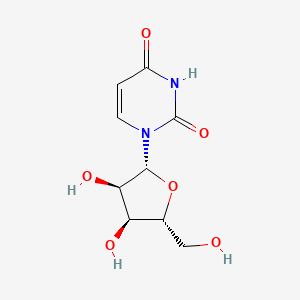
- Formula
- C9H12N2O6
- Weight
- 244.20 Da
- PubChem CID
- 6029
- Exact Mass
- 244.0695 Da
- LogP
- -2
- TPSA
- 119 Ų
- H-Bond Donors
- 4
- H-Bond Acceptors
- 6
- Rotatable Bonds
- 2
- Complexity
- 370
Identifiers (SMILES, InChI)
InChI=1S/C9H12N2O6/c12-3-4-6(14)7(15)8(17-4)11-2-1-5(13)10-9(11)16/h1-2,4,6-8,12,14-15H,3H2,(H,10,13,16)/t4-,6-,7-,8-/m1/s1
DRTQHJPVMGBUCF-XVFCMESISA-NResearch Indications
Primary Research Areas
Small open-label data suggest uridine may reduce depressive symptoms, possibly via mitochondrial and membrane effects.
As a synaptic membrane (phosphatidylcholine) precursor, studied within multinutrient formulations for memory.
Preclinical work on synapse formation and neurite outgrowth, often combined with choline and DHA.
References (11)
- [2]Potential Neuroregenerative and Neuroprotective Effects of Uridine/Choline-Enriched Multinutrient Dietary Intervention for Mild Cognitive Impairment
→ Evidence suggests that uridine, choline, and DHA are key nutrients needed by the brain in MCI, with preclinical and clinical data showing the importance of nutrient bioavailability for supporting brain structure and function in prodromal Alzheimer's disease.
- [1]Enhanced uridine bioavailability following administration of a triacetyluridine-rich nutritional supplement
→ Triacetyluridine (TAU) in supplement form achieved four-fold higher plasma uridine concentrations compared to pure uridine, reaching levels known to ameliorate mitochondrial toxicity in vitro, demonstrating superior bioavailability.
- [3]Dietary uridine improves lipid homeostasis in high-fat diet-induced obese mice by regulating liver gene expression and metabolomic profiles
→ Uridine supplementation (0.4 mg/mL) improved lipid metabolism in high-fat diet-induced obese mice through modulation of liver gene expression and metabolic profiles, demonstrating regulatory effects on lipid homeostasis.
- [4]Neuroinflammation-Modulating Properties Combining Glutathione, N-Acetylcysteine, and Uridine Monophosphate in a Formulation Supplement
→ A combination formulation including uridine monophosphate demonstrated neuroinflammation-modulating properties in vitro, showing potential for addressing neuropathic pain through antioxidant and anti-inflammatory mechanisms.
- [5]Evaluation of the Efficacy of the Addition of a Combination of Pyrimidine Nucleotides and Vitamin B1 and B12 to Standard Treatment in the Management of Painful Radiculopathy
→ A combination of pyrimidine nucleotides (including uridine) with B vitamins showed efficacy as an addition to standard treatment for painful radiculopathy, improving quality of life in patients.
- [6]Dietary supplement with nucleotides in the form of uridine monophosphate or uridine stimulate intestinal development and promote nucleotide transport in weaned piglets
→ Uridine monophosphate and uridine supplementation significantly improved intestinal development and glucose levels in weaned piglets, demonstrating benefits for cellular replication and growth.
- [7]Biallelic hypomorphic variants in CAD cause uridine-responsive macrocytic anaemia with elevated haemoglobin-A2
→ Uridine supplementation successfully treated macrocytic anemia caused by genetic variants affecting pyrimidine biosynthesis, demonstrating its therapeutic role in specific metabolic disorders.
- [8]Jagim AR, et al. Acute ingestion of neuromuscular enhancement supplements do not improve power output, work capacity, and cognition J Int Soc Sports Nutr / PubMed (2017)
→ Human supplement trial delivered 250 mg uridine-5'-monophosphate (with choline and DHA) as a standard oral dose.
- [9]van Wijk N, et al. Potential Neuroregenerative and Neuroprotective Effects of Uridine/Choline-Enriched Multinutrient Dietary Intervention for Mild Cognitive Impairment: A Narrative Review Neurol Ther (2020)
→ Uridine is used with choline and DHA in multinutrient interventions for mild cognitive impairment; standalone human dose-ranging data are limited.
- [10]Kondo DG, Sung YH, Hellem TL, et al. Open-label uridine for treatment of depressed adolescents with bipolar disorder Journal of Child and Adolescent Psychopharmacology (2011)
→ In 7 depressed adolescents with bipolar disorder, open-label uridine 500 mg twice daily for 6 weeks was associated with a 54% mean reduction in depression scores and was well tolerated.
- [11]Shah RC, Kamphuis PJ, Leurgans S, et al. The S-Connect study: results from a randomized, controlled trial of Souvenaid in mild-to-moderate Alzheimer's disease Alzheimer's Research & Therapy (2013)
→ In mild-to-moderate AD, the uridine/choline/DHA multinutrient Souvenaid did not slow cognitive decline as an add-on to standard therapy over 24 weeks.
Continue researching URIDINE
Keep scientific evidence separate from commercial availability. Review how claims are evaluated, explore question-led research paths, or inspect disclosed source records without changing the editorial conclusions on this page.