Oleic Acid
Oleic Acid research profile covering evidence quality, proposed mechanisms, safety considerations, regulatory status, and linked primary sources.
Evidence-led profile
Research snapshot
- Evidence stage
- Emerging research
- References
- 8 linked sources
- Research coverage
- 1 area
- Editorial review
- Mar 8, 2026
Published by the PepGuide Editorial Team using our research methodology.
Overview
Oleic acid (OA, cis-9-octadecenoic acid, 18:1n-9) is an 18-carbon monounsaturated omega-9 fatty acid that constitutes the predominant fatty acid in olive oil (55–83%), avocado oil, macadamia nut oil, and high-oleic varieties of sunflower and safflower oil. It is the most abundant fatty acid in human adipose tissue and cell membrane phospholipids, and is considered the primary bioactive lipid mediating many of the cardiovascular and metabolic benefits attributed to the Mediterranean diet. Oleic acid's single cis double bond at the delta-9 position introduces a 30-degree bend in the hydrocarbon chain that critically influences membrane biophysics — modulating fluidity, permeability, and the function of membrane-embedded proteins including receptors, ion channels, and transporters.
The cardiovascular benefits of oleic acid are among the best-documented dietary fatty acid effects. Replacement of saturated fatty acids with oleic acid consistently reduces LDL cholesterol and apolipoprotein B levels while preserving or increasing HDL cholesterol — a lipid profile shift associated with reduced atherosclerotic cardiovascular disease risk. The FDA authorized a qualified health claim for oleic acid-rich oils in 2018 based on this evidence. Beyond lipid modulation, oleic acid exerts direct anti-inflammatory effects by suppressing NF-kB activation, reducing endothelial adhesion molecule expression (ICAM-1, VCAM-1), inhibiting NLRP3 inflammasome assembly, and decreasing production of pro-inflammatory eicosanoids by competing with arachidonic acid for phospholipid membrane incorporation. Oleic acid also serves as the precursor to oleoylethanolamide (OEA), an endogenous PPAR-alpha agonist that promotes satiety, enhances fat oxidation, and has anti-inflammatory properties — linking oleic acid intake to appetite regulation and metabolic health.
Neuroprotective research on oleic acid has revealed several mechanisms relevant to cognitive health and neurodegeneration. Oleic acid is the most abundant fatty acid in myelin, the insulating sheath that enables rapid neural signal conduction, and plays a critical role in myelination during brain development and remyelination in demyelinating diseases. Studies demonstrate that oleic acid promotes neuronal differentiation, enhances synaptic plasticity through modulation of PKC signaling, and protects against amyloid-beta toxicity in Alzheimer's disease models. Dietary oleic acid intake is inversely associated with cognitive decline in epidemiological studies, consistent with the broader Mediterranean diet literature. Oleic acid is best obtained through dietary sources — particularly extra-virgin olive oil, which contains additional polyphenolic compounds including oleuropein and hydroxytyrosol that synergize with oleic acid's benefits. It pairs naturally with other Mediterranean diet components and is complementary to omega-3 fatty acids in comprehensive cardiovascular protocols.
Mechanism of Action
Oleic acid (C18:1 cis-9) is a monounsaturated omega-9 fatty acid that exerts its biological effects through multiple membrane-dependent and receptor-mediated mechanisms. As the predominant fatty acid incorporated into cell membrane phospholipids, oleic acid modulates membrane fluidity and lipid raft organization, influencing the clustering and signaling efficiency of membrane-associated receptors and ion channels. It activates the free fatty acid receptor FFAR1 (GPR40) on pancreatic beta cells, stimulating Gq-coupled signaling that increases intracellular calcium and potentiates glucose-stimulated insulin secretion, contributing to improved glycemic control.
Oleic acid is a potent activator of PPAR-alpha and PPAR-gamma nuclear receptors, promoting fatty acid beta-oxidation genes in the liver while enhancing insulin sensitivity in adipose tissue. It suppresses hepatic SREBP-1c (sterol regulatory element-binding protein) processing, reducing de novo lipogenesis and VLDL production. Oleic acid replaces saturated fatty acids in membrane phospholipids, reducing the formation of ceramides and diacylglycerols that activate PKC-theta and impair insulin receptor substrate-1 (IRS-1) signaling. It also inhibits NF-kB activation by reducing TLR4 receptor dimerization (which is promoted by saturated fatty acids like palmitate), thereby attenuating inflammatory cytokine production in macrophages and endothelial cells.
Therapeutically, oleic acid's cardiovascular benefits are mediated through improved endothelial function via enhanced eNOS activity and nitric oxide production, reduced LDL oxidation susceptibility (oleic acid-rich LDL particles are more resistant to oxidative modification than linoleic acid-rich LDL), and anti-inflammatory effects on vascular wall macrophages. It serves as the precursor for oleoylethanolamide (OEA), an endogenous PPAR-alpha agonist that signals satiety through vagal afferents, contributing to appetite regulation. The Mediterranean diet's cardiovascular benefits are substantially attributed to high oleic acid intake from olive oil.
Research
Reported Effects
Inflammation Reduction:: Meta-analysis of 31 RCTs showed significant CRP reduction with 10% decrease per 10g fiber increase. Fat Metabolism:: Demonstrated pancreatic lipase inhibition comparable to pharmaceutical options, reducing fat absorption. Research Model Use:: Frequently used in studies to induce metabolic conditions, indicating well-understood cellular mechanisms. Dose-Dependent Benefits:: Effects appear to scale with intake, though optimal dosing ranges vary by application
- Meta-analysis of 31 RCTs showed significant CRP reduction with 10% decrease per 10g fiber increase
- Demonstrated pancreatic lipase inhibition comparable to pharmaceutical options, reducing fat absorption
- Frequently used in studies to induce metabolic conditions, indicating well-understood cellular mechanisms
- Effects appear to scale with intake, though optimal dosing ranges vary by application
Safety and Limitations
Oleic acid is generally recognized as safe when consumed in dietary amounts. High supplemental doses may cause gastrointestinal upset including nausea and diarrhea. Individuals with fat malabsorption disorders should use caution, and excessive intake may contribute to weight gain due to its caloric density.
Common Side Effects
- Cellular Stress:: At high concentrations, oleic acid can induce hepatic steatosis and lipid accumulation in cell models
- Metabolic Disruption:: Excessive intake may contribute to lipid metabolism disorders in susceptible individuals
- Research Safety:: Human trials generally report good tolerability when consumed as part of balanced dietary fats
- Limited Standalone Data:: Few reports of side effects from isolated oleic acid supplementation in humans
Reconstitution Calculator
Pharmacokinetic Profile
Molecular Structure
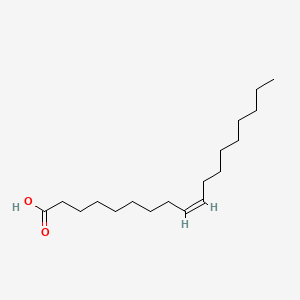
- Formula
- C18H34O2
- Weight
- 282.5 Da
- PubChem CID
- 445639
- Exact Mass
- 282.2559 Da
- LogP
- 6.5
- TPSA
- 37.3 Ų
- H-Bond Donors
- 1
- H-Bond Acceptors
- 2
- Rotatable Bonds
- 15
- Complexity
- 234
Identifiers (SMILES, InChI)
InChI=1S/C18H34O2/c1-2-3-4-5-6-7-8-9-10-11-12-13-14-15-16-17-18(19)20/h9-10H,2-8,11-17H2,1H3,(H,19,20)/b10-9-
ZQPPMHVWECSIRJ-KTKRTIGZSA-NReferences (8)
- [1]Dietary oleic acid supplementation and blood inflammatory markers: a systematic review and meta-analysis of randomized controlled trials
→ Meta-analysis of 31 RCTs involving 1,634 subjects found that oleic acid supplementation significantly reduced C-reactive protein (CRP) levels, indicating anti-inflammatory benefits, though it did not significantly affect other inflammatory markers like TNF or IL-6.
- [3]Oleic acid ameliorates amyloidosis in cellular and mouse models of Alzheimer's disease
→ Oleic acid supplementation reduced amyloid-beta levels and BACE enzyme activity in Alzheimer's disease models, decreased amyloid plaques, and increased non-amyloidogenic APP processing, suggesting neuroprotective effects.
- [5]Dietary oleic acid intake increases the proportion of type 1 and 2X muscle fibers in mice
→ Dietary oleic acid supplementation increased the proportion of slow-twitch type 1 and oxidative type 2X muscle fibers in mice, suggesting potential benefits for endurance and metabolic muscle characteristics.
- [6]Nitro-oleic acid regulates growth factor-induced differentiation of bone marrow-derived macrophages
→ Nitro-oleic acid, a metabolite of oleic acid, was found to regulate macrophage differentiation and modulate immune responses, demonstrating anti-inflammatory properties in bone marrow-derived cells.
- [7]Hesperetin ameliorates hepatic oxidative stress and inflammation via the PI3K/AKT-Nrf2-ARE pathway in oleic acid-induced HepG2 cells and a rat model of high-fat diet-induced NAFLD
→ Study used oleic acid to induce hepatic steatosis models, demonstrating its role in fatty liver research and establishing that interventions targeting oxidative stress pathways can ameliorate oleic acid-induced liver damage.
- [8]Dehydroepiandrosterone alleviates oleic acid-induced lipid metabolism disorders through activation of AMPK-mTOR signal pathway in primary chicken hepatocytes
→ Research utilized oleic acid to model lipid metabolism disorders in hepatocytes, demonstrating that interventions activating AMPK-mTOR pathways can reverse oleic acid-induced metabolic disturbances.
- [2]Oleic acid abomasal infusion limits lipolysis and improves insulin sensitivity in adipose tissue from periparturient dairy cows
→ Oleic acid infusion reduced adipose tissue lipolysis and improved insulin sensitivity in dairy cows during the periparturient period, suggesting beneficial effects on metabolic regulation and energy balance.
- [4]Free Linoleic Acid and Oleic Acid Reduce Fat Digestion and Absorption In Vivo as Potent Pancreatic Lipase Inhibitors Derived from Sesame Meal
→ Oleic acid demonstrated potent pancreatic lipase inhibitory activity with an IC50 of 11.7 µg/mL and significantly suppressed fat digestion and absorption in rats, suggesting potential for weight management applications.
Continue researching Oleic Acid
Keep scientific evidence separate from commercial availability. Review how claims are evaluated, explore question-led research paths, or inspect disclosed source records without changing the editorial conclusions on this page.