Noopept
Noopept research profile covering evidence quality, proposed mechanisms, safety considerations, regulatory status, and linked primary sources.
Evidence-led profile
Research snapshot
- Evidence stage
- Emerging research
- References
- 10 linked sources
- Research coverage
- 4 areas
- Editorial review
- Jul 7, 2026
Published by the PepGuide Editorial Team using our research methodology.
Overview
Noopept (GVS-111, N-phenylacetyl-L-prolylglycine ethyl ester) is a synthetic nootropic dipeptide developed in 1996 by Professor Tatiana Gudasheva at the Zakusov Institute of Pharmacology of the Russian Academy of Medical Sciences. Though often categorized with the racetam family due to its origin as a prodrug designed to mimic the pharmacological profile of piracetam, Noopept is structurally a dipeptide analog of the endogenous neuropeptide cycloprolylglycine (cPG) and does not contain the 2-pyrrolidone nucleus that defines true racetams. Noopept is approximately 1,000 times more potent than piracetam by weight, with effective oral doses in the 10–30 mg range compared to piracetam's 1,200–4,800 mg. This potency difference reflects both superior blood-brain barrier penetration (due to its dipeptide structure exploiting peptide transport systems) and distinct receptor-level mechanisms. Noopept is registered in Russia as a nootropic pharmaceutical under the trade name Noopept.
The cognitive-enhancing and neuroprotective effects of Noopept are mediated through several well-characterized mechanisms. After crossing the blood-brain barrier, Noopept is rapidly metabolized to cycloprolylglycine, which modulates both AMPA and NMDA glutamate receptors — enhancing excitatory neurotransmission and facilitating long-term potentiation (LTP) without the excitotoxicity risk of direct glutamate agonists. Critically, Noopept robustly upregulates expression of brain-derived neurotrophic factor (BDNF) and nerve growth factor (NGF) in the hippocampus and cortex, driving neuroplasticity, synaptogenesis, and neuronal survival. Additional mechanisms include antioxidant activity (scavenging of reactive oxygen species and inhibition of calcium-mediated mitochondrial apoptosis), anti-inflammatory effects (suppression of neuroinflammatory cascades), and enhancement of alpha-wave cortical activity associated with relaxed alertness. Clinical studies in patients with mild cognitive impairment of vascular and traumatic origin demonstrated significant improvements in memory, attention, and overall cognitive function.
Noopept is typically administered at 10–30 mg daily, either orally or sublingually for faster absorption. The compound has a relatively short half-life (~60 minutes), though its neurotrophic effects (BDNF/NGF upregulation) persist beyond the acute pharmacokinetic window. Users commonly report improved memory consolidation, enhanced learning capacity, increased mental clarity, and a subtle mood-elevating effect. Noopept is frequently stacked with alpha-GPC or CDP-choline to support increased acetylcholine demand, and combined with other nootropics such as aniracetam or lion's mane for complementary mechanisms. Side effects are rare at standard doses but may include headache (often alleviated by choline supplementation), irritability, and insomnia if dosed late in the day. Note: Noopept is also sold under the name Omberacetam, which is its INN (International Nonproprietary Name).
Mechanism of Action
Noopept (N-phenylacetyl-L-prolylglycine ethyl ester, GVS-111) is a dipeptide-derived nootropic that is rapidly metabolized to cyclo-prolylglycine, an endogenous neuropeptide, after crossing the blood-brain barrier. Its primary mechanism involves allosteric modulation of AMPA receptors, where it enhances glutamatergic transmission by increasing receptor sensitivity to glutamate and prolonging excitatory postsynaptic currents. Noopept also modulates NMDA receptor function by potentiating responses at the glycine co-agonist site, facilitating long-term potentiation (LTP) in hippocampal CA1 neurons, which is the cellular basis of memory formation.
Noopept significantly upregulates expression of brain-derived neurotrophic factor (BDNF) and nerve growth factor (NGF) in the hippocampus and cortex through activation of the CREB transcription factor pathway. This neurotrophic effect promotes neuronal survival, dendritic branching, and synaptogenesis. Noopept also enhances alpha and beta1 oscillatory activity in the brain, correlating with improved attention and cognitive processing. It provides neuroprotection through multiple pathways: inhibiting glutamate-induced excitotoxicity by preventing excessive calcium influx, reducing oxidative stress by enhancing endogenous antioxidant defenses (SOD, catalase, glutathione), and blocking mitochondrial apoptotic cascades by preserving mitochondrial membrane potential and preventing cytochrome c release.
Therapeutically, noopept demonstrates cognitive enhancement at very low doses (10-30 mg daily, approximately 1000x lower than piracetam) due to its high bioavailability and potent receptor modulation. It has shown efficacy in preclinical models of Alzheimer's disease (reducing amyloid-beta aggregation and tau hyperphosphorylation), cerebrovascular insufficiency, and traumatic brain injury. Clinical studies in Russia report improvements in memory, attention, and emotional processing in patients with mild cognitive disorders. Its dual action of acute synaptic enhancement combined with chronic neurotrophic factor upregulation provides both immediate cognitive benefits and long-term neuroprotective effects.
Research
Reported Effects
Highly Potent:: Active at very low doses (10-30mg).. Fast Onset:: Effects often felt within an hour.. Individual Variation:: Response can be stimulating or calming.
- Active at very low doses (10-30mg).
- Effects often felt within an hour.
- Response can be stimulating or calming.
Nootropic clinical evidence
Noopept (omberacetam, GVS-111) is a synthetic proline-containing dipeptide developed at the Zakusov Institute of Pharmacology in Moscow as a dipeptide analogue of piracetam. It is approved and marketed in Russia and some neighboring countries for mild cognitive disorders. The clinical evidence base is predominantly Russian, open-label or piracetam-comparative rather than large placebo-controlled trials, and shows benefits on cognition and asthenic/anxiety symptoms at doses roughly a thousandfold lower than racetams.
- Active at ~20 mg/day versus grams of piracetam
- Improves cognition and reduces anxiety-asthenic symptoms in vascular/post-traumatic MCI
- Human evidence is limited by open-label designs and small samples
Neurotrophic and neuroprotective mechanisms
Mechanistic work indicates noopept increases hippocampal expression of BDNF and NGF, exerts antioxidant activity, modulates cholinergic and glutamatergic signaling, and protects neurons in amyloid-beta and ischemia models. A cysteine-prolyl-glycine metabolite (cycloprolylglycine), an endogenous neuropeptide, is thought to contribute to its activity.
- Upregulates BDNF/NGF neurotrophin expression
- Attenuates amyloid toxicity and tau hyperphosphorylation in vitro
- Antioxidant and anti-apoptotic effects in ischemia/neurotoxicity models
Alzheimer's disease research directions
Because of its neurotrophic and anti-amyloid actions, noopept has been explored preclinically as a candidate for neurodegenerative disease. Cellular and animal Alzheimer models show reduced amyloid-induced apoptosis and tau pathology, but these findings have not yet been translated into rigorous human dementia trials.
- Protective in AD-relevant cellular and rodent models
- Reduces markers of tau and amyloid pathology preclinically
- No adequately powered placebo-controlled dementia trials to date
Safety and Limitations
Common side effects include headaches, restlessness, dizziness, and irritability, especially at higher doses. It is contraindicated in individuals with severe hypertension, renal or hepatic impairment, and during pregnancy or lactation. Noopept may potentiate the effects of psychostimulants and anticoagulants, warranting caution with concurrent use.
Common Side Effects
- Irritability:: Some users report increased irritability.
- Brain Fog:: Paradoxically, some experience this at wrong doses.
- Headaches:: Possible, often from inadequate choline.
- Generally Well Tolerated:: Most users have minimal issues.
Research protocol summary
- Typical Dose
- 10-30mg daily, often divided into 2-3 doses.
These values summarize cataloged research protocols. They are not personal dosing instructions or medical guidance.
Reconstitution Calculator
Pharmacokinetic Profile
Molecular Structure
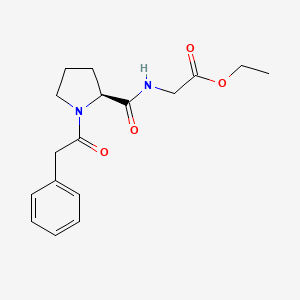
- Formula
- C17H22N2O4
- Weight
- 318.4 Da
- PubChem CID
- 180496
- Exact Mass
- 318.1580 Da
- LogP
- 1.5
- TPSA
- 75.7 Ų
- H-Bond Donors
- 1
- H-Bond Acceptors
- 4
- Rotatable Bonds
- 7
- Complexity
- 432
Identifiers (SMILES, InChI)
InChI=1S/C17H22N2O4/c1-2-23-16(21)12-18-17(22)14-9-6-10-19(14)15(20)11-13-7-4-3-5-8-13/h3-5,7-8,14H,2,6,9-12H2,1H3,(H,18,22)/t14-/m0/s1
PJNSMUBMSNAEEN-AWEZNQCLSA-NResearch Indications
Cognitive / Neurological (approved in Russia)
Registered in Russia (as Noopept) for cognitive and emotional-labile disorders following vascular disease, trauma and 'cerebrasthenic' conditions; comparable to piracetam at far lower doses.
Used for asthenia, reduced concentration, and post-traumatic/post-concussion syndromes.
Investigational / Preclinical Directions
Preclinical models show attenuation of amyloid toxicity, tau hyperphosphorylation and oxidative stress; not clinically proven for dementia.
Popular off-label nootropic use in healthy adults, but controlled data in healthy populations are lacking.
References (10)
- [3]Effect of nootropic dipeptide noopept on CA1 pyramidal neurons involves α7AChRs
→ Noopept enhances hippocampal neuron activity by boosting inhibitory interneuron firing through nicotinic acetylcholine receptors.
- [1]Noopept in the treatment of mild cognitive impairment in patients with stroke
→ Study of 60 stroke patients treated with noopept 20 mg daily for 12 months showed significant cognitive improvements after 2 months.
- [2]Clinical and electroencephalographic characteristic of noopept in patients with mild cognitive impairment
→ Research examined noopept's impact on brain activity, finding increased alpha- and beta-rhythm power while reducing delta-rhythm power.
- [4]Effects of noopept on cognitive functions and pubertal process in rats with diabetes
→ Noopept normalized delayed puberty and reduced blood glucose levels in diabetic rats, improving insulin resistance markers.
- [5]QbD-driven development of dissolving microneedle patch loaded with ultradeformable liposomes encapsulated Noopept
→ Development of transdermal microneedle delivery system for noopept showed enhanced bioavailability and skin penetration.
- [6]Neuroprotective and Nootropic Drug Noopept Rescues α-Synuclein Amyloid Cytotoxicity
→ Noopept mitigates harmful effects of α-synuclein linked to Parkinson's disease by promoting safer aggregation forms.
- [7]Novel nootropic dipeptide Noopept increases inhibitory synaptic transmission in CA1 pyramidal cells
→ Research found noopept increases inhibitory signal frequency in hippocampal brain cells through activation of specific inhibitory neurons.
- [8]Noopept stimulates the expression of NGF and BDNF in rat hippocampus
→ Noopept increases neurotrophic factor expression in the hippocampus, potentially enhancing cognitive functions.
- [9]Neznamov GG, Teleshova ES Comparative studies of Noopept and piracetam in the treatment of patients with mild cognitive disorders in organic brain diseases of vascular and traumatic origin Neuroscience and Behavioral Physiology (2009)
→ In an open comparative trial of 53 patients with mild cognitive disorders from vascular or traumatic brain disease, noopept 20 mg/day for 56 days improved cognition and anxiety-asthenic symptoms at least as effectively as piracetam 1200 mg/day, with a favorable tolerability profile.
- [10]Ostrovskaya RU, Vakhitova YV, Kuzmina USh, Salimgareeva MKh, Zainullina LF, Gudasheva TA, Vakhitov VA, Seredenin SB Neuroprotective effect of novel cognitive enhancer noopept on AD-related cellular model involves the attenuation of apoptosis and tau hyperphosphorylation Journal of Biomedical Science (2014)
→ In an amyloid-beta (Abeta25-35) PC12 cellular model, noopept protected against loss of cell viability, calcium/ROS dysregulation, mitochondrial dysfunction and tau hyperphosphorylation, supporting an Alzheimer-relevant neuroprotective mechanism.
Continue researching Noopept
Keep scientific evidence separate from commercial availability. Review how claims are evaluated, explore question-led research paths, or inspect disclosed source records without changing the editorial conclusions on this page.