TRIBUTYRIN
TRIBUTYRIN research profile covering evidence quality, proposed mechanisms, safety considerations, regulatory status, and linked primary sources.
Evidence-led profile
Research snapshot
- Evidence stage
- Emerging research
- References
- 8 linked sources
- Research coverage
- 1 area
- Editorial review
- Jul 7, 2026
Published by the PepGuide Editorial Team using our research methodology.
Tributyrin is a triglyceride containing three molecules of butyrate, acting as a high-bioavailability prodrug of butyric acid. It functions as a histone deacetylase (HDAC) inhibitor and a primary energy source for colonocytes, widely used to support intestinal barrier integrity, modulate inflammation, and promote systemic metabolic health.
Mechanism of Action
Mechanism of Action: Tributyrin
Prodrug Design
Tributyrin (glyceryl tributyrate) is a triglyceride consisting of three butyrate molecules esterified to a glycerol backbone. Pancreatic lipases hydrolyze tributyrin in the small intestine, releasing butyric acid gradually. This prodrug approach achieves higher colonic butyrate concentrations compared to direct butyrate supplementation, which is largely absorbed in the upper GI tract.
Epigenetic Regulation via HDAC Inhibition
Butyrate is one of the most potent endogenous HDAC inhibitors, primarily targeting class I HDACs (HDAC1, HDAC2, HDAC3). By inhibiting deacetylation, butyrate maintains histones in a hyperacetylated state, promoting open chromatin and transcriptional activation of tumor suppressors (p21, BAX), differentiation genes, and anti-inflammatory mediators.
Colonocyte Bioenergetics
Approximately 70-90% of colonocyte energy is derived from short-chain fatty acid oxidation, with butyrate as the primary substrate. Beta-oxidation of butyrate generates acetyl-CoA that enters the TCA cycle, producing ATP and supporting the high metabolic demands of rapidly dividing colonic epithelium.
Immune Modulation
Through combined HDAC inhibition and GPR109A activation, butyrate promotes regulatory T-cell (Treg) differentiation and IL-10 production while suppressing Th17 inflammatory responses. This immunomodulatory balance is central to maintaining intestinal immune homeostasis.
Gut Barrier Reinforcement
Butyrate activates AMP-activated protein kinase (AMPK) in epithelial cells, which promotes tight junction assembly. Simultaneously, HDAC inhibition upregulates genes encoding barrier proteins. This dual mechanism reduces intestinal permeability, relevant to conditions like leaky gut syndrome and inflammatory bowel disease.
Research
Reported Effects
Superior Bioavailability:: Unlike liquid butyrate which has a foul odor and low reach, tributyrin safely reaches the hindgut for maximum efficacy.. Anti-Inflammatory:: Consistently reduces pro-inflammatory cytokines like TNF-α and IL-6 in multiple animal models.. Growth Promotion:: Demonstrates clear improvements in average daily gain and feed efficiency in developing organisms.. Alcohol Protection:: Effectively mitigates intestinal and liver injury induced by ethanol consumption.
- Unlike liquid butyrate which has a foul odor and low reach, tributyrin safely reaches the hindgut for maximum efficacy.
- Consistently reduces pro-inflammatory cytokines like TNF-α and IL-6 in multiple animal models.
- Demonstrates clear improvements in average daily gain and feed efficiency in developing organisms.
- Effectively mitigates intestinal and liver injury induced by ethanol consumption.
Safety and Limitations
Safety Profile: Tributyrin
Common Side Effects
- Gastrointestinal symptoms are the most common: nausea, bloating, flatulence, abdominal discomfort, and diarrhea
- Unpleasant taste and burping with a butyric acid flavor or odor
- Mild heartburn or acid reflux
- Body odor changes due to butyrate metabolism
Serious Adverse Effects
- Limited human clinical data; most safety information extrapolated from butyrate and short-chain fatty acid research
- Gastrointestinal irritation at high doses; concentrated butyrate can be irritating to gastric and intestinal mucosa
- No significant hepatotoxicity, nephrotoxicity, or hematological toxicity reported at standard supplement doses (300–1000 mg/day)
- Theoretical concern for metabolic acidosis at extremely high doses (unlikely with oral supplementation)
- Animal studies suggest high doses may cause gastric erosion
Contraindications
- Known hypersensitivity to tributyrin or butyric acid
- Active peptic ulcer disease or erosive gastritis (may irritate gastric mucosa)
- Severe inflammatory bowel disease during acute flares (may worsen irritation despite potential long-term benefit)
- Pregnancy and lactation (insufficient safety data at supplemental doses)
Drug Interactions
- Histone deacetylase (HDAC) inhibitors (vorinostat, romidepsin): Butyrate is a natural HDAC inhibitor; additive effects possible; use only under oncologist supervision
- Antidiabetic agents: Butyrate may improve insulin sensitivity; monitor blood glucose
- 5-ASA drugs (mesalamine): May have additive anti-inflammatory effects in the colon; generally considered compatible but monitor
- No significant CYP450 interactions reported at typical supplement doses
- Antacids and proton pump inhibitors: May alter tributyrin absorption or gastric hydrolysis
Population-Specific Considerations
- Elderly: Generally well tolerated; start with lower doses to assess GI tolerance
- Pediatric: No established supplemental dosing; not recommended for children
- IBD patients: Potential benefit for gut barrier function and inflammation, but avoid during acute flares; use under gastroenterologist guidance
- Cancer patients: Butyrate has anti-proliferative properties in vitro; consult oncologist, particularly if on HDAC inhibitor therapy
- Gut health optimization: Commonly used for microbiome support; enteric-coated formulations may reduce GI side effects and improve colonic delivery
Common Side Effects
- Digestive Shift:: Rapid changes in gut microbiota may cause temporary bloating or changes in bowel habits.
- Odor:: Though less pungent than butyric acid, some concentrated forms can still have a distinct, slightly unpleasant smell.
- Metabolic Changes:: High doses may influence lipid metabolism and gene expression in the liver.
- Unknown Long-term Human Data:: Most current data is derived from animal models (porcine, bovine) or specific clinical cancer trials.
Reconstitution Calculator
Pharmacokinetic Profile
Molecular Structure
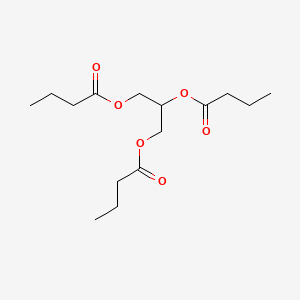
- Formula
- C15H26O6
- Weight
- 302.36 Da
- PubChem CID
- 6050
- Exact Mass
- 302.1729 Da
- LogP
- 2.4
- TPSA
- 78.9 Ų
- H-Bond Donors
- 0
- H-Bond Acceptors
- 6
- Rotatable Bonds
- 14
- Complexity
- 304
Identifiers (SMILES, InChI)
InChI=1S/C15H26O6/c1-4-7-13(16)19-10-12(21-15(18)9-6-3)11-20-14(17)8-5-2/h12H,4-11H2,1-3H3
UYXTWWCETRIEDR-UHFFFAOYSA-NReferences (8)
- [3]Evaluation of tributyrin supplementation in milk replacer on diarrhoea occurrence in preweaning Holstein calves
→ Tributyrin supplementation was shown to significantly reduce the frequency and severity of neonatal diarrhea by strengthening the intestinal antioxidant barrier.
- [1]Tributyrin administration improves intestinal development and health in pre-weaned dairy calves fed milk replacer
→ This study found that tributyrin improves intestinal immune and barrier functions while positively modulating gut microbial composition.
- [2]Dietary tributyrin, an HDAC inhibitor, promotes muscle growth through enhanced terminal differentiation of satellite cells
→ Research indicates tributyrin enhances the activity of muscle stem cells, leading to a significant increase in DNA:protein ratios and overall muscle growth efficiency.
- [4]Dietary Tributyrin Attenuates Intestinal Inflammation, Enhances Mitochondrial Function, and Induces Mitophagy in Piglets Challenged with Diquat
→ Tributyrin reduced markers of inflammation (TNF-α, IL-6) and improved mitochondrial function and antioxidant capacity under oxidative stress.
- [5]Prophylactic tributyrin treatment mitigates chronic-binge ethanol-induced intestinal barrier and liver injury
→ Experimental evidence suggests tributyrin protects the gut lining and liver from damage caused by acute or chronic alcohol consumption.
- [6]Maternal tributyrin supplementation in late pregnancy and lactation improves offspring immunity, gut microbiota, and diarrhea rate in a sow model
→ Maternal supplementation improved the immune status and gut health of offspring, highlighting its systemic impact on microbiome development.
- [7]Edelman MJ, Bauer K, Khanwani S, et al. Clinical and pharmacologic study of tributyrin: an oral butyrate prodrug Cancer Chemotherapy and Pharmacology (2003)
→ Oral tributyrin (a butyrate prodrug) was dosed 150-200 mg/kg three times daily with no dose-limiting toxicity, raising plasma butyrate.
- [8]et al. Feasibility and acceptability of 8-week oral tributyrin supplementation as add-on to antidepressant medication in patients with depression: a study protocol for a pilot randomised controlled trial Pilot and Feasibility Studies (2025)
→ Pilot RCT protocol uses oral tributyrin 4 g/day for 8 weeks as an add-on treatment.
Continue researching TRIBUTYRIN
Keep scientific evidence separate from commercial availability. Review how claims are evaluated, explore question-led research paths, or inspect disclosed source records without changing the editorial conclusions on this page.