Chromium Picolinate
Chromium Picolinate research profile covering evidence quality, proposed mechanisms, safety considerations, regulatory status, and linked primary sources.
Evidence-led profile
Research snapshot
- Evidence stage
- Emerging research
- References
- 2 linked sources
- Research coverage
- 1 area
- Editorial review
- Mar 8, 2026
Published by the PepGuide Editorial Team using our research methodology.
Overview
Chromium picolinate is a coordination compound consisting of trivalent chromium (Cr3+) chelated with three molecules of picolinic acid, a naturally occurring metabolite of tryptophan. This chelation significantly enhances the bioavailability of chromium compared to other supplemental forms. Chromium is classified as an essential trace mineral, though the precise mechanisms by which it influences human metabolism have been the subject of ongoing scientific debate, particularly following challenges to the earlier "glucose tolerance factor" hypothesis.
The primary area of interest in chromium picolinate supplementation involves its potential to enhance insulin signaling. Proposed mechanisms include upregulation of insulin receptor substrate proteins, activation of AMP-activated protein kinase (AMPK), and potentiation of insulin receptor tyrosine kinase activity through a chromium-binding oligopeptide called chromodulin. These effects have led to extensive research on its use in individuals with type 2 diabetes, insulin resistance, and polycystic ovary syndrome, as well as its marketing for weight management and body composition.
Clinical trial results for chromium picolinate have been variable. Some studies, particularly those conducted in populations with demonstrated chromium deficiency or poorly controlled type 2 diabetes, have shown improvements in fasting glucose, HbA1c, and lipid profiles. However, large meta-analyses have concluded that effects are generally modest and most pronounced in individuals with existing metabolic dysfunction. The supplement is generally considered safe at recommended doses, though concerns about potential genotoxicity at very high doses were raised in early cell culture studies, which have not been substantiated in subsequent animal or human research.
Mechanism of Action
Trivalent Chromium — Insulin Signal Amplification
Chromium picolinate provides trivalent chromium (Cr3+) chelated with three picolinic acid (pyridine-2-carboxylic acid) ligands, enhancing intestinal absorption from ~0.5% (inorganic chromium) to approximately 2-5%. Chromium's primary metabolic role involves potentiation of insulin receptor signaling through the low-molecular-weight chromium-binding substance chromodulin (also called LMWCr). Following insulin-stimulated chromium uptake into insulin-sensitive cells, four Cr3+ ions bind to apochromodulin, forming holochromodulin that binds to the insulin receptor beta-subunit, amplifying its tyrosine kinase activity approximately 8-fold. This enhances autophosphorylation of the receptor and downstream activation of IRS-1/PI3K/Akt signaling (PMID: 15208835).
GLUT4 Translocation & Glucose Uptake
Chromium enhances insulin-stimulated GLUT4 translocation to the plasma membrane in skeletal muscle and adipose tissue through potentiation of the Akt/AS160 (TBC1D4) phosphorylation cascade. AS160 phosphorylation releases its Rab-GTPase-activating protein (GAP) inhibition of Rab8A and Rab14, allowing GLUT4 storage vesicles to fuse with the plasma membrane. Clinical trials in type 2 diabetes demonstrate modest reductions in fasting glucose (0.5-1.0 mmol/L) and HbA1c (0.3-0.6%) with 200-1000 mcg/day chromium picolinate supplementation (PMID: 17519436).
AMPK Activation & Lipid Metabolism
Chromium activates AMP-activated protein kinase (AMPK) in hepatocytes and skeletal muscle, independently of insulin receptor signaling. AMPK activation phosphorylates and inactivates acetyl-CoA carboxylase (ACC), reducing malonyl-CoA levels, decreasing de novo lipogenesis, and enhancing fatty acid beta-oxidation through CPT1 derepression. This contributes to reductions in hepatic triglyceride content and circulating VLDL levels (PMID: 20570998).
Hypothalamic Effects on Appetite
Chromium picolinate modulates hypothalamic monoamine signaling, increasing serotonin (5-HT) release in the ventromedial hypothalamus and enhancing norepinephrine turnover, which may reduce carbohydrate craving and appetite in individuals with atypical depression or binge eating (PMID: 15829433).
Research
Reported Effects
Sugar Cravings:: Highly effective for many users in reducing the frequency and intensity of intense sugar binges.. Weight Loss:: Clinical evidence shows a modest benefit (approx. 1kg over placebo), which users feel is only effective when paired with exercise.. Insulin Sensitivity:: Most effective in individuals who already have compromised glucose metabolism or high-sugar diets.
- Highly effective for many users in reducing the frequency and intensity of intense sugar binges.
- Clinical evidence shows a modest benefit (approx. 1kg over placebo), which users feel is only effective when paired with exercise.
- Most effective in individuals who already have compromised glucose metabolism or high-sugar diets.
Safety and Limitations
Safety Profile: Chromium Picolinate
Common Side Effects
- Headache, dizziness, and insomnia (reported in clinical trials at 200–1000 mcg/day)
- Gastrointestinal symptoms: nausea, flatulence, abdominal discomfort, and loose stools
- Mood changes: irritability and mild cognitive fog during initial supplementation
- Vivid dreams (reported anecdotally at higher doses)
Serious Adverse Effects
- Renal toxicity: case reports of acute renal failure, interstitial nephritis, and renal tubular necrosis at doses of 600–2400 mcg/day; risk is elevated in pre-existing kidney disease
- Hepatotoxicity: isolated case reports of liver damage including elevated transaminases and cholestatic hepatitis
- Rhabdomyolysis: at least one documented case at 600 mcg/day over several weeks
- Chromosomal damage: picolinate ligand specifically has shown clastogenic potential in vitro (hamster cell lines); clinical significance in humans remains debated
- Hypoglycemia: can potentiate insulin and oral hypoglycemics, causing dangerously low blood sugar
Contraindications
- Pre-existing renal impairment or chronic kidney disease
- Liver disease or active hepatitis
- Known chromate or chromium allergy (contact dermatitis history)
- Behavioral or psychiatric conditions (theoretical dopamine/serotonin modulation via picolinic acid)
Drug Interactions
- Insulin and oral hypoglycemics (metformin, sulfonylureas, SGLT2 inhibitors): additive blood glucose–lowering effect; increased hypoglycemia risk—requires blood glucose monitoring and potential dose adjustment
- Levothyroxine: chromium picolinate may reduce thyroid hormone absorption; separate dosing by at least 3–4 hours
- NSAIDs and other nephrotoxic drugs: combined renal stress; monitor kidney function
- Corticosteroids: may oppose chromium's glucose-lowering effects
- Iron supplements: trivalent chromium competes with iron for transferrin binding; may reduce iron absorption
Population-Specific Considerations
- Diabetes (Type 2): most studied population; benefits modest (HbA1c reduction ~0.5%); always coordinate with prescriber when adding to existing regimen
- Pregnancy / lactation: adequate intake (25–45 mcg/day from diet) is safe; supplemental chromium picolinate specifically lacks robust safety data in pregnancy—use chromium polynicotinate or food sources instead
- Adolescents: marketed for weight loss but no safety data supports use in those under 18
- Elderly: increased renal vulnerability; use lowest effective dose and monitor creatinine
- Psychiatric patients: picolinic acid modulates tryptophan metabolism; theoretical risk of mood destabilization
Common Side Effects
- Kidney Stress:: Some users express concern regarding potential renal toxicity with long-term, high-dose usage.
- Skin Reactions:: While rare, some anecdotal reports mention potential interactions or sensitivities when paired with intensive skin treatments like Accutane.
- Hypoglycemia:: Potential for lightheadedness if taken on an empty stomach by individuals with already low blood sugar.
Reconstitution Calculator
Pharmacokinetic Profile
Molecular Structure
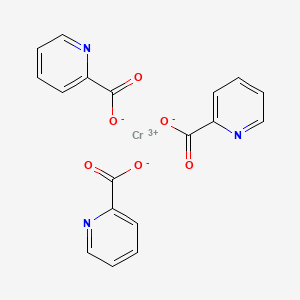
- Formula
- C18H12CrN3O6
- Weight
- 418.3 Da
- PubChem CID
- 151932
- Exact Mass
- 418.0131 Da
- TPSA
- 159 Ų
- H-Bond Donors
- 0
- H-Bond Acceptors
- 9
- Rotatable Bonds
- 0
- Complexity
- 108
Identifiers (SMILES, InChI)
InChI=1S/3C6H5NO2.Cr/c3*8-6(9)5-3-1-2-4-7-5;/h3*1-4H,(H,8,9);/q;;;+3/p-3
CBDQOLKNTOMMTL-UHFFFAOYSA-KReferences (2)
- [2]Chromium Picolinate Intake and Risk of Type 2 Diabetes: an Evidence-Based Review by the United States Food and Drug Administration
→ An FDA review concluded there is limited and uncertain evidence that chromium picolinate may reduce the risk of insulin resistance and type 2 diabetes.
- [1]A double-blind, placebo-controlled, exploratory trial of chromium picolinate in atypical depression: effect on carbohydrate craving
→ This study found that chromium picolinate may significantly reduce carbohydrate cravings and improve symptoms in patients suffering from atypical depression.
Continue researching Chromium Picolinate
Keep scientific evidence separate from commercial availability. Review how claims are evaluated, explore question-led research paths, or inspect disclosed source records without changing the editorial conclusions on this page.