DMAE (Dimethylaminoethanol)
DMAE (Dimethylaminoethanol) research profile covering evidence quality, proposed mechanisms, safety considerations, regulatory status, and linked primary…
Evidence-led profile
Research snapshot
- Evidence stage
- Emerging research
- References
- 7 linked sources
- Research coverage
- 1 area
- Editorial review
- Mar 8, 2026
Published by the PepGuide Editorial Team using our research methodology.
Overview
Dimethylaminoethanol (DMAE) is a naturally occurring compound found in small quantities in the brain and more abundantly in oily fish such as sardines, anchovies, and salmon. Structurally related to choline, DMAE is believed to cross the blood-brain barrier more efficiently than choline itself, where it may serve as a precursor to acetylcholine, the neurotransmitter essential for memory, learning, and muscle contraction. Historically, its pharmaceutical form (deanol) was marketed for the treatment of hyperactivity and learning disorders in children.
As a nootropic supplement, DMAE has been investigated for its potential to improve focus, mental clarity, and mood. Some research suggests it may reduce the accumulation of lipofuscin, an age-related pigment that builds up in neurons and other cells. However, clinical evidence for significant cognitive enhancement in healthy adults remains limited and mixed, with some studies showing modest improvements in alertness and others failing to demonstrate clear benefits.
Beyond its neurological applications, DMAE has found widespread use in the cosmetic industry. When applied topically, DMAE produces a measurable skin-firming effect, likely through its action on cell membrane fluidity and muscle tone in the underlying tissue. Supplemental DMAE is typically dosed at 100 to 300 mg per day. Potential side effects include insomnia, headache, and muscle tension, and it is contraindicated in individuals with bipolar disorder or seizure disorders due to its potential to exacerbate these conditions.
Mechanism of Action
Cholinergic Precursor Pathway
Dimethylaminoethanol (DMAE, deanol) is an organic amine and structural analog of choline, differing by one fewer methyl group. DMAE crosses the blood-brain barrier more efficiently than choline due to its lower molecular weight and greater lipophilicity. In the CNS, DMAE is methylated by phosphatidylethanolamine N-methyltransferase (PEMT) to form choline, which then serves as substrate for acetylcholine (ACh) synthesis via choline acetyltransferase (PMID: 14732431).
Phospholipid Membrane Integration
DMAE is incorporated into cell membrane phospholipids as phosphatidyldimethylaminoethanol (PDMAE), an analog of phosphatidylcholine. PDMAE integration alters membrane biophysical properties, potentially increasing membrane fluidity and stability. However, excessive PDMAE incorporation may interfere with normal phosphatidylcholine-dependent membrane functions, representing a dose-dependent biphasic effect on membrane integrity (PMID: 3495162).
Anti-Lipofuscin Activity
DMAE is one of the most effective known agents for reducing accumulation of lipofuscin (age pigment) — indigestible cross-linked protein and lipid aggregates that accumulate in lysosomes of post-mitotic cells (neurons, cardiomyocytes). The mechanism involves DMAE's ability to scavenge free radicals that initiate lipid peroxidation and cross-linking, and to enhance lysosomal turnover. Centrophenoxine (meclofenoxate), a DMAE prodrug, is the best-studied form for this application (PMID: 3897237).
Cognitive & Neurophysiological Effects
DMAE increases cortical cholinergic tone, producing mild psychostimulant effects including improved vigilance, attention, and mood. EEG studies show increased beta-wave activity and reduced theta-wave activity, consistent with enhanced cortical arousal. DMAE also modulates dopaminergic signaling indirectly, likely through cholinergic-dopaminergic interactions in the mesolimbic system (PMID: 14732431).
Research
Reported Effects
Subtle or Absent Effects:: Many users report negligible or very subtle effects from DMAE supplementation, with effectiveness often questioned compared to other nootropics. Better in Combinations:: When effects are noticed, they tend to occur when DMAE is stacked with other supplements rather than used alone. Individual Variability:: Response appears highly individual, with some users finding mild benefits while others experience no noticeable changes. Not a Primary Nootropic:: Generally not considered a first-line or standout nootropic supplement by experienced users, often overshadowed by other options
- Many users report negligible or very subtle effects from DMAE supplementation, with effectiveness often questioned compared to other nootropics
- When effects are noticed, they tend to occur when DMAE is stacked with other supplements rather than used alone
- Response appears highly individual, with some users finding mild benefits while others experience no noticeable changes
- Generally not considered a first-line or standout nootropic supplement by experienced users, often overshadowed by other options
Safety and Limitations
Common Side Effects
- Most commonly reported side effects include headache, insomnia, and restlessness, particularly at higher doses (above 400 mg/day)
- Gastrointestinal complaints including nausea, diarrhea, and stomach upset
- A characteristic fishy body odor is a well-known side effect resulting from trimethylamine production during metabolism; this is dose-dependent and reversible
- Muscle tension, particularly in the jaw, neck, and shoulders, has been reported
- Vivid dreams or disturbed sleep patterns, especially with evening dosing
- Mild increase in blood pressure in some individuals
Serious Adverse Effects
- May exacerbate symptoms in individuals with bipolar disorder, depression, or schizophrenia due to cholinergic modulation
- Rare reports of significant blood pressure elevation, particularly concerning for individuals with pre-existing hypertension
- Potential to trigger or worsen seizures in individuals with epilepsy due to cholinergic stimulation
- Allergic contact dermatitis reported with topical formulations
Contraindications
- Contraindicated in individuals with epilepsy or seizure disorders due to potential lowering of seizure threshold
- Individuals with bipolar disorder should avoid DMAE, as it may precipitate manic episodes
- Pregnant and breastfeeding women must avoid DMAE entirely; it has been associated with neural tube defects in animal studies
- Not recommended for individuals with Parkinson disease who are on anticholinergic medications, as effects may be counteracted
- Patients with severe hypertension should avoid supplementation
Drug Interactions
- May interfere with anticholinergic medications (benztropine, trihexyphenidyl, atropine) by opposing their mechanism of action
- Potential additive effects with cholinesterase inhibitors (donepezil, rivastigmine, galantamine), increasing risk of cholinergic toxicity
- May interact with medications for myasthenia gravis
- Concurrent use with other stimulatory supplements (caffeine, synephrine) may increase risk of insomnia, anxiety, and elevated blood pressure
- May affect the metabolism of drugs processed through choline-related pathways
Population-Specific Considerations
- Older adults may be more sensitive to cholinergic effects and should start with lower doses (100–150 mg/day)
- Individuals with a history of depression should use with caution and under medical supervision
- Athletes should be aware that DMAE may enhance focus but can cause muscle tension that impairs performance in some sports
Common Side Effects
- Choline Overload:: When combined with multiple choline sources (Alpha-GPC, CDP-Choline), users report potential for depression and attention issues
- Minimal Standalone Effects:: Most common complaint is lack of noticeable effects rather than negative side effects
- Topical Skin Concerns:: Some research suggests concentrated topical DMAE may affect fibroblast viability, raising questions about skincare applications
- Generally Well-Tolerated:: When side effects occur, they tend to be mild, with most users reporting no adverse reactions at standard doses
Research protocol summary
- Typical Dose
- Commonly mentioned doses range from 100-1200mg daily, with lower doses around 100-500mg being more typical
These values summarize cataloged research protocols. They are not personal dosing instructions or medical guidance.
Reconstitution Calculator
Pharmacokinetic Profile
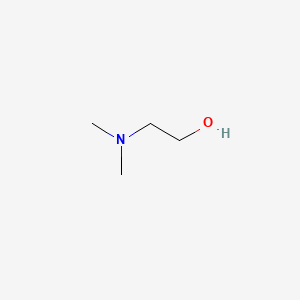
Molecular Structure
- Formula
- C4H11NO
- Weight
- 89.14 Da
- PubChem CID
- 7902
- Exact Mass
- 89.0841 Da
- LogP
- -0.4
- TPSA
- 23.5 Ų
- H-Bond Donors
- 1
- H-Bond Acceptors
- 2
- Rotatable Bonds
- 2
- Complexity
- 28
Identifiers (SMILES, InChI)
InChI=1S/C4H11NO/c1-5(2)3-4-6/h6H,3-4H2,1-2H3
UEEJHVSXFDXPFK-UHFFFAOYSA-NReferences (7)
- [1]Effects of dimethylaminoethanol pyroglutamate (DMAE p-Glu) against memory deficits induced by scopolamine: evidence from preclinical and clinical studies
→ DMAE pyroglutamate demonstrated procholinergic and promnesic effects in both animal models and human studies, showing potential for improving cognitive deficits related to cholinergic dysfunction.
- [2]In vivo skin effects of a dimethylaminoethanol (DMAE) based formulation
→ Topical DMAE application increased dermal thickness and collagen fiber thickness in mice, and improved skin hydration in human volunteers, suggesting potential anti-aging benefits for skin.
- [3]New insights on dimethylaminoethanol (DMAE) features as a free radical scavenger
→ DMAE demonstrated ability to scavenge hydroxyl, ascorbyl, and lipid radicals in vitro, supporting its potential role as an antioxidant compound.
- [4]Use of DMAE (2-dimethylaminoethanol) in the induction of lucid dreams
→ DMAE was proposed as a supplement that may facilitate the induction of lucid dreams, though this was a hypothesis paper rather than a controlled study.
- [5]Dimethylaminoethanol affects the viability of human cultured fibroblasts
→ Study found that DMAE directly affected cultured human fibroblasts, raising questions about its mechanism of action beyond simple muscle contraction theories.
- [6]Effects of dimethylaminoethanol and compound amino acid on D-galactose induced skin aging model of rat
→ DMAE and amino acid supplementation showed antiaging effects on skin in a rat model of accelerated aging, potentially through antioxidant mechanisms.
- [7]Comparative disposition of dimethylaminoethanol and choline in rats and mice following oral or intravenous administration
→ Pharmacokinetic study characterizing the absorption, distribution, metabolism, and excretion of DMAE in rodents, providing safety and toxicology data.
Continue researching DMAE (Dimethylaminoethanol)
Keep scientific evidence separate from commercial availability. Review how claims are evaluated, explore question-led research paths, or inspect disclosed source records without changing the editorial conclusions on this page.