XANTHOHUMOL
XANTHOHUMOL research profile covering evidence quality, proposed mechanisms, safety considerations, regulatory status, and linked primary sources.
Evidence-led profile
Research snapshot
- Evidence stage
- Emerging research
- References
- 11 linked sources
- Research coverage
- 1 area
- Editorial review
- Jul 7, 2026
Published by the PepGuide Editorial Team using our research methodology.
Xanthohumol is a prenylated flavonoid compound derived from hops (Humulus lupulus) with potent antioxidant, anti-inflammatory, and neuroprotective properties. It works primarily by regulating the Nrf2/NF-κB/mTOR/AKT pathways, reducing oxidative stress, inhibiting inflammation, and potentially protecting against neurodegenerative diseases and metabolic disorders. Research suggests benefits for cognitive function, metabolic health, and disease prevention, though human clinical data remains limited.
Research
Reported Effects
Cognitive Enhancement:: Animal studies show consistent improvements in cognitive flexibility and protection against age-related brain damage, though human data is limited. Microbiome Dependent:: Effectiveness for metabolic benefits appears dependent on intact gut microbiota, suggesting variable individual responses. Tau Aggregation:: In vitro studies show promise for Alzheimer's prevention through direct tau protein interaction, but clinical translation uncertain. Safety Profile:: Extensive animal studies show good safety at high doses with no organ toxicity, supported by Phase I human trial data
- Animal studies show consistent improvements in cognitive flexibility and protection against age-related brain damage, though human data is limited
- Effectiveness for metabolic benefits appears dependent on intact gut microbiota, suggesting variable individual responses
- In vitro studies show promise for Alzheimer's prevention through direct tau protein interaction, but clinical translation uncertain
- Extensive animal studies show good safety at high doses with no organ toxicity, supported by Phase I human trial data
Safety and Limitations
Safety Profile: Xanthohumol
Common Side Effects
- Limited human clinical trial data; most safety information from in vitro and animal studies
- Mild gastrointestinal discomfort including nausea, bloating, and diarrhea
- Headache reported in some study participants
- Mild estrogenic or anti-estrogenic effects (xanthohumol is a prenylated flavonoid from hops with complex hormonal activity)
- Dietary exposure through beer is minimal (0.1–0.5 mg/L) and generally poses no safety concerns
Serious Adverse Effects
- Estrogenic activity: Xanthohumol's metabolite isoxanthohumol can be converted to 8-prenylnaringenin (the most potent known phytoestrogen) by gut bacteria; this raises concerns for hormone-sensitive conditions
- Hepatotoxicity: High doses showed liver stress markers in some animal studies; clinical relevance in humans uncertain
- Limited pharmacokinetic data in humans; bioavailability is low and variable
- Potential immunomodulatory effects that are not fully characterized in vivo
- Allergic reactions possible in individuals sensitive to hops (Humulus lupulus) or related plants
Contraindications
- Known hypersensitivity to hops (Humulus lupulus) or Cannabaceae family plants
- Hormone-sensitive conditions (breast cancer, endometrial cancer, endometriosis) due to phytoestrogenic metabolites
- Active liver disease (limited safety data; hepatotoxicity concern from animal studies)
- Pregnancy and lactation (estrogenic activity and insufficient safety data)
- Concurrent use of hormone replacement therapy without medical supervision
Drug Interactions
- Estrogen and hormonal therapies (HRT, oral contraceptives): Potential estrogenic interaction via 8-prenylnaringenin metabolite
- CYP1A2 and CYP3A4 substrates: Xanthohumol may modulate these enzymes in vitro; clinical significance not established but caution warranted
- Anticoagulants/Antiplatelets: Some prenylated flavonoids have antiplatelet properties; monitor for bleeding
- Tamoxifen and aromatase inhibitors: Estrogenic metabolites may counteract anti-estrogen cancer therapies
- Sedatives and anxiolytics: Hops-derived compounds may have mild sedative effects; additive CNS depression possible
Population-Specific Considerations
- Menopausal women: Potential benefit for menopausal symptoms via phytoestrogenic activity, but use cautiously in those with hormone-sensitive cancer history
- Elderly: Limited safety data; start with low doses
- Pediatric: No safety data; not recommended
- Beer consumers: Dietary exposure from beer is far below supplemental doses; no additional safety concerns
- Cancer patients: Complex: anticancer properties demonstrated in vitro, but estrogenic metabolite is a concern for hormone-sensitive cancers; consult oncologist
Common Side Effects
- Minimal Reported:: Animal safety studies at very high doses (1000 mg/kg) showed no significant adverse effects or organ damage
- Individual Variation:: Effects may vary based on gut microbiome composition and metabolic status
- Drug Interactions:: Potential effects on CYP3A11 enzyme expression suggest possible interactions with medications metabolized by this pathway
- Long-term Safety:: Good safety profile in animal studies, but limited long-term human data available from clinical trials
Reconstitution Calculator
Pharmacokinetic Profile
Molecular Structure
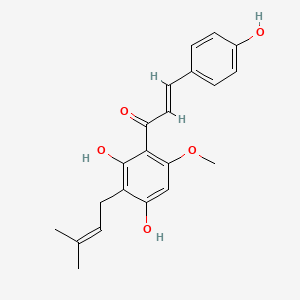
- Formula
- C21H22O5
- Weight
- 354.4 Da
- PubChem CID
- 639665
- Exact Mass
- 354.1467 Da
- LogP
- 5.1
- TPSA
- 87 Ų
- H-Bond Donors
- 3
- H-Bond Acceptors
- 5
- Rotatable Bonds
- 6
- Complexity
- 514
Identifiers (SMILES, InChI)
InChI=1S/C21H22O5/c1-13(2)4-10-16-18(24)12-19(26-3)20(21(16)25)17(23)11-7-14-5-8-15(22)9-6-14/h4-9,11-12,22,24-25H,10H2,1-3H3/b11-7+
ORXQGKIUCDPEAJ-YRNVUSSQSA-NReferences (11)
- [1]Antioxidant Potential of Xanthohumol in Disease Prevention: Evidence from Human and Animal Studies
→ Comprehensive review showing xanthohumol's strong antioxidant and anti-inflammatory effects through regulation of key cellular pathways, with potential for preventing cancer and neurodegenerative diseases, though some risks exist in certain disease states like advanced prostate cancer.
- [2]Xanthohumol improved cognitive flexibility in young mice
→ Study demonstrated that xanthohumol supplementation improved cognitive flexibility and reversed age-related changes in protein palmitoylation status in brain tissue, suggesting potential neuroprotective benefits.
- [3]Protective effect of xanthohumol against age-related brain damage
→ Research found xanthohumol protected against age-related brain damage through antioxidant mechanisms, reducing oxidative stress markers and improving mitochondrial function in aging brain tissue.
- [4]Xanthohumol protects neuron from cerebral ischemia injury in experimental stroke
→ Animal studies showed xanthohumol provided neuroprotection in stroke models through antioxidant effects, reducing brain damage and improving outcomes following ischemic injury.
- [5]Xanthohumol inhibits tau protein aggregation and protects cells against tau aggregates
→ Study found xanthohumol directly inhibits tau protein aggregation and disaggregates tau fibrils, protecting cells from tau-induced apoptosis with potential implications for Alzheimer's disease prevention.
- [6]Xanthohumol Requires the Intestinal Microbiota to Improve Glucose Metabolism in Diet-Induced Obese Mice
→ Research demonstrated that xanthohumol's beneficial effects on glucose metabolism and obesity are mediated through the gut microbiome, with effects being lost in microbiota-depleted animals.
- [7]Xanthohumol microbiome and signature in healthy adults (the XMaS trial): a phase I triple-masked, placebo-controlled clinical trial
→ Phase I clinical trial examining the safety and tolerability of xanthohumol supplementation in healthy adults, with focus on microbiome effects and metabolic markers.
- [8]Xanthohumol feeding does not impair organ function and homoeostasis in mice
→ Safety study found that high-dose xanthohumol supplementation (1000 mg/kg body weight) for 3 weeks showed no signs of toxicity or organ damage in mice, supporting its safety profile.
- [9]Xanthohumol, a hop-derived prenylated flavonoid, promotes macrophage reverse cholesterol transport
→ Study showed xanthohumol increased reverse cholesterol transport in a hamster model, potentially contributing to its anti-atherosclerotic effects and cardiovascular benefits.
- [10]Ferk F, Misik M, Nersesyan A, et al. Impact of xanthohumol (a prenylated flavonoid from hops) on DNA stability and other health-related biochemical parameters: Results of human intervention trials Molecular Nutrition & Food Research (2016)
→ Human intervention trials used oral xanthohumol at 6-24 mg/day for up to 3 weeks; 12 mg/day protected white-blood-cell DNA from oxidative damage, defining a practical daily supplemental range.
- [11]Legette LL, Karnpracha C, Reed RL, et al. Human pharmacokinetics of xanthohumol, an antihyperglycemic flavonoid from hops Molecular Nutrition & Food Research (2014)
→ Single oral doses of 20-180 mg xanthohumol in healthy adults were well tolerated with a ~18-20 h half-life, supporting once-daily dosing.
Continue researching XANTHOHUMOL
Keep scientific evidence separate from commercial availability. Review how claims are evaluated, explore question-led research paths, or inspect disclosed source records without changing the editorial conclusions on this page.