TUDCA
TUDCA research profile covering evidence quality, proposed mechanisms, safety considerations, regulatory status, and linked primary sources.
Evidence-led profile
Research snapshot
- Evidence stage
- Emerging research
- References
- 8 linked sources
- Research coverage
- 1 area
- Editorial review
- Jul 7, 2026
Published by the PepGuide Editorial Team using our research methodology.
Tauroursodeoxycholic acid (TUDCA) is a hydrophilic bile acid derivative that acts as a chemical chaperone to reduce endoplasmic reticulum (ER) stress and prevent apoptosis. It is primarily used to support liver health, treat cholestatic conditions, and is being investigated for neuroprotective effects in neurodegenerative diseases.
Mechanism of Action
Mechanism of Action: TUDCA
Chemical Chaperone Function
TUDCA's most distinctive mechanism is its ability to act as a chemical chaperone in the endoplasmic reticulum. Unlike pharmacological chaperones that bind specific proteins, TUDCA non-specifically stabilizes protein conformation during folding, reducing the accumulation of misfolded proteins. This alleviates ER stress and prevents prolonged activation of the unfolded protein response (UPR), which when chronic, triggers apoptotic signaling through CHOP and JNK pathways.
Hepatoprotection
In liver cells, TUDCA provides protection through multiple convergent mechanisms: it promotes bile flow (choleresis) by stimulating canalicular bile salt export pump (BSEP) activity; it protects hepatocyte mitochondria from bile acid toxicity by preventing the mitochondrial permeability transition; and it reduces oxidative stress by maintaining glutathione levels. These actions are relevant to cholestatic liver diseases, NAFLD, and drug-induced liver injury.
Neuroprotection
TUDCA crosses the blood-brain barrier and provides neuroprotection in models of Parkinson's, Alzheimer's, and Huntington's diseases. The mechanism involves stabilization of mitochondrial membranes in neurons, reduction of ER stress in protein aggregation diseases, and suppression of neuroinflammation through TGR5-mediated inhibition of microglial NF-κB activation.
Metabolic Effects
Through FXR and TGR5 activation, TUDCA improves insulin sensitivity, enhances GLP-1 secretion from enteroendocrine L-cells, and promotes energy expenditure via DIO2-mediated T4-to-T3 conversion. Human studies have demonstrated that TUDCA supplementation improves insulin sensitivity in obese subjects by reducing hepatic and muscle ER stress.
Anti-Inflammatory Mechanisms
TUDCA suppresses inflammation through TGR5/cAMP/PKA signaling, which inhibits NLRP3 inflammasome assembly and NF-κB nuclear translocation. This reduces production of IL-1β, TNF-α, and IL-6, with demonstrated efficacy in models of colitis, hepatitis, and neuroinflammation.
Research
Reported Effects
Neuroprotection:: Highly effective in preclinical models for preventing memory loss in Alzheimer's and Parkinson's contexts.. Liver Health:: Clinically recognized for its ability to treat biliary disorders and protect against alcohol-related or chemical liver stress.. Digestive Support:: Users find it helpful for fat digestion and managing issues related to bile flow.. Additive Synergy:: Works significantly better when stacked with antioxidants like CoQ10 or N-Acetylcysteine (NAC).
- Highly effective in preclinical models for preventing memory loss in Alzheimer's and Parkinson's contexts.
- Clinically recognized for its ability to treat biliary disorders and protect against alcohol-related or chemical liver stress.
- Users find it helpful for fat digestion and managing issues related to bile flow.
- Works significantly better when stacked with antioxidants like CoQ10 or N-Acetylcysteine (NAC).
Safety and Limitations
Safety Profile: TUDCA (Tauroursodeoxycholic Acid)
Common Side Effects
- Diarrhea (most common, dose-dependent)
- Mild nausea and stomach discomfort
- Headache
- Flatulence and bloating
- Mild pruritus (paradoxical, given its antipruritic use in cholestasis)
Serious Adverse Effects
- Generally very well tolerated; used clinically for cholestatic liver diseases at doses of 750–1750 mg/day
- Rare: worsening of diarrhea to dehydration levels at high doses
- Theoretical bile acid pool alteration with chronic high-dose use in individuals without biliary disease
- Possible gallstone dissolution leading to temporary biliary colic (rare, similar to UDCA)
Contraindications
- Complete biliary obstruction (bile acids require biliary patency)
- Known hypersensitivity to TUDCA, UDCA, or other bile acids
- Calcified gallstones (not amenable to bile acid dissolution)
- Chronic inflammatory bowel disease affecting the colon (bile acid malabsorption may worsen diarrhea)
Drug Interactions
- Cholestyramine and other bile acid sequestrants: Directly bind and inactivate TUDCA; separate dosing by at least 4 hours
- Aluminum-containing antacids: Reduce TUDCA absorption
- Cyclosporine: TUDCA may alter cyclosporine absorption; monitor levels
- Oral contraceptives and estrogens: These can reduce bile acid efficacy; theoretical reduced benefit
- Hepatotoxic drugs (statins, acetaminophen, methotrexate): TUDCA is often used specifically to counteract hepatotoxicity from these drugs
Population-Specific Considerations
- Liver disease: Primary clinical use; well-studied in primary biliary cholangitis and cholestatic conditions
- Bodybuilding/fitness community: Widely used as "liver support" during oral anabolic steroid cycles; likely beneficial given hepatoprotective properties
- Neurodegenerative diseases: Emerging research in ALS, Parkinson's, and Alzheimer's (anti-apoptotic and ER stress-reducing properties); clinical trials ongoing
- Pregnancy: UDCA (parent compound) is used for intrahepatic cholestasis of pregnancy; TUDCA-specific pregnancy data is limited
- Cholesterol gallstones: Can dissolve radiolucent gallstones over 6–24 months; not effective for calcified stones
Common Side Effects
- Gastrointestinal Distress:: Some users report diarrhea or loose stools, particularly at doses exceeding 1,000mg.
- Dehydration:: Reports of increased thirst or dry mouth at higher supplemental ranges.
- Potential Toxicity Debate:: A subset of concerns exists regarding UDCA's metabolite effects at very high doses, though TUDCA is generally considered safer due to its hydrophilic nature.
- Pruritus:: Itching has been occasionally noted in clinical settings for cholestatic patients.
Research protocol summary
- Typical Dose
- Commonly taken at 250mg to 500mg daily by recreational users.
These values summarize cataloged research protocols. They are not personal dosing instructions or medical guidance.
Reconstitution Calculator
Pharmacokinetic Profile
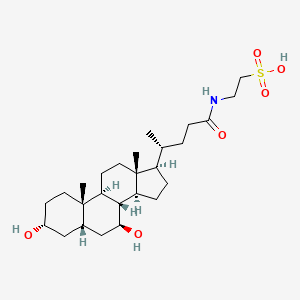
Molecular Structure
- Formula
- C26H45NO6S
- Weight
- 499.7 Da
- PubChem CID
- 9848818
- Exact Mass
- 499.2968 Da
- LogP
- 3.6
- TPSA
- 132 Ų
- H-Bond Donors
- 4
- H-Bond Acceptors
- 6
- Rotatable Bonds
- 7
- Complexity
- 858
Identifiers (SMILES, InChI)
InChI=1S/C26H45NO6S/c1-16(4-7-23(30)27-12-13-34(31,32)33)19-5-6-20-24-21(9-11-26(19,20)3)25(2)10-8-18(28)14-17(25)15-22(24)29/h16-22,24,28-29H,4-15H2,1-3H3,(H,27,30)(H,31,32,33)/t16-,17+,18-,19-,20+,21+,22+,24+,25+,26-/m1/s1
BHTRKEVKTKCXOH-LBSADWJPSA-NReferences (8)
- [5]Synbiotic Intervention with Inulin and Lactiplantibacillus plantarum LPm77 Attenuates Type 2 Diabetes via Enhanced TUDCA Metabolism and Gut-Liver Axis Modulation
→ Research indicates that TUDCA metabolism plays a crucial role in managing metabolic disorders like Type 2 diabetes by modulating the gut-liver axis.
- [2]Tauroursodeoxycholic acid (TUDCA) supplementation prevents cognitive impairment and amyloid deposition in APP/PS1 mice
→ Long-term TUDCA supplementation in an Alzheimer’s model prevented memory defects and reduced amyloid-beta plaque deposition in the brain.
- [3]Combination of tauroursodeoxycholic acid, co-enzyme Q10 and creatine demonstrates additive neuroprotective effects in in-vitro models of Parkinson's disease
→ TUDCA combined with CoQ10 and creatine showed synergistic protection against mitochondrial dysfunction and protein misfolding in human dopaminergic neurons.
- [4]Promoting longevity in aged liver through NLRP3 inflammasome inhibition using tauroursodeoxycholic acid (TUDCA) and SCD probiotics
→ TUDCA application inhibited liver inflammation and oxidative stress in aged models, suggesting a role in promoting hepatic longevity.
- [6]Potential therapeutic action of tauroursodeoxycholic acid against cholestatic liver injury via hepatic Fxr/Nrf2 and CHOP-DR5-caspase-8 pathway
→ TUDCA protects the liver from cholestatic injury by activating detoxifying pathways and inhibiting cell death signaling.
- [1]Bile acid metabolites predict multiple sclerosis progression and supplementation is safe in progressive disease
→ A clinical trial found that 2g daily of TUDCA is safe and tolerable for patients with progressive multiple sclerosis, potentially slowing brain and retinal atrophy while modulating the gut microbiome.
- [7]Paganoni S, et al. Tauroursodeoxycholic acid in patients with amyotrophic lateral sclerosis: the TUDCA-ALS trial protocol Frontiers in Neurology (2022)
→ Phase III ALS trial administers TUDCA orally at 1 g twice daily (2 g/day) for 18 months.
- [8]et al. Effect of tauroursodeoxycholic acid on survival and safety in amyotrophic lateral sclerosis: a retrospective population-based cohort study European Journal of Neurology (2023)
→ Doses >=1000 mg/day of TUDCA were associated with prolonged survival; side effects were mainly mild GI and infrequent.
Continue researching TUDCA
Keep scientific evidence separate from commercial availability. Review how claims are evaluated, explore question-led research paths, or inspect disclosed source records without changing the editorial conclusions on this page.