D-Ribose
D-Ribose research profile covering evidence quality, proposed mechanisms, safety considerations, regulatory status, and linked primary sources.
Evidence-led profile
Research snapshot
- Evidence stage
- Emerging research
- References
- 3 linked sources
- Research coverage
- 1 area
- Editorial review
- Mar 8, 2026
Published by the PepGuide Editorial Team using our research methodology.
Overview
D-Ribose is a monosaccharide that serves as a fundamental building block of adenosine triphosphate (ATP), the primary energy currency of all living cells. It is a key component of the pentose phosphate pathway and is incorporated into nucleotides, coenzymes (NAD+, FAD), and nucleic acids (RNA and DNA). Unlike other sugars, D-ribose bypasses the rate-limiting steps of the oxidative pentose phosphate pathway, directly accelerating nucleotide salvage and ATP resynthesis.
Supplementation with D-ribose has been most extensively studied in the context of cardiovascular health. Patients with congestive heart failure, coronary artery disease, and myocardial ischemia have shown improvements in diastolic function, exercise tolerance, and quality of life with D-ribose supplementation. The ischemic or hypoxic myocardium loses ATP at an accelerated rate, and D-ribose can reduce the recovery time from days to hours by providing the substrate needed to rebuild the adenine nucleotide pool.
In sports and exercise science, D-ribose is used to accelerate recovery after high-intensity or prolonged exercise that depletes muscle ATP stores. Typical supplementation doses range from 5–15 g per day, often divided into multiple servings. While healthy individuals with adequate recovery time may see limited benefits, those with chronic fatigue conditions, fibromyalgia, or cardiovascular compromise may experience more pronounced improvements in energy and functional capacity.
Mechanism of Action
Purine Nucleotide Salvage & De Novo Synthesis
D-Ribose is a naturally occurring five-carbon monosaccharide (aldopentose) that serves as the essential sugar backbone for adenine nucleotide synthesis. It enters the cell via GLUT2 transporters and is phosphorylated by ribokinase to form ribose-5-phosphate (R5P), bypassing the oxidative branch of the pentose phosphate pathway (PPP). R5P is then converted to 5-phosphoribosyl-1-pyrophosphate (PRPP) by PRPP synthetase, the committed substrate for both de novo and salvage purine nucleotide synthesis (PMID: 14625336).
ATP Pool Restoration
In ischemic or metabolically stressed tissues (cardiac muscle, skeletal muscle), ATP is degraded through sequential dephosphorylation to ADP, AMP, inosine, and hypoxanthine — which are lost from the cell via purine nucleoside transporters. Regeneration of the adenine nucleotide pool requires de novo synthesis through PRPP. Exogenous D-ribose dramatically accelerates this process by providing a direct substrate for PRPP formation, reducing ATP recovery time from days to hours (PMID: 14625336).
Cardiac Energetics
In cardiomyocytes, D-ribose supplementation enhances the hypoxanthine salvage pathway via hypoxanthine-guanine phosphoribosyltransferase (HGPRT), recycling purine bases back to IMP and ultimately ATP. This is critical after ischemia-reperfusion events where the adenine nucleotide pool is depleted and the rate-limiting step is PRPP availability (PMID: 12956743).
Mitochondrial Function Support
By restoring ATP and total adenine nucleotide (TAN) pools, D-ribose supports mitochondrial membrane potential and oxidative phosphorylation capacity. It also provides the ribose moiety for NAD+, FAD, and coenzyme A synthesis, supporting overall mitochondrial redox balance and electron transport chain function.
Research
Reported Effects
Fitness Level Variance:: Highly effective for those with lower VO2 max or metabolic stress, while highly trained individuals may see fewer incremental benefits.. Diminishing Returns:: Some users report a 'fizzle out' effect where benefits are strong for the first few days but decline with continued use.. Post-Viral Recovery:: Cited as a beneficial component in complex stacks for managing Long COVID symptoms like muscle weakness and fatigue.. Fast-Acting:: Often noted for its immediate impact on energy levels when taken just before or during exercise.
- Highly effective for those with lower VO2 max or metabolic stress, while highly trained individuals may see fewer incremental benefits.
- Some users report a 'fizzle out' effect where benefits are strong for the first few days but decline with continued use.
- Cited as a beneficial component in complex stacks for managing Long COVID symptoms like muscle weakness and fatigue.
- Often noted for its immediate impact on energy levels when taken just before or during exercise.
Safety and Limitations
Safety Profile: D-Ribose
Common Side Effects
- Gastrointestinal symptoms: nausea, diarrhea, stomach discomfort, bloating
- Hypoglycemia-like symptoms (lightheadedness, sweating) — D-ribose can lower blood glucose transiently
- Headache, particularly at doses above 10 g/day
- Mild dizziness or faintness after rapid consumption
- Hyperuricemia (elevated uric acid) with prolonged high-dose use
Serious Adverse Effects
- Clinically significant hypoglycemia in diabetic patients or those on glucose-lowering medications
- Potential exacerbation of gout due to uric acid elevation (ribose is metabolized through purine pathways)
- Advanced glycation end-product (AGE) formation — D-ribose is a potent glycating sugar, potentially problematic with chronic high-dose use
- No hepatotoxicity or nephrotoxicity reported at standard doses (5-15 g/day)
Contraindications
- Insulin-dependent diabetes or frequent hypoglycemic episodes — D-ribose lowers blood glucose
- Active gout or severe hyperuricemia
- Hereditary fructose intolerance (metabolic pathway overlap)
- Pregnancy and breastfeeding (insufficient safety data for supplemental doses)
Drug Interactions
- Insulin and oral hypoglycemics: Additive blood glucose lowering — requires dose monitoring
- Aspirin, warfarin, heparin: No direct interaction, but monitor if metabolic changes occur
- Allopurinol/Febuxostat: May be needed concurrently if uric acid rises
- Alcohol: Combined use may exacerbate hypoglycemia
- Generally compatible with most cardiovascular medications (beta-blockers, ACE inhibitors, statins)
Population-Specific Considerations
- Heart failure patients: Best-studied population; doses of 5-15 g/day show benefit in some trials with good tolerability
- Athletes: Generally well-tolerated; take with food to minimize GI effects and glucose dips
- Diabetics: Use only under medical supervision with glucose monitoring
- Elderly: Monitor for hypoglycemia; start at lower doses
- Children: Safety not established at supplemental doses; not recommended without medical guidance
Common Side Effects
- Anxiety Sensitivity:: While rare, some users with pre-existing anxiety found it did not alleviate fatigue and occasionally exacerbated restlessness.
- Blood Sugar Impact:: As a sugar, users monitor its effect on glucose, though studies show it does not typically cause the same spikes as dextrose.
- Digestive Issues:: High doses may be associated with mild nausea or GI upset in sensitive individuals.
Reconstitution Calculator
Pharmacokinetic Profile
Molecular Structure
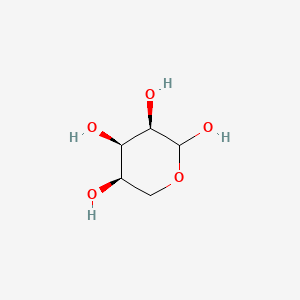
- Formula
- C5H10O5
- Weight
- 150.13 Da
- PubChem CID
- 10975657
- Exact Mass
- 150.0528 Da
- LogP
- -2.5
- TPSA
- 90.2 Ų
- H-Bond Donors
- 4
- H-Bond Acceptors
- 5
- Rotatable Bonds
- 0
- Complexity
- 117
Identifiers (SMILES, InChI)
InChI=1S/C5H10O5/c6-2-1-10-5(9)4(8)3(2)7/h2-9H,1H2/t2-,3-,4-,5?/m1/s1
SRBFZHDQGSBBOR-SOOFDHNKSA-NReferences (3)
- [2]The influence of D-ribose ingestion and fitness level on performance and recovery
→ A double-blind study found that 10g/day of D-ribose improved power output, lowered perceived exertion, and reduced muscle damage markers in lower-fitness individuals during high-intensity exercise.
- [1]Understanding D-Ribose and Mitochondrial Function
→ This review explains how D-ribose supports mitochondrial health by enhancing ATP production via the pentose phosphate pathway, especially when mitochondrial function declines due to aging or disease.
- [3]Mitochondrial bioenergetics and D-ribose in HFpEF: a brief narrative review
→ Research suggests D-ribose may improve cardiac relaxation and clinical symptoms in heart failure patients by addressing mitochondrial energy deficits.
Continue researching D-Ribose
Keep scientific evidence separate from commercial availability. Review how claims are evaluated, explore question-led research paths, or inspect disclosed source records without changing the editorial conclusions on this page.