Malic Acid
A naturally occurring dicarboxylic acid central to the Krebs cycle, used therapeutically for fibromyalgia pain, energy production support, and oral health, often combined with magnesium for musculoskeletal conditions.
Evidence-led profile
Research snapshot
- Evidence stage
- Emerging research
- References
- 5 linked sources
- Research coverage
- 1 area
- Editorial review
- Mar 8, 2026
Published by the PepGuide Editorial Team using our research methodology.
Overview
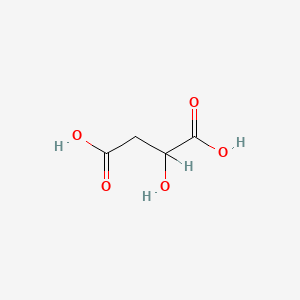
Malic Acid is an alpha-hydroxy dicarboxylic acid (C4H6O5) found abundantly in apples and other fruits, and is a key intermediate in the citric acid (Krebs) cycle — the central metabolic pathway responsible for aerobic energy production in all living cells. As a Krebs cycle intermediate, malic acid participates in the malate-aspartate shuttle that transfers reducing equivalents across the mitochondrial membrane, and its availability can influence the rate of oxidative phosphorylation and ATP generation. This biochemical role underpins its therapeutic application in conditions characterized by impaired energy metabolism, fatigue, and muscular pain.
The most significant clinical application of malic acid is in combination with magnesium for the management of fibromyalgia and chronic fatigue syndromes. The rationale stems from observations that fibromyalgia patients frequently exhibit low magnesium levels and impaired mitochondrial function, and that supplemental malic acid can enhance ATP production under hypoxic conditions by providing an anaplerotic substrate to the Krebs cycle. An early open-label trial by Abraham and Flechas (1992) reported significant reductions in pain and tenderness scores with magnesium malate supplementation, though subsequent controlled trials have yielded mixed results. The combination of Magnesium Glycinate or other bioavailable magnesium forms with malic acid remains popular in integrative medicine for musculoskeletal pain and energy support.
Beyond its metabolic roles, malic acid is widely used in the food industry as an acidulant (E296) and in dental care products for its ability to stimulate saliva production and support oral pH balance. In dermatology, it serves as an alpha-hydroxy acid (AHA) for chemical exfoliation, promoting cell turnover and skin texture improvement. Typical therapeutic doses range from 1,200–2,800 mg daily, usually combined with 300–600 mg of magnesium. Malic acid is generally recognized as safe (GRAS) by the FDA, with mild gastrointestinal effects (nausea, diarrhea) being the most common side effects at higher doses. It pairs well with B vitamins, CoQ10, and other mitochondrial support compounds in energy-focused supplement protocols.
Research
Reported Effects
Exercise Performance:: Most effective when combined with L-citrulline, with research showing measurable improvements in ATP production and phosphocreatine recovery. Individual Variability:: Response appears highly individual, with some users reporting significant benefits while others notice little to no effect from malate-containing supplements. Dosage-Dependent:: Effectiveness seems related to adequate dosing, typically 3-6 grams when combined with citrulline in research studies. Time to Effect:: Benefits appear to accumulate with consistent use rather than providing immediate acute effects, requiring several weeks of supplementation
Safety and Limitations
Malic acid is generally safe when consumed in food amounts and possibly safe as a short-term supplement. Side effects may include digestive issues such as diarrhea or upset stomach. People with low blood pressure should be cautious as it may further lower blood pressure, and its safety during pregnancy is not well-established.
Common Side Effects
- Gastrointestinal Distress:: Higher doses may cause stomach upset, bloating, or diarrhea in sensitive individuals, particularly when taken on an empty stomach
- Minimal Reported Issues:: When used at recommended doses, malic acid appears well-tolerated with few significant adverse effects reported
- Combination Effects:: Side effects are difficult to isolate when malic acid is consumed as part of multi-ingredient supplements
- Acidity Concerns:: As an organic acid, excessive intake may affect dental health or cause digestive discomfort in susceptible individuals
Mechanism of Action
Malic acid (L-malate) is a dicarboxylic acid that functions as a critical intermediate in the tricarboxylic acid (TCA/Krebs) cycle, the central metabolic pathway for aerobic energy production. Within the mitochondrial matrix, malate is oxidized to oxaloacetate by malate dehydrogenase (MDH), generating NADH that feeds into the electron transport chain (ETC) at Complex I for ATP synthesis via oxidative phosphorylation. Malate also participates in the malate-aspartate shuttle, the primary mechanism for transferring cytoplasmic NADH equivalents across the inner mitochondrial membrane, maintaining the NAD+/NADH redox balance essential for sustained glycolysis and cellular energy metabolism.
As a substrate for malic enzyme (ME), malate undergoes oxidative decarboxylation to pyruvate with concomitant production of NADPH, which is critical for reductive biosynthesis and maintenance of the glutathione antioxidant system. In the cytoplasm, malic enzyme-generated NADPH supports fatty acid synthesis and protects against oxidative stress by regenerating reduced glutathione (GSH) via glutathione reductase. The malate-fumarate interconversion catalyzed by fumarase also connects to mitochondrial biogenesis through ME2-mediated signaling that promotes mtDNA replication and mitoribosome assembly.
Therapeutically, supplemental malic acid enhances mitochondrial ATP production, particularly in conditions characterized by impaired energy metabolism such as fibromyalgia and chronic fatigue. Combined with magnesium, malic acid supports the reversal of aluminum-induced mitochondrial toxicity. Its capacity to chelate metals, acidify urine, and stimulate salivary flow adds to its utility in kidney stone prevention and management of xerostomia.
Research protocol summary
- Typical Dose
- 6-8 grams total (typically 2:1 ratio of citrulline to malate) taken 30-60 minutes pre-exercise
These values summarize cataloged research protocols. They are not personal dosing instructions or medical guidance.
Molecular Structure
- Formula
- C4H6O5
- Weight
- 134.09 Da
- PubChem CID
- 525
- Exact Mass
- 134.0215 Da
- LogP
- -1.3
- TPSA
- 94.8 Ų
- H-Bond Donors
- 3
- H-Bond Acceptors
- 5
- Rotatable Bonds
- 3
- Complexity
- 129
Identifiers (SMILES, InChI)
InChI=1S/C4H6O5/c5-2(4(8)9)1-3(6)7/h2,5H,1H2,(H,6,7)(H,8,9)
BJEPYKJPYRNKOW-UHFFFAOYSA-NReferences (5)
- [5]A critical review of citrulline malate supplementation and exercise performance
→ Comprehensive review analyzing the evidence for citrulline malate's effects on exercise performance, noting that benefits may be attributed to both the citrulline and malate components working synergistically.
- [1]The Effects of L-Citrulline and Malic Acid on Substrate Utilisation and Lactate Elimination
→ Study examining how L-citrulline combined with malic acid affects substrate metabolism and lactate clearance during exercise, suggesting potential benefits for aerobic energy production and recovery.
- [3]Effect of Malate-oligosaccharide Solution on Antioxidant Capacity of Endurance Athletes
→ Investigation into how malate-oligosaccharide solutions affect antioxidant status in endurance athletes, suggesting potential benefits for oxidative stress management during prolonged exercise.
- [4]Citrulline/malate promotes aerobic energy production in human exercising muscle
→ 31P-MRS study demonstrating that citrulline malate supplementation enhances aerobic ATP production during exercise and accelerates phosphocreatine recovery post-exercise in human skeletal muscle.
- [2]Malic acid supplementation increases urinary citrate excretion and urinary pH: implications for the potential treatment of calcium oxalate stone disease
→ Research showing malic acid supplementation significantly increases urinary citrate levels and pH, which may help prevent calcium oxalate kidney stones through similar mechanisms as traditional citrate therapy.
Continue researching Malic Acid
Keep scientific evidence separate from commercial availability. Review how claims are evaluated, explore question-led research paths, or inspect disclosed source records without changing the editorial conclusions on this page.