Astragaloside IV
Astragaloside IV research profile covering evidence quality, proposed mechanisms, safety considerations, regulatory status, and linked primary sources.
Evidence-led profile
Research snapshot
- Evidence stage
- Emerging research
- References
- 11 linked sources
- Research coverage
- 3 areas
- Editorial review
- Jul 7, 2026
Published by the PepGuide Editorial Team using our research methodology.
Overview
Astragaloside IV is a triterpenoid saponin and one of the principal bioactive compounds found in the root of Astragalus membranaceus, a plant with a long history of use in traditional Chinese medicine. It has attracted considerable scientific interest due to preclinical evidence suggesting it can activate telomerase, the enzyme responsible for maintaining telomere length, which has implications for cellular aging and longevity research.
Beyond its telomerase-related activity, astragaloside IV has been studied for cardioprotective effects, including attenuation of myocardial ischemia-reperfusion injury and reduction of cardiac fibrosis in animal models. The compound appears to exert anti-inflammatory action through modulation of the NF-κB signaling pathway and suppression of pro-inflammatory cytokine production. Additional preclinical studies have explored its neuroprotective, hepatoprotective, and immunomodulatory potential.
Astragaloside IV has limited oral bioavailability due to its large molecular weight and poor intestinal absorption, which has prompted research into enhanced delivery formulations. While it is commercially available as a dietary supplement, human clinical data remain limited, and most evidence derives from in vitro and animal studies. The compound is structurally related to cycloastragenol, its aglycone metabolite, which is also marketed for its purported anti-aging effects.
Mechanism of Action
Cycloartane Triterpenoid Saponin
Astragaloside IV (AS-IV) is the principal bioactive saponin isolated from Astragalus membranaceus root. It is a cycloartane-type triterpene glycoside with a tetracyclic scaffold that enables interactions with multiple cellular targets involved in inflammation, oxidative stress, and tissue repair (PMID: 24614112).
Telomerase Activation
AS-IV has been identified as a telomerase activator, enhancing the catalytic activity of human telomerase reverse transcriptase (hTERT) by upregulating hTERT gene expression through MAPK/ERK signaling. This promotes telomere maintenance in immune cells and fibroblasts, potentially counteracting replicative senescence. This mechanism underpins the patented telomerase activator TA-65, derived from astragalus (PMID: 22035048).
NF-kB & Inflammatory Pathway Modulation
AS-IV suppresses NF-kB activation through inhibition of IKKbeta phosphorylation and IkB-alpha degradation, reducing transcription of TNF-alpha, IL-1beta, IL-6, COX-2, and iNOS. It also inhibits TLR4/MyD88/TRAF6 upstream signaling in macrophages, blunting the innate immune inflammatory cascade triggered by LPS and damage-associated molecular patterns (PMID: 27720823).
PI3K/Akt/mTOR & Cardioprotection
AS-IV activates the PI3K/Akt survival pathway, phosphorylating GSK-3beta and Bad to inhibit mitochondrial apoptosis. In cardiomyocytes, this preserves mitochondrial membrane potential, reduces caspase-3/9 activation, and decreases infarct size in ischemia-reperfusion models. AS-IV also enhances VEGF expression and promotes angiogenesis in ischemic tissue (PMID: 26231173).
Nrf2-Mediated Antioxidant Defense
AS-IV activates the Keap1-Nrf2-ARE pathway, upregulating HO-1, SOD, glutathione peroxidase, and NQO1. This reduces ROS accumulation and lipid peroxidation, contributing to renal, hepatic, and neuronal protection in oxidative stress models (PMID: 28214597).
Research
Reported Effects
Research Quality:: Multiple peer-reviewed studies demonstrate consistent benefits across various organ systems and conditions, with mechanisms well-characterized. Bioavailability Considerations:: Content varies significantly based on source material, with periderm containing 8-fold higher concentrations than xylem tissue. Synergistic Potential:: Often works best when combined with other astragalus compounds or as part of comprehensive adaptogenic protocols. Traditional Use Validation:: Modern research supports traditional Chinese medicine applications for Qi tonification and immune enhancement
- Multiple peer-reviewed studies demonstrate consistent benefits across various organ systems and conditions, with mechanisms well-characterized
- Content varies significantly based on source material, with periderm containing 8-fold higher concentrations than xylem tissue
- Often works best when combined with other astragalus compounds or as part of comprehensive adaptogenic protocols
- Modern research supports traditional Chinese medicine applications for Qi tonification and immune enhancement
Cardioprotection and anti-fibrotic mechanisms
Astragaloside IV (AS-IV) is a lanostane-type triterpenoid saponin and the marker compound of Astragalus membranaceus (Huangqi). Preclinical systematic reviews and meta-analyses report that AS-IV improves left ventricular ejection fraction and fractional shortening, limits pathological remodeling, and lowers natriuretic peptides in animal models of heart failure, myocardial ischemia and viral myocarditis. Proposed mechanisms include antioxidant, anti-apoptotic, anti-inflammatory and antifibrotic effects with modulation of calcium handling and multiple signaling pathways (e.g., PI3K/Akt, TGF-beta/Smad).
- Improves ejection fraction and fractional shortening in animal heart failure
- Reduces cardiac fibrosis, apoptosis and oxidative stress
- Meta-analyses report benefit across ischemia and viral myocarditis models
Broad pharmacology and translational status
Beyond the heart, AS-IV shows anti-inflammatory, immunoregulatory, antidiabetic, neuroprotective (cerebral ischemia) and renoprotective activity in laboratory studies. Its clinical translation is limited by low oral bioavailability and a lack of rigorous human randomized trials; the evidence base is almost entirely animal and in vitro. AS-IV is therefore best characterized as a research compound and pharmacological probe rather than an established therapeutic.
- Multi-system preclinical activity (metabolic, neural, renal, immune)
- Low oral bioavailability constrains clinical development
- No adequately powered human randomized trials to date
Safety and Limitations
Common Side Effects
- Generally well-tolerated at standard doses (10-50 mg daily), with mild gastrointestinal symptoms such as nausea, bloating, or stomach discomfort being the most frequently reported complaints
- Occasional headache and dizziness have been noted in clinical trial participants
- Mild fatigue or drowsiness reported in some users, particularly during initial supplementation
Serious Adverse Effects
- Limited long-term human safety data exists, as most clinical studies have been short-duration (8-16 weeks)
- Theoretical immunostimulatory effects could be problematic in autoimmune conditions, though direct evidence is sparse
- No significant organ toxicity has been reported in available human or animal studies at recommended doses
Contraindications
- Individuals with autoimmune disorders (lupus, rheumatoid arthritis, multiple sclerosis) should use with caution due to potential immune-stimulating properties inherited from the parent astragalus plant
- Not recommended for individuals who have undergone organ transplantation or are on immunosuppressive therapy
- Should be discontinued at least two weeks prior to scheduled surgery due to potential effects on immune function and wound healing
Drug Interactions
- May interact with immunosuppressive drugs (cyclosporine, tacrolimus, azathioprine, corticosteroids) by counteracting their effects through immune activation
- Potential interaction with anticoagulant and antiplatelet medications, as some astragalus compounds have demonstrated mild antithrombotic activity
- May enhance the effects of antiviral medications; concurrent use should be monitored by a healthcare provider
- Theoretical interaction with lithium due to potential diuretic effects altering lithium clearance
- May potentiate the effects of hypoglycemic agents, requiring blood sugar monitoring in diabetic patients
Special Populations
- Insufficient safety data for use during pregnancy and breastfeeding; avoidance is recommended
- Pediatric dosing has not been established in clinical trials
- Elderly patients with compromised immune regulation should consult a healthcare provider before use
Common Side Effects
- Generally Well-Tolerated:: Research literature shows minimal adverse effects at standard doses in both animal and limited human studies
- Immune Modulation Caution:: May interact with immunosuppressive medications due to immune-enhancing effects
- Source Quality Issues:: Contamination or inconsistent potency in commercial products can lead to unpredictable effects
- Drug Interactions:: Potential interactions with medications metabolized through pathways affected by astragalus compounds
Research protocol summary
- Typical Dose
- Quality varies by extraction method and source tissue, with standardized extracts preferred for consistent dosing
These values summarize cataloged research protocols. They are not personal dosing instructions or medical guidance.
Reconstitution Calculator
Pharmacokinetic Profile
Astragaloside IV — Pharmacokinetic Curve
SubcutaneousMolecular Structure
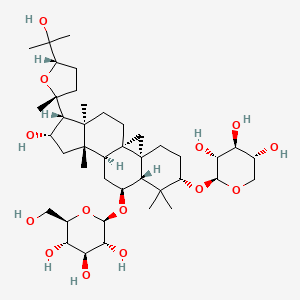
- Formula
- C41H68O14
- Weight
- 785.0 Da
- PubChem CID
- 13943297
- Exact Mass
- 784.4609 Da
- LogP
- 1.3
- TPSA
- 228 Ų
- H-Bond Donors
- 9
- H-Bond Acceptors
- 14
- Rotatable Bonds
- 7
- Complexity
- 1460
Identifiers (SMILES, InChI)
InChI=1S/C41H68O14/c1-35(2)24(54-33-29(48)26(45)20(44)17-51-33)9-11-41-18-40(41)13-12-37(5)31(39(7)10-8-25(55-39)36(3,4)50)19(43)15-38(37,6)23(40)14-21(32(35)41)52-34-30(49)28(47)27(46)22(16-42)53-34/h19-34,42-50H,8-18H2,1-7H3/t19-,20+,21-,22+,23-,24-,25-,26-,27+,28-,29+,30+,31-,32-,33-,34+,37+,38-,39+,40-,41+/m0/s1
QMNWISYXSJWHRY-YLNUDOOFSA-NResearch Indications
Primary Research Areas
Improves cardiac function and limits remodeling in animal heart-failure and ischemia models.
Reduces fibrosis and inflammation in cardiac, renal and pulmonary preclinical models.
Preclinical neuroprotective effects in cerebral ischemia models.
Improves insulin sensitivity and reduces oxidative stress in diabetic animal models.
References (11)
- [1]Astragaloside IV ameliorates Parkinson's disease by inhibiting TLR4/NF-κB-dependent neuroinflammation
→ AS-IV demonstrated neuroprotective effects in Parkinson's disease models by suppressing neuroinflammation through inhibition of the TLR4/NF-κB signaling pathway, suggesting potential therapeutic applications for neurodegenerative conditions.
- [2]Astragaloside IV Ameliorates Streptozotocin Induced Pancreatic β-Cell Apoptosis and Dysfunction Through SIRT1/P53 and Akt/GSK3β/Nrf2 Signaling Pathways
→ AS-IV protected pancreatic β-cells from damage and dysfunction by activating SIRT1/P53 and Akt/GSK3β/Nrf2 pathways, demonstrating anti-diabetic effects through anti-oxidant, anti-inflammatory, and anti-apoptotic properties.
- [3]Astragaloside IV Alleviates Depression in Rats by Modulating Intestinal Microbiota, T-Immune Balance, and Metabolome
→ AS-IV showed antidepressant effects by modulating gut microbiota (increasing beneficial bacteria like Lactobacillus), regulating Th17/Treg immune balance, and altering metabolic pathways, demonstrating the gut-brain axis connection.
- [6]Alleviative effects of astragaloside IV on cyclophosphamide-induced oxidative damage and immunosuppression in tilapia
→ AS-IV demonstrated protective effects against chemotherapy-induced oxidative damage and immune suppression, showing antioxidant and immunomodulatory properties that could support overall immune function.
- [7]Effects of astragaloside IV on the proliferation and osteogenic differentiation of human jaw bone marrow mesenchymal stem cells in vitro
→ AS-IV promoted proliferation and osteogenic differentiation of jaw bone marrow mesenchymal stem cells, suggesting potential applications in bone regeneration and healing.
- [8]Anti-anxiety and antidepressant-like effects of astragaloside IV and saponins extracted from Astragalus spinosus against the bisphenol A-induced motor and cognitive impairments
→ AS-IV showed anti-anxiety and antidepressant effects in a toxicity-induced model, improving motor and cognitive function while reducing neurochemical disturbances.
- [4]Astragaloside IV as a novel CXCR4 antagonist alleviates osteoarthritis in the knee of monosodium iodoacetate-induced rats
→ AS-IV demonstrated anti-inflammatory effects in osteoarthritis by acting as a CXCR4 antagonist, suggesting potential applications for joint health and inflammatory conditions.
- [5]Astragaloside IV Treats Parkinson's Disease by Regulating the Proliferation and Differentiation of NSCs through the SHH-Nurr1 Pathway
→ AS-IV enhanced neural stem cell proliferation and differentiation into dopamine neurons via the SHH-Nurr1 pathway, supporting potential therapeutic use for Parkinson's disease through neuroregeneration.
- [9]et al. Astragaloside IV for heart failure: preclinical evidence and possible mechanisms, a systematic review and meta-analysis Chinese Journal of Integrative Medicine (2023)
→ Meta-analysis of animal heart-failure studies found astragaloside IV improved ejection fraction and fractional shortening and reduced adverse remodeling and BNP.
- [10]et al. Research review on the pharmacological effects of astragaloside IV Fundamental & Clinical Pharmacology (2017)
→ Summarizes anti-inflammatory, antifibrotic, antioxidant, immunoregulatory, antidiabetic and cardioprotective actions across multiple signaling pathways.
- [11]et al. Pharmacological effects of astragaloside IV: a literature review Journal of Traditional Chinese Medicine (2013)
→ Reviews protective effects on cardiovascular, immune, digestive and nervous systems via calcium regulation, antioxidant and antiapoptotic mechanisms.
Continue researching Astragaloside IV
Keep scientific evidence separate from commercial availability. Review how claims are evaluated, explore question-led research paths, or inspect disclosed source records without changing the editorial conclusions on this page.