Beta-Carotene
Beta-Carotene research profile covering evidence quality, proposed mechanisms, safety considerations, regulatory status, and linked primary sources.
Evidence-led profile
Research snapshot
- Evidence stage
- Emerging research
- References
- 7 linked sources
- Research coverage
- 1 area
- Editorial review
- Mar 8, 2026
Published by the PepGuide Editorial Team using our research methodology.
Overview
Beta-carotene is a member of the carotenoid family, a group of naturally occurring fat-soluble pigments synthesized by plants, algae, and photosynthetic bacteria. Structurally, it is a tetraterpene composed of eight isoprene units with a characteristic system of conjugated double bonds responsible for its deep orange-red color. As the most efficient provitamin A carotenoid, one molecule of beta-carotene can be cleaved by the enzyme beta-carotene 15,15'-oxygenase to yield two molecules of retinal, which is subsequently converted to retinol (vitamin A).
Dietary sources rich in beta-carotene include carrots, sweet potatoes, spinach, kale, and cantaloupe. Its bioavailability is influenced by the food matrix, cooking methods, and the presence of dietary fat, which enhances intestinal absorption. Beyond its role as a vitamin A precursor, beta-carotene exhibits antioxidant properties by quenching singlet oxygen and scavenging peroxyl radicals, particularly under low oxygen partial pressures.
Supplementation with beta-carotene has been studied extensively in the context of cancer prevention and cardiovascular health. While observational studies initially suggested protective effects, large-scale randomized trials such as the ATBC and CARET studies found that high-dose supplementation increased lung cancer risk in smokers and asbestos-exposed individuals. Current guidelines generally recommend obtaining beta-carotene from whole foods rather than isolated supplements, particularly for populations at elevated risk of lung malignancies.
Mechanism of Action
Provitamin A Conversion
Beta-carotene is the most abundant dietary provitamin A carotenoid, containing two retinyl groups in its symmetric C40 polyene structure. Central cleavage by beta-carotene 15,15'-oxygenase 1 (BCO1/BCMO1) in intestinal enterocytes and hepatocytes yields two molecules of retinal (retinaldehyde). Retinal is then reduced to retinol (vitamin A) by retinal reductases or oxidized to retinoic acid by retinal dehydrogenases. The conversion is tightly regulated by retinoid status through feedback inhibition of BCO1 expression via the intestine-specific homeobox transcription factor ISX (PMID: 22113863).
Retinoic Acid Signaling
The biologically active metabolite all-trans-retinoic acid (ATRA) acts as a ligand for nuclear retinoic acid receptors (RAR-alpha, -beta, -gamma), which heterodimerize with retinoid X receptors (RXR) and bind retinoic acid response elements (RAREs) in gene promoters. This regulates transcription of over 500 genes involved in cell differentiation, proliferation, apoptosis, and immune function. ATRA is critical for epithelial cell maintenance, immune cell maturation (especially T-helper and regulatory T cells), and embryonic development (PMID: 17965418).
Singlet Oxygen Quenching
Beta-carotene is among the most efficient biological singlet oxygen (¹O₂) quenchers in nature, with a rate constant of ~1.5 × 10¹⁰ M⁻¹s⁻¹. The extended conjugated double bond system (11 conjugated C=C bonds) absorbs energy from excited-state singlet oxygen through physical quenching (energy transfer to the carotenoid's low-lying triplet state), dissipating it as heat without chemical consumption. Each molecule can quench up to 1,000 singlet oxygen molecules before oxidative degradation (PMID: 14978559).
Lipid Peroxidation & Membrane Protection
Beta-carotene integrates into lipid bilayers where it traps peroxyl radicals at low oxygen partial pressures, protecting membrane polyunsaturated fatty acids. However, at high concentrations or high O₂ tension, beta-carotene can exhibit pro-oxidant behavior, forming carotenoid peroxyl radicals that propagate lipid peroxidation — explaining adverse outcomes in high-dose supplementation trials among smokers (PMID: 9510787).
Research
Reported Effects
Dietary vs Supplemental:: Beta-carotene from food sources appears beneficial for health outcomes, while high-dose isolated supplements show harmful effects in clinical trials. Population-Specific Risks:: Smokers, former smokers, and asbestos workers face significantly increased cancer risk from supplementation. Conversion Inefficiency:: Many users note genetic variations (like poor BCO1 enzyme function) affect conversion to vitamin A, making dietary retinol from animal sources more reliable. Bioavailability Issues:: Research shows surprisingly low absorption of supplemental beta-carotene even at high doses, questioning effectiveness
- Beta-carotene from food sources appears beneficial for health outcomes, while high-dose isolated supplements show harmful effects in clinical trials
- Smokers, former smokers, and asbestos workers face significantly increased cancer risk from supplementation
- Many users note genetic variations (like poor BCO1 enzyme function) affect conversion to vitamin A, making dietary retinol from animal sources more reliable
- Research shows surprisingly low absorption of supplemental beta-carotene even at high doses, questioning effectiveness
Safety and Limitations
Common Side Effects
- Skin discoloration (carotenodermia): Prolonged high-dose intake can cause a harmless yellow-orange tint to the skin, particularly on palms and soles, which resolves upon discontinuation.
- Gastrointestinal discomfort including nausea, diarrhea, and abdominal cramping, especially at doses exceeding 20 mg/day.
- Loose stools and mild bloating reported in some individuals at standard supplementation doses.
- Joint pain has been occasionally reported with chronic high-dose use.
Contraindications
- Smokers and former smokers: The ATBC and CARET trials demonstrated a statistically significant 18-28% increase in lung cancer incidence among smokers supplementing with beta-carotene (20-30 mg/day). This is a critical and well-established contraindication.
- Individuals with a history of asbestos exposure face similarly elevated cancer risk with supplementation.
- Persons with hypersensitivity to beta-carotene or any formulation excipients.
- Patients with erythropoietic protoporphyria should use only under medical supervision, as therapeutic doses differ substantially from general supplementation.
Drug Interactions
- Statins (HMG-CoA reductase inhibitors): Beta-carotene combined with other antioxidants may blunt the HDL-raising effects of statin-niacin combination therapy.
- Cholestyramine and colestipol reduce beta-carotene absorption by 30-40%.
- Orlistat and mineral oil laxatives impair absorption of fat-soluble carotenoids.
- Proton pump inhibitors may modestly reduce bioavailability due to altered gastric pH.
- Alcohol: Chronic heavy alcohol use combined with beta-carotene supplementation may accelerate hepatotoxicity and increase liver cancer risk.
Special Populations
- Pregnancy: Excessive intake (above dietary levels) is not recommended due to potential teratogenic effects of preformed vitamin A conversion; dietary sources are considered safe.
- Renal impairment: No dose adjustment required, though carotenoid metabolism may be altered.
- Pediatric use: Generally safe from dietary sources; supplementation should be guided by a clinician.
Monitoring
- Serum retinol and beta-carotene levels if toxicity is suspected.
- Liver function tests with chronic high-dose supplementation.
- Skin examination for carotenodermia as a clinical indicator of excessive intake.
Common Side Effects
- Increased Cancer Risk:: Meta-analyses consistently show 16-21% increased lung cancer risk in smokers taking 20-30mg daily
- Cardiovascular Harm:: Studies found 12% increased cardiovascular mortality with supplementation
- Orange Skin Discoloration:: High doses can cause carotenodermia (orange-tinted skin), particularly visible on palms and soles
- Prooxidant Effects:: At high doses or in smokers, beta-carotene may act as a prooxidant rather than antioxidant, promoting cellular damage
Reconstitution Calculator
Pharmacokinetic Profile
Beta-Carotene — Pharmacokinetic Curve
SubcutaneousMolecular Structure
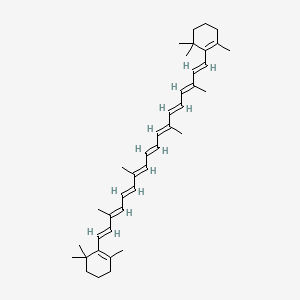
- Formula
- C40H56
- Weight
- 536.9 Da
- PubChem CID
- 5280489
- Exact Mass
- 536.4382 Da
- LogP
- 13.5
- TPSA
- 0 Ų
- H-Bond Donors
- 0
- H-Bond Acceptors
- 0
- Rotatable Bonds
- 10
- Complexity
- 1120
Identifiers (SMILES, InChI)
InChI=1S/C40H56/c1-31(19-13-21-33(3)25-27-37-35(5)23-15-29-39(37,7)8)17-11-12-18-32(2)20-14-22-34(4)26-28-38-36(6)24-16-30-40(38,9)10/h11-14,17-22,25-28H,15-16,23-24,29-30H2,1-10H3/b12-11+,19-13+,20-14+,27-25+,28-26+,31-17+,32-18+,33-21+,34-22+
OENHQHLEOONYIE-JLTXGRSLSA-NReferences (7)
- [3]Role of Beta-Carotene in Lung Cancer Primary Chemoprevention: A Systematic Review with Meta-Analysis and Meta-Regression
→ Meta-analysis of 167,141 participants showed beta-carotene supplementation was associated with increased lung cancer risk (RR=1.16), with effects more pronounced among smokers and asbestos workers (RR=1.21).
- [2]Association between β-carotene supplementation and risk of cancer: A systematic review and meta-analysis
→ Systematic review found beta-carotene supplementation was not protective against primary cancer and may increase risk of lung and stomach cancers in smokers and asbestos workers, particularly at higher doses.
- [4]Investigating the relationship between β-carotene intake from diet and supplements, smoking, and lung cancer risk
→ Study found that dietary beta-carotene from typical food sources is associated with cancer risk reductions, but high-dose supplements (20-30mg) increased lung cancer incidence in heavy smokers in clinical trials.
- [5]Beta-carotene in multivitamins and the possible risk of lung cancer among smokers versus former smokers: a meta-analysis
→ Meta-analysis found that among current smokers, beta-carotene supplementation was associated with increased lung cancer risk at doses of 20-30mg daily, while no significant effect was found in non-smokers.
- [6]Sunscreen and prevention of skin aging: a randomized trial
→ Randomized trial found that daily sunscreen use retarded skin aging, while 30mg daily beta-carotene supplements showed no effect on preventing photoaging over 4 years.
- [7]Low β-carotene bioaccessibility and bioavailability from high fat, dairy-based meal
→ Study found surprisingly low bioavailability of supplemental beta-carotene (15mg) when consumed with a high-fat dairy meal, with negligible postprandial increase in plasma concentrations despite high dose.
- [1]β-Carotene Supplementation and Risk of Cardiovascular Disease: A Systematic Review and Meta-Analysis of Randomized Controlled Trials
→ Meta-analysis of 182,788 individuals found that beta-carotene supplementation slightly increased cardiovascular incidence and was associated with increased cardiovascular mortality, particularly when given alone rather than in combination with other antioxidants.
Continue researching Beta-Carotene
Keep scientific evidence separate from commercial availability. Review how claims are evaluated, explore question-led research paths, or inspect disclosed source records without changing the editorial conclusions on this page.