L-Serine
L-Serine research profile covering evidence quality, proposed mechanisms, safety considerations, regulatory status, and linked primary sources.
Evidence-led profile
Research snapshot
- Evidence stage
- Emerging research
- References
- 8 linked sources
- Research coverage
- 1 area
- Editorial review
- Mar 8, 2026
Published by the PepGuide Editorial Team using our research methodology.
Overview
L-Serine is a non-essential amino acid that plays foundational roles in numerous biosynthetic pathways, including the synthesis of phosphatidylserine, sphingolipids, and other phospholipids essential for cell membrane integrity and myelin sheath formation. It is a precursor to glycine (via serine hydroxymethyltransferase), cysteine (through the transsulfuration pathway), and D-serine (an NMDA receptor co-agonist critical for synaptic plasticity and memory formation). L-Serine also contributes to one-carbon metabolism by donating its hydroxymethyl group to tetrahydrofolate, linking it to nucleotide synthesis, methylation reactions, and epigenetic regulation. Despite being classified as non-essential, research increasingly suggests that endogenous synthesis may be insufficient during periods of neurological stress or neurodegeneration.
The most compelling clinical application of L-serine is in neurodegenerative disease, particularly amyotrophic lateral sclerosis (ALS). Ethnobotanical research by Dr. Paul Cox linked the high ALS/PDC (parkinsonism-dementia complex) incidence in Guam's Chamorro people to chronic exposure to BMAA (beta-methylamino-L-alanine), a neurotoxic amino acid produced by cyanobacteria. BMAA is misincorporated into proteins in place of L-serine, causing protein misfolding and neurodegeneration. L-Serine supplementation competitively inhibits BMAA incorporation, and a Phase I clinical trial in ALS patients (30 g/day) demonstrated slowed functional decline on the ALSFRS-R scale compared to historical controls. Phase II trials are ongoing, making L-serine one of the few dietary amino acids under active investigation as a disease-modifying therapy for motor neuron disease.
Beyond ALS, L-serine is relevant to cognitive health through its role as a D-serine precursor. D-serine is the primary endogenous co-agonist at the glycine binding site of NMDA receptors in the forebrain, and deficits in D-serine signaling have been implicated in schizophrenia and age-related cognitive decline. L-serine supplementation also supports phosphatidylserine synthesis, a phospholipid critical for neuronal membrane fluidity and cell signaling. It pairs well with other neuroprotective compounds including lion-s-mane for nerve growth factor support, glycine for inhibitory neurotransmission and sleep quality, and citicoline for comprehensive phospholipid metabolism support. Typical supplemental doses range from 2–15 g/day, with the higher end used in neurological research protocols.
Mechanism of Action
L-Serine is a non-essential amino acid that occupies a central position in cellular metabolism, serving as a precursor for numerous bioactive molecules. Through the enzyme serine hydroxymethyltransferase (SHMT), L-serine donates a one-carbon unit to tetrahydrofolate (THF) to generate 5,10-methylene-THF and glycine, directly feeding the folate cycle that supports nucleotide biosynthesis, DNA methylation, and epigenetic regulation. This one-carbon metabolism pathway is essential for rapidly proliferating cells and for maintaining cellular methylation patterns through S-adenosylmethionine (SAM) production.
In the nervous system, L-serine serves as the obligate precursor for D-serine, synthesized by serine racemase. D-serine is the primary co-agonist at the glycine-binding site of NMDA (N-methyl-D-aspartate) receptors, making L-serine indirectly essential for synaptic plasticity, long-term potentiation, and learning and memory processes. L-serine is also the precursor for phosphatidylserine and sphingolipids, which are critical structural components of neuronal membranes and myelin sheaths. Deficiency in L-serine leads to the production of neurotoxic deoxysphingolipids (1-deoxysphinganine) instead of normal sphingolipids, a mechanism implicated in hereditary sensory and autonomic neuropathy type 1 (HSAN1) and potentially in other neurodegenerative conditions.
L-serine also serves as a precursor for cysteine biosynthesis through the transsulfuration pathway, linking it to glutathione production and cellular antioxidant defense. In phospholipid metabolism, serine is incorporated into phosphatidylserine via phosphatidylserine synthase, a critical membrane phospholipid involved in apoptotic signaling and cell recognition. Research has identified L-serine as a potential therapeutic agent for amyotrophic lateral sclerosis (ALS) and Alzheimer's disease, where it may counteract the neurotoxic effects of the cyanobacterial toxin beta-methylamino-L-alanine (BMAA) by competing for incorporation into proteins.
Research
Reported Effects
Memory Support:: Moderate effectiveness for memory improvement, though users note it may work better as part of a comprehensive stack rather than standalone. Neurological Conditions:: Strong evidence for effectiveness in specific neurological disorders including GRIN-related encephalopathy and diabetic neuropathy. Long-term Benefits:: Research supports sustained benefits with continuous supplementation, particularly for metabolic and neuroprotective effects. Individual Variation:: Effectiveness varies significantly based on individual health status, with greater benefits seen in those with neurological or metabolic deficiencies
- Moderate effectiveness for memory improvement, though users note it may work better as part of a comprehensive stack rather than standalone
- Strong evidence for effectiveness in specific neurological disorders including GRIN-related encephalopathy and diabetic neuropathy
- Research supports sustained benefits with continuous supplementation, particularly for metabolic and neuroprotective effects
- Effectiveness varies significantly based on individual health status, with greater benefits seen in those with neurological or metabolic deficiencies
Safety and Limitations
Safety Profile: L-Serine
Common Side Effects
- Generally well-tolerated at doses up to 15 g/day in clinical trials (ALS studies)
- Gastrointestinal symptoms: nausea, bloating, abdominal discomfort, and diarrhea, particularly at higher doses (>10 g/day)
- Mild drowsiness (serine is a precursor to glycine, an inhibitory neurotransmitter)
- Headache (infrequent)
- Transient dizziness
- Changes in appetite (mild increase or decrease)
Serious Adverse Effects
- Limited serious adverse event data: L-serine has been studied primarily in phase I/II trials; long-term safety profile is not fully established
- Theoretical concern for D-serine formation: excessive L-serine could increase D-serine levels, which acts as an NMDA receptor co-agonist; in theory, this could contribute to excitotoxicity, though clinical relevance at supplemental doses is unclear
- No significant hepatic, renal, or hematologic toxicity observed in clinical trials up to 30 g/day
- Rare allergic or hypersensitivity reactions possible with any amino acid supplement
- Potential for worsening of conditions involving NMDA receptor hyperactivation (theoretical)
Contraindications
- Known hypersensitivity to L-serine or supplement excipients
- Conditions associated with NMDA receptor overactivation (certain epilepsy subtypes, some neurodegenerative conditions) — use with caution pending further research
- Severe renal impairment (amino acid clearance may be affected; limited data)
- Serine biosynthesis disorders (paradoxically, supplementation is the treatment — but requires specialist management to avoid overcorrection)
Drug Interactions
- NMDA receptor modulators (memantine, ketamine, dextromethorphan): L-serine conversion to D-serine may interact with NMDA receptor pharmacology; clinical significance unknown but warrants monitoring
- Antiepileptic drugs: serine-derived glycine and D-serine affect excitatory neurotransmission; may theoretically alter seizure threshold, though clinical evidence is lacking
- Levodopa: L-serine may theoretically compete for amino acid transporters, though no clinically significant interaction has been documented
- Folate pathway drugs (methotrexate): serine is involved in one-carbon metabolism and folate cycling; high-dose supplementation may theoretically affect folate-dependent drug efficacy
- Minimal documented drug interactions: L-serine has relatively few known clinically significant interactions at standard supplemental doses
Population-Specific Considerations
- Pregnancy: L-serine is a naturally occurring amino acid present in dietary protein; supplemental doses have not been studied in pregnant women — caution advised
- Lactation: naturally present in breast milk; supplemental safety data lacking
- Children: used therapeutically in pediatric serine biosynthesis defects under strict medical supervision; otherwise, supplement use not well-studied in children
- Elderly: of particular research interest for neuroprotection (ALS, Alzheimer's); generally well-tolerated but long-term data in elderly populations is limited
- ALS patients: phase I/II trials demonstrated safety at 15–30 g/day; however, this is an investigational use and should only be undertaken in clinical trial settings or under neurologist supervision
Common Side Effects
- Minimal Side Effects:: Generally well-tolerated with few reported adverse effects in both research and user experiences
- Sleep Disruption:: Paradoxically, some users report mild sleep disturbances when not properly timed
- Individual Sensitivity:: Limited reports suggest some individuals may experience anxiety or restlessness at higher doses
- Long-term Safety:: Research indicates good safety profile for extended use, with most studies showing no significant adverse events
Reconstitution Calculator
Pharmacokinetic Profile
Molecular Structure
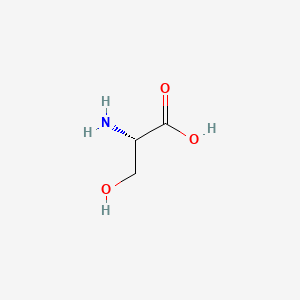
- Formula
- C3H7NO3
- Weight
- 105.09 Da
- PubChem CID
- 5951
- Exact Mass
- 105.0426 Da
- LogP
- -3.1
- TPSA
- 83.6 Ų
- H-Bond Donors
- 3
- H-Bond Acceptors
- 4
- Rotatable Bonds
- 2
- Complexity
- 72
Identifiers (SMILES, InChI)
InChI=1S/C3H7NO3/c4-2(1-5)3(6)7/h2,5H,1,4H2,(H,6,7)/t2-/m0/s1
MTCFGRXMJLQNBG-REOHCLBHSA-NReferences (8)
- [6]L-serine supplementation attenuates alcoholic fatty liver by enhancing homocysteine metabolism in mice and rats
→ L-serine supplementation prevented alcoholic fatty liver development by enhancing homocysteine metabolism and reducing hepatic steatosis in both acute and chronic alcohol exposure models.
- [1]L-serine treatment in patients with GRIN-related encephalopathy: a phase 2A, non-randomized study
→ L-serine supplementation showed clinical improvement in patients with GRIN-related encephalopathy, demonstrating neuroprotective effects in severe neurological conditions with genetic mutations affecting NMDA receptors.
- [2]L-serine: a neglected amino acid with a potential therapeutic role in diabetes
→ L-serine metabolism is altered in type 1, type 2, and gestational diabetes, with supplementation improving glucose homeostasis, insulin secretion, and mitochondrial function while reducing neuronal death.
- [3]L-serine supplementation lowers diabetes incidence and improves blood glucose homeostasis in NOD mice
→ Continuous L-serine supplementation reduced diabetes incidence and insulitis scores in NOD mice while improving glucose tolerance, reducing HOMA-IR, and lowering blood glucose levels.
- [4]Oral L-serine supplementation reduces production of neurotoxic deoxysphingolipids in hereditary sensory neuropathy
→ L-serine supplementation effectively reduced neurotoxic deoxysphingolipid production in HSAN1 patients, demonstrating therapeutic potential for hereditary sensory and autonomic neuropathy type 1.
- [5]L-Serine Supplementation Blunts Fasting-Induced Weight Regain by Increasing Brown Fat Thermogenesis
→ L-serine supplementation prevented weight regain after fasting by enhancing brown fat thermogenesis and improving metabolic parameters in mice subjected to repeated overnight fasting.
- [7]Long-term effects of l-serine supplementation upon a mouse model of diabetic neuropathy
→ L-serine supplementation reduced neurotoxic 1-deoxysphingolipid accumulation and improved insulin sensitivity and sensory nerve velocity in diabetic neuropathy models, though long-term outcomes require further examination.
- [8]L-Serine Deficiency Elicits Intracellular Accumulation of Cytotoxic Deoxysphingolipids and Lipid Body Formation
→ L-serine deficiency leads to accumulation of cytotoxic deoxysphingolipids and lipid body formation, highlighting the essential role of L-serine in preventing cellular toxicity and maintaining metabolic health.
Continue researching L-Serine
Keep scientific evidence separate from commercial availability. Review how claims are evaluated, explore question-led research paths, or inspect disclosed source records without changing the editorial conclusions on this page.