Rosmarinic Acid
Rosmarinic Acid research profile covering evidence quality, proposed mechanisms, safety considerations, regulatory status, and linked primary sources.
Evidence-led profile
Research snapshot
- Evidence stage
- Emerging research
- References
- 4 linked sources
- Research coverage
- 1 area
- Editorial review
- Mar 8, 2026
Published by the PepGuide Editorial Team using our research methodology.
Overview
Rosmarinic acid is a naturally occurring polyphenolic compound classified as an ester of caffeic acid and 3,4-dihydroxyphenyllactic acid. It was first isolated from rosemary (Rosmarinus officinalis) in 1958, but is widely distributed across the Lamiaceae (mint) family — occurring in high concentrations in rosemary, lemon balm (Melissa officinalis), sage, oregano, thyme, basil, and peppermint — as well as in perilla (Perilla frutescens), a plant particularly valued in East Asian cuisine and traditional medicine. The compound's catechol groups enable potent free radical scavenging and metal chelation, while its phenylpropanoid structure allows interaction with multiple enzymes and signaling proteins, producing a remarkably broad pharmacological profile.
Rosmarinic acid's anti-inflammatory activity operates through several distinct mechanisms. It inhibits complement activation (particularly C3 convertase), suppresses lipoxygenase (LOX) and cyclooxygenase (COX-2) pathways, blocks NF-kB nuclear translocation, and inhibits the release of pro-inflammatory cytokines. Its anti-allergic effects are particularly noteworthy: rosmarinic acid inhibits IgE-mediated histamine release from mast cells, reduces leukotriene biosynthesis, and suppresses the inflammatory cascade in allergic rhinitis and asthma. Clinical trials using perilla extract standardized for rosmarinic acid have demonstrated significant improvements in seasonal allergic rhinoconjunctivitis symptoms, including reduced nasal congestion, rhinorrhea, and eye itching, with efficacy comparable to antihistamines in some studies. These anti-allergic properties complement those of quercetin, bromelain, and stinging nettle for natural allergy management.
Beyond allergy and inflammation, rosmarinic acid demonstrates significant neuroprotective potential. It inhibits acetylcholinesterase (AChE) and butyrylcholinesterase, modulates amyloid-beta aggregation, protects neurons against oxidative stress-induced apoptosis, and crosses the blood-brain barrier — properties relevant to Alzheimer's disease prevention. Animal studies have shown improved cognitive performance in learning and memory tasks. Rosmarinic acid also exhibits antimicrobial activity against numerous bacterial and viral pathogens, hepatoprotective effects through Nrf2-mediated antioxidant enzyme induction, and anti-fibrotic properties. In dermatology, it reduces UV-induced oxidative damage and inhibits melanogenesis. Typical supplemental doses range from 100-500 mg/day of rosmarinic acid from standardized herbal extracts. It synergizes with other polyphenolic compounds including curcumin, EGCG, and resveratrol for comprehensive anti-inflammatory and antioxidant support.
Mechanism of Action
Rosmarinic acid (RA) is an ester of caffeic acid and 3,4-dihydroxyphenyllactic acid found abundantly in rosemary, lemon balm, and other Lamiaceae family plants. Its anti-inflammatory mechanism centers on dual inhibition of the NF-kB and MAPK signaling pathways. RA prevents IkB-alpha phosphorylation and degradation, thereby blocking NF-kB nuclear translocation and subsequent transcription of pro-inflammatory genes including COX-2, iNOS, TNF-alpha, IL-1beta, and IL-6. Simultaneously, it suppresses phosphorylation of p38 MAPK, ERK1/2, and JNK, reducing activation of downstream transcription factors AP-1 and ATF-2.
RA directly inhibits both cyclooxygenase (COX-1 and COX-2) and 5-lipoxygenase enzymatic activity, reducing production of pro-inflammatory prostaglandins and leukotrienes. It also inhibits complement activation by interfering with C3 convertase assembly, providing additional anti-allergic and anti-inflammatory effects. This complement inhibitory action underlies its traditional use in allergic conditions and has been validated in models of allergic rhinitis and contact dermatitis.
As an antioxidant, rosmarinic acid directly scavenges superoxide anions, hydroxyl radicals, and peroxynitrite due to its catechol moieties, which readily donate hydrogen atoms to neutralize free radicals. It also activates the Nrf2/ARE pathway, upregulating expression of endogenous antioxidant enzymes including heme oxygenase-1 (HO-1), superoxide dismutase (SOD), and glutathione peroxidase. Additional reported activities include acetylcholinesterase inhibition contributing to its neuroprotective effects, and antiviral activity through interference with viral attachment and entry.
Research
Reported Effects
Clinical Translation:: Strong preclinical evidence with demonstrated effects in laboratory and animal studies, though human clinical data remains limited. Multi-target Action:: Works through multiple pathways including NF-κB inhibition, MAPK signaling modulation, and AMPK activation. Disease Applications:: Most effective for inflammatory conditions, metabolic disorders, and as adjunct therapy for various chronic diseases. Bioavailability Concerns:: Research indicates potential absorption and bioavailability challenges that may limit oral supplementation effectiveness
- Strong preclinical evidence with demonstrated effects in laboratory and animal studies, though human clinical data remains limited
- Works through multiple pathways including NF-κB inhibition, MAPK signaling modulation, and AMPK activation
- Most effective for inflammatory conditions, metabolic disorders, and as adjunct therapy for various chronic diseases
- Research indicates potential absorption and bioavailability challenges that may limit oral supplementation effectiveness
Safety and Limitations
Safety Profile: Rosmarinic Acid
Common Side Effects
- Mild gastrointestinal discomfort: nausea and stomach upset
- Allergic contact dermatitis with topical application (especially in Lamiaceae-sensitive individuals)
- Mild dizziness or headache
- Potential for mild photosensitivity
Serious Adverse Effects
- Very few serious adverse events reported in clinical studies
- Rare allergic reactions in individuals sensitive to rosemary, basil, sage, or other Lamiaceae/mint family plants
- Theoretical anti-androgenic effects at very high doses (animal data)
- Possible iron chelation at supratherapeutic doses, potentially affecting iron status
Contraindications
- Known allergy to Lamiaceae (mint) family plants
- Iron deficiency anemia (due to potential iron-chelating effects)
- Pregnancy (may have uterotonic effects at high doses based on traditional concerns with rosemary)
- Lactation (insufficient data)
Drug Interactions
- Anticoagulants: Mild antiplatelet activity; monitor bleeding risk
- Iron supplements: May reduce iron absorption through chelation
- Thyroid medications: Rosmarinic acid may inhibit TSH receptor activity; caution with thyroid-modulating drugs
- Immunosuppressants: Anti-inflammatory effects may have additive or opposing effects
Population-Specific Considerations
- Seasonal allergy sufferers: Emerging evidence for symptom reduction; generally well tolerated
- Topical use: Well tolerated in cosmetic formulations for anti-inflammatory and antioxidant purposes
- Dietary exposure: Present naturally in rosemary, basil, and perilla; dietary amounts are safe
- Research status: Well-characterized phytochemical but clinical trial evidence remains limited for most indications
Common Side Effects
- Generally Well-Tolerated:: Most studies report minimal adverse effects at standard supplemental doses
- Toxicity Unknown:: Long-term safety data and toxicity thresholds in humans are not well-established
- Drug Interactions:: Potential interactions with medications metabolized through similar pathways remain unexplored
- Quality Concerns:: Contamination and standardization issues may affect supplement safety and efficacy
Reconstitution Calculator
Pharmacokinetic Profile
Molecular Structure
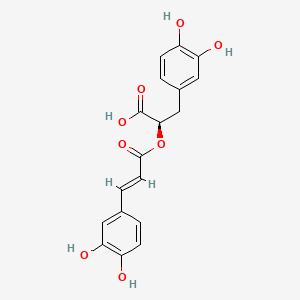
- Formula
- C18H16O8
- Weight
- 360.3 Da
- PubChem CID
- 5281792
- Exact Mass
- 360.0845 Da
- LogP
- 2.4
- TPSA
- 145 Ų
- H-Bond Donors
- 5
- H-Bond Acceptors
- 8
- Rotatable Bonds
- 7
- Complexity
- 519
Identifiers (SMILES, InChI)
InChI=1S/C18H16O8/c19-12-4-1-10(7-14(12)21)3-6-17(23)26-16(18(24)25)9-11-2-5-13(20)15(22)8-11/h1-8,16,19-22H,9H2,(H,24,25)/b6-3+/t16-/m1/s1
DOUMFZQKYFQNTF-WUTVXBCWSA-NReferences (4)
- [2]A Review of the Anti-Inflammatory Effects of Rosmarinic Acid on Inflammatory Diseases
→ Review examining rosmarinic acid's anti-inflammatory effects in various inflammatory diseases including arthritis, colitis, and atopic dermatitis through in vitro and in vivo studies, demonstrating its ability to modulate inflammatory mediators and cells.
- [4]Biomedical Features and Therapeutic Potential of Rosmarinic Acid
→ Analysis of rosmarinic acid's biomedical applications demonstrating multiple therapeutic benefits in cancer, diabetes, inflammatory disorders, neurodegenerative diseases, plus anti-oxidant capacity for potential use as a nutraceutical compound.
- [1]A Comprehensive Review of Rosmarinic Acid: From Phytochemistry to Pharmacology and Its New Insight
→ Comprehensive review demonstrating rosmarinic acid's diverse biological activities including anti-inflammation, anti-oxidation, anti-diabetes, anti-virus, anti-tumor, neuroprotection, and hepatoprotection across multiple research fields.
- [3]Therapeutic Potential of Rosmarinic Acid: A Comprehensive Review
→ Systematic review of rosmarinic acid's therapeutic applications showing efficacy in cancer, diabetes, inflammatory disorders, neurodegenerative diseases, and its anti-plasmodic, anti-viral, and anti-bacterial properties.
Continue researching Rosmarinic Acid
Keep scientific evidence separate from commercial availability. Review how claims are evaluated, explore question-led research paths, or inspect disclosed source records without changing the editorial conclusions on this page.