Biotin
Biotin research profile covering evidence quality, proposed mechanisms, safety considerations, regulatory status, and linked primary sources.
Evidence-led profile
Research snapshot
- Evidence stage
- Emerging research
- References
- 5 linked sources
- Research coverage
- 1 area
- Editorial review
- Mar 8, 2026
Published by the PepGuide Editorial Team using our research methodology.
Overview
Biotin, also known as vitamin B7 or vitamin H, is a water-soluble vitamin belonging to the B-complex group. It functions as a covalently bound coenzyme for five carboxylase enzymes in humans: acetyl-CoA carboxylase (ACC1 and ACC2), pyruvate carboxylase (PC), propionyl-CoA carboxylase (PCC), and 3-methylcrotonyl-CoA carboxylase (MCC). These enzymes play critical roles in fatty acid synthesis, gluconeogenesis, the citric acid cycle, and the catabolism of branched-chain amino acids such as leucine, isoleucine, and valine.
Biotin is found in a wide range of foods, including egg yolks, liver, nuts, legumes, whole grains, and certain vegetables. It is also synthesized by intestinal bacteria, though the extent to which this endogenous production contributes to human biotin status remains debated. True biotin deficiency is rare in the general population but may occur in individuals consuming large quantities of raw egg whites (which contain avidin, a biotin-binding protein), those with biotinidase deficiency, or during prolonged parenteral nutrition without biotin supplementation.
Biotin supplementation has gained widespread popularity for its purported benefits to hair growth, skin health, and nail strength, although clinical evidence supporting these claims in biotin-replete individuals is limited. High-dose biotin (up to 300 mg/day) has been investigated in the management of multiple sclerosis with mixed results. Importantly, high-dose biotin supplementation can interfere with streptavidin-biotin immunoassay platforms, potentially causing falsely elevated or decreased results in laboratory tests for thyroid function, troponin, and other analytes. Patients should disclose biotin use to their healthcare providers before undergoing laboratory testing.
Mechanism of Action
Biotin-Dependent Carboxylase Cofactor
Biotin (vitamin B7/vitamin H) functions as a covalently bound prosthetic group for five mammalian biotin-dependent carboxylases: (1) acetyl-CoA carboxylase 1 (ACC1, cytoplasmic — fatty acid synthesis), (2) acetyl-CoA carboxylase 2 (ACC2, mitochondrial — fatty acid oxidation regulation), (3) pyruvate carboxylase (PC — gluconeogenesis and TCA cycle anaplerosis), (4) propionyl-CoA carboxylase (PCC — odd-chain fatty acid and amino acid metabolism), and (5) 3-methylcrotonyl-CoA carboxylase (MCC — leucine catabolism). Biotin is attached post-translationally to a specific lysine residue by holocarboxylase synthetase (HLCS) (PMID: 15992684).
Catalytic Mechanism — Two-Step Carboxylation
Biotin-dependent carboxylases catalyze the ATP-dependent transfer of CO₂ (as bicarbonate) to organic acid substrates through a conserved two-step mechanism: (1) the biotin carboxylase (BC) domain catalyzes carboxyphosphate formation from ATP and bicarbonate, then transfers CO₂ to the N1 nitrogen of biotin's ureido ring forming carboxybiotin, (2) the carboxyltransferase (CT) domain transfers the activated CO₂ from carboxybiotin to the substrate (acetyl-CoA, pyruvate, etc.). Biotin's long flexible linker arm allows it to shuttle between the BC and CT active sites (PMID: 22000733).
Keratin & Hair/Nail Integrity
Biotin's role in keratinocyte biology extends beyond carboxylase activity. It influences keratin gene expression by serving as a substrate for biotinylation of histones (H2A, H3, H4) catalyzed by HLCS and biotinidase. Histone biotinylation at K12 of histone H4 affects chromatin structure at keratin gene loci, modulating expression of keratins (KRT1, KRT10, KRT14) critical for hair shaft, nail plate, and epidermal structural integrity (PMID: 19114078).
Gene Regulation & Epigenetics
Biotinylation of histones represents a distinct epigenetic mark that influences gene silencing, DNA repair, and cell proliferation. Biotin also modulates expression of >2,000 genes through biotinyl-AMP-mediated signaling, including genes involved in glucose metabolism, cytokine signaling, and cell cycle regulation (PMID: 16600817).
Research
Reported Effects
Response Time:: Users who notice benefits typically report waiting 3-6 months for visible hair/nail changes due to slow growth cycles. Deficiency-Dependent:: Evidence suggests biotin is most effective in individuals with actual biotin deficiency rather than those with adequate status. Individual Variation:: Responses are highly variable, with approximately half of users reporting no noticeable benefits even after extended use. Limited Research:: Controlled studies show minimal benefit in healthy individuals without deficiency, despite widespread marketing claims
- Users who notice benefits typically report waiting 3-6 months for visible hair/nail changes due to slow growth cycles
- Evidence suggests biotin is most effective in individuals with actual biotin deficiency rather than those with adequate status
- Responses are highly variable, with approximately half of users reporting no noticeable benefits even after extended use
- Controlled studies show minimal benefit in healthy individuals without deficiency, despite widespread marketing claims
Safety and Limitations
Common Side Effects
- Biotin is exceptionally well-tolerated and rarely causes side effects at standard supplementation doses (30-100 mcg daily)
- At high doses (5-10 mg daily, commonly used for hair and nail growth), mild gastrointestinal symptoms such as nausea and cramping have been occasionally reported
- Skin breakouts and acne have been anecdotally reported with high-dose supplementation, though clinical evidence is inconsistent
Serious Adverse Effects
- Critical laboratory interference: High-dose biotin (>1 mg daily) can significantly interfere with immunoassay-based laboratory tests, leading to falsely elevated or falsely decreased results. This includes troponin (cardiac marker), thyroid function tests (TSH, T3, T4), parathyroid hormone, vitamin D, and certain hormone panels. This interference has led to misdiagnosis and, in documented cases, delayed treatment of serious conditions including heart attacks
- No known toxicity threshold has been established; the Institute of Medicine has not set a Tolerable Upper Intake Level (UL) due to lack of adverse effect data at high oral doses
- Eosinophilic pleuropericardial effusion has been reported in one case associated with high-dose biotin and vitamin B5 supplementation
Contraindications
- Individuals scheduled for laboratory blood work should discontinue high-dose biotin supplementation at least 72 hours (ideally one week) prior to testing to avoid assay interference
- No absolute contraindications exist for dietary or standard supplemental doses
Drug Interactions
- Anticonvulsant medications (carbamazepine, phenytoin, phenobarbital, primidone) can decrease biotin levels through accelerated catabolism, potentially necessitating supplementation
- Long-term antibiotic use may reduce biotin levels by suppressing gut bacteria that synthesize biotin
- Raw egg whites contain avidin, which tightly binds biotin and prevents absorption; this is a dietary rather than drug interaction but clinically relevant
- Alpha-lipoic acid may compete with biotin for cellular uptake via shared sodium-dependent multivitamin transporter (SMVT)
Special Populations
- Safe during pregnancy and breastfeeding at recommended dietary allowances (30 mcg daily); marginal biotin deficiency is actually common during pregnancy
- Pediatric use is safe at age-appropriate doses; biotin deficiency screening is part of newborn metabolic panels
- Individuals with biotinidase deficiency require lifelong biotin supplementation under medical supervision
Common Side Effects
- Acne Breakouts:: Most commonly reported side effect, particularly cystic acne on face, chest, and back in susceptible individuals
- Digestive Issues:: Some users report mild stomach upset or changes in bowel movements at higher doses
- Lab Test Interference:: High-dose biotin can cause false results in blood tests using biotin-streptavidin technology, including thyroid panels
- Minimal Serious Effects:: Generally well-tolerated with few serious adverse effects reported at typical supplemental doses
Research protocol summary
- Typical Dose
- 5,000-10,000 mcg (5-10 mg) daily is most commonly used, far exceeding the 30 mcg adequate intake recommendation
These values summarize cataloged research protocols. They are not personal dosing instructions or medical guidance.
Reconstitution Calculator
Pharmacokinetic Profile
Biotin — Pharmacokinetic Curve
SubcutaneousMolecular Structure
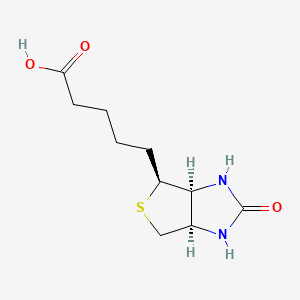
- Formula
- C10H16N2O3S
- Weight
- 244.31 Da
- PubChem CID
- 171548
- Exact Mass
- 244.0882 Da
- LogP
- 0.3
- TPSA
- 104 Ų
- H-Bond Donors
- 3
- H-Bond Acceptors
- 4
- Rotatable Bonds
- 5
- Complexity
- 298
Identifiers (SMILES, InChI)
InChI=1S/C10H16N2O3S/c13-8(14)4-2-1-3-7-9-6(5-16-7)11-10(15)12-9/h6-7,9H,1-5H2,(H,13,14)(H2,11,12,15)/t6-,7-,9-/m0/s1
YBJHBAHKTGYVGT-ZKWXMUAHSA-NReferences (5)
- [1]Serum Biotin Levels in Women Complaining of Hair Loss
→ Study of 541 women with hair loss found that 38% had biotin deficiency, suggesting biotin supplementation may be beneficial in deficient individuals with hair concerns.
- [3]Biotin interference in immunoassays for thyroid hormone
→ High-dose biotin supplementation can cause false results in laboratory tests that use biotin-streptavidin technology, potentially leading to misdiagnosis of thyroid conditions.
- [4]A review of the use of biotin for hair loss
→ Comprehensive review concluded that biotin supplementation benefits individuals with documented biotin deficiency or certain genetic disorders, but evidence is lacking for benefits in healthy individuals without deficiency.
- [2]Biotin supplementation in pregnancy - a randomized controlled trial
→ Randomized trial found that biotin supplementation during pregnancy increased maternal biotin status but did not significantly affect pregnancy outcomes or neonatal biotin status.
- [5]Biotin status: recent advances
→ Review of biotin assessment methods found that marginal biotin deficiency may occur in pregnancy and that reliable biotin status markers include urinary biotin excretion and specific metabolites.
Continue researching Biotin
Keep scientific evidence separate from commercial availability. Review how claims are evaluated, explore question-led research paths, or inspect disclosed source records without changing the editorial conclusions on this page.