Diosmin
Diosmin research profile covering evidence quality, proposed mechanisms, safety considerations, regulatory status, and linked primary sources.
Evidence-led profile
Research snapshot
- Evidence stage
- Emerging research
- References
- 8 linked sources
- Research coverage
- 1 area
- Editorial review
- Mar 8, 2026
Published by the PepGuide Editorial Team using our research methodology.
Overview
Diosmin is a flavone glycoside found primarily in the rinds of citrus fruits, particularly hesperidin-rich varieties. It is semi-synthetically produced from hesperidin through an oxidation process and has been used as a pharmaceutical agent in Europe since the 1960s, most commonly in micronized purified flavonoid fraction (MPFF) formulations combined with hesperidin. Diosmin is classified as a venoactive drug and is prescribed for the symptomatic treatment of chronic venous disease.
The pharmacological effects of diosmin center on its ability to improve venous tone, reduce capillary permeability, and exert anti-inflammatory activity. It enhances venous return by prolonging the vasoconstrictive effect of norepinephrine on the vein wall and inhibits the inflammatory cascade by reducing leukocyte adhesion and migration. These properties make it effective for managing symptoms of chronic venous insufficiency, including leg heaviness, pain, swelling, and restless legs, as well as acute hemorrhoidal episodes.
Clinical evidence supporting diosmin is robust, with multiple randomized controlled trials and meta-analyses demonstrating significant improvements in venous disease symptoms and accelerated healing of venous leg ulcers. The standard therapeutic dose is 900 to 1,000 mg daily in the micronized form, which offers superior bioavailability compared to non-micronized preparations. Diosmin is well tolerated, with gastrointestinal discomfort being the most commonly reported side effect.
Mechanism of Action
Venotonic Mechanism — Norepinephrine Pathway
Diosmin is a naturally occurring flavonoid glycoside (diosmetin-7-O-rutinoside) found in citrus peels. Its primary pharmacological action is as a venotonic agent that increases venous wall tone through inhibition of catechol-O-methyltransferase (COMT) and norepinephrine reuptake in venous smooth muscle. By prolonging norepinephrine availability at a1-adrenergic receptors in the venous wall, diosmin increases smooth muscle contraction and reduces venous distensibility and capacitance (PMID: 10721976).
Microvascular Protection & Lymphatic Drainage
Diosmin reduces capillary hyperpermeability by inhibiting prostaglandin E2 and thromboxane A2 synthesis while increasing PGF2a production. It strengthens capillary resistance by stabilizing the collagen-integrin anchoring complex between endothelial cells and the basement membrane. Diosmin also enhances lymphatic contractility and pumping frequency, improving lymphatic drainage and reducing edema (PMID: 12453236).
Anti-Inflammatory Leukocyte Adhesion Inhibition
Diosmin inhibits leukocyte-endothelial adhesion by downregulating expression of adhesion molecules including ICAM-1, VCAM-1, and selectins on endothelial surfaces. It suppresses neutrophil activation and free radical generation by inhibiting NADPH oxidase and reducing complement activation. This mechanism is particularly relevant in chronic venous insufficiency, where leukocyte trapping and activation in the venous microcirculation drives tissue damage (PMID: 12927940).
Rheological & Erythrocyte Effects
Micronized diosmin (MPFF formulation, combined with hesperidin) improves red blood cell deformability and reduces blood viscosity, improving microcirculatory flow. It also inhibits platelet aggregation through suppression of phosphodiesterase activity and modulates the prostaglandin/thromboxane balance toward antithrombotic pathways.
Research
Reported Effects
Chronic Venous Disease:: Strong evidence from systematic reviews showing improvement in venous symptoms, signs, and quality of life across severity spectrum. Hemorrhoid Treatment:: Mixed user experiences - some find it ineffective at standard doses (450-500mg), many report needing 2-6g daily combined with hesperidin for noticeable results. Dose-Response Relationship:: Both research and users indicate higher doses (1-2g+) are more effective than standard recommendations, particularly for hemorrhoids and venous issues. Synergistic Effects:: Users report better results when combining with hesperidin, rutin, horse chestnut, and other flavonoids rather than using diosmin alone
- Strong evidence from systematic reviews showing improvement in venous symptoms, signs, and quality of life across severity spectrum
- Mixed user experiences - some find it ineffective at standard doses (450-500mg), many report needing 2-6g daily combined with hesperidin for noticeable results
- Both research and users indicate higher doses (1-2g+) are more effective than standard recommendations, particularly for hemorrhoids and venous issues
- Users report better results when combining with hesperidin, rutin, horse chestnut, and other flavonoids rather than using diosmin alone
Safety and Limitations
Common Side Effects
- Generally well-tolerated at standard doses (500–1000 mg/day) with a favorable safety profile
- Mild gastrointestinal symptoms including stomach pain, nausea, diarrhea, or abdominal cramps reported in a small percentage of users
- Headache and dizziness occur infrequently
- Mild skin rash or allergic dermatitis in sensitive individuals
Serious Adverse Effects
- Rare cases of severe allergic reactions including angioedema have been reported
- Isolated reports of muscle pain or general malaise, though causation has not been definitively established
- No significant organ toxicity has been observed in clinical studies lasting up to 12 months
- Very high doses may theoretically contribute to gastrointestinal bleeding risk when combined with other vasoactive agents
Contraindications
- Known hypersensitivity to diosmin, hesperidin, or other flavonoids warrants avoidance
- Pregnant women should avoid use in the first trimester; use in the second and third trimesters should occur only under medical supervision for conditions such as hemorrhoids or venous insufficiency
- Breastfeeding women should exercise caution due to limited safety data on excretion in breast milk
- Patients with active bleeding disorders should consult a physician before use
Drug Interactions
- May potentiate the effects of anticoagulant and antiplatelet medications (warfarin, heparin, clopidogrel, aspirin), increasing bleeding risk
- Known inhibitor of CYP1A2 and CYP3A4 enzymes, which may increase serum levels of drugs metabolized by these pathways, including certain statins, calcium channel blockers, and benzodiazepines
- May interact with metformin and other antidiabetic agents due to mild effects on glucose metabolism
- Potential interaction with iron supplements, as flavonoids can chelate iron and reduce its bioavailability
- May enhance the effects of venoactive drugs and compression therapy when used concomitantly
Population-Specific Considerations
- Widely prescribed in Europe (as Daflon) for chronic venous insufficiency and hemorrhoids with extensive clinical safety data
- Older adults with polypharmacy should have their medication list reviewed for potential cytochrome P450 interactions
- Patients scheduled for surgery should discontinue at least two weeks prior due to mild antiplatelet activity
- Renal and hepatic dosing adjustments are generally not required at standard doses
Common Side Effects
- Gastrointestinal Stress:: Multiple users concerned about liver/kidney stress from high doses, particularly when combining multiple flavonoids and supplements
- Bleeding Risk:: One case report of spontaneous intraventricular hemorrhage with prolonged use, users report blood-thinning properties when combined with other supplements
- Copper Depletion:: Users report zinc-copper imbalance concerns when taking high-dose flavonoids alongside zinc supplementation
- Telomerase Inhibition:: Some users concerned about hesperidin's strong telomerase inhibition, though unclear if this affects normal cells or primarily cancer cells
Research protocol summary
- Typical Dose
- 450-500mg twice daily for chronic venous disease, often combined with hesperidin in 9:1 ratio (MPFF formulation)
These values summarize cataloged research protocols. They are not personal dosing instructions or medical guidance.
Reconstitution Calculator
Pharmacokinetic Profile
Molecular Structure
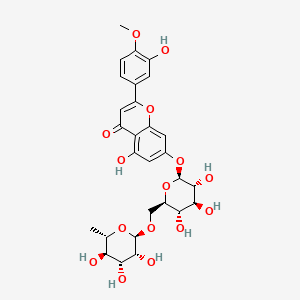
- Formula
- C28H32O15
- Weight
- 608.5 Da
- PubChem CID
- 5281613
- Exact Mass
- 608.1741 Da
- LogP
- -0.8
- TPSA
- 234 Ų
- H-Bond Donors
- 8
- H-Bond Acceptors
- 15
- Rotatable Bonds
- 7
- Complexity
- 995
Identifiers (SMILES, InChI)
InChI=1S/C28H32O15/c1-10-21(32)23(34)25(36)27(40-10)39-9-19-22(33)24(35)26(37)28(43-19)41-12-6-14(30)20-15(31)8-17(42-18(20)7-12)11-3-4-16(38-2)13(29)5-11/h3-8,10,19,21-30,32-37H,9H2,1-2H3/t10-,19+,21-,22+,23+,24-,25+,26+,27+,28+/m0/s1
GZSOSUNBTXMUFQ-YFAPSIMESA-NReferences (8)
- [7]The Effectiveness of Hesperidin, Diosmin and Proanthocyanidins Nutritional Supplementation on Cognitive and Motor Functions in Older Adults: A Pilot Randomized Control Study
→ Pilot RCT showing combination supplementation with hesperidin, diosmin, and proanthocyanidins improved cognitive and motor functions in older adults by optimizing blood microcirculation.
- [1]Efficacy of micronized purified flavonoid fraction (Daflon®) on improving individual symptoms, signs and quality of life in patients with chronic venous disease: a systematic review and meta-analysis of randomized double-blind placebo-controlled trials
→ Systematic review and meta-analysis demonstrating MPFF (Daflon) significantly improves individual venous symptoms, signs, and quality of life across the spectrum of chronic venous disease severity in randomized controlled trials.
- [2]Effects of the Flavonoid Diosmin on Post Exercise Muscle Soreness - A Randomized Controlled Trial
→ Randomized controlled trial in athletes showing diosmin supplementation significantly reduced delayed-onset muscle soreness (DOMS) and improved athletic performance during pre-season training.
- [3]Dual modulatory effects of diosmin on calcium oxalate kidney stone formation processes
→ Study demonstrating diosmin has protective effects against kidney stone formation by modulating crystallization, aggregation, and cellular interactions in calcium oxalate stone disease.
- [5]A Literature Review of Pharmacological Agents to Improve Venous Leg Ulcer Healing
→ Comprehensive review identifying diosmin and MPFF as effective pharmacological agents for accelerating venous leg ulcer healing when used alongside compression therapy.
- [8]A nutraceutical composition containing diosmin and hesperidin has osteogenic and anti-resorptive effects and expands the anabolic window of teriparatide
→ Animal study showing diosmin-hesperidin combination promotes bone regeneration, increases peak bone mass in growing rats, and restores trabecular bones in osteopenic models.
- [4]Nephroprotective Effect of Diosmin against Cisplatin-Induced Kidney Damage by Modulating IL-1β, IL-6, TNFα and Renal Oxidative Damage
→ Animal study showing diosmin significantly protects against cisplatin-induced kidney damage by reducing inflammatory markers (IL-1β, IL-6, TNFα) and oxidative stress.
- [6]Diosmin abrogates chemically induced hepatocarcinogenesis via alleviation of oxidative stress, hyperproliferative and inflammatory markers in murine model
→ Animal study demonstrating diosmin's chemopreventive efficacy against liver cancer through reduction of oxidative stress, inflammatory markers (COX-2, iNOS), and proliferation markers.
Continue researching Diosmin
Keep scientific evidence separate from commercial availability. Review how claims are evaluated, explore question-led research paths, or inspect disclosed source records without changing the editorial conclusions on this page.