Matrine
Matrine research profile covering evidence quality, proposed mechanisms, safety considerations, regulatory status, and linked primary sources.
Evidence-led profile
Research snapshot
- Evidence stage
- Emerging research
- References
- 8 linked sources
- Research coverage
- 1 area
- Editorial review
- Mar 8, 2026
Published by the PepGuide Editorial Team using our research methodology.
Overview
Matrine is a tetracyclic quinolizidine alkaloid primarily isolated from the roots of Sophora flavescens (Kushen) and related Sophora species, which have been used in traditional Chinese medicine for over 2,000 years to treat dysentery, eczema, and various inflammatory conditions. In modern pharmacological research, matrine and its oxidized derivative oxymatrine have emerged as compounds of significant therapeutic interest due to their broad-spectrum biological activities spanning anti-inflammatory, anti-tumor, antiviral, antifibrotic, and immunomodulatory effects — activities that are remarkable in scope for a single natural alkaloid.
The anti-tumor properties of matrine have been the most extensively studied, with research demonstrating growth inhibition and apoptosis induction across a wide range of cancer cell lines including hepatocellular carcinoma, gastric cancer, breast cancer, lung cancer, and leukemia. Mechanistically, matrine triggers apoptosis through both intrinsic (mitochondrial) and extrinsic (death receptor) pathways, inhibits NF-kB and PI3K/Akt signaling, induces cell cycle arrest at G0/G1 or G2/M phases, suppresses tumor angiogenesis, and promotes autophagy-mediated cell death. In hepatology, oxymatrine is approved in China as an injectable treatment for chronic hepatitis B, where it demonstrates both direct antiviral activity and hepatoprotective effects through reduction of liver inflammation and fibrosis. The compound inhibits hepatic stellate cell activation and collagen deposition via TGF-beta/Smad pathway modulation.
Matrine's anti-inflammatory mechanism involves suppression of the JAK/STAT signaling cascade, inhibition of MAPK phosphorylation, and downregulation of pro-inflammatory cytokines (IL-1beta, IL-6, TNF-alpha). These effects have shown therapeutic potential in autoimmune and inflammatory conditions including inflammatory bowel disease, rheumatoid arthritis, and atopic dermatitis in preclinical models. Dosing in clinical practice (primarily in China) ranges from 100–200 mg orally or 100–150 mg intravenously for oxymatrine. Side effects may include gastrointestinal discomfort, dizziness, and at higher doses, hepatotoxicity — paradoxically, given the compound's hepatoprotective effects at therapeutic levels. Matrine remains primarily a research compound outside of Chinese clinical practice and is not widely available as a consumer supplement in Western markets.
Mechanism of Action
Matrine is a tetracyclic quinolizidine alkaloid derived from Sophora flavescens that exerts broad pharmacological effects through modulation of multiple oncogenic and inflammatory signaling pathways. Its antitumor activity centers on suppression of the PI3K/Akt/mTOR axis, reducing phosphorylation of Akt and downstream effectors including p70S6K and 4E-BP1, thereby inhibiting tumor cell proliferation, protein synthesis, and survival signaling. Matrine simultaneously inhibits the MAPK/ERK pathway by reducing Ras-Raf-MEK-ERK phosphorylation cascades, and suppresses Wnt/beta-catenin signaling by promoting beta-catenin degradation, which is critical for blocking epithelial-mesenchymal transition (EMT) and cancer cell metastasis.
Matrine induces programmed cell death through multiple mechanisms: it triggers intrinsic (mitochondrial) apoptosis by upregulating pro-apoptotic Bax, downregulating anti-apoptotic Bcl-2, promoting cytochrome c release, and activating caspase-9 and caspase-3 cascades. It also induces autophagy through AMPK activation and mTOR inhibition, and promotes pyroptosis via NLRP3 inflammasome activation in certain cancer types. Anti-inflammatory effects are mediated through potent inhibition of NF-kB nuclear translocation by blocking IKK-mediated IkB-alpha phosphorylation, reducing expression of COX-2, iNOS, TNF-alpha, and IL-6. Matrine also inhibits JAK/STAT3 signaling, disrupting STAT3 dimerization and nuclear translocation required for tumor cell survival gene expression.
These multi-pathway actions give matrine therapeutic potential in hepatocellular carcinoma, breast cancer, lung cancer, and leukemia, as well as in inflammatory conditions including hepatic fibrosis, colitis, and cardiac inflammation. Matrine remodels the tumor immune microenvironment by promoting CD8+ T cell infiltration and reducing regulatory T cell populations, suggesting immunomodulatory anticancer potential.
Research
Reported Effects
Research-Backed:: Extensive preclinical research demonstrates anti-inflammatory, neuroprotective, and anti-proliferative effects across multiple disease models. Multiple Pathways:: Works through various cellular signaling mechanisms rather than a single target, potentially explaining broad pharmacological activities. Traditional Use:: Long history of use in Traditional Chinese Medicine for liver conditions and inflammation. Limited Human Data:: Most evidence comes from cell culture and animal studies; human clinical trial data remains limited
- Extensive preclinical research demonstrates anti-inflammatory, neuroprotective, and anti-proliferative effects across multiple disease models
- Works through various cellular signaling mechanisms rather than a single target, potentially explaining broad pharmacological activities
- Long history of use in Traditional Chinese Medicine for liver conditions and inflammation
- Most evidence comes from cell culture and animal studies; human clinical trial data remains limited
Safety and Limitations
Matrine has limited human safety data, so caution is advised. Potential side effects may include anxiety and derealization, possibly due to kappa-opioid receptor activity. There is also a theoretical concern for 5-alpha reductase inhibition. No specific contraindications are established, but use should be approached carefully given the lack of clinical studies.
Common Side Effects
- Psychological Effects:: User report of anxiety and derealization at 100mg dose
- 5-AR Inhibition Concern:: Potential 5-alpha reductase inhibitory activity suspected in parent plant, though not confirmed for isolated matrine
- Kappa-Opioid Activity:: Known kappa-opioid receptor activity may contribute to dysphoric effects
- Safety Profile:: Research papers generally note matrine as well-tolerated in animal studies, but human safety data limited
Research protocol summary
- Typical Dose
- Commercial products often use 98% matrine extracts from Sophora flavescens
These values summarize cataloged research protocols. They are not personal dosing instructions or medical guidance.
Reconstitution Calculator
Pharmacokinetic Profile
Molecular Structure
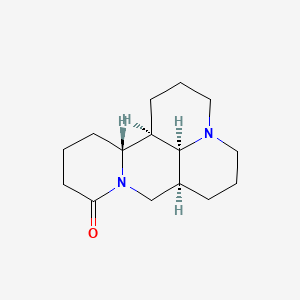
- Formula
- C15H24N2O
- Weight
- 248.36 Da
- PubChem CID
- 91466
- Exact Mass
- 248.1889 Da
- LogP
- 1.6
- TPSA
- 23.6 Ų
- H-Bond Donors
- 0
- H-Bond Acceptors
- 2
- Rotatable Bonds
- 0
- Complexity
- 356
Identifiers (SMILES, InChI)
InChI=1S/C15H24N2O/c18-14-7-1-6-13-12-5-3-9-16-8-2-4-11(15(12)16)10-17(13)14/h11-13,15H,1-10H2/t11-,12+,13+,15-/m0/s1
ZSBXGIUJOOQZMP-JLNYLFASSA-NReferences (8)
- [3]Preventive effects of matrine on LPS-induced inflammation in RAW 264.7 cells and intestinal damage in mice through the TLR4/NF-κB/MAPK pathway
→ Study demonstrates matrine's anti-inflammatory properties by inhibiting the TLR4/NF-κB/MAPK pathway, showing protective effects against LPS-induced intestinal damage and inflammation in both cell and mouse models.
- [5]Oxymatrine relieves non-alcoholic fatty liver disease by promoting sirtuin 1/adenosine 5'-monophosphate-activated protein kinase pathway and peroxisome proliferator activated receptor alpha-mediated hepatic fatty acid oxidation
→ Study demonstrates that oxymatrine (a derivative of matrine) has protective effects in NAFLD by promoting the SIRT1/AMPK pathway and enhancing hepatic fatty acid oxidation, showing therapeutic potential for liver disease.
- [1]Matrine exerts its neuroprotective effects by modulating multiple neuronal pathways
→ Comprehensive review demonstrating that matrine protects neurons by crossing the blood-brain barrier and modulating multiple signaling pathways, showing therapeutic potential for Multiple Sclerosis, Alzheimer's disease, and other neurological disorders.
- [2]Matrine Exerts Pharmacological Effects Through Multiple Signaling Pathways: A Comprehensive Review
→ Detailed review showing matrine has broad pharmacological activities including anti-tumor, anti-inflammatory, analgesic, anti-fibrotic, anti-viral effects through activation or inhibition of key molecules in cellular signaling pathways, with therapeutic effects in various tumors, cardiopathy, and CNS inflammation.
- [4]Matrine suppresses NLRP3 inflammasome activation via regulating PTPN2/JNK/SREBP2 pathway in sepsis
→ Research showing matrine suppresses abnormal NLRP3 inflammasome activation in sepsis through the PTPN2/JNK/SREBP2 pathway, demonstrating anti-inflammatory properties in life-threatening dysregulated host responses to infection.
- [6]Matrine inhibits vascular smooth muscle cell proliferation by modulating the expression of cell cycle regulatory genes
→ Research showing matrine inhibits vascular smooth muscle cell proliferation in a dose-dependent manner by promoting G1 arrest through up-regulation of p53, p21, and p27, demonstrating potential cardiovascular benefits.
- [7]Effects of oxymatrine and matrine on left ventricular contractility using pressure-volume relationship analysis in anesthetized rats
→ Study using advanced cardiac analysis showed that both oxymatrine and matrine significantly improved load-independent cardiac parameters, increased cardiac efficiency, and improved mechanoenergetics, suggesting cardiovascular benefits.
- [8]Matrine induces ferroptosis in cervical cancer through activation of piezo1 channel
→ Research demonstrates matrine's anti-cancer properties by inducing ferroptosis (a form of cell death) in cervical cancer cells through activation of the piezo1 channel, showing potential therapeutic utility in cancer treatment.
Continue researching Matrine
Keep scientific evidence separate from commercial availability. Review how claims are evaluated, explore question-led research paths, or inspect disclosed source records without changing the editorial conclusions on this page.