EPA (Eicosapentaenoic Acid)
EPA (Eicosapentaenoic Acid) research profile covering evidence quality, proposed mechanisms, safety considerations, regulatory status, and linked primary…
Evidence-led profile
Research snapshot
- Evidence stage
- Emerging research
- References
- 7 linked sources
- Research coverage
- 1 area
- Editorial review
- Mar 8, 2026
Published by the PepGuide Editorial Team using our research methodology.
Overview
Eicosapentaenoic acid (EPA, 20:5n-3) is a long-chain omega-3 polyunsaturated fatty acid found abundantly in fatty fish (salmon, mackerel, sardines), fish oil, krill oil, and certain algal sources. It is a 20-carbon fatty acid with five cis double bonds, the first at the omega-3 position. While humans can theoretically synthesize EPA from the essential fatty acid alpha-linolenic acid (ALA), this conversion is extremely inefficient (typically less than 5-10%), making dietary intake or supplementation the primary means of achieving adequate EPA levels.
EPA's anti-inflammatory mechanisms are multifaceted and distinct from those of DHA. EPA competitively inhibits the conversion of arachidonic acid (AA) by cyclooxygenase and lipoxygenase enzymes, reducing production of pro-inflammatory series-2 prostaglandins and series-4 leukotrienes. Instead, EPA generates series-3 prostaglandins and series-5 leukotrienes, which are markedly less inflammatory. EPA is also the precursor to E-series resolvins (RvE1, RvE2, RvE3), specialized pro-resolving mediators that actively promote the resolution of inflammation rather than merely suppressing it.
The landmark REDUCE-IT trial demonstrated that high-dose icosapent ethyl (a purified EPA ethyl ester, marketed as Vascepa) reduced cardiovascular events by 25% in statin-treated patients with elevated triglycerides, leading to FDA approval. In psychiatry, EPA has shown particular efficacy in major depressive disorder, with meta-analyses suggesting that formulations with an EPA:DHA ratio greater than 2:1 produce the strongest antidepressant effects. EPA also shows promise in reducing inflammatory markers in autoimmune conditions, improving endothelial function, and modulating immune cell membrane composition to favor anti-inflammatory signaling.
Mechanism of Action
Omega-3 Lipid Mediator Biosynthesis — Resolvins and Prostaglandins
EPA (eicosapentaenoic acid, 20:5n-3) is a 20-carbon omega-3 polyunsaturated fatty acid that competes with arachidonic acid (AA, 20:4n-6) for incorporation into membrane phospholipids at the sn-2 position via Lands cycle remodeling enzymes (LPCAT3, MBOAT5). Upon cellular activation, cytosolic phospholipase A2 (cPLA2) releases EPA from membranes, making it available for cyclooxygenase (COX-1/2) and lipoxygenase (5-LOX, 12-LOX, 15-LOX) metabolism. COX-2 converts EPA to 3-series prostaglandins (PGE3, PGI3) and 3-series thromboxanes (TXA3), which are significantly less inflammatory and less prothrombotic than their AA-derived 2-series counterparts (PGE2, TXA2). 5-LOX converts EPA to 5-series leukotrienes (LTB5), which have 10–100 fold weaker chemotactic activity than LTB4 (PMID: 12442909).
Specialized Pro-Resolving Mediators (SPMs)
Aspirin-acetylated COX-2 and cytochrome P450 enzymes convert EPA to 18-HEPE (18-hydroxyeicosapentaenoic acid), which is subsequently transformed by 5-LOX to E-series resolvins (RvE1, RvE2, RvE3). RvE1 binds the ChemR23 (CMKLR1) receptor on macrophages and dendritic cells, stimulating efferocytosis (clearance of apoptotic neutrophils) and promoting the transition from inflammatory to resolution phases. RvE1 also antagonizes the BLT1 leukotriene receptor, blocking LTB4-mediated neutrophil chemotaxis. These SPMs actively resolve inflammation rather than merely suppressing it — a fundamentally different mechanism from NSAIDs. EPA-derived SPMs restore tissue homeostasis at picomolar concentrations (PMID: 17968408).
Cardiovascular and Triglyceride-Lowering Mechanisms
EPA reduces hepatic triglyceride synthesis by activating PPARalpha, which upregulates beta-oxidation genes (CPT-1, ACOX1) and suppresses SREBP-1c-dependent lipogenic gene expression (FAS, SCD1, ACC). At doses of 2–4 g/day, EPA reduces triglycerides by 20–45%. In the REDUCE-IT trial, icosapent ethyl (pure EPA, 4 g/day) reduced major cardiovascular events by 25% beyond statin therapy. Mechanistically, EPA stabilizes atherosclerotic plaques by reducing macrophage foam cell formation, decreasing MMP-9 expression, and increasing fibrous cap thickness. EPA also suppresses NLRP3 inflammasome activation in vascular endothelium by preventing cholesterol crystal-mediated lysosomal damage (PMID: 30415628).
Research
Reported Effects
Depression Treatment:: Multiple users report EPA-rich fish oil (1000-2000mg EPA) being as effective or more effective than prescription antidepressants with fewer side effects. Individual Variation:: While majority report benefits, some users taking 4g+ daily report no effect on mood, suggesting individual biochemistry plays a significant role. Inflammation Reduction:: Consistently effective for reducing brain and systemic inflammation, with users noting this is likely the mechanism behind mood and cognitive benefits. Time to Effect:: Benefits typically noticed within 2-8 weeks of consistent daily use, with effects being persistent rather than acute
- Multiple users report EPA-rich fish oil (1000-2000mg EPA) being as effective or more effective than prescription antidepressants with fewer side effects
- While majority report benefits, some users taking 4g+ daily report no effect on mood, suggesting individual biochemistry plays a significant role
- Consistently effective for reducing brain and systemic inflammation, with users noting this is likely the mechanism behind mood and cognitive benefits
- Benefits typically noticed within 2-8 weeks of consistent daily use, with effects being persistent rather than acute
Safety and Limitations
Safety Profile: EPA (Eicosapentaenoic Acid)
Overview EPA is an omega-3 long-chain polyunsaturated fatty acid found in fatty fish and algae. Icosapent ethyl (Vascepa), a purified EPA ethyl ester, is FDA-approved for cardiovascular risk reduction. EPA has been extensively studied in major cardiovascular outcomes trials including REDUCE-IT, JELIS, and STRENGTH. Its safety profile is well-established at doses up to 4 g/day.
Common Side Effects
- Fishy aftertaste and belching (most frequent complaint, less prominent than with DHA/fish oil combinations)
- Gastrointestinal symptoms: nausea, diarrhea, abdominal discomfort, and constipation
- Musculoskeletal pain (5-7% in clinical trials)
- Peripheral edema (2-3%)
- Mild bleeding events: bruising, epistaxis, and gingival bleeding
Serious Adverse Effects
- Atrial fibrillation/flutter: REDUCE-IT trial showed a statistically significant increase in AF (5.3% vs 3.9% with placebo) at 4 g/day icosapent ethyl; this risk appears dose-dependent and is a class effect of high-dose omega-3s
- Bleeding: increased risk of bleeding events, particularly at high doses (>2 g/day); the REDUCE-IT trial showed higher rates of bleeding requiring hospitalization (2.7% vs 2.1%)
- Hepatic effects: rare elevation of ALT/AST, generally mild and reversible
- Unlike DHA, EPA does not raise LDL cholesterol levels, making it preferable for dyslipidemia management
Contraindications
- Known hypersensitivity to EPA, icosapent ethyl, or fish-derived products (algal EPA is an alternative)
- Active pathological bleeding
- History of atrial fibrillation or flutter (relative contraindication at high doses; risk-benefit assessment required)
- Severe hepatic impairment (limited safety data)
Drug Interactions
- Anticoagulants (warfarin, DOACs) and antiplatelet agents (aspirin, clopidogrel, prasugrel): additive bleeding risk; INR monitoring essential with warfarin — this interaction is clinically significant at doses ≥2 g/day
- Antihypertensive medications: EPA may provide modest blood pressure reduction (2-3 mmHg)
- Antiarrhythmic drugs: potential for complex interactions given EPA's pro-arrhythmic (AF) and anti-arrhythmic (ventricular) properties
- Hepatotoxic drugs: monitor liver function with concurrent hepatotoxic medications
- Orlistat: may reduce EPA absorption
Special Populations
- Pregnancy and breastfeeding: EPA supplementation at standard doses is generally considered safe; omega-3 supplementation is often recommended during pregnancy
- Renal impairment: no dose adjustment needed
- Hepatic impairment: ALT monitoring recommended; use with caution in severe liver disease
- Elderly: primary benefit population for cardiovascular risk reduction; monitor for bleeding
Dosage Considerations
- Cardiovascular risk reduction (Vascepa): 2 g twice daily with food (4 g/day total)
- General supplementation: 500-1,000 mg/day
- Combined EPA+DHA should not exceed 3 g/day from supplements per FDA guidance
- Triglyceride reduction typically requires 2-4 g/day
Common Side Effects
- Blood Thinning:: Excessive doses (particularly from cod liver oil) can cause nosebleeds and increased bleeding risk due to anticoagulant effects
- Rancidity Concerns:: Users frequently warn that most commercial fish oil supplements are oxidized/rancid by the time they reach consumers, potentially negating benefits
- Digestive Issues:: Some report fishy burps or gastrointestinal discomfort, though this is less common with quality products
- Vitamin A Toxicity:: Risk with cod liver oil when taken in excessive amounts due to high preformed vitamin A content
Research protocol summary
- Typical Dose
- 1000mg EPA + 500mg DHA daily is commonly reported as effective for mood and general health benefits
These values summarize cataloged research protocols. They are not personal dosing instructions or medical guidance.
Reconstitution Calculator
Pharmacokinetic Profile
Molecular Structure
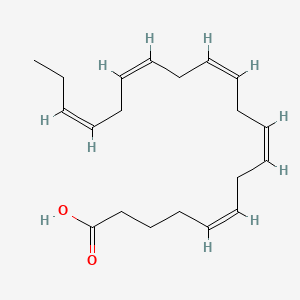
- Formula
- C20H30O2
- Weight
- 302.5 Da
- PubChem CID
- 446284
- Exact Mass
- 302.2246 Da
- LogP
- 5.6
- TPSA
- 37.3 Ų
- H-Bond Donors
- 1
- H-Bond Acceptors
- 2
- Rotatable Bonds
- 13
- Complexity
- 398
Identifiers (SMILES, InChI)
InChI=1S/C20H30O2/c1-2-3-4-5-6-7-8-9-10-11-12-13-14-15-16-17-18-19-20(21)22/h3-4,6-7,9-10,12-13,15-16H,2,5,8,11,14,17-19H2,1H3,(H,21,22)/b4-3-,7-6-,10-9-,13-12-,16-15-
JAZBEHYOTPTENJ-JLNKQSITSA-NReferences (7)
- [6]Bioavailability and conversion of plant based sources of omega-3 fatty acids - a scoping review to update supplementation options for vegetarians and vegans
→ Comprehensive review examining the bioavailability of plant-based omega-3 sources and conversion rates to EPA and DHA, providing guidance for vegetarian and vegan populations.
- [2]International Society of Sports Nutrition Position Stand: Long-Chain Omega-3 Polyunsaturated Fatty Acids
→ Position statement from sports nutrition experts establishing evidence-based guidelines for EPA and DHA supplementation in athletes for performance, recovery, and health optimization.
- [3]EPA, DHA, and resolvin effects on cancer risk: The underexplored mechanisms
→ Research exploring how EPA and DHA metabolism produces resolvins that demonstrate antitumorigenic effects through mechanisms including promoting macrophage phagocytosis and inhibiting proinflammatory cytokines.
- [4]Nutritional Interventions to Improve Cachexia Outcomes in Cancer-A Systematic Review
→ Systematic review showing that EPA supplementation resulted in significant body weight increases in cancer patients with cachexia, with additional benefits from β-HMB, arginine, and glutamine combinations.
- [7]DHA retroconversion revisited: dietary DHA spares endogenous EPA
→ Research showing that dietary DHA supplementation can spare endogenous EPA production through retroconversion pathways, optimizing omega-3 status.
- [1]Athletes Can Benefit from Increased Intake of EPA and DHA-Evaluating the Evidence
→ Comprehensive review demonstrating that EPA and DHA from fatty fish and algae are the most biologically active omega-3 fatty acids, with limited dietary sources raising concerns about status among athletes and general population.
- [5]The Influence of an Anti-Inflammatory Gluten-Free Diet with EPA and DHA on the Involvement of Maresin and Resolvins in Hashimoto's Disease
→ Study demonstrating that EPA and DHA supplementation combined with dietary modifications impacts inflammation through long-chain fatty acid mediators in autoimmune thyroid conditions.
Continue researching EPA (Eicosapentaenoic Acid)
Keep scientific evidence separate from commercial availability. Review how claims are evaluated, explore question-led research paths, or inspect disclosed source records without changing the editorial conclusions on this page.