Sodium Butyrate
Sodium Butyrate research profile covering evidence quality, proposed mechanisms, safety considerations, regulatory status, and linked primary sources.
Evidence-led profile
Research snapshot
- Evidence stage
- Emerging research
- References
- 6 linked sources
- Research coverage
- 1 area
- Editorial review
- Jul 7, 2026
Published by the PepGuide Editorial Team using our research methodology.
Overview
Sodium butyrate is the sodium salt of butyric acid (butanoic acid), one of the three principal short-chain fatty acids (SCFAs) produced by anaerobic bacterial fermentation of dietary fiber in the colon. Butyrate is the preferred energy substrate for colonocytes, supplying 60-70% of their metabolic needs through beta-oxidation and supporting the high-turnover epithelial lining of the large intestine. Beyond its metabolic role, butyrate is a potent class I and II histone deacetylase (HDAC) inhibitor, an epigenetic mechanism that increases histone acetylation and modulates gene expression across numerous cell types. This dual identity — metabolic fuel and epigenetic regulator — makes butyrate one of the most biologically significant molecules at the host-microbiome interface.
Butyrate's HDAC inhibitory activity drives many of its systemic health effects. In the gut, it strengthens barrier function by upregulating tight junction proteins (claudins, occludin, ZO-1), stimulates mucin production, promotes regulatory T cell differentiation (Tregs) through Foxp3 induction, and suppresses pro-inflammatory NF-κB signaling in intestinal macrophages and dendritic cells. These combined actions create an anti-inflammatory, barrier-protective environment that has shown therapeutic relevance in inflammatory bowel disease (IBD), irritable bowel syndrome (IBS), and leaky gut syndrome. Butyrate enemas have demonstrated efficacy in ulcerative colitis, and oral sodium butyrate supplementation has shown benefit in microscopic colitis and functional GI disorders.
Systemically, butyrate influences metabolic health through multiple mechanisms: it activates free fatty acid receptors (FFAR2/GPR43 and FFAR3/GPR41) on enteroendocrine cells to stimulate GLP-1 and PYY secretion (improving insulin sensitivity and satiety), enhances mitochondrial fatty acid oxidation, and modulates hypothalamic inflammation relevant to obesity. In cancer research, butyrate's HDAC inhibition promotes cell cycle arrest and apoptosis in colorectal cancer cells — the "butyrate paradox" wherein butyrate fuels normal colonocytes but inhibits cancer cell growth. Sodium butyrate supplementation is typically dosed at 300-600 mg two to three times daily. It pairs synergistically with prebiotics and probiotics that increase endogenous butyrate production, and complements other gut-supportive compounds like L-glutamine and colostrum.
Mechanism of Action
Sodium butyrate is the sodium salt of butyric acid, a four-carbon short-chain fatty acid (SCFA) produced primarily by anaerobic bacterial fermentation of dietary fiber in the colon. Its most well-characterized mechanism is inhibition of histone deacetylase (HDAC) enzymes, particularly class I (HDAC1, 2, 3, 8) and class IIa (HDAC4, 5, 7, 9). By binding to the zinc-containing active site of HDACs, butyrate prevents removal of acetyl groups from lysine residues on histone proteins. The resulting histone hyperacetylation relaxes chromatin structure, increasing accessibility of transcription factors to DNA and altering gene expression. This epigenetic modulation affects genes involved in cell differentiation, apoptosis (p21WAF1, BAX upregulation), and anti-inflammatory responses.
In the gastrointestinal tract, butyrate serves as the preferred energy substrate for colonocytes, supplying approximately 70% of their energy requirements through mitochondrial beta-oxidation. This metabolic consumption maintains a physiological oxygen gradient that promotes anaerobic conditions favoring beneficial gut microbiota. Butyrate strengthens the intestinal epithelial barrier by upregulating tight junction proteins (claudin-1, ZO-1, occludin) through HDAC inhibition-dependent and AMPK-mediated mechanisms. It also stimulates mucin production and promotes epithelial cell differentiation.
Butyrate signals through G-protein coupled receptors GPR41 (FFAR3), GPR43 (FFAR2), and GPR109A (HCA2/HCAR2) expressed on immune cells, enteroendocrine cells, and adipocytes. GPR109A activation on dendritic cells and macrophages promotes anti-inflammatory IL-10 production and regulatory T cell differentiation, while suppressing NF-kB-mediated pro-inflammatory cytokine expression. This immune-modulatory action, combined with HDAC inhibition, contributes to butyrate's protective effects against inflammatory bowel disease, colorectal cancer, and metabolic disorders.
Research
Reported Effects
Obesity Prevention:: Highly effective in animal models for preventing weight gain despite high-calorie intake.. Cognitive Recovery:: Shows significant promise in reversing symptoms of age-related memory loss and neurodegeneration.. Insulin Sensitivity:: Effectively promotes glucose homeostasis and reduces insulin resistance through skeletal muscle adaptations.. Synergistic Potential:: Works best when combined with dietary fiber (prebiotics) that fuel endogenous butyrate production.
- Highly effective in animal models for preventing weight gain despite high-calorie intake.
- Shows significant promise in reversing symptoms of age-related memory loss and neurodegeneration.
- Effectively promotes glucose homeostasis and reduces insulin resistance through skeletal muscle adaptations.
- Works best when combined with dietary fiber (prebiotics) that fuel endogenous butyrate production.
Safety and Limitations
Safety Profile: Sodium Butyrate
Common Side Effects
- Gastrointestinal symptoms: bloating, flatulence, abdominal cramps, and nausea (most common complaints, especially at higher doses)
- Unpleasant taste and smell (butyric acid has a strong, rancid butter/vomit-like odor; enteric-coated formulations reduce this)
- Mild diarrhea or loose stools during initial supplementation
- Body odor changes (butyrate metabolites excreted through skin and breath)
- Mild headache
Serious Adverse Effects
- Generally well-tolerated: butyrate is a naturally occurring short-chain fatty acid produced by colonic bacteria (15–20 mmol/day endogenously); supplemental doses of 150–600 mg/day are generally safe
- Sodium load: similar to other sodium salts; relevant at high doses for individuals on sodium-restricted diets
- Histamine release: butyrate may influence mast cell function and histamine signaling; theoretical concern for individuals with mast cell activation syndrome or histamine intolerance, though some evidence suggests butyrate may actually stabilize mast cells
- Paradoxical effects in cancer: butyrate inhibits HDAC (histone deacetylase) and is antiproliferative in colorectal cancer cells in vitro; however, in some cancer cell types, butyrate can promote proliferation (the "butyrate paradox"); clinical implications of oral supplementation for cancer risk are unclear
- Limited clinical trial data for oral sodium butyrate supplements; most human evidence comes from butyrate enemas for ulcerative colitis
Contraindications
- Known hypersensitivity to butyrate or butyric acid
- Sodium-restricted diets at high supplement doses
- Active GI bleeding (oral butyrate may irritate compromised mucosa)
- Severe hepatic encephalopathy (gut-derived SCFAs may affect ammonia metabolism)
Drug Interactions
- HDAC inhibitors (vorinostat, romidepsin, panobinostat): sodium butyrate is itself an HDAC inhibitor; additive epigenetic modification effects; clinical significance at oral supplement doses is likely low but unknown
- 5-ASA compounds (mesalamine): used together in IBD management; generally compatible but additive GI effects possible
- Immunosuppressants: butyrate modulates immune function (regulatory T-cell differentiation, anti-inflammatory cytokine production); may interact with immunosuppressive therapy in complex ways
- Probiotics: synergistic—many probiotic bacteria produce butyrate; combining oral butyrate with butyrate-producing probiotics increases total colonic butyrate load
- No significant CYP450 interactions identified
Population-Specific Considerations
- IBD (ulcerative colitis): butyrate enemas (100 mmol/L) have the most evidence; oral sodium butyrate (300–600 mg/day) is studied as adjunct therapy; generally well-tolerated alongside standard IBD medications
- IBS: emerging evidence for gut barrier improvement and visceral pain reduction; 300 mg/day appears safe in IBS populations
- Gut health / microbiome optimization: most popular consumer use case; typical doses of 150–300 mg/day; enteric-coated or tributyrin formulations improve delivery to the colon
- Pregnancy / lactation: butyrate is a normal metabolic product; supplementation at standard doses is likely safe but lacks formal study
- Children: no established pediatric dosing for supplements; butyrate production is a normal part of pediatric gut microbiome development
- Cancer patients: do not use as a cancer treatment; the HDAC inhibitor mechanism is exploited at pharmacological doses (IV) in oncology, not at oral supplement doses; discuss with oncologist
- Tributyrin vs. sodium butyrate: tributyrin (glycerol tributyrate) is a prodrug form with better colonic delivery and less odor; pharmacokinetically different but same active metabolite
Common Side Effects
- Gastrointestinal Odor:: The most commonly reported 'side effect' is a strong, cheese-like odor in the supplement and occasionally in breath/sweat.
- Digestive Discomfort:: High initial doses may cause mild cramping or changes in bowel habits as the microbiome shifts.
- Electrolyte Balance:: As a sodium salt, users with hypertension may need to monitor total daily sodium intake.
Reconstitution Calculator
Pharmacokinetic Profile
Molecular Structure
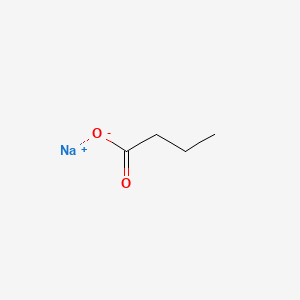
- Formula
- C4H7NaO2
- Weight
- 110.09 Da
- PubChem CID
- 5222465
- Exact Mass
- 110.0344 Da
- TPSA
- 40.1 Ų
- H-Bond Donors
- 0
- H-Bond Acceptors
- 2
- Rotatable Bonds
- 2
- Complexity
- 53
Identifiers (SMILES, InChI)
InChI=1S/C4H8O2.Na/c1-2-3-4(5)6;/h2-3H2,1H3,(H,5,6);/q;+1/p-1
MFBOGIVSZKQAPD-UHFFFAOYSA-MReferences (6)
- [3]Anti-obesity effect of butyrate links to modulation of gut microbiome and epigenetic regulation of muscular circadian clock
→ Butyrate supplementation was found to reduce weight gain and enhance fatty acid oxidation by regulating the muscle's circadian clock genes and increasing histone acetylation.
- [1]Sodium butyrate epigenetically modulates high-fat diet-induced skeletal muscle mitochondrial adaptation, obesity and insulin resistance through nucleosome positioning
→ This study demonstrates that sodium butyrate can prevent high-fat diet-induced obesity and insulin resistance by improving mitochondrial function and oxidative metabolism in skeletal muscle.
- [2]Sodium butyrate improves memory function in an Alzheimer's disease mouse model when administered at an advanced stage of disease progression
→ Research found that sodium butyrate administration can restore memory function and improve cognitive performance even in late-stage neurodegenerative models by elevating histone acetylation.
- [4]Sodium butyrate improves memory and modulates the activity of histone deacetylases in aged rats after the administration of d-galactose
→ This paper highlights butyrate's ability to reverse memory decline associated with aging and oxidative stress through the modulation of epigenetic markers.
- [5]Banasiewicz T, Krokowicz Ł, Stojcev Z, et al. Microencapsulated sodium butyrate reduces the frequency of abdominal pain in patients with irritable bowel syndrome Colorectal Disease (2013)
→ Microencapsulated sodium butyrate 300 mg/day added to standard care reduced the frequency of abdominal pain in IBS versus placebo at 4 weeks.
- [6]Lewandowski K, Kaniewska M, Karłowicz K, et al. The effectiveness of microencapsulated sodium butyrate at reducing symptoms in patients with irritable bowel syndrome Przegląd Gastroenterologiczny (Gastroenterology Review) (2022)
→ 150 mg twice daily for 12 weeks significantly improved abdominal pain, bloating, and bowel symptoms in a large IBS cohort.
Continue researching Sodium Butyrate
Keep scientific evidence separate from commercial availability. Review how claims are evaluated, explore question-led research paths, or inspect disclosed source records without changing the editorial conclusions on this page.