L-Glutamine
The most abundant amino acid in the body, essential for gut barrier integrity, immune cell function, muscle recovery, and nitrogen transport between tissues.
Evidence-led profile
Research snapshot
- Evidence stage
- Emerging research
- References
- 6 linked sources
- Research coverage
- 1 area
- Editorial review
- Mar 8, 2026
Published by the PepGuide Editorial Team using our research methodology.
Overview
L-Glutamine is a conditionally essential amino acid and the most abundant free amino acid in human plasma and skeletal muscle, comprising approximately 60% of the intramuscular free amino acid pool. Under normal conditions, endogenous synthesis (primarily in skeletal muscle and lungs) meets physiological demands, but during critical illness, surgery, intense exercise, burns, or sepsis, glutamine demand can dramatically exceed supply — depleting plasma levels by up to 50% and creating a state of functional deficiency. Glutamine serves as a primary fuel source for rapidly dividing cells, including enterocytes (intestinal epithelial cells), lymphocytes, macrophages, and neutrophils, making it indispensable for both gut barrier function and immune competence.
The gut-protective properties of L-glutamine are among its most clinically significant applications. Enterocytes consume glutamine as their preferred energy substrate, and adequate supply is critical for maintaining tight junction integrity, mucus production, and intestinal permeability regulation. Clinical trials have demonstrated that glutamine supplementation (typically 15–30 g/day in divided doses) reduces intestinal permeability ("leaky gut"), attenuates inflammatory cytokine production, and supports recovery from chemotherapy-induced mucositis, short bowel syndrome, and inflammatory bowel conditions. In critical care medicine, glutamine supplementation has been associated with reduced infection rates, shorter hospital stays, and improved nitrogen balance in surgical and ICU patients, though optimal dosing protocols continue to be refined.
For athletes and fitness enthusiasts, L-glutamine supports recovery by replenishing depleted intramuscular stores, reducing exercise-induced immunosuppression, and attenuating muscle soreness. It also serves as a gluconeogenic substrate and as the primary nitrogen shuttle between tissues via the glucose-glutamine cycle. L-glutamine pairs synergistically with zinc-l-carnosine for comprehensive gut mucosal repair, colostrum for immune and gut barrier support, and humic-acid in protocols targeting intestinal permeability. For muscle-focused applications, it complements creatine-monohydrate, bcaas, and hmb. Its excellent safety profile — even at doses up to 40 g/day in clinical settings — makes L-glutamine one of the most widely used therapeutic amino acids in both integrative and conventional medicine.
Research
Reported Effects
Gut Health Efficacy:: Most effective for intestinal issues when combined with other interventions (psyllium husk, bone broth, probiotics, fasting) rather than as standalone treatment. Individual Variability:: Results are highly variable - works excellently for some users with gut issues while providing zero benefit to others even after months of use. Dosage Sensitivity:: Higher doses (15-20g daily) appear more effective for gut healing, while lower doses (5g) may be sufficient for general recovery support. Timeline:: Benefits for gut healing typically require 2-3 months minimum, though some users report no improvement even after 12 months of consistent use
Safety and Limitations
Safety Profile: L-Glutamine
Common Side Effects
- Generally well-tolerated at doses up to 30–40 g/day in clinical settings
- Gastrointestinal symptoms: bloating, nausea, abdominal cramps, and flatulence, particularly at higher doses
- Constipation or diarrhea (dose-dependent)
- Mild headache
- Muscle or joint aches (uncommon)
- Cough and mild respiratory symptoms (observed in clinical trials at high doses)
Serious Adverse Effects
- Ammonia accumulation: glutamine is deaminated to glutamate and ammonia; patients with hepatic encephalopathy or severe liver disease may develop dangerous hyperammonemia
- Tumor growth promotion: glutamine is a critical metabolic fuel for rapidly dividing cells; theoretical and preclinical concern that supplementation may support tumor growth in cancer patients (clinical significance debated)
- Mania induction: rare case reports of glutamine-triggered manic episodes in patients with bipolar disorder, possibly via glutamate-mediated excitotoxicity
- Allergic reactions (rare): hives, facial swelling, difficulty breathing
- Seizure exacerbation in susceptible individuals (glutamate is an excitatory neurotransmitter)
Contraindications
- Hepatic encephalopathy or severe liver disease (risk of ammonia accumulation — absolute contraindication)
- Reye syndrome (impaired ammonia metabolism)
- Active malignancy (unless specifically directed by oncologist; glutamine may fuel tumor metabolism)
- Seizure disorders not well-controlled by medication
- Known hypersensitivity to L-glutamine
- Bipolar disorder (risk of manic episode induction)
Drug Interactions
- Lactulose: used to reduce ammonia in hepatic encephalopathy; glutamine may counteract its therapeutic effect by increasing ammonia production
- Anticonvulsants (phenobarbital, valproate, carbamazepine): glutamine conversion to glutamate may lower seizure threshold; monitor anticonvulsant drug levels
- Chemotherapy agents: complex interaction — glutamine may reduce mucositis and neuropathy from certain agents (e.g., paclitaxel, 5-FU) but could theoretically support tumor cell metabolism
- Immunosuppressants: glutamine supports immune cell proliferation; may partially counteract immunosuppressive therapy
- MSG-sensitive individuals: glutamine is metabolized to glutamate; may trigger reactions in highly sensitive persons
Population-Specific Considerations
- Pregnancy: generally considered safe at dietary levels; supplemental use should be discussed with healthcare provider; limited controlled human data
- Lactation: present in breast milk naturally; supplemental doses likely safe but data limited
- Children: FDA-approved for sickle cell disease in patients aged 5+; otherwise, supplement use should be medically supervised
- Elderly: beneficial for gut health and muscle preservation but monitor for renal clearance capacity at higher doses
- Renal impairment: kidneys are major site of glutamine metabolism; impaired renal function may alter ammonia handling; use caution
- Critical illness: commonly used in ICU nutrition but recent large trials (REDOXS) showed potential harm in multi-organ failure; use only per institutional protocol
Common Side Effects
- Mental Health Impact:: Notable number of users report anxiety, depression, depersonalization, PTSD flashbacks, and emotional numbness, particularly those sensitive to glutamate/GABA imbalances
- No Effect:: Common complaint that glutamine produces zero noticeable benefits even after months of consistent supplementation
- Glutamate Sensitivity:: Users with existing GABA/glutamate issues report worsening anxiety, tight chest, tinnitus, and sleep disturbances
- Generally Well-Tolerated:: For majority who don't experience mental effects, side effects are minimal with proper dosing
Mechanism of Action
L-Glutamine is the most abundant free amino acid in the body, serving as a critical metabolic substrate for rapidly dividing cells including enterocytes, lymphocytes, and macrophages. In the gut, glutamine is the preferred energy source for intestinal epithelial cells, where it is converted to glutamate by glutaminase and subsequently enters the tricarboxylic acid (TCA) cycle via alpha-ketoglutarate. This metabolic pathway is essential for maintaining the integrity of tight junctions between enterocytes, preventing intestinal permeability (commonly referred to as leaky gut). Glutamine upregulates expression of tight junction proteins including claudin-1, occludin, and zonula occludens-1 (ZO-1) through activation of the MAPK/ERK signaling cascade.
In immune cells, glutamine serves as a nitrogen donor for purine and pyrimidine biosynthesis, directly supporting lymphocyte proliferation and cytokine production. It activates the mTOR (mechanistic target of rapamycin) signaling pathway, which regulates T-cell differentiation and effector function. Glutamine also induces heat shock protein 70 (HSP70) expression, which provides cytoprotection against inflammatory damage and modulates NF-κB-mediated inflammatory signaling. During periods of physiological stress such as trauma, surgery, or intensive exercise, endogenous glutamine production becomes insufficient, making supplementation critical for maintaining immune competence and preventing muscle catabolism.
Additionally, glutamine participates in the glutamine-glutamate cycle in the brain, where it serves as a precursor for both the excitatory neurotransmitter glutamate and the inhibitory neurotransmitter GABA. In the kidneys, glutamine metabolism generates ammonium ions essential for acid-base homeostasis. Glutamine also serves as the primary inter-organ nitrogen transporter, shuttling ammonia from peripheral tissues to the liver for urea synthesis and to the kidneys for excretion, making it central to whole-body nitrogen balance.
Research protocol summary
- Typical Dose
- 5g taken three times daily (15g total) is most commonly recommended for gut healing and IBS, often on empty stomach
These values summarize cataloged research protocols. They are not personal dosing instructions or medical guidance.
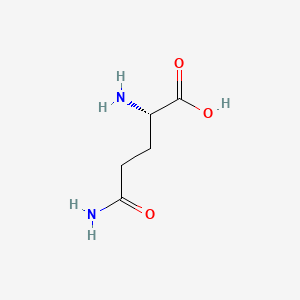
Molecular Structure
- Formula
- C5H10N2O3
- Weight
- 146.14 Da
- PubChem CID
- 5961
- Exact Mass
- 146.0691 Da
- LogP
- -3.1
- TPSA
- 106 Ų
- H-Bond Donors
- 3
- H-Bond Acceptors
- 4
- Rotatable Bonds
- 4
- Complexity
- 146
Identifiers (SMILES, InChI)
InChI=1S/C5H10N2O3/c6-3(5(9)10)1-2-4(7)8/h3H,1-2,6H2,(H2,7,8)(H,9,10)/t3-/m0/s1
ZDXPYRJPNDTMRX-VKHMYHEASA-NReferences (6)
- [3]Randomised placebo-controlled trial of dietary glutamine supplements for postinfectious irritable bowel syndrome
→ Glutamine supplementation (5g three times daily for 8 weeks) significantly reduced IBS symptom severity scores and improved intestinal permeability in patients with postinfectious IBS-D, with benefits sustained at follow-up.
- [1]Supplementation of L-glutamine enhanced mucosal immunity and improved hormonal status of combat-sport athletes
→ Three-week supplementation with L-glutamine (0.3g/kg body weight) in combat athletes significantly improved mucosal immunity markers, reduced upper respiratory tract infection rates, and enhanced hormonal balance following intensive training.
- [2]Glutamine for Amelioration of Radiation and Chemotherapy Associated Mucositis during Cancer Therapy
→ Oral glutamine supplementation (10g/day) combined with disaccharides reduces painful mucosal symptoms, ulceration, and tissue damage associated with chemotherapy and radiation in cancer patients, promoting better nutrition and quality of life.
- [4]A systematic review and meta-analysis of clinical trials on the effects of glutamine supplementation on gut permeability in adults
→ Meta-analysis shows glutamine supplementation can improve intestinal permeability markers in various clinical populations, though effects vary based on dosage, duration, and underlying condition.
- [5]The effect of glutamine supplementation on athletic performance, body composition, and immune function: A systematic review and a meta-analysis of clinical trials
→ Systematic review found glutamine supplementation provides modest benefits for immune function and may reduce infection rates in athletes, though effects on performance and body composition were inconsistent.
- [6]L-Glutamine Supplementation Improves the Benefits of Combined-Exercise Training on Oral Redox Balance and Inflammatory Status in Elderly Individuals
→ L-glutamine supplementation combined with aerobic-resistance exercise enhanced antioxidant status and reduced inflammatory markers in elderly participants compared to exercise alone.
Continue researching L-Glutamine
Keep scientific evidence separate from commercial availability. Review how claims are evaluated, explore question-led research paths, or inspect disclosed source records without changing the editorial conclusions on this page.