ZEAXANTHIN
ZEAXANTHIN research profile covering evidence quality, proposed mechanisms, safety considerations, regulatory status, and linked primary sources.
Evidence-led profile
Research snapshot
- Evidence stage
- Emerging research
- References
- 10 linked sources
- Research coverage
- 1 area
- Editorial review
- Jul 7, 2026
Published by the PepGuide Editorial Team using our research methodology.
Zeaxanthin is a fat-soluble carotenoid antioxidant that, along with lutein, selectively accumulates in the macula of the eye where it forms macular pigment. It functions by filtering harmful blue light and providing antioxidant protection to retinal cells, helping to prevent age-related macular degeneration and supporting visual performance.
Research
Reported Effects
Preventive vs. Corrective:: Research shows strong evidence for preventing age-related macular degeneration progression (up to 30% reduction), but limited ability to reverse existing vision problems like nearsightedness. Time to Effect:: Users typically notice eye strain relief within 2-4 weeks, while macular pigment density changes require 6+ weeks; full protective benefits develop over months. Screen Protection:: Particularly effective for people with heavy computer and phone use, acting as 'internal sunglasses' by filtering blue-violet light around 450-460nm. Combination Benefits:: Most effective when combined with omega-3s and other antioxidants; synergistic effects noted in both research and user reports
- Research shows strong evidence for preventing age-related macular degeneration progression (up to 30% reduction), but limited ability to reverse existing vision problems like nearsightedness
- Users typically notice eye strain relief within 2-4 weeks, while macular pigment density changes require 6+ weeks; full protective benefits develop over months
- Particularly effective for people with heavy computer and phone use, acting as 'internal sunglasses' by filtering blue-violet light around 450-460nm
- Most effective when combined with omega-3s and other antioxidants; synergistic effects noted in both research and user reports
Safety and Limitations
Safety Profile: Zeaxanthin
Common Side Effects
- Generally very well tolerated at typical supplement doses (2–10 mg/day)
- Mild yellowing of the skin (carotenodermia) at high doses; harmless and reversible upon discontinuation
- Mild gastrointestinal symptoms including nausea and stomach upset (uncommon)
- Headache reported rarely in clinical trials
- The AREDS2 study (10 mg lutein + 2 mg zeaxanthin daily for 5 years) demonstrated an excellent safety profile
Serious Adverse Effects
- No significant serious adverse effects reported in clinical trials at recommended doses
- Theoretical concern for crystalline maculopathy with extremely high-dose carotenoid supplementation, though no cases specifically attributed to zeaxanthin at standard doses
- Carotenoids are fat-soluble; accumulation is possible with chronic mega-dosing, but toxicity threshold is not established
- Unlike beta-carotene, zeaxanthin has NOT been associated with increased lung cancer risk in smokers (beta-carotene showed this risk in the ATBC and CARET trials)
- Rare allergic reactions to marigold-derived zeaxanthin (Tagetes erecta, the most common supplement source)
Contraindications
- Known hypersensitivity to zeaxanthin, lutein, or marigold (Tagetes) flowers (common extraction source)
- No absolute contraindications established at standard supplemental doses
- Pregnancy and lactation: dietary intake is safe; supplemental doses beyond dietary levels lack specific safety data, though AREDS2 doses are generally considered acceptable
Drug Interactions
- Orlistat and cholestyramine: Reduce carotenoid absorption as they impair fat digestion/absorption
- Beta-carotene supplements: High-dose beta-carotene may compete with zeaxanthin for absorption and transport; AREDS2 replaced beta-carotene with lutein/zeaxanthin partly for this reason
- Plant sterol/stanol supplements: May reduce carotenoid absorption
- No significant CYP450 interactions reported at supplemental doses
- Mineral oil laxatives: Chronic use may reduce absorption of fat-soluble carotenoids
Population-Specific Considerations
- AMD patients: Primary use population; 2 mg zeaxanthin (combined with 10 mg lutein) shown to reduce progression of age-related macular degeneration in AREDS2
- Elderly: Excellent safety profile; recommended as part of AREDS2 formulation for macular health
- Smokers: Unlike beta-carotene, zeaxanthin is not associated with increased lung cancer risk; can be safely used in smokers
- Pediatric: Naturally present in breast milk and many foods; supplemental doses not established for children
- Contact lens wearers and screen workers: Commonly used for blue light protection and macular pigment density; well tolerated
Common Side Effects
- Skin Pigmentation:: High doses can cause yellow-orange skin tint, particularly noticeable with beta-carotene combination; generally harmless and reversible
- Minimal Adverse Effects:: Very few users report negative side effects; considered one of the safest supplements with excellent tolerability
- Individual Variation:: Some users report no noticeable effects even at standard doses, possibly due to dietary intake or genetic factors affecting absorption
- Interaction Considerations:: Generally safe to combine with other supplements; often stacked with astaxanthin, omega-3s, and vitamin E without issues
Research protocol summary
- Typical Dose
- Research consistently uses 10mg lutein + 2mg zeaxanthin (5:1 ratio), which users and researchers recommend maintaining for optimal benefits
These values summarize cataloged research protocols. They are not personal dosing instructions or medical guidance.
Reconstitution Calculator
Pharmacokinetic Profile
Molecular Structure
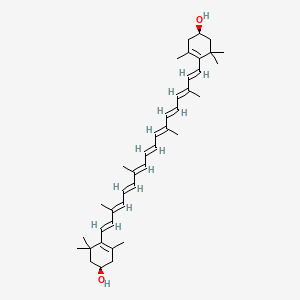
- Formula
- C40H56O2
- Weight
- 568.9 Da
- PubChem CID
- 5280899
- Exact Mass
- 568.4280 Da
- LogP
- 10.9
- TPSA
- 40.5 Ų
- H-Bond Donors
- 2
- H-Bond Acceptors
- 2
- Rotatable Bonds
- 10
- Complexity
- 1190
Identifiers (SMILES, InChI)
InChI=1S/C40H56O2/c1-29(17-13-19-31(3)21-23-37-33(5)25-35(41)27-39(37,7)8)15-11-12-16-30(2)18-14-20-32(4)22-24-38-34(6)26-36(42)28-40(38,9)10/h11-24,35-36,41-42H,25-28H2,1-10H3/b12-11+,17-13+,18-14+,23-21+,24-22+,29-15+,30-16+,31-19+,32-20+/t35-,36-/m1/s1
JKQXZKUSFCKOGQ-QAYBQHTQSA-NReferences (10)
- [1]Lutein + zeaxanthin and omega-3 fatty acids for age-related macular degeneration: the Age-Related Eye Disease Study 2 (AREDS2) randomized clinical trial
→ Major clinical trial with over 4,000 participants showing that lutein and zeaxanthin supplementation reduced the risk of progression to advanced age-related macular degeneration when added to antioxidant formulations.
- [2]Long-term Outcomes of Adding Lutein/Zeaxanthin and ω-3 Fatty Acids to the AREDS Supplements on Age-Related Macular Degeneration Progression: AREDS2 Report 28
→ Ten-year follow-up of AREDS2 confirmed sustained benefits of lutein/zeaxanthin supplementation in slowing progression to late-stage AMD, particularly in patients at high risk.
- [3]Lutein and Zeaxanthin Supplementation Improves Dynamic Visual and Cognitive Performance in Children: A Randomized, Double-Blind, Parallel, Placebo-Controlled Study
→ Study of 60 children found that 10mg lutein and 2mg zeaxanthin daily for 180 days improved visual function, cognitive performance, and brain-derived neurotrophic factor levels.
- [4]Oral Antioxidant and Lutein/Zeaxanthin Supplements Slow Geographic Atrophy Progression to the Fovea in Age-Related Macular Degeneration
→ Analysis of AREDS and AREDS2 data demonstrated that lutein/zeaxanthin supplementation significantly slowed the progression of geographic atrophy to the central vision area in AMD patients.
- [5]Omega-3 fatty acid, carotenoid and vitamin E supplementation improves working memory in older adults: A randomised clinical trial
→ Randomized trial showed that combined supplementation with omega-3s, carotenoids including lutein and zeaxanthin, and vitamin E significantly improved working memory performance in older adults.
- [6]Supplementation With Carotenoids, Omega-3 Fatty Acids, and Vitamin E Has a Positive Effect on the Symptoms and Progression of Alzheimer's Disease
→ 12-month trial in Alzheimer's patients found that supplementation with carotenoids (including 10mg lutein and 2mg zeaxanthin) combined with omega-3s and vitamin E improved cognitive function and behavioral symptoms.
- [7]Dietary carotenoids and cognitive function among US adults, NHANES 2011-2014
→ Analysis of 2,700+ adults aged 60+ found associations between higher dietary intake of lutein and zeaxanthin and better performance on cognitive tests including memory and processing speed.
- [8]Effect of an antioxidant supplement containing high dose lutein and zeaxanthin on macular pigment and skin carotenoid levels
→ Study of 20mg lutein and 4mg zeaxanthin daily for 16 weeks showed significant increases in macular pigment optical density and skin carotenoid levels, indicating successful tissue accumulation.
- [9]Lutein, zeaxanthin, and meso-zeaxanthin: The basic and clinical science underlying carotenoid-based nutritional interventions against ocular disease
→ Comprehensive review detailing how lutein and zeaxanthin protect the retina through blue light filtration and antioxidant effects, with evidence supporting their role in preventing age-related eye diseases.
- [10]Potential roles of dietary zeaxanthin and lutein in macular health and function
→ Review establishing that lutein and zeaxanthin concentrate in the macula, provide oxidative defense, filter blue light, and can be quantified via macular pigment optical density measurements.
Continue researching ZEAXANTHIN
Keep scientific evidence separate from commercial availability. Review how claims are evaluated, explore question-led research paths, or inspect disclosed source records without changing the editorial conclusions on this page.