TETRAHYDROCURCUMIN
TETRAHYDROCURCUMIN research profile covering evidence quality, proposed mechanisms, safety considerations, regulatory status, and linked primary sources.
Evidence-led profile
Research snapshot
- Evidence stage
- Emerging research
- References
- 9 linked sources
- Research coverage
- 1 area
- Editorial review
- Mar 8, 2026
Published by the PepGuide Editorial Team using our research methodology.
Tetrahydrocurcumin (THC) is a major metabolite of curcumin with enhanced bioavailability, water solubility, and chemical stability compared to its parent compound. It exerts potent antioxidant, anti-inflammatory, and neuroprotective effects by reducing oxidative stress, modulating inflammatory pathways, and protecting mitochondrial function. THC has demonstrated therapeutic potential for cardiovascular health, metabolic dysfunction, neurodegenerative diseases, and age-related conditions.
Research
Reported Effects
Enhanced Bioavailability:: Demonstrated 2-3 fold better absorption compared to standard curcumin in multiple studies. Dose-Dependent Effects:: Both upregulation and downregulation of certain enzymes depends on concentration used. Superior Stability:: Greater water solubility and chemical stability compared to curcumin while maintaining therapeutic benefits. Metabolite Advantage:: Acts as an active metabolite of curcumin with similar or enhanced biological activities
- Demonstrated 2-3 fold better absorption compared to standard curcumin in multiple studies
- Both upregulation and downregulation of certain enzymes depends on concentration used
- Greater water solubility and chemical stability compared to curcumin while maintaining therapeutic benefits
- Acts as an active metabolite of curcumin with similar or enhanced biological activities
Safety and Limitations
Safety Profile: Tetrahydrocurcumin
Common Side Effects
- Generally well tolerated at typical doses (250–500 mg/day); better bioavailability than curcumin
- Mild gastrointestinal symptoms including nausea, bloating, and diarrhea
- Mild headache reported in some users
- Yellow discoloration of stools (harmless, related to curcuminoid metabolism)
Serious Adverse Effects
- Limited human clinical trial data compared to parent compound curcumin; most safety data extrapolated from curcumin studies
- Potential antiplatelet activity may increase bleeding risk at high doses
- Theoretical risk of iron chelation and reduced iron absorption with chronic high-dose use
- No significant hepatotoxicity or nephrotoxicity reported at standard doses in available studies
- Rare allergic reactions in individuals sensitive to turmeric or Curcuma species
Contraindications
- Known allergy to turmeric, curcumin, or related Zingiberaceae family plants
- Active bleeding disorders or upcoming surgery (discontinue 2 weeks prior)
- Bile duct obstruction or gallstones (curcuminoids stimulate bile flow)
- Iron deficiency anemia (may impair iron absorption)
- Pregnancy and lactation (insufficient safety data at supplemental doses; culinary turmeric use is generally safe)
Drug Interactions
- Anticoagulants/Antiplatelets (warfarin, aspirin, clopidogrel): May potentiate anticoagulant effects; monitor INR and bleeding signs
- Antidiabetic agents: May enhance hypoglycemic effects; monitor blood glucose
- CYP3A4 and CYP2C9 substrates: Curcuminoids may inhibit these enzymes; caution with drugs having narrow therapeutic indices
- Iron supplements: May chelate iron and reduce absorption; separate dosing by at least 2 hours
- Chemotherapy agents: May interact with certain chemotherapeutics; consult oncologist before concurrent use
Population-Specific Considerations
- Elderly: Generally well tolerated; monitor for GI side effects and potential drug interactions
- Pediatric: No established safety data at supplemental doses; not recommended for children
- Diabetic patients: Monitor blood glucose closely due to potential hypoglycemic effects
- Gallbladder disease: Avoid use due to choleretic (bile-stimulating) effects
- Anemic patients: Monitor iron status with long-term use
Common Side Effects
- Trace Mineral Depletion:: Potential for zinc, copper, and selenium depletion with long-term curcuminoid use based on NAC-related reports
- Digestive Interactions:: Can affect pepsin function and enzyme activity in concentration-dependent manner
- Limited Human Data:: Most safety profiles derived from animal studies with minimal long-term human clinical data
- Generally Well-Tolerated:: No major adverse effects reported in animal studies at therapeutic doses
Reconstitution Calculator
Pharmacokinetic Profile
Molecular Structure
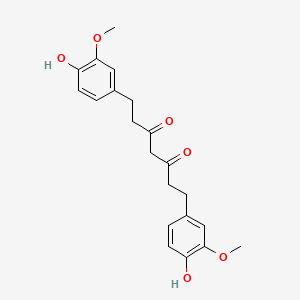
- Formula
- C21H24O6
- Weight
- 372.4 Da
- PubChem CID
- 124072
- Exact Mass
- 372.1573 Da
- LogP
- 2.8
- TPSA
- 93.1 Ų
- H-Bond Donors
- 2
- H-Bond Acceptors
- 6
- Rotatable Bonds
- 10
- Complexity
- 437
Identifiers (SMILES, InChI)
InChI=1S/C21H24O6/c1-26-20-11-14(5-9-18(20)24)3-7-16(22)13-17(23)8-4-15-6-10-19(25)21(12-15)27-2/h5-6,9-12,24-25H,3-4,7-8,13H2,1-2H3
LBTVHXHERHESKG-UHFFFAOYSA-NReferences (9)
- [1]Positive Tetrahydrocurcumin-Associated Brain-Related Metabolomic Implications
→ THC demonstrates strong antioxidant properties and effectively reduces amyloid β aggregates in various brain dysfunction models including traumatic brain injury, ischemia-reperfusion injury, Alzheimer's disease, and Parkinson's disease.
- [2]Nutraceutical activation of Sirt1: a review
→ Tetrahydrocurcumin is identified as a nutraceutical that enhances Sirt1 synthesis and protein expression, contributing to anti-aging effects and improved healthspan similar to calorie restriction.
- [3]Tetrahydrocurcumin alleviates hypertension, aortic stiffening and oxidative stress in rats with nitric oxide deficiency
→ THC at 50-100 mg/kg significantly reduced blood pressure, peripheral vascular resistance, and aortic stiffness while improving oxidative stress markers in hypertensive rats.
- [4]Tetrahydrocurcumin-Related Vascular Protection: An Overview of the Findings from Animal Disease Models
→ THC demonstrates preventive effects on vascular dysfunction and hypertension development through improvements in hemodynamic status, aortic elasticity, and reduction of oxidative stress in various animal models.
- [5]The role of tetrahydrocurcumin in disease prevention and treatment
→ Comprehensive review highlighting THC's important roles in prevention and treatment of various diseases, with enhanced bioavailability compared to curcumin from herbal medicine and dietary sources.
- [6]Tetrahydrocurcumin Ameliorates Skin Inflammation by Modulating Autophagy in High-Fat Diet-Induced Obese Mice
→ THC demonstrated anti-inflammatory and antioxidant effects by modulating autophagy processes in skin tissue of obese mice, addressing obesity-induced chronic low-grade inflammation.
- [7]Tetrahydrocurcumin Enhances Islet Cell Function and Attenuates Apoptosis in Mouse Islets
→ THC treatment enhanced islet cell function and reduced apoptosis before transplantation, demonstrating antioxidant and anti-inflammatory activities that protect against ischemic damage.
- [8]Tetrahydrocurcumin: effect on chloroquine-mediated oxidative damage in rat kidney
→ Oral administration of THC at 80 mg/kg significantly prevented chloroquine-induced nephrotoxicity by decreasing lipid peroxidation and increasing antioxidant levels in kidney tissue.
- [9]Efficacy of TurmiZn, a Metallic Complex of Curcuminoids-Tetrahydrocurcumin and Zinc on Bioavailability, Antioxidant, and Cytokine Modulation Capability
→ A curcuminoid-THC-zinc complex showed 2-3 fold increase in bioavailability compared to curcumin and THC alone, with enhanced antioxidant capability and inflammatory cytokine inhibition.
Continue researching TETRAHYDROCURCUMIN
Keep scientific evidence separate from commercial availability. Review how claims are evaluated, explore question-led research paths, or inspect disclosed source records without changing the editorial conclusions on this page.