VINPOCETINE
VINPOCETINE research profile covering evidence quality, proposed mechanisms, safety considerations, regulatory status, and linked primary sources.
Evidence-led profile
Research snapshot
- Evidence stage
- Emerging research
- References
- 11 linked sources
- Research coverage
- 3 areas
- Editorial review
- Jul 7, 2026
Published by the PepGuide Editorial Team using our research methodology.
Vinpocetine is a semi-synthetic derivative of the alkaloid vincamine, extracted from the periwinkle plant. It acts as a phosphodiesterase inhibitor and cerebral vasodilator, enhancing blood flow to the brain and providing neuroprotective effects. Originally developed for treating cerebrovascular disorders like stroke and dementia, it's now widely available as a dietary supplement marketed for cognitive enhancement and memory improvement.
Research
Reported Effects
Individual Variation:: User responses range from highly positive to minimal effects, suggesting significant individual differences in metabolism or sensitivity. Stack Synergy:: Most effective when combined with other nootropics like Alpha-GPC, piracetam, or choline sources rather than used alone. Subtle Effects:: Users often describe vinpocetine's benefits as more subtle compared to stimulants, with effects on focus and mental clarity rather than energy. Long-term Benefits:: Some users report consistent benefits with regular use over months, particularly for cognitive maintenance
- User responses range from highly positive to minimal effects, suggesting significant individual differences in metabolism or sensitivity
- Most effective when combined with other nootropics like Alpha-GPC, piracetam, or choline sources rather than used alone
- Users often describe vinpocetine's benefits as more subtle compared to stimulants, with effects on focus and mental clarity rather than energy
- Some users report consistent benefits with regular use over months, particularly for cognitive maintenance
PDE1 inhibition and cerebral vasodilation
Vinpocetine is a semisynthetic derivative of vincamine, an alkaloid from Vinca minor (lesser periwinkle). Its principal mechanisms are selective inhibition of phosphodiesterase type 1 (PDE1), raising cAMP/cGMP, blockade of voltage-gated sodium channels, and inhibition of IKK/NF-kB inflammatory signaling. Together these produce cerebral vasodilation, improved microcirculation, reduced platelet aggregation, and anti-inflammatory/antioxidant neuroprotection, underpinning its use in cerebrovascular disorders.
- Selective PDE1 inhibitor increasing cerebral cAMP/cGMP and blood flow
- Sodium-channel blockade and NF-kB inhibition confer neuroprotection
- Improves microcirculation and reduces platelet aggregation
Clinical evidence and regulatory status
Vinpocetine (Cavinton) is an approved drug for cerebrovascular and cognitive disorders in several European and Asian countries but is sold only as a dietary supplement in the US and is not FDA-approved. RCTs in acute ischemic stroke (e.g., CAVIN) suggest functional benefit, while the pooled dementia evidence remains inconclusive because trials were small, short, and predated modern diagnostic criteria. It is contraindicated in pregnancy due to potential fetal harm.
- Approved abroad for cerebrovascular disease; US supplement only
- Stroke RCTs show functional benefit; dementia evidence inconclusive
- FDA has warned it should not be used during pregnancy
Safety and Limitations
Safety Profile: Vinpocetine
Common Side Effects
- Headache, dizziness, and flushing are the most frequently reported adverse effects
- Gastrointestinal symptoms including nausea, stomach pain, and indigestion
- Mild hypotension and transient facial flushing due to vasodilatory effects
- Insomnia and nervousness in some individuals
- Mild tachycardia at higher doses (>30 mg/day)
Serious Adverse Effects
- Immunosuppressive effects: vinpocetine has been shown to inhibit NF-κB activation and reduce immune cell function; chronic use may impair immune defense
- FDA issued a safety alert in 2019 warning that vinpocetine may cause miscarriage or harm fetal development; reproductive toxicity demonstrated in animal studies
- Significant blood pressure reduction in susceptible individuals; postural hypotension risk
- Agranulocytosis and other blood dyscrasias reported rarely in post-marketing surveillance
- May lower seizure threshold in epileptic patients at high doses
Contraindications
- Pregnancy and lactation (FDA warning: may cause miscarriage and fetal harm based on animal data)
- Known hypersensitivity to vinpocetine or vinca alkaloids
- Severe hypotension or concurrent use of potent antihypertensives
- Active bleeding disorders or hemorrhagic stroke (vasodilatory and antiplatelet effects)
- Severe hepatic impairment (hepatic metabolism via CYP3A4)
Drug Interactions
- Anticoagulants/Antiplatelets (warfarin, aspirin, clopidogrel): Vinpocetine inhibits platelet aggregation; additive bleeding risk; monitor INR
- Antihypertensives: Additive blood pressure-lowering effects; monitor for symptomatic hypotension
- CYP3A4 inhibitors (ketoconazole, erythromycin): May increase vinpocetine levels
- Anticonvulsants: May alter seizure threshold; monitor patients with epilepsy closely
- Immunosuppressants: Additive immunosuppressive effects possible
Population-Specific Considerations
- Women of childbearing potential: FDA explicitly warns against use due to reproductive toxicity; ensure reliable contraception
- Elderly: Primary target population for cognitive support; start with low doses (5 mg three times daily); monitor blood pressure
- Pediatric: No established safety data; not recommended
- Stroke patients: Sometimes used for post-ischemic cognitive support, but contraindicated in hemorrhagic stroke
- Surgical patients: Discontinue 2 weeks before surgery due to antiplatelet effects
Common Side Effects
- Headaches:: Some users report headaches, particularly when not taking adequate choline sources alongside vinpocetine
- Breathing Issues:: A few users reported difficulty breathing, leading them to discontinue use
- Cardiovascular Effects:: Research shows potential for heart rate changes, though serious effects are rare at supplement doses
- Pregnancy Concerns:: Animal studies show significant reproductive toxicity, making it unsuitable for pregnant or nursing women
Research protocol summary
- Typical Dose
- Most users take 10mg doses, typically 1-3 times daily for a total of 10-30mg per day
These values summarize cataloged research protocols. They are not personal dosing instructions or medical guidance.
Reconstitution Calculator
Pharmacokinetic Profile
Molecular Structure
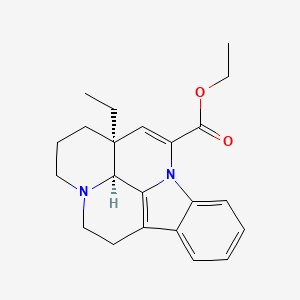
- Formula
- C22H26N2O2
- Weight
- 350.5 Da
- PubChem CID
- 443955
- Exact Mass
- 350.1994 Da
- LogP
- 4.1
- TPSA
- 34.5 Ų
- H-Bond Donors
- 0
- H-Bond Acceptors
- 3
- Rotatable Bonds
- 4
- Complexity
- 617
Identifiers (SMILES, InChI)
InChI=1S/C22H26N2O2/c1-3-22-11-7-12-23-13-10-16-15-8-5-6-9-17(15)24(19(16)20(22)23)18(14-22)21(25)26-4-2/h5-6,8-9,14,20H,3-4,7,10-13H2,1-2H3/t20-,22+/m1/s1
DDNCQMVWWZOMLN-IRLDBZIGSA-NResearch Indications
Primary Research Areas
Adjunctive IV vinpocetine improved cognitive, neurological, and functional recovery in the CAVIN trial and several other RCTs, largely reflecting cerebral vasodilation and neuroprotection.
Used in Europe, Russia, and Japan for chronic cerebrovascular cognitive dysfunction; evidence in dementia is inconclusive per Cochrane review.
Increases cerebral blood flow and vasomotor reactivity in cerebral small-vessel disease.
Other Uses
Marketed as a dietary supplement for memory and focus; human data limited and short-term.
Studied for sudden hearing loss and tinnitus via microcirculatory effects.
References (11)
- [2]An update on vinpocetine: New discoveries and clinical implications
→ Research reveals novel therapeutic effects of vinpocetine including anti-inflammation, protection against vascular remodeling, and benefits for cardiovascular health beyond its traditional cerebrovascular uses.
- [3]Role of vinpocetine in cerebrovascular diseases
→ Clinical studies demonstrate vinpocetine's cerebral blood-flow enhancing and neuroprotective effects through multiple mechanisms, with good safety profile for long-term use.
- [4]Vinpocetine and Lactobacillus Attenuated Rotenone-Induced Parkinson's Disease
→ Study shows vinpocetine helped restore dopamine synthesis and reduced oxidative stress, neuroinflammation, and Lewy body formation in a rat model of Parkinson's disease.
- [5]Effect of vinpocetine on embryonic heart rate in vitro
→ Research found vinpocetine induced concentration-dependent embryonic bradycardia, with effects occurring at levels unlikely to be reached in humans taking normal supplement doses.
- [6]Vinpocetine improved neuropsychiatric and epileptic outcomes in a patient with a GABRA1 loss-of-function variant
→ Case report demonstrates vinpocetine successfully improved both seizure control and neuropsychiatric symptoms in a patient with a specific genetic variant affecting GABA function.
- [7]Updates of Recent Vinpocetine Research in Treating Cardiovascular Diseases
→ Review highlights vinpocetine's expanding therapeutic potential for cardiovascular conditions including atherosclerosis, obesity, and pathological cardiac remodeling.
- [8]Embryo-fetal development studies with the dietary supplement vinpocetine in the rat and rabbit
→ Safety study revealed dose-dependent fetal mortality and cardiovascular malformations in animal models, leading to FDA advisories against use during pregnancy.
- [1]Vinpocetine (A comprehensive profile)
→ A comprehensive review detailing vinpocetine's multi-action properties for treating neurological disorders like Alzheimer's and Parkinson's disease, along with its anti-inflammatory, analgesic, and antioxidant effects.
- [9]Hindmarch I, Fuchs HH, Erzigkeit H Efficacy and tolerance of vinpocetine in ambulant patients suffering from mild to moderate organic psychosyndromes Int Clin Psychopharmacol (1991)
→ Vinpocetine 10 mg three times daily (30 mg/day) and 20 mg three times daily (60 mg/day) for 16 weeks improved cognition versus placebo, with no clinically relevant side effects.
- [10]Zhang W, Huang Y, Li Y, et al. Efficacy and safety of vinpocetine as part of treatment for acute cerebral infarction: a randomized, open-label, controlled, multicenter CAVIN trial Clinical Drug Investigation (2016)
→ Adding IV vinpocetine 30 mg/day for 7 days to standard therapy in 610 acute cerebral infarction patients gave significantly higher MMSE, NIHSS, and Barthel Index scores at 90 days versus control.
- [11]Szatmari S, Whitehouse P Vinpocetine for cognitive impairment and dementia Cochrane Database of Systematic Reviews (2003)
→ Pooled analysis of 3 trials (583 patients) showed benefit signals at 30-60 mg/day but concluded the evidence for vinpocetine in dementia is inconclusive and does not support clinical use.
Continue researching VINPOCETINE
Keep scientific evidence separate from commercial availability. Review how claims are evaluated, explore question-led research paths, or inspect disclosed source records without changing the editorial conclusions on this page.