TRIGONELLINE
TRIGONELLINE research profile covering evidence quality, proposed mechanisms, safety considerations, regulatory status, and linked primary sources.
Evidence-led profile
Research snapshot
- Evidence stage
- Emerging research
- References
- 8 linked sources
- Research coverage
- 1 area
- Editorial review
- Jul 7, 2026
Published by the PepGuide Editorial Team using our research methodology.
Trigonelline is a plant alkaloid found in coffee and fenugreek that functions as an NAD+ precursor through the Preiss-Handler pathway. It supports mitochondrial function, muscle health, and metabolic homeostasis while demonstrating neuroprotective, anti-diabetic, and anti-inflammatory properties.
Mechanism of Action
Mechanism of Action: Trigonelline
NAD+ Precursor Role
As an N-methyl derivative of nicotinic acid, trigonelline undergoes hepatic demethylation to yield niacin (vitamin B3). Niacin is then converted to NAD+ via the Preiss-Handler pathway through nicotinic acid mononucleotide (NaMN) and nicotinic acid adenine dinucleotide (NaAD). Elevated NAD+ levels activate sirtuins (SIRT1, SIRT3) which regulate mitochondrial biogenesis, DNA repair, and metabolic homeostasis.
Glucose Homeostasis
Trigonelline improves insulin sensitivity through multiple mechanisms: enhancing tyrosine phosphorylation of the insulin receptor, activating the PI3K/Akt cascade, and promoting GLUT4 membrane translocation. In pancreatic beta cells, trigonelline may also support glucose-stimulated insulin secretion. Its alpha-glucosidase inhibitory activity slows carbohydrate digestion, reducing postprandial glycemic spikes.
Antioxidant and Cytoprotective Effects
Trigonelline regulates the Nrf2 transcription factor, which controls expression of antioxidant response element (ARE) genes. Upregulation of heme oxygenase-1 (HO-1) and NAD(P)H quinone dehydrogenase 1 (NQO1) provides protection against oxidative stress in hepatic, renal, and neural tissues.
Cognitive and Neurological Effects
By inhibiting acetylcholinesterase, trigonelline prolongs cholinergic neurotransmission at synapses, which is relevant to learning and memory. Additionally, trigonelline reduces neuroinflammation by suppressing NF-κB-mediated microglial activation and reducing production of inflammatory mediators in the CNS.
Lipid Metabolism
Trigonelline has been shown to reduce hepatic lipid accumulation by activating AMPK and downregulating SREBP-1c, a master regulator of lipogenesis. This contributes to its beneficial effects on dyslipidemia and non-alcoholic fatty liver disease.
Research
Reported Effects
NAD+ Boosting:: Works through the distinct Preiss-Handler pathway rather than competing with NR/NMN, with particular effectiveness in muscle tissue. Dosage Response:: Studies used 250-500mg doses with effects appearing within weeks; one user self-experiment found no NAD+ increase at 500mg daily. Synergistic Benefits:: When combined with other NAD+ precursors or as part of fenugreek extract, demonstrates enhanced effects on hormonal balance and metabolic function. Age-Related Decline:: Particularly effective for sarcopenia and age-associated muscle wasting, with circulating levels naturally declining with age
- Works through the distinct Preiss-Handler pathway rather than competing with NR/NMN, with particular effectiveness in muscle tissue
- Studies used 250-500mg doses with effects appearing within weeks; one user self-experiment found no NAD+ increase at 500mg daily
- When combined with other NAD+ precursors or as part of fenugreek extract, demonstrates enhanced effects on hormonal balance and metabolic function
- Particularly effective for sarcopenia and age-associated muscle wasting, with circulating levels naturally declining with age
Safety and Limitations
Safety Profile: Trigonelline
Common Side Effects
- Mild gastrointestinal symptoms: nausea, bloating, and mild stomach upset
- Mild diuretic effect and increased urination
- Possible mild stimulant effects (structurally related to nicotinic acid; converted to NAD+ precursors during coffee roasting)
- Headache at higher supplemental doses
Serious Adverse Effects
- Very limited human supplemental data; most safety information comes from dietary exposure (coffee) and animal studies
- Animal studies at very high doses showed possible hepatic effects, but no confirmed human toxicity at dietary levels
- Theoretical nicotinamide pathway effects at very high doses
- No confirmed serious adverse events at supplemental doses used in human studies
Contraindications
- Known hypersensitivity to trigonelline or fenugreek-derived compounds
- Pregnancy (fenugreek source extracts have uterotonic potential; trigonelline specifically less characterized)
- Lactation (insufficient data)
Drug Interactions
- Antidiabetic medications: Trigonelline has been shown to lower blood glucose in animal studies; potential additive hypoglycemia
- Niacin/nicotinamide supplements: Overlapping NAD+ pathway modulation
- Caffeine: Often co-consumed in coffee; no known adverse interaction with trigonelline specifically
Population-Specific Considerations
- Coffee drinkers: Major dietary source; typical coffee consumption provides 40–100 mg trigonelline per cup; well tolerated at dietary levels
- NAD+ biology: Emerging research (Nature Metabolism 2023) identified trigonelline as a novel NAD+ precursor; supplements are beginning to appear
- Aging population: Interest in NAD+ replenishment for age-related decline; clinical evidence is nascent
- Diabetics: Animal data suggests blood glucose–lowering effects; human clinical confirmation pending
- Regulatory status: GRAS in food; supplemental forms are newly emerging with limited regulatory review
Common Side Effects
- Formaldehyde Concerns:: Demethylation produces formaldehyde as a byproduct, raising theoretical concerns about DNA damage at higher supplemental doses
- Minimal Reported Issues:: Most studies and users report good tolerance with few adverse effects at standard doses
- Heavy Metal Risk:: As with other supplements, quality and purity testing is important to avoid contamination from plant sources
- Individual Variation:: Some users may not respond to trigonelline's NAD+ boosting effects based on individual metabolic differences
Research protocol summary
- Typical Dose
- 250-500mg daily used in most human and animal studies showing metabolic and muscle benefits
These values summarize cataloged research protocols. They are not personal dosing instructions or medical guidance.
Reconstitution Calculator
Pharmacokinetic Profile
Molecular Structure
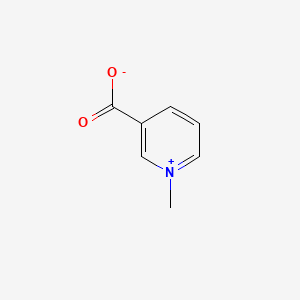
- Formula
- C7H7NO2
- Weight
- 137.14 Da
- PubChem CID
- 5570
- Exact Mass
- 137.0477 Da
- LogP
- 1.2
- TPSA
- 44 Ų
- H-Bond Donors
- 0
- H-Bond Acceptors
- 2
- Rotatable Bonds
- 0
- Complexity
- 130
Identifiers (SMILES, InChI)
InChI=1S/C7H7NO2/c1-8-4-2-3-6(5-8)7(9)10/h2-5H,1H3
WWNNZCOKKKDOPX-UHFFFAOYSA-NReferences (8)
- [3]Experimental diabetes treated with trigonelline: effect on key enzymes related to diabetes and hypertension, β-cell and liver function
→ Trigonelline inhibited DPP-4 and α-glucosidase activities in plasma and intestine, increased GLP-1 levels, reduced blood pressure by normalizing ACE activity, and improved lipid profiles while protecting pancreatic islet cells.
- [1]Trigonelline is an NAD+ precursor that improves muscle function during ageing and is reduced in human sarcopenia
→ Trigonelline supplementation increased NAD+ levels, improved mitochondrial respiration, reduced age-related muscle wasting, and enhanced muscle strength in aging mice. In C. elegans, it increased lifespan and mobility through NAD+-dependent mechanisms.
- [4]Trigonelline inhibits intestinal microbial metabolism of choline and its associated cardiovascular risk
→ Trigonelline prevented gut microbiota conversion of choline to pro-atherosclerotic TMAO, suggesting cardiovascular protective effects by modulating gut bacterial metabolism.
- [5]Efficacy of a novel extract of fenugreek seeds in alleviating vasomotor symptoms and depression in perimenopausal women
→ Fenugreek extract containing trigonelline reduced hot flashes by 25.9%, night sweats by 26.5%, depression by 31.8%, and insomnia by 21.6% while improving hormonal balance in perimenopausal women over 42 days.
- [6]A review on therapeutic potentials of Trigonella foenum graecum (fenugreek) and its chemical constituents in neurological disorders
→ Trigonelline from fenugreek shows beneficial effects in Alzheimer's disease and other neurological conditions through neuroprotective, anti-inflammatory, and NAD+-boosting mechanisms.
- [7]Coffee variety, origin and extraction procedure: Implications for coffee beneficial effects on human health
→ NMR analysis revealed trigonelline as a major bioactive compound in coffee, with hydroalcoholic extraction being most efficient for obtaining beneficial low molecular weight compounds including chlorogenic acids.
- [2]Inhibition of key digestive enzymes related to diabetes and hyperlipidemia and protection of liver-kidney functions by trigonelline in diabetic rats
→ Trigonelline reduced blood glucose by 46% through inhibition of intestinal α-amylase and maltase, while also decreasing serum triglycerides and cholesterol levels and protecting pancreatic β-cells in diabetic rats.
- [8]Membrez M, Migliavacca E, Christen S, et al. Trigonelline is an NAD+ precursor that improves muscle function during ageing and is reduced in human sarcopenia Nature Metabolism (2024)
→ Trigonelline is a human NAD+ precursor; serum levels correlate with muscle strength, and dietary supplementation improved muscle strength in mice (preclinical), with human observational data supporting relevance.
Continue researching TRIGONELLINE
Keep scientific evidence separate from commercial availability. Review how claims are evaluated, explore question-led research paths, or inspect disclosed source records without changing the editorial conclusions on this page.