Calcium Citrate
Calcium Citrate research profile covering evidence quality, proposed mechanisms, safety considerations, regulatory status, and linked primary sources.
Evidence-led profile
Research snapshot
- Evidence stage
- Emerging research
- References
- 4 linked sources
- Research coverage
- 1 area
- Editorial review
- Mar 8, 2026
Published by the PepGuide Editorial Team using our research methodology.
Overview
Calcium citrate is the calcium salt of citric acid, with the chemical formula Ca₃(C₆H₅O₇)₂. It is one of the most widely used forms of supplemental calcium, valued for its superior bioavailability compared to other common calcium salts such as calcium carbonate. Unlike calcium carbonate, calcium citrate does not require an acidic environment for absorption, making it particularly suitable for older adults, individuals taking proton pump inhibitors, and those with achlorhydria or other conditions involving reduced stomach acid production.
Calcium is essential for the maintenance of bone mineral density, muscle contraction, nerve transmission, and vascular function. Adequate calcium intake, in conjunction with vitamin D, is a well-established strategy for the prevention and management of osteoporosis. The National Institutes of Health recommends daily calcium intakes ranging from 1,000 to 1,200 mg for most adults, with supplementation appropriate when dietary intake is insufficient.
Calcium citrate is generally well tolerated and is less likely to cause gastrointestinal side effects such as bloating and constipation compared to calcium carbonate. It can be taken with or without food, offering greater dosing flexibility. The citrate component may also provide additional benefits, as citrate is metabolized to bicarbonate and can help alkalinize the urine, potentially reducing the risk of calcium oxalate kidney stones. It is also used as a food additive (E333) for its buffering and chelating properties.
Mechanism of Action
Calcium Bioavailability & Absorption Mechanism
Calcium citrate (Ca3(C6H5O7)2) provides elemental calcium (21% by weight) complexed with citric acid. Unlike calcium carbonate, calcium citrate is soluble in the absence of gastric acid, dissociating readily at neutral pH. This makes it the preferred calcium supplement for individuals with achlorhydria, those taking proton pump inhibitors, or elderly populations with reduced gastric acid secretion. Absorption occurs primarily in the duodenum and proximal jejunum via two pathways: transcellular (active, vitamin D-dependent) and paracellular (passive, concentration-dependent) (PMID: 10584048).
Transcellular Calcium Transport
The active transcellular pathway is regulated by 1,25-dihydroxyvitamin D (calcitriol), which binds the vitamin D receptor (VDR) in enterocytes, inducing expression of: (1) TRPV6 (transient receptor potential vanilloid 6), the apical calcium entry channel, (2) calbindin-D9k, an intracellular calcium-binding transport protein that buffers free Ca²⁺ and shuttles it across the cytoplasm, and (3) PMCA1b (plasma membrane Ca²⁺-ATPase), the basolateral calcium pump that extrudes calcium into the interstitial fluid. This pathway is saturable and is the primary mechanism for calcium absorption when dietary calcium intake is low (PMID: 16373952).
Bone Remodeling — Osteoblast/Osteoclast Balance
Calcium maintains skeletal integrity by sustaining the extracellular ionized calcium concentration sensed by the calcium-sensing receptor (CaSR) on parathyroid chief cells. Adequate calcium intake suppresses parathyroid hormone (PTH) secretion, reducing osteoclast-mediated bone resorption. Calcium also directly activates CaSR on osteoblasts, stimulating proliferation, differentiation, and mineralization while reducing RANKL expression, thereby shifting the remodeling balance toward bone formation (PMID: 21118827).
Citrate Component — Urinary Alkalization
The citrate moiety is metabolized to bicarbonate, producing a mild alkalinizing effect on urine. Urinary citrate is a potent inhibitor of calcium oxalate and calcium phosphate crystallization in the renal tubules, reducing kidney stone risk — a key advantage over calcium carbonate supplementation (PMID: 16702345).
Research
Reported Effects
Fracture Prevention:: Large body of trial evidence shows calcium supplements do not prevent fractures in community-dwelling adults. Absorption Efficiency:: Calcium citrate demonstrates effective absorption without requiring stomach acid, beneficial for elderly or those on acid-suppressing medications. Cardiovascular Concerns:: Meta-analyses suggest 10-20% increased risk of myocardial infarction with calcium supplementation. Limited Clinical Role:: Current evidence suggests minimal role in osteoporosis prevention or treatment when used with modern bone medicines
- Large body of trial evidence shows calcium supplements do not prevent fractures in community-dwelling adults
- Calcium citrate demonstrates effective absorption without requiring stomach acid, beneficial for elderly or those on acid-suppressing medications
- Meta-analyses suggest 10-20% increased risk of myocardial infarction with calcium supplementation
- Current evidence suggests minimal role in osteoporosis prevention or treatment when used with modern bone medicines
Safety and Limitations
Common Side Effects
- Gastrointestinal symptoms are the most common, including bloating, gas, and mild stomach upset
- Constipation, particularly when taken without adequate fluid intake
- Nausea, especially at higher doses or when taken on an empty stomach
- Diarrhea in some individuals (dose-dependent)
- Mild hypercalcemia symptoms if combined with excessive vitamin D or other calcium sources (fatigue, muscle weakness)
Serious Adverse Effects
- Hypercalcemia with chronic high-dose use, manifesting as confusion, cardiac arrhythmias, nausea, vomiting, and polyuria
- Kidney stones (calcium oxalate or calcium phosphate) with prolonged excessive intake, particularly in predisposed individuals
- Cardiovascular concerns: some epidemiological studies have suggested a potential association between high-dose calcium supplementation (>1,000 mg/day) and increased cardiovascular risk, though findings remain controversial and are not conclusive
- Milk-alkali syndrome when combined with high doses of absorbable alkali and vitamin D
- Renal impairment exacerbation in patients with pre-existing kidney disease
Contraindications
- Hypercalcemia from any cause (hyperparathyroidism, malignancy, sarcoidosis)
- Hypercalciuria with history of calcium-containing kidney stones
- Severe renal insufficiency (eGFR <30 mL/min) without nephrologist guidance
- Known hypersensitivity to calcium citrate or any formulation components
- Conditions associated with elevated vitamin D and calcium, including certain granulomatous diseases
Drug Interactions
- Thyroid hormones (levothyroxine): calcium reduces absorption; separate administration by at least 4 hours
- Bisphosphonates (alendronate, risedronate): calcium impairs absorption; separate by at least 30 minutes to 2 hours
- Tetracycline and quinolone antibiotics: calcium chelates these drugs, significantly reducing their bioavailability; separate by 2-4 hours
- Thiazide diuretics: reduce renal calcium excretion and may cause hypercalcemia when combined with calcium supplementation
- Iron supplements: calcium reduces iron absorption; take at different times of day
- Cardiac glycosides (digoxin): hypercalcemia potentiates digoxin toxicity
Special Populations
- Pregnant and lactating women have increased calcium requirements but should stay within recommended daily limits (1,000-1,300 mg/day)
- Elderly individuals may benefit from calcium supplementation but should combine with vitamin D and monitor serum calcium
- Patients with achlorhydria or on proton pump inhibitors: calcium citrate is preferred over calcium carbonate as it does not require an acidic environment for absorption
Common Side Effects
- Gastrointestinal Effects:: Common side effects including digestive disturbances, sometimes serious in nature
- Kidney Stones:: Increased risk of renal calculi formation with supplementation
- Cardiovascular Risk:: Elevated myocardial infarction risk compared to dietary calcium intake
- Vascular Calcification:: Acute increases in blood calcification propensity following supplementation
Reconstitution Calculator
Pharmacokinetic Profile
Molecular Structure
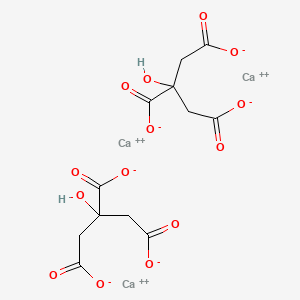
- Formula
- C12H10Ca3O14
- Weight
- 498.4 Da
- PubChem CID
- 13136
- Exact Mass
- 497.8948 Da
- TPSA
- 281 Ų
- H-Bond Donors
- 2
- H-Bond Acceptors
- 14
- Rotatable Bonds
- 4
- Complexity
- 211
Identifiers (SMILES, InChI)
InChI=1S/2C6H8O7.3Ca/c2*7-3(8)1-6(13,5(11)12)2-4(9)10;;;/h2*13H,1-2H2,(H,7,8)(H,9,10)(H,11,12);;;/q;;3*+2/p-6
FNAQSUUGMSOBHW-UHFFFAOYSA-HReferences (4)
- [2]A comparative study of calcium absorption following a single serving administration of calcium carbonate powder versus calcium citrate tablets in healthy premenopausal women
→ Study in premenopausal women demonstrated that calcium citrate tablets showed comparable absorption to calcium carbonate powder, with both forms effectively raising serum calcium levels.
- [4]Calcium Supplementation- Efficacy and Safety
→ Comprehensive review concludes that calcium supplements do not prevent fractures in community-dwelling adults and may increase cardiovascular risk by 10-20%, with gastrointestinal side effects and renal calculi being common adverse events.
- [1]Meta-analysis of calcium bioavailability: a comparison of calcium citrate with calcium carbonate
→ Meta-analysis comparing calcium citrate to calcium carbonate found that calcium citrate demonstrates superior bioavailability, particularly in fasting states and in individuals with reduced gastric acid production.
- [3]Acute effects of calcium citrate with or without a meal, calcium-fortified juice and a dairy product meal on serum calcium and phosphate: a randomised cross-over trial
→ Randomized trial examining acute effects found that calcium supplements produce different serum calcium responses compared to dietary calcium, potentially explaining differences in cardiovascular risk profiles.
Continue researching Calcium Citrate
Keep scientific evidence separate from commercial availability. Review how claims are evaluated, explore question-led research paths, or inspect disclosed source records without changing the editorial conclusions on this page.