Carnosic Acid
Carnosic Acid research profile covering evidence quality, proposed mechanisms, safety considerations, regulatory status, and linked primary sources.
Evidence-led profile
Research snapshot
- Evidence stage
- Emerging research
- References
- 9 linked sources
- Research coverage
- 1 area
- Editorial review
- Mar 8, 2026
Published by the PepGuide Editorial Team using our research methodology.
Overview
Carnosic acid is a naturally occurring phenolic diterpene found in high concentrations in rosemary (Salvia rosmarinus) and sage (Salvia officinalis). It is one of the primary bioactive compounds responsible for the antioxidant activity of rosemary extracts and has been the subject of growing research interest for its therapeutic potential in neurodegenerative diseases, cancer, and metabolic disorders.
The antioxidant mechanism of carnosic acid is distinctive in that it functions as a pro-electrophilic compound. Under conditions of oxidative stress, carnosic acid is converted to carnosol and other oxidized quinone derivatives, which activate the Nrf2 (nuclear factor erythroid 2-related factor 2) transcription pathway. This leads to upregulation of the antioxidant response element (ARE) and increased expression of endogenous cytoprotective enzymes, including heme oxygenase-1 (HO-1), glutathione S-transferase, and NAD(P)H quinone oxidoreductase. This pathological activation-dependent mechanism means carnosic acid exerts its protective effects preferentially in tissues experiencing oxidative damage.
Preclinical studies have demonstrated neuroprotective effects of carnosic acid in models of Alzheimer's disease, Parkinson's disease, and ischemic stroke. Additional research has explored its anti-cancer properties, including inhibition of cell proliferation and induction of apoptosis in various tumor cell lines. Carnosic acid is currently available primarily through rosemary extract supplements and is approved as a food antioxidant (E392) in the European Union.
Mechanism of Action
Electrophilic Nrf2 Activator
Carnosic acid is an ortho-dihydroquinone diterpene isolated from rosemary (Rosmarinus officinalis) and sage (Salvia officinalis). It functions as a pro-electrophilic compound — chemically inert under normal conditions but oxidized to its quinone form (carnosic acid quinone) in the presence of reactive oxygen species (ROS). This oxidized quinone reacts with critical cysteine residues (Cys151, Cys273, Cys288) on Keap1, disrupting the Keap1-Nrf2 interaction and preventing ubiquitin-mediated proteasomal degradation of Nrf2. Stabilized Nrf2 translocates to the nucleus and activates antioxidant response elements (AREs), inducing phase II detoxification enzymes (HO-1, NQO1, GCLC, GST) (PMID: 22118981).
Pathological Selectivity — The "Pathological Activation" Concept
A unique feature of carnosic acid's mechanism is its activation only under oxidative stress conditions. In healthy cells with low ROS, the catechol form remains stable and unreactive. Only in cells experiencing pathological oxidative stress does sufficient ROS accumulate to convert carnosic acid to its electrophilic quinone form, triggering Nrf2 activation precisely where protection is needed. This "pathological activation of therapeutic targets" (PATh) mechanism provides a built-in selectivity that distinguishes carnosic acid from constitutive Nrf2 activators like sulforaphane (PMID: 23064004).
Neuroprotective Mechanisms
In neuronal cells, carnosic acid-mediated Nrf2 activation increases glutathione (GSH) biosynthesis and thioredoxin expression, protecting against glutamate excitotoxicity, 6-OHDA-induced oxidative damage, and amyloid-beta neurotoxicity. It also activates the PI3K/Akt/mTOR survival pathway in neurons and inhibits NLRP3 inflammasome assembly in microglia, reducing neuroinflammation (PMID: 26585771).
Anti-Adipogenic & Metabolic Effects
Carnosic acid suppresses adipocyte differentiation by inhibiting PPARgamma and C/EBPalpha transcriptional activity in preadipocytes. It activates AMPK in skeletal muscle and liver, enhancing fatty acid oxidation and glucose uptake while reducing hepatic lipogenesis through SREBP-1c downregulation (PMID: 25261798).
Research
Reported Effects
Weight Management:: Studies show 69% reduction in weight gain and 79% reduction in fat accumulation when supplemented at 0.02% of diet. Metabolic Health:: Consistently improves glucose tolerance, insulin sensitivity, and lipid profiles across multiple animal studies. Dose-Dependent Effects:: Research indicates optimal effects at 0.02% dietary intake (approximately 500mg per kg body weight in animal models). Limited Human Data:: Most evidence comes from animal studies and in vitro research, with limited clinical trials in humans to confirm optimal dosing
- Studies show 69% reduction in weight gain and 79% reduction in fat accumulation when supplemented at 0.02% of diet
- Consistently improves glucose tolerance, insulin sensitivity, and lipid profiles across multiple animal studies
- Research indicates optimal effects at 0.02% dietary intake (approximately 500mg per kg body weight in animal models)
- Most evidence comes from animal studies and in vitro research, with limited clinical trials in humans to confirm optimal dosing
Safety and Limitations
Safety Profile: Carnosic Acid
Common Side Effects
- Mild gastrointestinal upset (nausea, stomach discomfort) in ~5-8% of users
- Allergic skin reactions (contact dermatitis with topical rosemary preparations)
- Headache
- Dizziness at higher doses
Serious Adverse Effects
- Allergic reactions: Anaphylaxis possible in individuals with Lamiaceae (mint family) allergy; includes rosemary, sage, basil, oregano sensitivity
- Seizure potentiation: High-dose rosemary extracts (containing carnosic acid) have shown proconvulsant activity in animal models; relevant for epilepsy patients
- Hepatotoxicity: Isolated reports with high-dose concentrated rosemary extracts; monitor liver enzymes with chronic high-dose use
- Nephrotoxicity: Very high doses in preclinical models showed renal tubular effects
Contraindications
- Known allergy to rosemary or other Lamiaceae family plants
- Seizure disorders (epilepsy) -- use with caution due to potential proconvulsant effects at high doses
- Active bleeding disorders or upcoming surgery (antiplatelet properties)
- Iron-deficiency anemia (may chelate iron)
Drug Interactions
- Anticoagulants/Antiplatelets (warfarin, aspirin, clopidogrel): Carnosic acid has demonstrated antiplatelet activity in vitro; increased bleeding risk
- Antihypertensives (ACE inhibitors, ARBs): Rosemary compounds may have mild diuretic/hypotensive effects; additive hypotension possible
- CYP enzyme substrates: Carnosic acid may modulate CYP1A2, CYP2C9, and CYP3A4 activity; potential pharmacokinetic interactions with drugs metabolized by these enzymes
- Iron supplements: Polyphenolic compounds may chelate iron, reducing absorption; separate administration by 2+ hours
- Antiepileptic drugs: May reduce seizure threshold; monitor seizure control
- Lithium: Rosemary's diuretic properties may alter lithium clearance; monitor levels
Population-Specific Considerations
- Pregnancy: Contraindicated at supplemental doses; rosemary in large amounts may have emmenagogue and abortifacient effects. Culinary amounts are generally safe
- Lactation: Insufficient data on concentrated carnosic acid supplements; culinary rosemary amounts considered safe
- Pediatric: No established pediatric dosing or safety data for concentrated extracts
- Elderly: Generally well-tolerated; consider drug interaction potential given polypharmacy
- Surgical patients: Discontinue supplemental carnosic acid at least 2 weeks before elective surgery due to antiplatelet effects
- Renal/Hepatic impairment: Use reduced doses; limited pharmacokinetic data in organ impairment
Common Side Effects
- Hepatotoxicity Potential:: High doses (94.8 μM) showed dose-dependent hepatotoxicity in primary human hepatocytes, though well above typical supplemental levels
- CYP450 Interactions:: Does not exhibit significant time-dependent inhibition of major cytochrome P450 enzymes at studied concentrations
- Generally Well-Tolerated:: Animal studies report no significant adverse effects at therapeutic doses over extended periods
- Limited Human Safety Data:: Most safety information derives from animal studies; human clinical safety profiles remain incomplete
Reconstitution Calculator
Pharmacokinetic Profile
Carnosic Acid — Pharmacokinetic Curve
SubcutaneousMolecular Structure
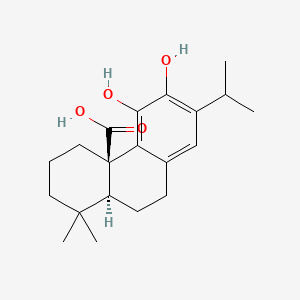
- Formula
- C20H28O4
- Weight
- 332.4 Da
- PubChem CID
- 65126
- Exact Mass
- 332.1988 Da
- LogP
- 4.9
- TPSA
- 77.8 Ų
- H-Bond Donors
- 3
- H-Bond Acceptors
- 4
- Rotatable Bonds
- 2
- Complexity
- 500
Identifiers (SMILES, InChI)
InChI=1S/C20H28O4/c1-11(2)13-10-12-6-7-14-19(3,4)8-5-9-20(14,18(23)24)15(12)17(22)16(13)21/h10-11,14,21-22H,5-9H2,1-4H3,(H,23,24)/t14-,20+/m0/s1
QRYRORQUOLYVBU-VBKZILBWSA-NReferences (9)
- [2]Carnosic acid attenuates obesity-induced glucose intolerance and hepatic fat accumulation by modulating genes of lipid metabolism in C57BL/6J-ob/ob mice
→ A 0.02% dietary carnosic acid significantly decreased body weight, liver weight, blood triglycerides, and improved glucose tolerance while reducing hepatic fat accumulation through modulation of lipogenic and lipolytic genes.
- [8]Carnosic Acid Modulates Increased Hepatic Lipogenesis and Adipocytes Differentiation in Ovariectomized Mice Fed Normal or High-Fat Diets
→ Carnosic acid supplementation improved lipid profiles, reduced body and liver weight, and modulated hepatic lipogenesis and adipocyte differentiation in ovariectomized mice, suggesting potential for postmenopausal metabolic health.
- [1]Nutraceutical activation of Sirt1: a review
→ Carnosic acid is identified as a nutraceutical that enhances Sirt1 synthesis or protein expression, contributing to anti-aging effects and improved healthspan through deacetylase activity.
- [3]Carnosic acid as a major bioactive component in rosemary extract ameliorates high-fat-diet-induced obesity and metabolic syndrome in mice
→ Rosemary extract supplementation (containing carnosic acid) significantly reduced body weight gain by 69%, epididymal fat by 79%, and improved fasting glucose, insulin levels, and reduced oxidative stress markers compared to high-fat diet controls.
- [4]Nrf2 activator PB125® as a carnosic acid-based therapeutic agent against respiratory viral diseases, including COVID-19
→ PB125, a carnosic acid-based composition, provides potent Nrf2 activation and shows promise as a therapeutic agent for respiratory viral diseases by maintaining metabolic balance and providing antioxidant protection.
- [5]Prevention and Treatment of Influenza, Influenza-Like Illness, and Common Cold by Herbal, Complementary, and Natural Therapies
→ Plant extracts containing carnosic acid were found effective for prevention and treatment of viral respiratory illnesses, offering natural therapeutic alternatives.
- [6]Dietary carnosic acid suppresses hepatic steatosis formation via regulation of hepatic fatty acid metabolism in high-fat diet-fed mice
→ Dietary carnosic acid at 0.02% markedly reduced steatosis grade, HOMA-IR index, body weight gain, and liver weight while decreasing expression of lipogenic genes and increasing lipolysis markers.
- [9]Carnosic acid attenuates cartilage degeneration through induction of heme oxygenase-1 in human articular chondrocytes
→ Carnosic acid demonstrated cartilage-protective effects by inducing heme oxygenase-1 expression, reducing inflammatory markers, and attenuating cartilage degradation in osteoarthritis models.
- [7]Carnosic acid-rich rosemary leaf extract limits weight gain and improves cholesterol levels and glycaemia in mice on a high-fat diet
→ Rosemary extract standardized to 20% carnosic acid reduced body weight gain by 69% and epididymal fat by 79%, improved fasting glucose levels, and was associated with increased fecal fat excretion.
Continue researching Carnosic Acid
Keep scientific evidence separate from commercial availability. Review how claims are evaluated, explore question-led research paths, or inspect disclosed source records without changing the editorial conclusions on this page.