Baicalein
Baicalein research profile covering evidence quality, proposed mechanisms, safety considerations, regulatory status, and linked primary sources.
Evidence-led profile
Research snapshot
- Evidence stage
- Emerging research
- References
- 4 linked sources
- Research coverage
- 1 area
- Editorial review
- Mar 8, 2026
Published by the PepGuide Editorial Team using our research methodology.
Overview
Baicalein (5,6,7-trihydroxyflavone) is a flavone and one of the principal bioactive compounds found in the root of Scutellaria baicalensis (Chinese skullcap), a plant extensively used in traditional Chinese medicine. It is the aglycone form of baicalin, meaning it lacks the sugar moiety present in its glycoside counterpart. Baicalein has garnered significant research interest due to its broad spectrum of biological activities demonstrated in preclinical models.
The compound exhibits potent anti-inflammatory effects through inhibition of lipoxygenase enzymes (particularly 12/15-LOX) and suppression of pro-inflammatory mediators including NF-κB, COX-2, and various cytokines. Its antioxidant activity involves both direct free radical scavenging and induction of endogenous antioxidant enzymes via the Nrf2 pathway. Preclinical studies have also explored neuroprotective effects, with evidence suggesting it may attenuate neuroinflammation and protect against oxidative stress in models of neurodegenerative disease.
Additional areas of investigation include anticancer activity, where baicalein has shown pro-apoptotic and anti-proliferative effects across multiple cancer cell lines, and antiviral properties, including activity against influenza and SARS-CoV-2 in laboratory settings. Bioavailability remains a challenge due to extensive first-pass metabolism and rapid glucuronidation. Human clinical data are limited, and most pharmacological evidence is derived from in vitro and animal studies.
Mechanism of Action
Flavone Structure & Multi-Target Pharmacology
Baicalein (5,6,7-trihydroxyflavone) is a bioactive flavone aglycone primarily obtained from the root of Scutellaria baicalensis (Chinese skullcap). Its three adjacent hydroxyl groups on the A-ring create a potent metal-chelating catechol-like motif and enable interactions with numerous enzyme active sites and receptor binding pockets (PMID: 25301074).
12/15-Lipoxygenase Inhibition
Baicalein is a potent and selective inhibitor of 12-lipoxygenase (12-LOX) and 15-lipoxygenase (15-LOX) with IC50 values in the low micromolar range. It chelates the catalytic non-heme iron in the LOX active site, preventing the oxidation of arachidonic acid to 12-HETE and 15-HETE. These pro-inflammatory eicosanoids promote platelet aggregation, vascular inflammation, and neurodegeneration, making LOX inhibition central to baicalein's anti-inflammatory profile (PMID: 11755102).
NF-kB & MAPK Pathway Suppression
Baicalein inhibits IKKbeta phosphorylation and prevents NF-kB p65 nuclear translocation, suppressing transcription of COX-2, iNOS, TNF-alpha, IL-1beta, and IL-6. It also inhibits p38 MAPK and JNK activation in macrophages and microglial cells, reducing the inflammatory response to LPS and oxidative stress (PMID: 21821613).
Neuroprotective & Anti-Aggregation Effects
Baicalein directly inhibits alpha-synuclein fibril formation by binding to synuclein monomers and stabilizing soluble oligomers, preventing their conversion to toxic amyloid fibrils. This mechanism is investigated in Parkinson's disease models. It also protects against glutamate excitotoxicity by enhancing GABAergic transmission and inhibiting calcium influx through NMDA receptors (PMID: 20347898).
Nrf2 Activation & Ferroptosis Inhibition
Baicalein activates Nrf2/ARE signaling and is a potent inhibitor of ferroptosis — iron-dependent lipid peroxidation-driven cell death — by chelating intracellular labile iron and suppressing GPX4-independent lipid peroxidation (PMID: 31634899).
Research
Reported Effects
Preclinical Evidence:: Strong animal model data showing consistent benefits across depression, anxiety, and neuroprotection studies. Mechanism Clarity:: Well-documented molecular mechanisms including Nrf2/HO-1, NLRP3 inflammasome, and MAPK pathway modulation. Bioavailability Considerations:: Flavonoid compound with potential absorption limitations requiring appropriate formulation or delivery methods. Clinical Translation:: Promising preclinical results warrant human clinical trials to confirm therapeutic efficacy and optimal dosing
- Strong animal model data showing consistent benefits across depression, anxiety, and neuroprotection studies
- Well-documented molecular mechanisms including Nrf2/HO-1, NLRP3 inflammasome, and MAPK pathway modulation
- Flavonoid compound with potential absorption limitations requiring appropriate formulation or delivery methods
- Promising preclinical results warrant human clinical trials to confirm therapeutic efficacy and optimal dosing
Safety and Limitations
Safety Profile: Baicalein (5,6,7-trihydroxyflavone)
Common Side Effects
- Gastrointestinal disturbance: nausea, diarrhea, abdominal discomfort (dose-related, typically at >500 mg/day)
- Mild drowsiness and sedation (baicalein modulates GABA-A receptors)
- Headache during initial supplementation
- Mild hypotension (related to vasodilatory properties)
- Dizziness at higher doses
- Yellow discoloration of urine (harmless; related to flavonoid pigment excretion)
Serious Adverse Effects
- Bleeding risk: Baicalein is a potent inhibitor of lipoxygenase (12-LOX, 15-LOX) and has demonstrated antiplatelet and anticoagulant activity in preclinical studies. Clinically significant bleeding risk when combined with anticoagulant or antiplatelet therapy
- Hepatotoxicity: While baicalein is generally hepatoprotective, high-dose concentrated extracts have shown mixed effects. Rare cases of liver enzyme elevation with Scutellaria-containing products (though often attributed to contamination with germander/Teucrium)
- Excessive sedation when combined with CNS depressants (benzodiazepines, alcohol, opioids)
- Hypoglycemia risk in diabetic patients (baicalein enhances insulin sensitivity in preclinical models)
- Theoretical risk of excessive iron chelation at very high doses (baicalein chelates iron)
- Drug metabolism interference: Potent CYP inhibition may cause serious interactions (see below)
Contraindications
- Known allergy to baicalein, baicalin, or Scutellaria baicalensis (Chinese skullcap)
- Active bleeding disorders or hemorrhagic conditions
- Concurrent use of anticoagulant therapy without medical supervision
- Scheduled surgery within 2 weeks (discontinue due to antiplatelet effects)
- Severe hepatic impairment
- Iron deficiency anemia (iron chelation may worsen)
- Pregnancy and lactation (insufficient safety data)
Drug Interactions
- Anticoagulants (warfarin, heparin, rivaroxaban, apixaban): Significant additive anticoagulant and antiplatelet effects. INR monitoring essential with warfarin; dose adjustment likely needed
- CYP2C9 substrates (warfarin, phenytoin, losartan, celecoxib): Baicalein is a potent CYP2C9 inhibitor; may significantly increase levels of CYP2C9 substrates
- CYP1A2 substrates (theophylline, caffeine, clozapine, olanzapine): Baicalein modulates CYP1A2; monitor drug levels
- CYP3A4 substrates: Some inhibition reported; caution with cyclosporine, statins, calcium channel blockers
- Benzodiazepines and CNS depressants: Additive sedation via GABA-A receptor modulation
- Antidiabetic medications: Additive hypoglycemic effect; glucose monitoring required
- Iron supplements: Baicalein chelates ferrous iron; separate administration by at least 2 hours
- Cyclosporine: Baicalein may increase cyclosporine bioavailability via CYP3A4 and P-gp inhibition
Population-Specific Considerations
- Pregnancy: No adequate human pregnancy safety data. Animal studies show mixed results; some teratogenicity signals at very high doses in rodents. Traditional use of Scutellaria baicalensis during pregnancy exists in Chinese medicine, but concentrated baicalein isolates have not been studied. Avoid during pregnancy and breastfeeding
- Pediatric: Not formally studied in children. Scutellaria preparations used in traditional Chinese medicine for children, but concentrated baicalein extracts lack pediatric safety data. Not recommended for children under 18 in supplement form
- Elderly: Potentially beneficial population due to anti-inflammatory and neuroprotective properties. However, increased bleeding risk in elderly patients on anticoagulants/antiplatelets. Start at low doses. Enhanced sedative effects possible. Monitor liver function periodically. Drug interaction risk higher due to polypharmacy
Common Side Effects
- General Tolerability:: Literature indicates baicalein is well-tolerated in preclinical studies with minimal adverse effects reported
- Interaction Potential:: As a bioactive flavonoid, may interact with cytochrome P450 enzymes affecting drug metabolism
- Limited Human Data:: Side effect profile in humans requires more clinical investigation
- Dosing Considerations:: Higher doses may require monitoring though specific toxicity thresholds not well-established in humans
Reconstitution Calculator
Pharmacokinetic Profile
Baicalein — Pharmacokinetic Curve
SubcutaneousMolecular Structure
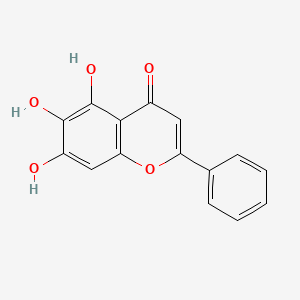
- Formula
- C15H10O5
- Weight
- 270.24 Da
- PubChem CID
- 5281605
- Exact Mass
- 270.0528 Da
- LogP
- 1.7
- TPSA
- 87 Ų
- H-Bond Donors
- 3
- H-Bond Acceptors
- 5
- Rotatable Bonds
- 1
- Complexity
- 412
Identifiers (SMILES, InChI)
InChI=1S/C15H10O5/c16-9-6-11(8-4-2-1-3-5-8)20-12-7-10(17)14(18)15(19)13(9)12/h1-7,17-19H
FXNFHKRTJBSTCS-UHFFFAOYSA-NReferences (4)
- [1]Mitigating neurodegenerative diseases: the protective influence of baicalin and baicalein through neuroinflammation regulation
→ Baicalein and baicalin show protective effects in animal models of neurodegenerative diseases by inhibiting pro-inflammatory cytokines, suppressing microglial activation, and regulating inflammatory signaling cascades including TLR4, MAPK, and NLRP3 inflammasome pathways.
- [4]Baicalein: Multiple Pharmacological Activities, Pharmacokinetics, and Clinical Trials
→ Comprehensive review demonstrates baicalein's therapeutic potential across multiple conditions including neurodegenerative diseases and cardiovascular health through modulation of oxidative stress, inflammatory responses, and specific molecular pathways, showing it is well-tolerated as a potential nutritional supplement.
- [2]Neuroprotective effects of baicalin and baicalein on the central nervous system and the underlying mechanisms
→ Multiple studies demonstrate that baicalein effectively reduces severity of depression, stroke, and CNS degenerative disorders by exerting antioxidant and anti-inflammatory effects, regulating programmed cell death, and reducing mitochondrial dysfunction.
- [3]The effects of baicalin in depression: preclinical evidence construction based on meta-analysis
→ Meta-analysis of preclinical studies shows baicalin significantly improves depressive symptoms in animal models, increasing sucrose preference and reducing immobility in forced swim and tail suspension tests, demonstrating antidepressant potential.
Continue researching Baicalein
Keep scientific evidence separate from commercial availability. Review how claims are evaluated, explore question-led research paths, or inspect disclosed source records without changing the editorial conclusions on this page.