Forskolin
Forskolin research profile covering evidence quality, proposed mechanisms, safety considerations, regulatory status, and linked primary sources.
Evidence-led profile
Research snapshot
- Evidence stage
- Emerging research
- References
- 8 linked sources
- Research coverage
- 1 area
- Editorial review
- Mar 8, 2026
Published by the PepGuide Editorial Team using our research methodology.
Overview
Forskolin is extracted from the roots of Coleus forskohlii (now reclassified as Plectranthus barbatus), a member of the mint family that has been used for centuries in Ayurvedic medicine to treat heart disease, respiratory disorders, and digestive complaints. Its unique pharmacological significance lies in being the only known naturally occurring compound that directly activates all known isoforms of adenylyl cyclase, the enzyme responsible for converting ATP to cyclic AMP (cAMP) — a ubiquitous second messenger involved in virtually every cellular signaling pathway.
By elevating intracellular cAMP, forskolin triggers a cascade of downstream effects through protein kinase A (PKA) activation. In adipose tissue, this stimulates hormone-sensitive lipase, promoting lipolysis and fat breakdown. In the heart, it enhances contractility and relaxes vascular smooth muscle, producing vasodilatory and positive inotropic effects. A notable clinical trial in overweight men demonstrated that 250 mg of 10% forskolin extract taken twice daily for 12 weeks resulted in significant decreases in body fat percentage, fat mass, and increases in lean body mass and free testosterone compared to placebo.
Beyond body composition, forskolin has been investigated for glaucoma (as eye drops reducing intraocular pressure), asthma (bronchodilation through smooth muscle relaxation), and hypothyroidism (stimulation of thyroid hormone synthesis via cAMP). Its role as a research tool is equally important — forskolin is used extensively in cell biology laboratories worldwide to study cAMP-dependent signaling. Supplemental forms typically use standardized root extracts, and it may synergize with phosphodiesterase inhibitors that prevent cAMP breakdown, such as those found in caffeine and theophylline.
Mechanism of Action
Direct Adenylyl Cyclase Activation
Forskolin is a labdane diterpene isolated from Coleus forskohlii that directly activates adenylyl cyclase (AC) by binding to the catalytic subunit interface between C1 and C2 domains, independent of G-protein-coupled receptor (GPCR) stimulation. This unique mechanism bypasses receptor-level regulation and robustly increases intracellular cyclic adenosine monophosphate (cAMP) levels in virtually all cell types (PMID: 6289816).
cAMP/PKA Signaling Cascade
Elevated cAMP activates protein kinase A (PKA) by binding its regulatory subunits and releasing the catalytic subunits. Active PKA phosphorylates numerous downstream targets including CREB (cAMP response element-binding protein), which translocates to the nucleus and drives transcription of genes involved in metabolism, differentiation, and survival. PKA also phosphorylates hormone-sensitive lipase (HSL), promoting lipolysis in adipocytes (PMID: 16460774).
Metabolic & Thermogenic Effects
Through cAMP-PKA-mediated activation of HSL and perilipin phosphorylation, forskolin stimulates triglyceride hydrolysis and free fatty acid mobilization. In brown adipose tissue, cAMP signaling activates UCP1 (uncoupling protein 1) expression via CREB/PGC-1alpha, enhancing mitochondrial thermogenesis. Forskolin also promotes thyroid hormone synthesis by stimulating cAMP-dependent iodide uptake and thyroglobulin processing in thyrocytes (PMID: 15797686).
Cardiovascular & Smooth Muscle Effects
In vascular smooth muscle, PKA-mediated phosphorylation of myosin light chain kinase (MLCK) reduces its affinity for the calcium-calmodulin complex, causing vasodilation and bronchodilation. Forskolin also enhances cardiac contractility through PKA-dependent phosphorylation of L-type calcium channels and phospholamban, increasing calcium cycling in cardiomyocytes (PMID: 2434028).
Research
Reported Effects
Individual Variability:: Results appear highly dependent on individual biochemistry, with some users experiencing dramatic effects while others notice minimal benefits. Weight Loss Support:: Most effective when combined with caloric restriction and exercise rather than as a standalone solution, with research supporting its role as an adjunct therapy. Neuroprotection:: Promising research for eye health and glaucoma management, though primarily studied in combination formulas rather than forskolin alone. Dosage-Dependent:: Higher quality extracts standardized to 10-20% forskolin content appear more effective than whole plant extracts, with typical doses ranging from 25-50mg of pure forskolin twice daily
- Results appear highly dependent on individual biochemistry, with some users experiencing dramatic effects while others notice minimal benefits
- Most effective when combined with caloric restriction and exercise rather than as a standalone solution, with research supporting its role as an adjunct therapy
- Promising research for eye health and glaucoma management, though primarily studied in combination formulas rather than forskolin alone
- Higher quality extracts standardized to 10-20% forskolin content appear more effective than whole plant extracts, with typical doses ranging from 25-50mg of pure forskolin twice daily
Safety and Limitations
Common Side Effects
- Gastrointestinal symptoms are the most frequently reported side effects, including nausea, diarrhea, abdominal bloating, and stomach cramps
- Flushing and warmth sensation, particularly at higher doses, due to vasodilatory effects
- Headache, dizziness, and lightheadedness related to blood pressure reduction
- Increased heart rate (tachycardia) as a compensatory response to vasodilation
- Throat irritation and cough when using inhaled formulations (used in asthma research)
- Restlessness and tremor reported at higher doses
Serious Adverse Effects
- Significant hypotension (dangerously low blood pressure) can occur, especially in combination with antihypertensive medications
- Tachyarrhythmias (abnormal rapid heart rhythms) have been reported, particularly in individuals with pre-existing cardiac conditions
- May increase gastric acid secretion, potentially worsening peptic ulcers or gastroesophageal reflux disease
- Increased intraocular pressure is a concern for individuals with glaucoma
- Risk of bleeding when combined with anticoagulants due to antiplatelet properties
Contraindications
- Contraindicated in individuals with active peptic ulcer disease due to increased gastric acid secretion via cAMP-mediated pathways
- Individuals with hypotension or those on multiple antihypertensive agents should avoid forskolin
- Patients with tachyarrhythmias, atrial fibrillation, or other cardiac rhythm disorders should not use forskolin
- Glaucoma patients using oral forskolin should exercise caution (note: ophthalmic forskolin has been studied to reduce intraocular pressure, representing a different use case)
- Pregnant and breastfeeding women should avoid use due to potential effects on smooth muscle relaxation and insufficient safety data
- Patients with polycystic kidney disease should avoid forskolin due to its effects on cAMP signaling
Drug Interactions
- Potentiates the effects of antihypertensive medications (beta-blockers, ACE inhibitors, calcium channel blockers, diuretics), significantly increasing hypotension risk
- May enhance the effects of anticoagulant and antiplatelet drugs, increasing bleeding risk
- Additive effects with nitrates and PDE5 inhibitors, potentially causing severe hypotension
- May interact with cardiac glycosides (digoxin) by affecting intracellular calcium handling through cAMP elevation
- Beta-agonists (albuterol, salmeterol) may have enhanced bronchodilatory effects and increased risk of tachycardia
- May affect the metabolism of drugs that interact with cAMP-dependent pathways
Population-Specific Considerations
- Individuals with cardiovascular disease should only use under medical supervision with blood pressure monitoring
- Those with thyroid conditions should be aware that forskolin may stimulate thyroid hormone production
- Athletes should note that forskolin is not currently banned but may affect cardiovascular parameters during exertion
Common Side Effects
- Sleep Disruption:: Multiple users report insomnia or difficulty sleeping when taking forskolin, particularly at higher doses or later in the day
- Hot Flashes:: Some users experience uncomfortable hot flashes and temperature regulation issues, leading them to discontinue use
- Pregnancy Concerns:: Research indicates potential endocrine disruption in placental cells, making it unsuitable for pregnant or nursing women
- Gastrointestinal Effects:: Occasional reports of nausea or digestive discomfort, though less common than other stimulant-based supplements
Research protocol summary
- Typical Dose
- Most common dosing is 25-50mg of pure forskolin (from 250-500mg of 10% standardized extract) taken twice daily with meals
These values summarize cataloged research protocols. They are not personal dosing instructions or medical guidance.
Reconstitution Calculator
Pharmacokinetic Profile
Molecular Structure
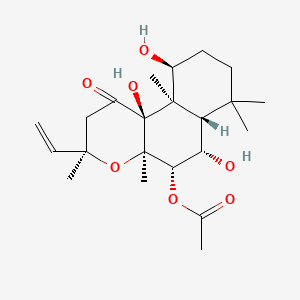
- Formula
- C22H34O7
- Weight
- 410.5 Da
- PubChem CID
- 47936
- Exact Mass
- 410.2305 Da
- LogP
- 1
- TPSA
- 113 Ų
- H-Bond Donors
- 3
- H-Bond Acceptors
- 7
- Rotatable Bonds
- 3
- Complexity
- 747
Identifiers (SMILES, InChI)
InChI=1S/C22H34O7/c1-8-19(5)11-14(25)22(27)20(6)13(24)9-10-18(3,4)16(20)15(26)17(28-12(2)23)21(22,7)29-19/h8,13,15-17,24,26-27H,1,9-11H2,2-7H3/t13-,15-,16-,17-,19-,20-,21+,22-/m0/s1
OHCQJHSOBUTRHG-KGGHGJDLSA-NReferences (8)
- [2]Fat burners: nutrition supplements that increase fat metabolism
→ This systematic review found that while many fat-burning supplements lack evidence, forskolin shows promise for enhancing fat metabolism, though more research is needed to confirm its effectiveness.
- [3]Coleus forskohlii Extract Supplementation in Conjunction with a Hypocaloric Diet Reduces the Risk Factors of Metabolic Syndrome in Overweight and Obese Subjects: A Randomized Controlled Trial
→ A randomized controlled trial demonstrated that Coleus forskohlii extract combined with a hypocaloric diet significantly reduced metabolic syndrome risk factors in overweight and obese individuals.
- [4]Neuroprotective Effect of a Nutritional Supplement Containing Spearmint Extract, Forskolin, Homotaurine and Group B Vitamins in a Mouse Model of Transient Ocular Hypertension
→ Research in a mouse glaucoma model found that a supplement containing forskolin showed neuroprotective effects independent of intraocular pressure lowering, suggesting potential benefits for retinal ganglion cell protection.
- [5]Protective Efficacy of a Dietary Supplement Based on Forskolin, Homotaurine, Spearmint Extract, and Group B Vitamins in a Mouse Model of Optic Nerve Injury
→ A study using an optic nerve crush model demonstrated that a forskolin-containing supplement counteracted retinal dysfunction and showed anti-inflammatory and neuroprotective properties.
- [6]Forskolin Induces Endocrine Disturbance in Human JEG-3 Placental Cells
→ In vitro research found that forskolin caused endocrine disruption in placental cells, activating degenerative receptors and disturbing hormone secretion, raising safety concerns for pregnant women.
- [7]Natural Products: Evidence for Neuroprotection to Be Exploited in Glaucoma
→ A comprehensive review of natural compounds for glaucoma management identified forskolin as having potential neuroprotective effects for retinal ganglion cells, warranting further clinical investigation.
- [8]Local administration of lipid-silica nanohybrid-carried forskolin modulates thermogenesis in human adipocytes and impedes weight gain in mice
→ Research demonstrated that forskolin delivered via nanoparticles successfully promoted the transformation of white adipocytes into thermogenic adipocytes, achieving browning effects in both human cells and mice without systemic side effects.
- [1]Novel Multi-Ingredient Supplement Facilitates Weight Loss and Improves Body Composition in Overweight and Obese Individuals: A Randomized, Double-Blind, Placebo-Controlled Clinical Trial
→ A 12-week study of 55 overweight/obese participants found that a multi-ingredient supplement containing forskolin (50mg) significantly reduced BMI, body weight, and fat content while improving metabolic health outcomes.
Continue researching Forskolin
Keep scientific evidence separate from commercial availability. Review how claims are evaluated, explore question-led research paths, or inspect disclosed source records without changing the editorial conclusions on this page.