Quercetin
The most abundant dietary flavonoid, a potent antioxidant and senolytic agent found in onions, apples, and berries that modulates inflammatory pathways, supports immune function, and enhances endurance performance through diverse molecular targets.
Evidence-led profile
Research snapshot
- Evidence stage
- Emerging research
- References
- 9 linked sources
- Research coverage
- 1 area
- Editorial review
- Jul 7, 2026
Published by the PepGuide Editorial Team using our research methodology.
Overview
Quercetin (3,3',4',5,7-pentahydroxyflavone) is a flavonol-type flavonoid distributed ubiquitously in the plant kingdom, found at particularly high concentrations in onions (especially red onions), capers, apples, berries, tea, and cruciferous vegetables. It is the most consumed flavonoid in the human diet, with typical intakes estimated at 10-100 mg/day depending on dietary patterns. Quercetin's broad pharmacological profile stems from its planar polyphenolic structure, which allows it to interact with numerous molecular targets including kinases, phospholipases, transcription factors, and membrane transporters. As a potent antioxidant, it scavenges reactive oxygen and nitrogen species, chelates pro-oxidant transition metals (iron, copper), and upregulates endogenous antioxidant enzymes through Nrf2 pathway activation.
Quercetin's anti-inflammatory activity is mediated through multiple mechanisms: inhibition of NF-kB and AP-1 transcription factors, suppression of COX-2 and lipoxygenase enzymes, stabilization of mast cell membranes (reducing histamine release — hence its use for allergies), and downregulation of pro-inflammatory cytokines including TNF-alpha, IL-6, and IL-1beta. This mast cell-stabilizing effect makes quercetin a popular natural approach for allergic conditions and histamine intolerance. In immunology, quercetin has demonstrated antiviral properties — it inhibits viral entry and replication for several respiratory viruses, and gained significant attention during the COVID-19 pandemic for its ability to act as a zinc ionophore, facilitating intracellular zinc transport to inhibit RNA-dependent RNA polymerase. Its combination with zinc and vitamin C became a widely discussed immune protocol.
Perhaps most notably, quercetin has emerged as one of the first identified senolytic agents — compounds that selectively induce apoptosis in senescent cells. The combination of dasatinib and quercetin (D+Q) has been the most studied senolytic regimen, demonstrating clearance of senescent cells, reduction of the senescence-associated secretory phenotype (SASP), and improvements in physical function in human clinical trials in idiopathic pulmonary fibrosis and diabetic kidney disease. Quercetin's poor oral bioavailability (~2%) due to rapid glucuronidation and sulfation has driven development of enhanced formulations including quercetin phytosome, liposomal quercetin, and nanoparticle encapsulations. Typical supplemental doses range from 500-1000 mg/day. It synergizes with bromelain (which enhances absorption), vitamin C, resveratrol, and fisetin (a related senolytic flavonoid).
Research
Reported Effects
Bioavailability Concerns:: Users emphasize importance of taking quercetin with bromelain or choosing phytosome formulations for significantly better absorption, with standard quercetin having poor bioavailability. Histamine Management:: Particularly effective for those with mast cell activation syndrome (MCAS) or histamine intolerance, with many reporting it helps manage symptoms when antihistamines alone are insufficient. Dosage-Dependent:: Most effective results reported at 500-1000mg daily doses, with lower doses (200mg) showing benefits for allergies but requiring consistency over weeks. Synergistic Effects:: Works best when combined with other supplements like zinc, vitamin C, NAC, or as part of anti-aging/senolytic protocols with fisetin
Safety and Limitations
Safety Profile: Quercetin
Common Side Effects
- Generally well tolerated at typical doses (500–1000 mg/day)
- Headache and mild tingling of the extremities
- Gastrointestinal symptoms including nausea, upset stomach, and diarrhea
- Mild kidney discomfort at high doses due to oxalate formation
Serious Adverse Effects
- Nephrotoxicity: High doses (>1000 mg/day) may promote kidney damage; quercetin is metabolized to oxalate, and excessive intake may increase kidney stone risk in susceptible individuals
- Potential thyroid disruption: in vitro studies show quercetin can inhibit thyroid peroxidase, though clinical significance at normal doses is unclear
- Rare allergic reactions including contact dermatitis with topical application
- Theoretical concern for mutagenicity at extremely high concentrations (not demonstrated at dietary or supplemental levels in human studies)
- IV administration (not a standard route) has caused nephrotoxicity in early cancer studies
Contraindications
- Known allergy to quercetin or related flavonoids
- History of kidney stones (particularly calcium oxalate stones) without medical supervision
- Severe renal impairment (risk of oxalate accumulation)
- Pregnancy and lactation (supplemental doses lack adequate safety data; dietary intake is considered safe)
- Cyclosporine therapy (significant drug interaction)
Drug Interactions
- Cyclosporine: Quercetin markedly increases cyclosporine blood levels by inhibiting CYP3A4 and P-glycoprotein; potentially dangerous interaction
- Fluoroquinolone antibiotics (ciprofloxacin, levofloxacin): Quercetin may compete for DNA gyrase binding sites; may reduce antibiotic efficacy
- Anticoagulants (warfarin): Mild CYP2C9 inhibition may increase warfarin levels; monitor INR
- Antihypertensives: Additive blood pressure-lowering effects possible
- CYP3A4, CYP2C9, and P-glycoprotein substrates: Quercetin inhibits these pathways; may increase plasma levels of many drugs including statins, calcium channel blockers, and digoxin
Population-Specific Considerations
- Elderly: Monitor renal function and hydration status; increased kidney stone risk with age
- Pediatric: Dietary quercetin from fruits and vegetables is safe; supplemental use lacks pediatric data
- Kidney stone formers: Avoid high-dose supplementation; ensure adequate hydration if using quercetin
- Thyroid patients: Monitor thyroid function with long-term high-dose use
- Cancer patients: Consult oncologist before use; may interfere with certain chemotherapy drugs while potentially enhancing others
Common Side Effects
- Thyroid Concerns:: Some users and research note quercetin may disrupt thyroid function, with recommendations to avoid for those with hypothyroid conditions
- Digestive Issues:: Occasional reports of nausea or stomach discomfort, particularly at higher doses or when taken on empty stomach
- Drying Effects:: Some users report dry sinuses, skin, or mouth, particularly at doses above 500mg daily
- Minimal Overall:: Most users report no significant side effects, with quercetin being well-tolerated at standard doses (200-1000mg daily)
Mechanism of Action
Mechanism of Action: Quercetin
Quercetin (3,3',4',5,7-pentahydroxyflavone) is the most abundant dietary flavonol, found in onions, apples, berries, and capers. It acts on multiple molecular targets with broad anti-inflammatory, antioxidant, antiallergic, and senolytic properties.
Anti-inflammatory Mechanisms
Quercetin inhibits IKKβ kinase activity, preventing IκBα phosphorylation and NF-κB nuclear translocation. It suppresses NLRP3 inflammasome assembly by blocking ASC oligomerization and caspase-1 activation, reducing IL-1β and IL-18 maturation. It also inhibits phospholipase A2, COX-2, and 5-LOX, reducing prostaglandin and leukotriene synthesis. JAK/STAT signaling is attenuated through direct JAK2 inhibition.
Mast Cell and Histamine Modulation
Quercetin is one of the most potent natural mast cell stabilizers. It inhibits Syk kinase and PLCγ signaling downstream of FcεRI activation, blocking calcium mobilization and PKC activation required for degranulation. This prevents release of histamine, tryptase, PGD2, and leukotrienes. It also inhibits histidine decarboxylase, reducing histamine biosynthesis. These properties make it particularly relevant for mast cell activation syndrome (MCAS) and allergic conditions.
Senolytic Properties
Senescent cells rely on pro-survival pathways (PI3K/Akt, Bcl-2/Bcl-xL, p21/serpines) to resist apoptosis despite DNA damage. Quercetin inhibits PI3K (particularly PI3Kγ) and downstream Akt phosphorylation, and downregulates Bcl-2 and Bcl-xL anti-apoptotic proteins. This selectively tips the survival/apoptosis balance in senescent cells while sparing normal cells. The senolytic effect is enhanced when combined with dasatinib (targeting different anti-apoptotic pathways), forming the D+Q senolytic protocol.
Metabolic Regulation
Quercetin activates AMPK through multiple mechanisms: direct binding to the AMPKγ subunit, LKB1-dependent activation, and CaMKKβ-mediated phosphorylation. AMPK activation promotes GLUT4 translocation (improving glucose uptake), enhances fatty acid β-oxidation, and induces autophagy through ULK1 phosphorylation. SIRT1 activation by quercetin deacetylates PGC-1α, driving mitochondrial biogenesis and metabolic efficiency.
Antioxidant Network
Quercetin's catechol B-ring provides potent radical scavenging, chelating iron and copper to prevent Fenton reactions. It inhibits xanthine oxidase (reducing uric acid and superoxide production) and NADPH oxidase. Nrf2 activation upregulates HO-1, NQO1, and glutathione synthesis genes, amplifying endogenous antioxidant defenses.
Antiviral Activity
Quercetin inhibits viral entry and replication through multiple mechanisms: blocking viral helicase and protease enzymes, interfering with spike protein-ACE2 interactions, and modulating host cell autophagy pathways that viruses exploit for replication.
Pharmacokinetic Profile
- Half-life
- 25 h
- Tmax
- 7.5 h
Molecular Structure
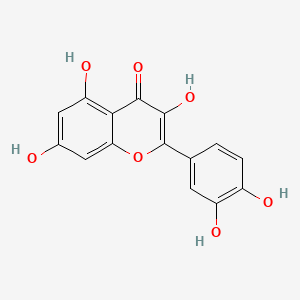
- Formula
- C15H10O7
- Weight
- 302.23 Da
- PubChem CID
- 5280343
- Exact Mass
- 302.0427 Da
- LogP
- 1.5
- TPSA
- 127 Ų
- H-Bond Donors
- 5
- H-Bond Acceptors
- 7
- Rotatable Bonds
- 1
- Complexity
- 488
Identifiers (SMILES, InChI)
InChI=1S/C15H10O7/c16-7-4-10(19)12-11(5-7)22-15(14(21)13(12)20)6-1-2-8(17)9(18)3-6/h1-5,16-19,21H
REFJWTPEDVJJIY-UHFFFAOYSA-NReferences (9)
- [2]Quercetin, Inflammation and Immunity
→ Comprehensive review demonstrating quercetin's mechanisms in reducing inflammation and supporting immune function through modulation of inflammatory pathways and immune cell activity.
- [3]Effects of repeated oral intake of a quercetin-containing supplement on allergic reaction
→ Randomized controlled trial of 66 subjects showed that 200mg daily quercetin supplementation for 4 weeks significantly reduced allergic symptoms including eye itching and nasal discomfort in adults with pollinosis.
- [6]Quercetin Supplement to Aspirin Attenuates Lipopolysaccharide-Induced Pre-eclampsia-Like Impairments in Rats
→ Animal study demonstrated that quercetin supplementation enhances aspirin's therapeutic effects in pre-eclampsia models by modulating the NLRP3 inflammasome pathway.
- [4]Quercetin supplementation prevents kidney damage and improves long-term prognosis in hypertensive patients
→ Analysis of 5,801 hypertensive patients found that for every 10mg/day increase in quercetin intake, kidney damage prevalence decreased by 8%, with quercetin being a protective factor for kidney health.
- [5]Improving quercetin bioavailability: A systematic review and meta-analysis of human intervention studies
→ Systematic review of 31 studies found that quercetin bioavailability is significantly affected by chemical structure and formulation, with quercetin-3-O-oligoglucosides showing 2-fold higher bioavailability than other forms.
- [7]Dietary Flavonoid Quercetin Supplement Promotes Antiviral Innate Responses
→ Mouse study showed quercetin supplementation enhanced antiviral immune responses against viral infection by reshaping gut microbiome and host metabolome.
- [8]Do Interventions with Diet or Dietary Supplements Reduce the Disease Activity Score in Rheumatoid Arthritis
→ Systematic review of RCTs examining various dietary interventions and supplements including quercetin for reducing disease activity in rheumatoid arthritis patients.
- [1]Safety Aspects of the Use of Quercetin as a Dietary Supplement
→ Review of human intervention studies found that quercetin supplementation up to 1000mg daily is generally well-tolerated with rarely reported adverse effects that are mild in nature, though long-term safety data beyond 12 weeks at high doses is limited.
- [9]Edwards RL, Lyon T, Litwin SE, Rabovsky A, Symons JD, Jalili T Quercetin reduces blood pressure in hypertensive subjects Journal of Nutrition (2007)
→ 730 mg quercetin/day for 28 days reduced systolic (-7 mmHg) and diastolic (-5 mmHg) blood pressure in stage 1 hypertensive subjects.
Continue researching Quercetin
Keep scientific evidence separate from commercial availability. Review how claims are evaluated, explore question-led research paths, or inspect disclosed source records without changing the editorial conclusions on this page.