Cyanidin
Cyanidin research profile covering evidence quality, proposed mechanisms, safety considerations, regulatory status, and linked primary sources.
Evidence-led profile
Research snapshot
- Evidence stage
- Emerging research
- References
- 8 linked sources
- Research coverage
- 1 area
- Editorial review
- Mar 8, 2026
Published by the PepGuide Editorial Team using our research methodology.
Overview
Cyanidin is a member of the anthocyanin family of flavonoid pigments responsible for the red, purple, and blue coloration of many fruits, vegetables, and flowers. It is one of the most abundant anthocyanidins in the human diet, found in high concentrations in blackberries, elderberries, black rice, and red cabbage. Cyanidin and its glycosylated derivatives (such as cyanidin-3-glucoside) are among the most studied anthocyanins for their health-promoting properties.
The antioxidant capacity of cyanidin is substantial, with the ability to scavenge reactive oxygen species (ROS), chelate metal ions, and modulate endogenous antioxidant enzyme systems. Research has demonstrated its potential to reduce LDL oxidation, improve endothelial function, and exert anti-inflammatory effects through suppression of COX-2 and pro-inflammatory cytokine expression.
Preclinical studies suggest cyanidin may also influence glucose metabolism by improving insulin sensitivity and protecting pancreatic beta cells. Its bioavailability remains a challenge, as anthocyanins undergo extensive metabolism in the gut and liver, though emerging evidence indicates that their metabolites retain significant biological activity. Dietary strategies emphasizing whole-food sources of cyanidin are generally recommended to maximize health benefits.
Mechanism of Action
Anthocyanidin Aglycone — Flavylium Cation Redox Chemistry
Cyanidin (3,3',4',5,7-pentahydroxyflavylium) is the most abundant anthocyanidin in the human diet, found as glycosides (cyanidin-3-glucoside, cyanidin-3-rutinoside, cyanidin-3-galactoside) in berries, cherries, red cabbage, and purple corn. The flavylium cation at physiological pH exists in equilibrium between the red flavylium form (pH <3), colorless carbinol pseudobase (pH 4-5), purple quinoidal base (pH 6-7), and yellow chalcone (pH >7). The catechol B-ring (3',4'-dihydroxy pattern) is critical for antioxidant activity, providing the ability to donate electrons sequentially, forming a stable semiquinone radical and ultimately an ortho-quinone — a process that scavenges superoxide, hydroxyl, and peroxyl radicals with higher efficiency than vitamin C or E (PMID: 16277431).
Phase II Metabolism & Gut Microbiome Transformation
Cyanidin glycosides undergo rapid deglycosylation by lactase-phlorizin hydrolase (LPH) at the intestinal brush border and by cytosolic beta-glucosidase (CBG) after SGLT1-mediated transport. The liberated cyanidin aglycone is unstable at intestinal pH and undergoes spontaneous ring fission to protocatechuic acid (PCA) and phloroglucinaldehyde — degradation products that are themselves bioactive. Colonic microbiota further metabolize unabsorbed cyanidin to phenylacetic acid, phenylpropionic acid, and hippuric acid through C-ring cleavage. These microbial metabolites may account for the majority of cyanidin's systemic bioactivity given the low intact anthocyanin bioavailability (<1-2%) (PMID: 20047325).
NF-kB Suppression & Anti-Inflammatory Signaling
Cyanidin-3-glucoside and its PCA metabolite suppress NF-kB activation by inhibiting IKKbeta phosphorylation, preventing IkBalpha degradation and p65 nuclear translocation. This reduces expression of COX-2, iNOS, TNF-alpha, IL-6, and MCP-1 in macrophages and adipocytes. Cyanidin also activates PPARgamma in adipose tissue, promoting insulin sensitization and suppressing MCP-1-mediated macrophage infiltration into adipose depots (PMID: 22040900).
Anthocyanin-Specific Vascular Effects
Cyanidin enhances endothelial function through Src/ERK-mediated eNOS phosphorylation at Ser1177 and suppression of endothelin-1 expression, contributing to vasodilation and blood pressure reduction observed in berry intervention trials (PMID: 19073169).
Research
Reported Effects
Clinical Evidence:: Randomized controlled trials show 4.2% body mass reduction over 6 months with blood orange extract containing C3G versus 2.2% with placebo. Dose-Dependent Response:: Research indicates C3G effectiveness varies with dosage, with standardized extracts from blood oranges showing consistent metabolic benefits. Synergistic Effects:: Works through multiple pathways including mitochondrial biogenesis, brown adipose tissue activation, and gut microbiota modulation for comprehensive metabolic support. Limited Long-Term Data:: While short to medium-term studies (6-12 months) show benefits, extensive long-term human data beyond this timeframe is limited
- Randomized controlled trials show 4.2% body mass reduction over 6 months with blood orange extract containing C3G versus 2.2% with placebo
- Research indicates C3G effectiveness varies with dosage, with standardized extracts from blood oranges showing consistent metabolic benefits
- Works through multiple pathways including mitochondrial biogenesis, brown adipose tissue activation, and gut microbiota modulation for comprehensive metabolic support
- While short to medium-term studies (6-12 months) show benefits, extensive long-term human data beyond this timeframe is limited
Safety and Limitations
Safety Profile: Cyanidin
Common Side Effects
- Gastrointestinal discomfort (bloating, gas, mild diarrhea) at high supplemental doses
- Temporary discoloration of urine or stool (harmless, due to pigment)
- Mild headache in sensitive individuals
- Possible nausea when taken on an empty stomach
Serious Adverse Effects
- Allergic reactions in individuals with known berry or anthocyanin sensitivity (rare)
- At very high doses, theoretical risk of pro-oxidant effects rather than antioxidant benefits
- No hepatotoxicity or nephrotoxicity reported at standard supplemental doses
- No carcinogenic or mutagenic activity demonstrated in preclinical studies
Contraindications
- Known allergy to anthocyanins or specific berry sources
- Caution in individuals with bleeding disorders (cyanidin may have mild antiplatelet activity)
- Discontinue supplemental use at least 2 weeks before scheduled surgery
- Pregnancy and lactation: food-level intake is safe; high-dose supplements lack sufficient data
Drug Interactions
- May potentiate anticoagulant and antiplatelet medications (warfarin, aspirin, clopidogrel) due to mild antiplatelet properties
- May enhance the effects of antihypertensive medications (monitor blood pressure)
- Potential interaction with CYP enzyme substrates — cyanidin inhibits CYP2C9 and CYP3A4 in vitro
- May improve insulin sensitivity; monitor blood glucose when combined with antidiabetic agents
Population-Specific Considerations
- Elderly: Generally well-tolerated; beneficial cardiovascular and neuroprotective properties under investigation
- Children: Safe at dietary levels; supplemental doses not studied
- Diabetics: May lower blood glucose — monitor closely and adjust medications if needed
- Renal impairment: No specific concerns at food-level intake; high-dose supplement data lacking
Common Side Effects
- Generally Well-Tolerated:: Research studies report minimal adverse effects with C3G supplementation in clinical trials
- Potential Interactions:: Users note theoretical interactions with curcumin and other supplements that affect drug-metabolizing enzymes
- Quality Concerns:: Broader supplement community expresses concerns about heavy metal contamination in plant-based supplements, emphasizing need for third-party testing
- Limited Safety Data:: Long-term safety data beyond 6-12 months in humans is not extensively documented in available literature
Reconstitution Calculator
Pharmacokinetic Profile
Cyanidin — Pharmacokinetic Curve
SubcutaneousMolecular Structure
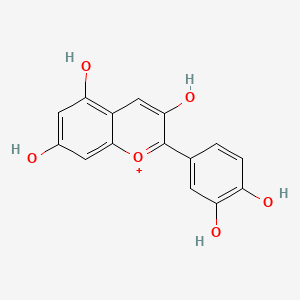
- Formula
- C15H11O6+
- Weight
- 287.24 Da
- PubChem CID
- 128861
- Exact Mass
- 287.0556 Da
- TPSA
- 102 Ų
- H-Bond Donors
- 5
- H-Bond Acceptors
- 5
- Rotatable Bonds
- 1
- Complexity
- 364
Identifiers (SMILES, InChI)
InChI=1S/C15H10O6/c16-8-4-11(18)9-6-13(20)15(21-14(9)5-8)7-1-2-10(17)12(19)3-7/h1-6H,(H4-,16,17,18,19,20)/p+1
VEVZSMAEJFVWIL-UHFFFAOYSA-OReferences (8)
- [1]Recent advances on cyanidin-3-O-glucoside in preventing obesity-related metabolic disorders: A comprehensive review
→ C3G demonstrates significant efficacy in combating obesity by regulating lipid metabolism, increasing fatty acid oxidation, reducing lipid accumulation, and enhancing energy expenditure through brown adipose tissue activation and mitochondrial biogenesis.
- [5]Anthocyanins and their metabolites promote white adipose tissue beiging by regulating mitochondria thermogenesis and dynamics
→ C3G and its metabolites promote browning of white adipose tissue and enhance mitochondrial thermogenesis, leading to decreased body weight gain and fat deposition on high-fat diets.
- [8]Elderberries as a potential supplement to improve vascular function in a SARS-CoV-2 environment
→ Elderberries high in C3G demonstrate vascular protective properties and prevention of cardiovascular disease-related complications, with potential benefits for endothelial dysfunction.
- [2]Effectiveness of 'Moro' Blood Orange Extract on Weight Loss in Overweight Adults - A Randomized Double-Blind Placebo-Controlled Study
→ After 6 months, participants taking blood orange extract rich in C3G showed significantly greater reductions in body mass (4.2% vs 2.2%), BMI, and hip circumference compared to placebo.
- [3]Cyanidin-3-O-Glucoside Supplementation Ameliorates Metabolic Insulin Resistance via Restoration of Nitric Oxide-Mediated Endothelial Insulin Transport
→ C3G supplementation improves metabolic insulin resistance by restoring endothelial insulin transport through nitric oxide pathways, decreasing exogenous insulin requirements in skeletal muscle.
- [4]Cyanidin-3-O-β-glucoside inactivates NLRP3 inflammasome and alleviates alcoholic steatohepatitis via SirT1/NF-κB signaling pathway
→ C3G alleviates alcoholic liver injury by inactivating NLRP3 inflammasome and modulating SirT1/NF-κB signaling pathways, demonstrating hepatoprotective effects.
- [6]Cyanidin-3-O-Glucoside Alleviates Alcoholic Liver Injury via Modulating Gut Microbiota and Metabolites in Mice
→ C3G effectively ameliorates liver pathology and function while inhibiting lipid accumulation by modulating gut microbiota composition and metabolite profiles.
- [7]Cyanidin-3-rutinoside from Mori Fructus ameliorates dyslipidemia via modulating gut microbiota and lipid metabolism pathway
→ Cyanidin compounds improve dyslipidemia through beneficial modulation of gut microbiota and regulation of lipid metabolism pathways, suggesting therapeutic potential for cardiovascular disease prevention.
Continue researching Cyanidin
Keep scientific evidence separate from commercial availability. Review how claims are evaluated, explore question-led research paths, or inspect disclosed source records without changing the editorial conclusions on this page.