Retinol
The alcohol form of vitamin A, essential for vision, immune function, cellular differentiation, and skin health, widely used in dermatology as a topical anti-aging agent that promotes collagen synthesis and accelerates epidermal turnover.
Evidence-led profile
Research snapshot
- Evidence stage
- Emerging research
- References
- 4 linked sources
- Research coverage
- 1 area
- Editorial review
- Mar 8, 2026
Published by the PepGuide Editorial Team using our research methodology.
Overview
Retinol is the preformed alcohol form of vitamin A, one of four essential fat-soluble vitamins. It belongs to a family of compounds collectively called retinoids, which include retinal (the aldehyde form critical for vision), retinoic acid (the carboxylic acid form that mediates most systemic biological effects), and retinyl esters (the storage form). Dietary retinol is obtained from animal sources — liver, dairy, eggs, and fish oils — while provitamin A carotenoids such as beta-carotene from plant sources are converted to retinol with variable efficiency. Once absorbed, retinol is esterified for hepatic storage or converted to retinal and ultimately to all-trans-retinoic acid (ATRA), which binds nuclear retinoic acid receptors (RARs and RXRs) to regulate the transcription of over 500 genes involved in cellular differentiation, proliferation, apoptosis, and immune function.
In dermatology, retinol has become the gold standard topical anti-aging ingredient. Applied to skin, retinol is enzymatically converted through retinal to retinoic acid within keratinocytes and fibroblasts. Retinoic acid stimulates collagen I and III synthesis, inhibits matrix metalloproteinases (MMPs) that degrade collagen, accelerates epidermal turnover (reducing the appearance of fine lines, hyperpigmentation, and rough texture), normalizes keratinization, and increases dermal glycosaminoglycan content. While prescription-strength tretinoin (pure retinoic acid) produces faster results, over-the-counter retinol offers a more gradual and better-tolerated approach, as the rate-limiting enzymatic conversion to retinoic acid in skin creates a built-in buffering mechanism. Encapsulated and time-released retinol formulations further improve tolerability. Retinol pairs synergistically with vitamin C (which provides complementary antioxidant protection and collagen support), niacinamide, hyaluronic acid, and broad-spectrum sunscreen.
Systemically, vitamin A/retinol is essential for rhodopsin synthesis in rod photoreceptors (enabling night vision), T-cell maturation and mucosal immune defense, embryonic development, and maintenance of epithelial tissue integrity. Deficiency causes night blindness, xerophthalmia, impaired immunity, and ultimately corneal destruction (keratomalacia) — vitamin A deficiency remains a leading cause of preventable blindness in developing countries. Conversely, vitamin A toxicity (hypervitaminosis A) can cause hepatotoxicity, intracranial hypertension, teratogenicity, and bone demineralization, necessitating careful dosing. The recommended daily allowance is 700-900 mcg RAE (retinol activity equivalents) for adults. Retinol is distinct from provitamin A carotenoids like beta-carotene, which carry no risk of hypervitaminosis A due to regulated conversion. Topical retinoids are contraindicated in pregnancy due to teratogenic risk.
Research
Reported Effects
Dosage Response:: 10,000 IU taken 2-3 times weekly appears to be the sweet spot for most users, with daily dosing potentially leading to accumulation and side effects over time. Individual Variation:: Response is highly individual with some users experiencing benefits at lower doses (5,000 IU) while others require higher amounts, likely depending on baseline deficiency status. Synergistic Effects:: Works best when balanced with vitamin D3, K2, and magnesium, as these nutrients interact in fat-soluble vitamin metabolism and calcium regulation. Timeline:: Most noticeable effects occur within 1-4 weeks, with vision improvements often appearing first, followed by cognitive and energy benefits
Safety and Limitations
Safety Profile: Retinol (Vitamin A)
Common Side Effects
- Skin irritation, peeling, dryness, and photosensitivity (topical use)
- Nausea, headache, and fatigue (oral supplementation)
- Dry lips (cheilitis) and dry eyes
- Mild hair thinning at moderate doses
- Skin yellowing (carotenodermia) with excessive beta-carotene conversion
Serious Adverse Effects
- Hypervitaminosis A (acute): Single doses >150,000 IU in adults cause nausea, vomiting, vertigo, blurred vision, increased intracranial pressure (pseudotumor cerebri)
- Hypervitaminosis A (chronic): Prolonged intake >25,000 IU/day causes hepatotoxicity (fibrosis, cirrhosis), bone pain, hypercalcemia, and alopecia
- Teratogenicity: One of the most well-established human teratogens; doses >10,000 IU/day during pregnancy cause craniofacial, cardiac, and CNS birth defects
- Bone mineral density reduction with chronic high intake, increasing fracture risk
- Rare pseudotumor cerebri (benign intracranial hypertension), especially with concurrent tetracycline use
Contraindications
- Pregnancy or planned pregnancy: Absolute contraindication for supplemental retinol above RDA (770 mcg RAE/day); use beta-carotene instead
- Hypervitaminosis A
- Severe liver disease or hepatic impairment
- Concurrent isotretinoin or other retinoid therapy
Drug Interactions
- Tetracyclines (doxycycline, minocycline): Combined use dramatically increases intracranial pressure risk
- Retinoids (isotretinoin, tretinoin, acitretin): Additive toxicity; never combine supplemental vitamin A with prescription retinoids
- Warfarin: High-dose vitamin A may potentiate anticoagulant effects
- Orlistat and cholestyramine: Reduce fat-soluble vitamin A absorption
- Hepatotoxic drugs: Increased liver toxicity risk with combined use
- Alcohol: Chronic alcohol use synergistically increases hepatotoxicity risk
Population-Specific Considerations
- Pregnant women: Use only at RDA levels; teratogenic risk is dose-dependent and highest in first trimester
- Children: Vulnerable to toxicity at much lower thresholds; follow age-appropriate dosing strictly
- Liver disease: Dramatically reduced tolerance; even moderate doses may cause toxicity
- Elderly: Increased sensitivity to toxicity; reduced hepatic clearance
- Topical use: Much safer profile than oral; start with low-concentration products (0.25–0.5%) and increase gradually
Common Side Effects
- Toxicity Concerns:: Long-term high doses can cause liver damage, bone issues, and hypervitaminosis A symptoms including headaches, nausea, and skin changes
- Interaction Effects:: Can deplete or imbalance other nutrients when taken without vitamin D, K2, and magnesium, potentially causing electrolyte disturbances
- Vivid Dreams:: Multiple users report intensely vivid or unusual dreams when supplementing, particularly with retinyl acetate forms
- Skin Sensitivity:: Some experience initial breakouts or skin changes during the first few weeks, though this often resolves with continued use
Mechanism of Action
Retinol (vitamin A) exerts its biological effects primarily through conversion to retinoic acid (RA), which acts as a ligand for nuclear retinoic acid receptors (RARα, RARβ, RARγ) and retinoid X receptors (RXRα, RXRβ, RXRγ). These receptors function as ligand-activated transcription factors that form RAR/RXR heterodimers, binding to retinoic acid response elements (RAREs) in the promoter regions of target genes to regulate their transcription. This genomic mechanism controls the expression of over 500 genes involved in embryonic development, cellular differentiation, proliferation, apoptosis, and immune function (Huang et al., Chemical Reviews 2014; Cunningham & Duester, Nature Reviews Molecular Cell Biology 2015).
The retinol signaling cascade begins with retinol binding to cellular retinol-binding proteins (CRBPs) and sequential oxidation by alcohol dehydrogenases (ADH) to retinaldehyde, then by retinaldehyde dehydrogenases (RALDH/ALDH1A) to all-trans-retinoic acid (atRA). In the absence of RA ligand, RAR/RXR heterodimers bound to RAREs recruit nuclear corepressor complexes (NCoR/SMRT) and histone deacetylases that maintain target genes in a repressed state. RA binding triggers conformational changes that release corepressors and recruit coactivator complexes with histone acetyltransferase activity, switching genes from repression to activation. Key developmental targets include Hox genes that establish body axis patterning and FGF8, which RA represses during forelimb initiation. In immune function, retinoic acid promotes differentiation of naive T cells into regulatory T cells (Tregs) and gut-homing effector T cells, while supporting IgA-producing B cell responses. In skin, retinol stimulates collagen synthesis, inhibits matrix metalloproteinases (MMPs), and promotes keratinocyte differentiation.
Molecular Structure
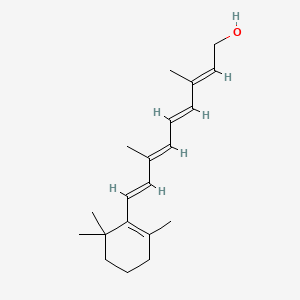
- Formula
- C20H30O
- Weight
- 286.5 Da
- PubChem CID
- 445354
- Exact Mass
- 286.2297 Da
- LogP
- 5.7
- TPSA
- 20.2 Ų
- H-Bond Donors
- 1
- H-Bond Acceptors
- 1
- Rotatable Bonds
- 5
- Complexity
- 496
Identifiers (SMILES, InChI)
InChI=1S/C20H30O/c1-16(8-6-9-17(2)13-15-21)11-12-19-18(3)10-7-14-20(19,4)5/h6,8-9,11-13,21H,7,10,14-15H2,1-5H3/b9-6+,12-11+,16-8+,17-13+
FPIPGXGPPPQFEQ-OVSJKPMPSA-NReferences (4)
- [2]Retinol and retinyl esters: biochemistry and physiology
→ Details the metabolism and physiological roles of retinol and retinyl esters, including their storage, transport, and cellular functions in vision, gene expression, and immune response.
- [1]Vitamin A Metabolism: An Update
→ Comprehensive review of vitamin A biochemistry, absorption, storage in the liver, and its conversion to active forms including retinol, retinal, and retinoic acid for various physiological functions.
- [3]Vitamin A Update: Forms, Sources, Kinetics, Detection, Function, Deficiency, Therapeutic Use and Toxicity
→ Comprehensive analysis of vitamin A forms, bioavailability from different sources, metabolic pathways, and both therapeutic applications and toxicity concerns with various retinoid compounds.
- [4]Recommended dietary intakes (RDI) of vitamin A in humans
→ Establishes recommended dietary allowances for vitamin A based on prevention of deficiency symptoms and adequate hepatic stores, with specific recommendations for different age groups and life stages.
Continue researching Retinol
Keep scientific evidence separate from commercial availability. Review how claims are evaluated, explore question-led research paths, or inspect disclosed source records without changing the editorial conclusions on this page.