Berberine
Berberine research profile covering evidence quality, proposed mechanisms, safety considerations, regulatory status, and linked primary sources.
Evidence-led profile
Research snapshot
- Evidence stage
- Emerging research
- References
- 7 linked sources
- Research coverage
- 1 area
- Editorial review
- Mar 8, 2026
Published by the PepGuide Editorial Team using our research methodology.
Overview
Berberine is an isoquinoline alkaloid with a distinctive bright yellow color, extracted from the bark, roots, rhizomes, and stems of several medicinal plants including Berberis vulgaris (barberry), Coptis chinensis (Chinese goldthread), and Hydrastis canadensis (goldenseal). It has been used for centuries in Traditional Chinese Medicine and Ayurvedic practice, primarily for gastrointestinal infections and inflammatory conditions. In recent decades, berberine has attracted significant scientific attention for its metabolic effects, with some researchers comparing its blood sugar-lowering potency to that of pharmaceutical metformin.
The central molecular mechanism of berberine involves activation of AMP-activated protein kinase (AMPK), often described as the body's "metabolic master switch," which regulates cellular energy homeostasis. AMPK activation enhances glucose uptake, promotes fatty acid oxidation, improves insulin sensitivity, and inhibits gluconeogenesis and adipogenesis in the liver. Berberine also activates SIRT1 proteins involved in metabolism and inflammation. Clinical trials in patients with metabolic syndrome have demonstrated significant reductions in fasting blood glucose, postprandial blood glucose, glycosylated hemoglobin, and insulin resistance. For cholesterol, meta-analyses of 16 clinical trials totaling over 2,000 patients have shown reductions in total cholesterol, LDL cholesterol, and triglycerides, with one study reporting 25–35% decreases in LDL and triglycerides over three months.
Berberine is typically dosed at 500 mg two to three times daily before meals (up to 1,500 mg/day) to maintain stable blood levels. It has been used safely in studies lasting up to six months, with the most common side effects being gastrointestinal — diarrhea, constipation, gas, and stomach discomfort. Berberine works through mechanisms distinct from statin drugs, making it a potential complementary option for individuals who are statin-resistant. However, it has not been FDA-approved to treat any medical condition, and significant drug interactions exist with medications for diabetes, blood pressure, and blood clotting. Pregnant and breastfeeding women should avoid berberine, as it can cross the placenta and may cause harm.
Mechanism of Action
AMPK Activation — Central Metabolic Switch
Berberine is an isoquinoline alkaloid from Coptis chinensis and Berberis species that functions as a potent activator of AMP-activated protein kinase (AMPK). Berberine inhibits mitochondrial complex I of the electron transport chain, reducing ATP production and increasing the AMP:ATP ratio. This activates AMPK via allosteric AMP binding and LKB1-mediated phosphorylation at Thr172. Activated AMPK switches on catabolic pathways (fatty acid oxidation, glucose uptake) while suppressing anabolic processes (lipogenesis, gluconeogenesis) (PMID: 16988474).
Glucose Metabolism & Insulin Sensitization
Berberine enhances glucose disposal through multiple AMPK-dependent mechanisms: (1) GLUT4 translocation to the plasma membrane in adipocytes and myocytes via AS160 phosphorylation, (2) inhibition of hepatic gluconeogenesis by suppressing PEPCK and G6Pase gene expression via AMPK-TORC2-CREB pathway disruption, and (3) upregulation of insulin receptor (InsR) expression through PKC-dependent stabilization of InsR mRNA. Clinical meta-analyses show HbA1c reductions comparable to metformin (PMID: 18442638).
Lipid-Lowering Mechanism — LDLR Upregulation
Berberine reduces LDL cholesterol through a mechanism distinct from statins. It activates the ERK/JNK MAPK pathway, which stabilizes LDLR mRNA by increasing its post-transcriptional half-life through interaction with the 3'-UTR. This increases hepatic LDL receptor density and LDL clearance from plasma. Berberine also inhibits PCSK9 transcription via HNF1-alpha suppression, further preventing LDLR degradation (PMID: 15564361).
Gut Microbiome Modulation
Berberine's poor oral bioavailability (<5%) led to the discovery that much of its systemic metabolic benefit derives from gut microbiome modulation. It enriches butyrate-producing bacteria (Roseburia, Faecalibacterium), increases short-chain fatty acid production, reduces trimethylamine-producing bacteria, and enhances GLP-1 secretion from enteroendocrine L-cells (PMID: 22155985).
Research
Reported Effects
Metabolic Impact:: Highly effective for users with insulin resistance, prediabetes, PCOS, or metabolic syndrome; effects are more pronounced in those with existing metabolic dysfunction versus healthy individuals. Individual Variation:: Works exceptionally well for 70-80% of users, but 20-30% report minimal effects or intolerance; effectiveness appears linked to baseline metabolic health and gut microbiome composition. Timing Matters:: Most effective when taken 15-30 minutes before meals; some users note reduced exercise performance if taken too close to workouts due to glucose blunting effects. Comparison to Pharmaceuticals:: Users frequently compare effectiveness favorably to metformin for blood sugar control, with some finding berberine equally or more effective with fewer side effects
- Highly effective for users with insulin resistance, prediabetes, PCOS, or metabolic syndrome; effects are more pronounced in those with existing metabolic dysfunction versus healthy individuals
- Works exceptionally well for 70-80% of users, but 20-30% report minimal effects or intolerance; effectiveness appears linked to baseline metabolic health and gut microbiome composition
- Most effective when taken 15-30 minutes before meals; some users note reduced exercise performance if taken too close to workouts due to glucose blunting effects
- Users frequently compare effectiveness favorably to metformin for blood sugar control, with some finding berberine equally or more effective with fewer side effects
Safety and Limitations
Common Side Effects
- Gastrointestinal disturbances: Diarrhea, constipation, flatulence, abdominal pain, nausea (most common, reported in up to 30% of users)
- Metallic or bitter taste
- Headache
- Skin rash or itching (uncommon)
Serious Concerns
- Lactic acidosis: Berberine inhibits mitochondrial complex I (similar mechanism to metformin). Rare but potentially fatal lactic acidosis has been reported, particularly in renal impairment or combined with metformin.
- Hypoglycemia: Significant glucose-lowering effects, especially when combined with antidiabetic agents. Can cause symptomatic hypoglycemia.
- QT prolongation: Berberine can block hERG potassium channels. Cases of QT prolongation and ventricular arrhythmias have been documented. ECG monitoring recommended in at-risk patients.
- Neonatal toxicity: Berberine displaces bilirubin from albumin and can worsen neonatal jaundice; absolutely contraindicated in neonates and late pregnancy.
Contraindications
- Pregnancy (uterotonic effects; risk of neonatal jaundice/kernicterus)
- Breastfeeding (excreted in breast milk; risk to infant)
- Neonates and infants
- Severe hepatic impairment
- Long QT syndrome or concurrent use of QT-prolonging drugs
- Hypotension or hemodynamic instability
Drug Interactions
- Metformin: Additive risk of lactic acidosis and hypoglycemia
- CYP3A4 substrates (cyclosporine, statins, calcium channel blockers): Berberine is a potent CYP3A4 inhibitor; may significantly increase drug levels
- CYP2D6 substrates (dextromethorphan, codeine, SSRIs): Inhibition may alter metabolism
- P-glycoprotein substrates (digoxin, dabigatran): Berberine inhibits P-gp, increasing absorption and levels
- QT-prolonging drugs (sotalol, amiodarone, fluoroquinolones): Additive QT prolongation risk
- Anticoagulants: May enhance anticoagulant effects
- Antihypertensives: Additive blood pressure lowering
Special Populations
- Pediatric: Not recommended; bilirubin displacement risk in young children
- Geriatric: Higher risk of hypoglycemia, QT prolongation, and drug interactions due to polypharmacy
- Renal impairment: Increased lactic acidosis risk; dose reduction or avoidance recommended
Monitoring
- Blood glucose regularly, especially with concurrent antidiabetic therapy
- ECG at baseline and periodically (QTc interval) in at-risk patients
- Renal function (creatinine, eGFR) and lactate if symptoms suggest acidosis
- Liver function tests periodically
- Bilirubin in any pediatric exposure
Common Side Effects
- Gastrointestinal Distress:: 30-40% of users report initial digestive issues including diarrhea, constipation, flatulence, or abdominal discomfort, typically resolving within 1-2 weeks
- Severe Reactions:: Small percentage (5-10%) experience intense nausea, simultaneous vomiting and diarrhea, or severe stomach cramping requiring discontinuation
- Microbiome Impact:: Strong antimicrobial effects can disrupt gut bacteria balance; users recommend taking probiotics or fermented foods to maintain beneficial bacteria
- Drug Interactions:: Can potentiate blood pressure medications causing hypotension, interacts poorly with statins causing muscle cramps, and should be avoided with certain medications; medical consultation recommended
Research protocol summary
- Typical Dose
- 500mg taken 2-3 times daily before meals (total 1000-1500mg/day) is most commonly reported effective dose
These values summarize cataloged research protocols. They are not personal dosing instructions or medical guidance.
Reconstitution Calculator
Pharmacokinetic Profile
Berberine — Pharmacokinetic Curve
SubcutaneousMolecular Structure
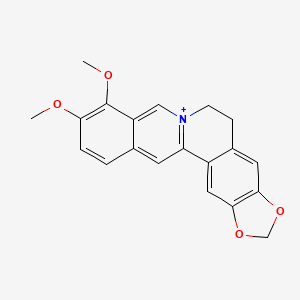
- Formula
- C20H18NO4+
- Weight
- 336.4 Da
- PubChem CID
- 2353
- Exact Mass
- 336.1236 Da
- LogP
- 3.6
- TPSA
- 40.8 Ų
- H-Bond Donors
- 0
- H-Bond Acceptors
- 4
- Rotatable Bonds
- 2
- Complexity
- 488
Identifiers (SMILES, InChI)
InChI=1S/C20H18NO4/c1-22-17-4-3-12-7-16-14-9-19-18(24-11-25-19)8-13(14)5-6-21(16)10-15(12)20(17)23-2/h3-4,7-10H,5-6,11H2,1-2H3/q+1
YBHILYKTIRIUTE-UHFFFAOYSA-NReferences (7)
- [4]Combined berberine and probiotic treatment as an effective regimen for improving postprandial hyperlipidemia in type 2 diabetes patients: a double blinded placebo controlled randomized study
→ Double-blind RCT showing berberine combined with probiotics significantly improved postprandial lipid metabolism in type 2 diabetes patients, suggesting synergistic effects through gut microbiome modulation.
- [1]Efficacy of berberine in patients with type 2 diabetes mellitus
→ Berberine showed hypoglycemic effects similar to metformin, significantly reducing HbA1c from 9.5% to 7.5%, fasting blood glucose, postprandial glucose, and plasma triglycerides in type 2 diabetes patients over 3 months.
- [2]Gut microbiome-related effects of berberine and probiotics on type 2 diabetes (the PREMOTE study)
→ Large-scale study demonstrating berberine's effects on type 2 diabetes are mediated through gut microbiome modulation, with combined berberine and probiotic treatment showing enhanced metabolic benefits.
- [3]The effect of berberine supplementation on obesity parameters, inflammation and liver function enzymes: A systematic review and meta-analysis of randomized controlled trials
→ Meta-analysis confirmed berberine's effectiveness in reducing obesity parameters, inflammatory markers (CRP), and improving liver function enzymes across multiple randomized controlled trials.
- [5]Berberine Phospholipid Is an Effective Insulin Sensitizer and Improves Metabolic and Hormonal Disorders in Women with Polycystic Ovary Syndrome
→ Berberine phospholipid formulation demonstrated significant insulin-sensitizing effects and improved metabolic and hormonal parameters in women with PCOS over the study period.
- [6]A network meta-analysis on the comparative effect of nutraceuticals on lipid profile in adults
→ Network meta-analysis found berberine among the most effective nutraceuticals for reducing plasma total and LDL cholesterol levels by 3-25% in hypercholesterolemic patients depending on dosage.
- [7]The efficacy and safety of berberine in combination with cinnamon supplementation in patients with type 2 diabetes: a randomized clinical trial
→ Randomized trial demonstrated berberine combined with cinnamon supplementation was safe and effective for improving glycemic control in type 2 diabetes patients.
Continue researching Berberine
Keep scientific evidence separate from commercial availability. Review how claims are evaluated, explore question-led research paths, or inspect disclosed source records without changing the editorial conclusions on this page.