Lithium Orotate
Lithium Orotate research profile covering evidence quality, proposed mechanisms, safety considerations, regulatory status, and linked primary sources.
Evidence-led profile
Research snapshot
- Evidence stage
- Emerging research
- References
- 8 linked sources
- Research coverage
- 1 area
- Editorial review
- Mar 8, 2026
Published by the PepGuide Editorial Team using our research methodology.
Overview
Lithium orotate is a compound of lithium bound to orotic acid (a pyrimidine precursor), marketed as a nutritional supplement providing elemental lithium at doses typically ranging from 1–20 mg — approximately 1/15th to 1/150th the elemental lithium dose in pharmaceutical lithium carbonate used for bipolar disorder (typically 900–1,200 mg lithium carbonate, providing 170–230 mg elemental lithium). The orotate salt was originally proposed by Dr. Hans Nieper in the 1970s, who theorized that orotic acid facilitates lithium transport across cell membranes more efficiently than carbonate, potentially allowing therapeutic CNS effects at much lower systemic doses. While this enhanced membrane transport hypothesis remains debated, epidemiological evidence strongly supports biological activity of lithium at trace nutritional levels: multiple large population studies across Texas, Japan, Austria, Greece, and Denmark demonstrate inverse correlations between naturally occurring lithium in drinking water (typically 0.001–0.17 mg/L) and rates of suicide, violent crime, dementia, and all-cause mortality.
The neuroprotective mechanisms of lithium are remarkably diverse and operate across multiple pathways. Lithium inhibits glycogen synthase kinase-3 beta (GSK-3beta), a kinase implicated in Alzheimer's disease pathology (tau hyperphosphorylation), neuroinflammation, and apoptosis. It upregulates brain-derived neurotrophic factor (BDNF) and nerve growth factor (NGF), promotes hippocampal neurogenesis, enhances autophagy-mediated clearance of misfolded proteins (including beta-amyloid and alpha-synuclein), stabilizes mitochondrial function, and reduces neuroinflammation through NF-kB and NLRP3 inflammasome modulation. At pharmaceutical doses, lithium increases gray matter volume in bipolar patients — one of the few psychiatric medications demonstrated to have direct neurotrophic structural effects. Observational studies in patients on chronic lithium therapy show significantly reduced rates of Alzheimer's disease and dementia compared to the general population.
Low-dose lithium supplementation (5–20 mg elemental lithium as orotate) occupies a distinct niche from pharmaceutical lithium therapy. At these doses, the serious side effects associated with high-dose lithium — including nephrotoxicity, thyroid suppression, nephrogenic diabetes insipidus, and the narrow therapeutic index requiring serum monitoring — are not expected to occur, as serum lithium levels remain far below the therapeutic range of 0.6–1.2 mmol/L. Lithium orotate complements other neuroprotective compounds such as lion-s-mane for neurotrophic support, magnesium-l-threonate for combined neuroprotection and cognitive support, omega-3 fatty acids for neuroinflammation, and nac for glutathione-mediated antioxidant defense. It may also support vitamin-b12 and folate metabolism. While low-dose lithium supplementation is generally considered safe, individuals with renal impairment or thyroid disease should exercise caution and consult a healthcare provider.
Mechanism of Action
Lithium orotate is an organic lithium salt that delivers elemental lithium bound to orotic acid. The orotate carrier is proposed to enhance cellular uptake compared to conventional lithium salts (carbonate, citrate), potentially allowing therapeutic effects at lower doses. Once dissociated, lithium ions exert their primary neurobiological effects through direct inhibition of two key enzymes: glycogen synthase kinase-3 beta (GSK-3beta) and inositol monophosphatase (IMPase).
GSK-3beta inhibition is considered the central mechanism underlying lithium's mood-stabilizing and neuroprotective properties. Lithium competes with magnesium at the enzyme's active site, suppressing GSK-3beta activity. This disinhibits the Wnt/beta-catenin signaling pathway, allowing beta-catenin to translocate to the nucleus and activate transcription of genes involved in neuronal survival, synaptic plasticity, and neurogenesis (including BDNF and Bcl-2). GSK-3beta inhibition also reduces tau hyperphosphorylation, a hallmark of neurodegenerative pathology, and protects against glutamate-induced excitotoxicity by modulating NMDA receptor trafficking.
The inositol depletion hypothesis provides a complementary mechanism: by inhibiting IMPase, lithium reduces the recycling of inositol from inositol phosphates, depleting the free inositol pool required for resynthesis of phosphatidylinositol 4,5-bisphosphate (PIP2). This selectively attenuates overactive neuronal circuits that have high PI turnover rates, providing a basis for lithium's antimanic effects. Lithium also influences circadian biology through GSK-3beta-mediated phosphorylation of clock proteins, stabilizing circadian rhythms that are frequently disrupted in mood disorders.
Research
Reported Effects
Rapid Onset:: Many users report noticeable effects within 12-24 hours to a few days, which is unusually fast for mood supplements. Individual Variability:: Effectiveness varies widely, with some experiencing profound benefits while others report no effects or negative responses, possibly related to regional lithium levels in drinking water. Dose Sensitivity:: Users report significant differences between doses, with 1mg being effective for some while others require 5-10mg, and higher doses potentially causing lethargy or anhedonia. Combination Effects:: Often more effective when combined with other supplements like magnesium, with some users reporting synergistic benefits
- Many users report noticeable effects within 12-24 hours to a few days, which is unusually fast for mood supplements
- Effectiveness varies widely, with some experiencing profound benefits while others report no effects or negative responses, possibly related to regional lithium levels in drinking water
- Users report significant differences between doses, with 1mg being effective for some while others require 5-10mg, and higher doses potentially causing lethargy or anhedonia
- Often more effective when combined with other supplements like magnesium, with some users reporting synergistic benefits
Safety and Limitations
Safety Profile: Lithium Orotate
Common Side Effects
- Available as an over-the-counter supplement at doses of 5–20 mg elemental lithium (compared to 150–1,800 mg lithium carbonate for psychiatric use)
- Gastrointestinal symptoms: nausea, mild diarrhea, and stomach discomfort
- Increased thirst and urination (polyuria/polydipsia) — classic lithium effect even at low doses
- Fine hand tremor at higher supplement doses
- Mild fatigue, drowsiness, or cognitive dulling
- Slight weight gain with chronic use
Serious Adverse Effects
- Thyroid dysfunction: lithium inhibits thyroid hormone synthesis and release; hypothyroidism and goiter can develop even at low chronic doses; regular thyroid monitoring is essential
- Nephrogenic diabetes insipidus: lithium interferes with renal aquaporin-2 channels, impairing urine concentration; can occur at any dose with chronic exposure
- Renal tubular damage: chronic lithium exposure is associated with tubulointerstitial nephropathy; long-term low-dose safety data are lacking
- Cardiac effects: lithium can cause ECG changes (T-wave flattening, sinus node dysfunction); risk increases with higher levels or dehydration
- Lithium toxicity: a narrow therapeutic index; dehydration, sodium depletion, or renal impairment can precipitate toxicity even from supplement doses — symptoms include coarse tremor, confusion, ataxia, seizures, and renal failure
- Marketing claims that orotate salt delivers lithium intracellularly more efficiently than carbonate are not supported by rigorous clinical evidence
Contraindications
- Renal impairment: lithium is exclusively renally cleared; reduced GFR significantly increases toxicity risk
- Severe cardiovascular disease: risk of arrhythmias and hemodynamic instability
- Brugada syndrome: lithium can unmask or worsen this potentially fatal cardiac condition
- Addison's disease or sodium-depleted states: hyponatremia dramatically increases lithium levels
- Hypothyroidism (untreated): lithium will worsen thyroid function
- Pregnancy (first trimester especially): Ebstein's anomaly cardiac malformation risk
Drug Interactions
- ACE inhibitors and ARBs: reduce renal lithium clearance, increasing serum levels and toxicity risk
- NSAIDs (ibuprofen, naproxen, indomethacin): reduce renal lithium excretion by 15–25%; significant toxicity risk
- Thiazide diuretics: decrease lithium clearance by promoting sodium and water reabsorption; can precipitate acute toxicity
- SSRIs and SNRIs: increased risk of serotonin syndrome when combined with lithium
- Metronidazole and tetracyclines: may increase lithium levels through reduced renal clearance
- Carbamazepine: additive neurotoxicity without increased lithium levels; monitor for ataxia, nystagmus, and tremor
Population-Specific Considerations
- Pregnancy: lithium is a known teratogen; first-trimester exposure carries risk of Ebstein's anomaly (cardiac defect); if used, requires level II ultrasound and fetal echocardiography; discuss risk-benefit with maternal-fetal medicine specialist
- Lactation: lithium is excreted in breast milk at 40–50% of maternal serum levels; can cause lethargy, hypotonia, and hypothyroidism in breastfed infants; generally contraindicated during breastfeeding
- Children: not recommended without psychiatric supervision; OTC lithium orotate supplementation in children has no safety or efficacy evidence
- Elderly: increased sensitivity due to age-related decline in renal function; lower doses required; monitor renal function, thyroid, and serum lithium levels regularly
- Bipolar patients: DO NOT use lithium orotate as a substitute for prescription lithium without psychiatric supervision; OTC dosing is unregulated and may be insufficient or unpredictable
Common Side Effects
- Lethargy/Low Motivation:: Higher doses or daily use can cause excessive calmness leading to reduced productivity and anhedonia in some users
- Emotional Blunting:: Some report feeling too emotionally numb or having difficulty with introspection and positive self-talk
- Physical Symptoms:: Rare reports of headaches, neck tension, tremors, and nausea at higher doses or in sensitive individuals
- Individual Sensitivity:: Extreme variability in tolerance, with some experiencing side effects at doses as low as 0.25mg while others tolerate 10mg+ without issues
Reconstitution Calculator
Pharmacokinetic Profile
Molecular Structure
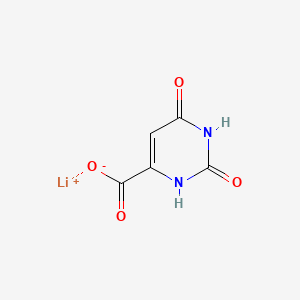
- Formula
- C5H3LiN2O4
- Weight
- 162.1 Da
- PubChem CID
- 23686432
- Exact Mass
- 162.0253 Da
- TPSA
- 98.3 Ų
- H-Bond Donors
- 2
- H-Bond Acceptors
- 4
- Rotatable Bonds
- 1
- Complexity
- 273
Identifiers (SMILES, InChI)
InChI=1S/C5H4N2O4.Li/c8-3-1-2(4(9)10)6-5(11)7-3;/h1H,(H,9,10)(H2,6,7,8,11);/q;+1/p-1
IZJGDPULXXNWJP-UHFFFAOYSA-MReferences (8)
- [2]Different pharmacokinetics of lithium orotate inform why it is more potent, effective, and less toxic than lithium carbonate in a mouse model of mania
→ Mouse study demonstrated lithium orotate was more potent and effective than lithium carbonate at lower doses with reduced adverse effects, potentially due to different pharmacokinetic properties and better tissue uptake.
- [8]Lithium orotate in the treatment of alcoholism and related conditions
→ Clinical practice study of 42 alcoholic patients treated with 150mg daily lithium orotate found it useful as a pharmacologic agent, with 10 patients having no relapse for 3-10 years during follow-up.
- [1]A toxicological evaluation of lithium orotate
→ Safety study found lithium orotate has a narrow therapeutic window with potential toxicity concerns, though it has been marketed for decades as a supplemental lithium source with few recorded adverse events at typical supplement doses.
- [3]Lithium deficiency and the onset of Alzheimer's disease
→ Research found endogenous lithium is dynamically regulated in the brain and contributes to cognitive preservation during aging, with lithium deficiency linked to increased amyloid deposition and tau accumulation in Alzheimer's disease models.
- [4]A Survey Exploring People's Experiences With Lithium Bought as a Supplement
→ Survey of 211 participants found users reported perceived benefits for mood, anxiety, and cognitive effects from low-dose lithium supplements, though empirical neuropsychiatric evidence in humans remains limited.
- [5]Lithium orotate: A superior option for lithium therapy?
→ Review suggests lithium orotate may cross the blood-brain barrier more readily than lithium carbonate, potentially allowing reduced dosage requirements and ameliorated toxicity concerns, though clinical evidence is limited.
- [6]Lithium toxicity from an Internet dietary supplement
→ Case report documented mild acute lithium toxicity from intentional overdose of lithium orotate supplement, highlighting potential risks despite lower elemental lithium content compared to prescription forms.
- [7]Kidney function and lithium concentrations of rats given an injection of lithium orotate or lithium carbonate
→ Rat study found lithium orotate caused significantly lower kidney function and higher lithium concentrations in tissues compared to lithium carbonate, suggesting it may be inadvisable for patient treatment due to potential renal effects.
Continue researching Lithium Orotate
Keep scientific evidence separate from commercial availability. Review how claims are evaluated, explore question-led research paths, or inspect disclosed source records without changing the editorial conclusions on this page.