CJC-1295 (without DAC)
CJC-1295 without DAC (Modified GRF 1-29) is a synthetic analog of growth hormone-releasing hormone with four amino acid substitutions that enhance metabolic stability. It promotes pulsatile GH release with a short half-life of approximately 30 minutes.
Evidence-led profile
Research snapshot
- Evidence stage
- Established research record
- References
- 16 linked sources
- Research coverage
- 18 areas
- Editorial review
- Mar 8, 2026
Published by the PepGuide Editorial Team using our research methodology.
Overview
The development of Modified GRF 1-29 arose from the observation that native GHRH (1-44) and its minimally active fragment GHRH (1-29) (sermorelin) are rapidly degraded in vivo by dipeptidyl peptidase IV (DPP-IV) and other serum proteases, resulting in a half-life of less than 10 minutes. This rapid degradation limits the clinical utility of unmodified GHRH peptides.
The four substitutions in Mod GRF 1-29 — Ala2 to D-Ala2, Asn8 to Gln8, Ala15 to Ala15 (maintained), and Met27 to Leu27 — were specifically selected to block known cleavage sites while preserving receptor binding affinity. The result is a peptide approximately 3-fold more resistant to enzymatic degradation than sermorelin, with a functional half-life of approximately 30 minutes.
This short half-life is actually considered advantageous by many researchers because it preserves the natural pulsatile pattern of GH release. Unlike CJC-1295 with DAC, which produces sustained continuous GH elevation over days, Mod GRF 1-29 produces a discrete GH pulse that rises and falls within 2-3 hours, more closely mimicking physiological GHRH-stimulated GH secretion. This pulsatile pattern is believed to better preserve somatotroph sensitivity and avoid the desensitization that can occur with continuous GH stimulation.
Mod GRF 1-29 is frequently used in combination with GH-releasing peptides (GHRPs) such as ipamorelin, GHRP-2, or GHRP-6, as the GHRH and ghrelin/GHRP pathways synergize to produce GH pulses significantly larger than either agent alone.
Research
GH Pulse Dynamics
When administered as a single subcutaneous injection, Mod GRF 1-29 produces a GH pulse with characteristics closely resembling an endogenous GHRH-stimulated pulse: rapid onset (15-30 minutes), peak at 30-60 minutes, and return to baseline within 2-3 hours. This pulsatile pattern maintains the natural rhythmicity of the GH axis and preserves hepatic sensitivity to GH-stimulated IGF-1 production.
Combination with Ipamorelin
The Mod GRF 1-29 + Ipamorelin combination is the most widely studied GHRH + GHRP pairing. Ipamorelin is a highly selective ghrelin receptor agonist that does not significantly release cortisol or prolactin (unlike GHRP-2 and GHRP-6). The combination produces GH pulses 3-5 fold greater than either agent alone, with minimal off-target hormonal effects.
Comparison with CJC-1295 DAC
| Property | Mod GRF 1-29 (no DAC) | CJC-1295 with DAC |
|---|---|---|
| Half-life | ~30 minutes | ~8 days |
| GH release pattern | Pulsatile | Sustained elevation |
| Injection frequency | 1-3x daily | 1-2x weekly |
| Somatotroph sensitivity | Preserved | May desensitize |
| IGF-1 elevation | Moderate, pulsatile | Sustained, higher |
| Typical combination | With GHRP (ipamorelin) | Often standalone |
Body Composition and Performance
Animal and limited human data suggest that pulsatile GH stimulation with GHRH analogs promotes lean mass accrual and lipolysis, consistent with the known anabolic and lipolytic effects of GH. The pulsatile pattern may preferentially promote lipolysis (which responds to GH pulse amplitude) over IGF-1-mediated anabolic effects (which respond to mean GH levels).
Linker Design in Peptide-Protein Conjugation
The choice of linker in peptide-protein conjugates critically affects both pharmacokinetics and pharmacodynamics. Key design parameters include length (too short impairs receptor binding; too long increases immunogenicity and proteolytic susceptibility), flexibility (rigid linkers constrain orientation; flexible linkers maximize binding freedom), and protease resistance (the linker must survive long enough to deliver the pharmacokinetic benefit of conjugation).
Glycine-rich linkers (Gly₄, Gly₄Ser repeats) are the most widely used flexible spacers in bioconjugate chemistry, including antibody-drug conjugates, fusion proteins, and PEGylated therapeutics.
Linker Length Optimization
The optimal linker length for peptide-protein conjugates depends on the geometry of the receptor binding interaction. For the GHRH receptor, the N-terminal residues of GRF(1-29) form the primary binding interface. The C-terminal linker must provide enough distance to prevent albumin from sterically occluding the receptor binding pocket. Molecular modeling studies suggest that 4-6 glycine residues provide the minimum effective spacing for this particular receptor-ligand geometry.
Shorter linkers (1-2 glycines) can reduce receptor binding affinity by 50-90% due to steric interference. Longer linkers (8+ glycines) provide diminishing returns in binding freedom while increasing the exposed peptide backbone available for endoprotease cleavage, potentially reducing the pharmacokinetic advantage of albumin conjugation.
Comparison with Rigid Linkers
An alternative to flexible Gly-rich linkers is the use of rigid, alpha-helical linkers such as (Ala-Glu-Ala-Ala-Ala-Lys)ₙ repeats. Rigid linkers maintain a fixed distance and orientation between the active peptide and its conjugation partner. While this can be advantageous when a specific geometry is required, the GHRH receptor system benefits from the conformational sampling provided by flexible glycine linkers, as the peptide-receptor interaction involves an induced-fit mechanism that requires conformational adaptability.
Body Composition Effects
GH secretagogue therapy using GHRH analogs has shown favorable effects on body composition in both GH-deficient and healthy aging populations. Increases in lean body mass and reductions in visceral adiposity have been documented, though the magnitude of effects is generally more modest than with direct exogenous GH administration. The advantage of secretagogue-based approaches is the preservation of physiological feedback regulation, which limits the supraphysiological GH levels and side effects associated with exogenous GH.
GH Release Pharmacokinetics
The pharmacokinetic and pharmacodynamic profile of modified GHRH analogs has been well characterized. Compared to native GHRH (1-29) (sermorelin), the tetrasubstituted analog shows markedly improved metabolic stability while retaining full receptor binding affinity. Studies comparing native and modified GRF fragments demonstrated that the D-Ala2 substitution alone provided substantial protection against DPP-IV cleavage, while the additional substitutions at positions 8 and 27 conferred further resistance to other proteases (Frohman et al., 1989).
Synergy with GH-Releasing Peptides
The synergistic interaction between GHRH-pathway and ghrelin-pathway stimulation represents one of the most important aspects of Mod GRF 1-29 research. Bowers et al. demonstrated that combining GHRH with GHRP-6 produced GH responses 3-10 times greater than either compound alone in human subjects (Bowers et al., 1990). This synergy has been confirmed across multiple GHRP compounds and is now the basis for combination protocols using Mod GRF 1-29 with ipamorelin, GHRP-2, or GHRP-6.
GH Deficiency Diagnostics
GHRH analogs including modified GRF are used diagnostically in the GHRH + arginine stimulation test, one of the gold-standard provocative tests for GH deficiency. This application exploits the peptide's reliable and reproducible stimulation of GH release to distinguish true GH deficiency from functional hyposecretion (Aimaretti et al., 1998).
Pharmacokinetic Profile
<PKCurve halfLife={0.5} tmax={0.3} route="Subcutaneous" peptide="CJC-1295 (Mod GRF 1-29)" />
Pharmacokinetic Characterization
The tetrasubstituted GRF(1-29) analog demonstrated approximately 3-fold greater resistance to enzymatic degradation compared to native sermorelin in pharmacokinetic studies. The D-Ala² substitution is the most critical modification, blocking the DPP-IV cleavage that accounts for >90% of first-pass inactivation of native GHRH in circulation (Jetté et al., 2005).
Ongoing & Future Research
Active and relevant clinical trials involving GHRH analogs and GH secretagogue combinations:
- NCT00935493 -- Phase 3 study of tesamorelin (GHRH analog) in HIV-associated lipodystrophy, providing class-relevant safety and efficacy data for GHRH-pathway stimulation.
- NCT02696642 -- Tesamorelin for reduction of liver fat in people with HIV, exploring GHRH analog effects on hepatic steatosis.
- NCT03375112 -- Tesamorelin for peripheral neuropathy in prediabetes and type 2 diabetes, investigating neurotrophic effects of GHRH-pathway GH/IGF-1 stimulation.
- NCT01263041 -- MK-677 (oral GH secretagogue) in early Alzheimer's disease, evaluating whether sustained GH/IGF-1 elevation via ghrelin-pathway stimulation affects cognitive decline.
- NCT02152839 -- Study of combined GHRH and GHRP effects on GH secretion in aging, directly investigating the secretagogue combination approach that Mod GRF 1-29 protocols are based on.
Emerging research directions:
- Optimizing GHRH/GHRP combination ratios for maximal GH pulse amplitude with minimal side effects
- Chronobiological timing studies to determine optimal injection timing relative to circadian GH patterns
- Long-term safety assessment of pulsatile vs sustained GH secretagogue protocols
- GHRH analog applications in age-related sarcopenia and functional decline
Glycine Spacers in Broader Peptide Chemistry
Polyglycine linkers are used extensively beyond GHRH analogs, including in bispecific antibodies (connecting two antigen-binding domains), cytokine fusion proteins (IL-2-Fc, IL-15-Fc), and peptide-PEG conjugates. The (Gly₄Ser)ₙ motif is the standard flexible linker in recombinant fusion protein engineering.
CJC-1295 DAC Architecture
The CJC-1295 DAC molecule consists of three functional domains: (1) the tetrasubstituted GRF(1-29) active peptide, (2) a linker/spacer region, and (3) the MPA reactive group that covalently binds albumin. The linker region allows the 3.4 kDa peptide to engage the pituitary GHRH receptor while physically attached to the 66 kDa albumin carrier, achieving the 8-day half-life that distinguishes DAC from non-DAC formulations (Jetté et al., 2005).
Comparison with CJC-1295-DAC
The key pharmacological distinction between Mod GRF 1-29 and CJC-1295-DAC lies in their half-lives: ~30 minutes versus ~8 days. The DAC version achieves its extended duration through covalent binding to serum albumin via a reactive maleimide linker, creating a circulating depot. While CJC-1295-DAC produces sustained GH and IGF-1 elevation, it eliminates the pulsatile pattern that characterizes normal GH physiology. Teichman et al. demonstrated that single subcutaneous doses of CJC-1295-DAC produced dose-dependent increases in mean GH concentrations lasting 6-14 days, with parallel sustained IGF-1 elevation (Teichman et al., 2006). Whether pulsatile or sustained GH elevation produces superior long-term outcomes remains an open question.
Comparison to Related Compounds
| Compound | Half-life | Key Modifications | GH Pattern | FDA Status |
|---|---|---|---|---|
| Mod GRF 1-29 | ~30 min | D-Ala2, Gln8, Ala15, Leu27 | Pulsatile | Not approved |
| Sermorelin (GRF 1-29) | ~10-12 min | None (native sequence) | Pulsatile (brief) | Approved (discontinued) |
| CJC-1295 DAC | ~6-8 days | Same 4 substitutions + DAC-albumin conjugation | Sustained + pulsatile | Not approved |
| Tesamorelin (Egrifta) | ~26-38 min | Trans-3-hexenoic acid at N-terminus | Pulsatile | FDA-approved |
| GHRH (1-44) | ~7 min | None (full-length native) | Pulsatile (brief) | Research use |
Key distinctions:
- Mod GRF 1-29 vs sermorelin: Both are 29-amino-acid GHRH fragments with identical receptor binding and mechanism of action. Mod GRF 1-29's four substitutions provide approximately 3-fold improved DPP-IV resistance, extending functional half-life from ~10-12 minutes to ~30 minutes. The D-Ala2 substitution blocks the primary DPP-IV cleavage site (between positions 2-3), while Gln8 prevents asparagine deamidation, and Leu27 eliminates methionine oxidation -- both common degradation pathways for native GHRH (Frohman et al., 1989).
- Mod GRF 1-29 vs CJC-1295 DAC: The base peptide sequence is identical. The DAC version adds a maleimidopropionic acid linker enabling albumin conjugation, extending half-life to ~6-8 days. Mod GRF 1-29 produces discrete GH pulses lasting 2-3 hours per injection; CJC-1295 DAC produces sustained GH elevation over days. The pulsatile profile of Mod GRF 1-29 is considered more physiological and may better preserve somatotroph sensitivity during chronic use.
- Mod GRF 1-29 vs tesamorelin: Tesamorelin is the only FDA-approved GHRH analog (indicated for HIV lipodystrophy). It uses a trans-3-hexenoic acid modification at the N-terminus rather than the D-Ala2 approach, achieving similar DPP-IV resistance. Tesamorelin has robust clinical safety and efficacy data including demonstrated reductions in visceral adipose tissue and hepatic fat (Stanley et al., 2015). Mod GRF 1-29 lacks equivalent clinical data but is widely used in research settings.
Safety and Limitations
Mod GRF 1-29 has demonstrated a generally favorable safety profile in research settings, consistent with the broader class of GHRH analogs:
- Injection site reactions: Mild, transient redness, swelling, or irritation at subcutaneous injection sites. This is the most commonly reported adverse effect.
- Flushing and warmth: Transient facial flushing and a sensation of warmth or tingling shortly after injection, typically resolving within 15-30 minutes. This is attributed to vasodilation mediated by GHRH receptor activation.
- Headache: Mild headaches have been reported, possibly related to transient GH elevation.
- Water retention: Mild fluid retention may occur with sustained use, consistent with GH-mediated effects on renal sodium handling.
- Blood glucose effects: GH elevation can produce transient insulin resistance, though the pulsatile nature of Mod GRF 1-29-stimulated GH release produces less sustained glucose effects compared to exogenous GH or long-acting GH secretagogues.
- No pituitary suppression: Unlike exogenous GH, GHRH analog-stimulated GH release does not suppress endogenous GH axis function upon discontinuation.
- Tachyphylaxis considerations: Some evidence suggests that very frequent dosing (multiple times daily) may produce diminishing GH responses over time, though this is less pronounced than with continuous GH stimulation.
Mod GRF 1-29 is not approved by any major regulatory agency for clinical use. Tesamorelin, a closely related GHRH analog, is FDA-approved for HIV-associated lipodystrophy, providing some regulatory precedent for the GHRH analog class.
Common Side Effects
- Generally well-tolerated at recommended doses
- Temporary facial flushing/warmth (5-10 minutes post-injection)
Contraindications
- Active cancer (due to growth-promoting effects)
- Diabetic retinopathy
- Severe kidney disease
- Pregnancy or breastfeeding
Discontinue If
- Persistent joint pain or carpal tunnel symptoms
- Significant water retention or edema
- Unexplained headaches or vision changes
- Extreme fatigue or lethargy
- Allergic reaction signs at injection sites
Mechanism of Action
Mod GRF 1-29 activates the GHRH receptor (GHRHR), a G protein-coupled receptor expressed on somatotroph cells of the anterior pituitary. This triggers a well-characterized intracellular signaling cascade:
GHRH receptor activation: Binding to GHRHR activates the Gs-adenylyl cyclase-cAMP-protein kinase A (PKA) pathway, which stimulates both GH synthesis and secretion from pituitary somatotrophs. This mechanism is distinct from and complementary to the ghrelin/GHRP pathway, which signals through GHS-R1a via phospholipase C and intracellular calcium mobilization (Mayo et al., 1995).
Pulsatile GH release: Due to its ~30-minute half-life, Mod GRF 1-29 produces a single discrete GH pulse peaking at approximately 30-60 minutes post-injection. This mimics the endogenous pattern where hypothalamic GHRH is released in pulses alternating with somatostatin, producing 6-12 GH secretory episodes per day. The preservation of this pulsatile pattern maintains somatotroph responsiveness and avoids receptor downregulation.
Synergy with GHRPs: When co-administered with ghrelin receptor agonists (GHRPs or ghrelin mimetics), the GH response is synergistic rather than merely additive. This occurs because GHRH and ghrelin/GHRPs stimulate GH release through complementary intracellular pathways, and GHRPs additionally suppress somatostatin release from the hypothalamus, removing the primary inhibitory brake on GHRH-stimulated GH secretion (Bowers et al., 1990).
Downstream effects: The resulting GH pulse stimulates hepatic IGF-1 production, promoting anabolic effects on skeletal muscle, bone, and connective tissue. GH also directly promotes lipolysis and fatty acid oxidation in adipose tissue, contributing to favorable body composition changes.
Research protocol summary
- Typical Dose
- 100-300mcg per injection
- Frequency
- 2-3 times daily (morning, post-workout optional, bedtime)
- Route
- Subcutaneous
- Cycle Length
- 12-16 weeks
- Storage
- Lyophilized: 2-8°C refrigerated; Reconstituted: 2-8°C refrigerated, use within 30 days
These values summarize cataloged research protocols. They are not personal dosing instructions or medical guidance.
Reconstitution Calculator
Pharmacokinetic Profile
CJC-1295 (without DAC) — Pharmacokinetic Curve
SubcutaneousIllustrative model from the listed half-life and time to peak, not measured concentration data.
Molecular Structure
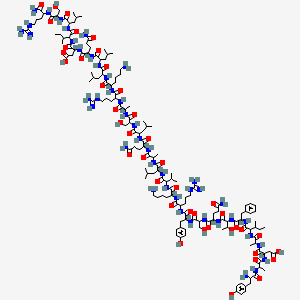
- Formula
- C₁₅₂H₂₅₂N₄₄O₄₂
- Weight
- 3 Da
- Length
- 30 amino acids
- CAS
- 863288-34-0
- PubChem CID
- 91976842
- Exact Mass
- 3366.8969 Da
- LogP
- -10.7
- TPSA
- 1450 Ų
- H-Bond Donors
- 52
- H-Bond Acceptors
- 48
- Rotatable Bonds
- 118
- Complexity
- 7710
Identifiers (SMILES, InChI)
InChI=1S/C152H252N44O42/c1-22-79(15)118(194-125(214)84(20)171-135(224)107(68-115(206)207)181-124(213)81(17)169-126(215)91(155)65-87-41-45-89(201)46-42-87)147(236)189-106(66-86-34-25-24-26-35-86)141(230)196-120(85(21)200)149(238)180-99(51-54-114(158)205)132(221)190-111(72-199)145(234)185-105(67-88-43-47-90(202)48-44-88)140(229)178-96(40-33-59-168-152(164)165)128(217)177-94(37-28-30-56-154)133(222)193-117(78(13)14)146(235)187-100(60-73(3)4)134(223)170-82(18)123(212)175-97(49-52-112(156)203)130(219)183-103(63-76(9)10)138(227)191-109(70-197)143(232)172-83(19)122(211)174-95(39-32-58-167-151(162)163)127(216)176-93(36-27-29-55-153)129(218)182-102(62-75(7)8)137(226)184-101(61-74(5)6)136(225)179-98(50-53-113(157)204)131(220)186-108(69-116(208)209)142(231)195-119(80(16)23-2)148(237)188-104(64-77(11)12)139(228)192-110(71-198)144(233)173-92(121(159)210)38-31-57-166-150(160)161/h24-26,34-35,41-48,73-85,91-111,117-120,197-202H,22-23,27-33,36-40,49-72,153-155H2,1-21H3,(H2,156,203)(H2,157,204)(H2,158,205)(H2,159,210)(H,169,215)(H,170,223)(H,171,224)(H,172,232)(H,173,233)(H,174,211)(H,175,212)(H,176,216)(H,177,217)(H,178,229)(H,179,225)(H,180,238)(H,181,213)(H,182,218)(H,183,219)(H,184,226)(H,185,234)(H,186,220)(H,187,235)(H,188,237)(H,189,236)(H,190,221)(H,191,227)(H,192,228)(H,193,222)(H,194,214)(H,195,231)(H,196,230)(H,206,207)(H,208,209)(H4,160,161,166)(H4,162,163,167)(H4,164,165,168)
XOZMWINMZMMOBR-UHFFFAOYSA-NResearch Indications
Growth Hormone
Restores natural GH pulsatility patterns in aging individuals.
Elevates IGF-1 through enhanced GH secretion.
Supports pituitary axis without suppression of natural function.
Anti-Aging
Supports maintenance of lean muscle mass through GH elevation.
Supports bone health through GH-mediated pathways.
Improvements in skin quality through collagen synthesis.
Recovery
Enhanced recovery from training through GH elevation.
Improved sleep architecture with bedtime dosing.
Research Protocols
subcutaneous Injection
GHRH analog administered subcutaneously at bedtime to align with nocturnal GH pulsatility.
| Goal | Dose | Frequency | Duration |
|---|---|---|---|
| Loading phase | 100 mcg | Once daily | Weeks 1-2(Administer at bedtime) |
| Escalation | 150 mcg | Once daily | Weeks 3-4 |
| Standard dose | 200 mcg | Once daily | Weeks 5-6 |
| Full dose | 250-300 mcg | Once daily | Weeks 7-12(Titrate ~50 mcg every 1-2 weeks as tolerated) |
Reconstitution Guide (5mg vial + 3mL BAC water)
- Wipe vial tops with alcohol swab
- Draw 3.0 mL bacteriostatic water into syringe
- Inject slowly down the inside wall of the peptide vial
- Gently swirl to dissolve — never shake
- Resulting concentration: 1.67 mg/mL
- For 100 mcg dose: draw 6 units (0.06 mL)
- For 200 mcg dose: draw 12 units (0.12 mL)
- For 300 mcg dose: draw 18 units (0.18 mL)
- Store reconstituted vial refrigerated at 2-8°C
Interactions
Peptide Interactions
The synergistic interaction between GHRH-pathway and ghrelin-pathway stimulation represents one of the most important aspects of Mod GRF 1-29 research. Bowers et al. demonstrated that combining GHRH with GHRP-6 produced GH responses 3-10 times greater than either compound alone in human subjects ...
Mod GRF 1-29 is frequently used in combination with GH-releasing peptides (GHRPs) such as ipamorelin, GHRP-2, or GHRP-6, as the GHRH and ghrelin/GHRP pathways synergize to produce GH pulses significantly larger than either agent alone.
Mod GRF 1-29 is frequently used in combination with GH-releasing peptides (GHRPs) such as ipamorelin, GHRP-2, or GHRP-6, as the GHRH and ghrelin/GHRP pathways synergize to produce GH pulses significantly larger than either agent alone.
Synergy with GHRPs: GHRH and ghrelin/GHRPs stimulate GH release through complementary intracellular pathways.
Co-administration produces synergistic rather than additive GH release, as GHRPs additionally suppress somatostatin, removing the primary brake on GHRH-stimulated secretion ([Bowers et al.
The Mod GRF 1-29 + Ipamorelin combination is the most widely studied GHRH + GHRP pairing. Ipamorelin is a highly selective ghrelin receptor agonist that does not significantly release cortisol or prolactin (unlike GHRP-2 and GHRP-6). The combination produces GH pulses 3-5 fold greater than either...
| Property | Mod GRF 1-29 (no DAC) | CJC-1295 with DAC | |----------|----------------------|-------------------| | Half-life | ~30 minutes | ~8 days | | GH release pattern | Pulsatile | Sustained elevation | | Injection frequency | 1-3x daily | 1-2x weekly | | Somatotroph sensitivity | Preserved ...
Reported Research Timeline
Improved sleep quality; vivid dreams from enhanced REM
Enhanced workout recovery, reduced muscle soreness, better pumps
Noticeable skin improvements, minor body composition shifts
Significant lean gains, fat loss, improved joint comfort
Continued gradual improvements in composition and well-being
Quality Indicators
What to look for
- Vendor provides certificates of analysis (>98% purity)
- Proper cold-chain shipping with ice packs/refrigeration
- Vacuum-sealed vials showing pressure seal integrity
- White/off-white lyophilized powder
Caution
- Verify expiration dates; lyophilized peptides stable ~2 years if stored properly
Red flags
- Pre-reconstituted solutions—peptide degrades rapidly
- Discolored powder (yellow/brown indicates degradation)
- Cloudy solution after reconstitution
Frequently Asked Questions
References (16)
- [19]
- [1]Pharmacokinetics of Modified GRF(1-29) in Healthy Adults (2006)
- [2]Growth Hormone Pulsatility with Mod GRF 1-29 (2008)
- [3]Comparative Analysis: CJC-1295 vs Native GHRH (2010)
- [4]Long-term Safety Profile of Modified GRF Analogs (2015)
- [14]
- [6]Bowers CY et al On the in vitro and in vivo activity of a new synthetic hexapeptide that acts on the pituitary to specifically release growth hormone Endocrinology (1990)
- [7]
- [8]Aimaretti G et al Comparison between insulin-induced hypoglycemia and growth hormone (GH)-releasing hormone + arginine as provocative tests for the diagnosis of GH deficiency in adults J Clin Endocrinol Metab (1998)
- [10]
- [11]
- [12]Sinha DK et al Beyond the androgen receptor: the role of growth hormone secretagogues Transl Androl Urol (2020)
- [5]Mayo KE et al The growth-hormone-releasing hormone receptor: signal transduction, clinical significance, and therapeutic potential Recent Prog Horm Res (1995)
- [17]
- [13]Alba M et al Once-daily administration of CJC-1295, a long-acting growth hormone-releasing hormone (GHRH) analog, normalizes growth in the GHRH knockout (GHRHKO) mouse Am J Physiol Endocrinol Metab (2006)
- [9]Teichman SL et al Prolonged stimulation of growth hormone (GH) and insulin-like growth factor I secretion by CJC-1295, a long-acting analog of GH-releasing hormone, in healthy adults J Clin Endocrinol Metab (2006)
Continue researching CJC-1295 (without DAC)
Keep scientific evidence separate from commercial availability. Review how claims are evaluated, explore question-led research paths, or inspect disclosed source records without changing the editorial conclusions on this page.