Baicalin
Baicalin research profile covering evidence quality, proposed mechanisms, safety considerations, regulatory status, and linked primary sources.
Evidence-led profile
Research snapshot
- Evidence stage
- Emerging research
- References
- 8 linked sources
- Research coverage
- 1 area
- Editorial review
- Mar 8, 2026
Published by the PepGuide Editorial Team using our research methodology.
Overview
Baicalin (baicalein 7-O-glucuronide) is a flavone glycoside and the most abundant flavonoid compound in the root of Scutellaria baicalensis, commonly known as Chinese skullcap or Huang Qin. It is the glucuronide conjugate of baicalein, and upon oral ingestion, it is hydrolyzed by intestinal bacteria to release the aglycone baicalein, which is then reabsorbed and undergoes enterohepatic recirculation. This metabolic pathway significantly influences its pharmacokinetics and bioavailability.
Pharmacological research has identified a wide range of activities for baicalin, including anti-inflammatory effects mediated through inhibition of the NF-κB pathway, suppression of NLRP3 inflammasome activation, and modulation of T-cell differentiation. Hepatoprotective effects have been demonstrated in models of liver injury, fibrosis, and non-alcoholic fatty liver disease. The compound also exhibits antimicrobial activity, with evidence of synergistic effects when combined with conventional antibiotics against drug-resistant bacterial strains.
Baicalin is a component of several traditional Chinese medicine formulations, including Shuanghuanglian and Xiao Chai Hu Tang, which have been used clinically for respiratory infections and liver disorders. While preclinical evidence is extensive, large-scale randomized clinical trials in Western medical literature remain limited. The compound is generally considered to have a favorable safety profile, though its interactions with cytochrome P450 enzymes warrant consideration when used alongside pharmaceutical agents.
Mechanism of Action
Glycoside Prodrug of Baicalein
Baicalin (baicalein-7-O-glucuronide) is the principal flavonoid glycoside from Scutellaria baicalensis root and the glucuronide conjugate of baicalein. After oral administration, baicalin undergoes hydrolysis by intestinal beta-glucuronidases (both bacterial and brush-border enzymes) to release the aglycone baicalein, which is absorbed and subsequently re-glucuronidated in the liver. This enterohepatic cycling creates sustained plasma exposure to both baicalin and baicalein (PMID: 21291893).
TLR4/NF-kB Anti-Inflammatory Cascade
Baicalin directly binds to the MD2 subunit of the TLR4/MD2 complex, competitively antagonizing LPS binding and preventing TLR4 dimerization. This upstream blockade inhibits MyD88/TRAF6/IKK signaling, suppressing NF-kB nuclear translocation and reducing expression of TNF-alpha, IL-1beta, IL-6, COX-2, and iNOS. This mechanism distinguishes baicalin from general NF-kB inhibitors by targeting the receptor initiation step (PMID: 25666783).
Th17/Treg Balance Modulation
Baicalin inhibits RORgamma-t transcription factor activity, suppressing Th17 cell differentiation and IL-17 production. Simultaneously, it promotes Foxp3+ regulatory T cell (Treg) differentiation by enhancing TGF-beta/Smad signaling. This shift in the Th17/Treg balance underlies its therapeutic potential in autoimmune conditions including inflammatory bowel disease, multiple sclerosis, and rheumatoid arthritis (PMID: 26118570).
Gut-Brain Axis & Microbiome Effects
Baicalin modulates the gut microbiome by promoting Lactobacillus and Bifidobacterium growth while suppressing pathogenic species. Its bacterial metabolism generates baicalein locally in the colon, strengthening intestinal barrier integrity via tight junction protein upregulation (ZO-1, occludin, claudin-1) (PMID: 31422538).
Neuroprotective Mechanisms
Baicalin crosses the blood-brain barrier and exerts neuroprotection through TREM2/TLR4/NF-kB modulation in microglia, reducing neuroinflammation. It enhances BDNF expression via CREB phosphorylation and protects against oxidative damage through Nrf2 activation.
Research
Reported Effects
Anxiety Relief:: Consistently effective for general and social anxiety across user reports, often compared favorably to pharmaceutical options like benzodiazepines. Onset and Duration:: Effects typically noticed within 30-60 minutes when taken as tincture or extract, with sustained benefits throughout the day. Individual Variation:: Works well for most users, though effectiveness may vary; some find it more effective when combined with other GABAergic supplements. Non-tolerance:: Users report maintained effectiveness with regular use, though some prefer cycling or taking breaks on weekends to optimize benefits
- Consistently effective for general and social anxiety across user reports, often compared favorably to pharmaceutical options like benzodiazepines
- Effects typically noticed within 30-60 minutes when taken as tincture or extract, with sustained benefits throughout the day
- Works well for most users, though effectiveness may vary; some find it more effective when combined with other GABAergic supplements
- Users report maintained effectiveness with regular use, though some prefer cycling or taking breaks on weekends to optimize benefits
Safety and Limitations
Common Side Effects
- Gastrointestinal symptoms including nausea, diarrhea, abdominal discomfort, and dyspepsia are the most frequently reported adverse effects, occurring in approximately 5-15% of users.
- Dizziness and drowsiness, particularly at higher doses, due to baicalin's GABAergic activity and interaction with benzodiazepine binding sites.
- Headache reported in some clinical studies, though often at rates comparable to placebo.
- Mild hypotension, especially in individuals with already low baseline blood pressure.
- Allergic skin reactions including rash and pruritus in sensitized individuals.
Contraindications
- Known hypersensitivity to baicalin, baicalein, or Scutellaria baicalensis (Chinese skullcap) preparations. Note: There have been documented cases of hepatotoxicity attributed to skullcap products, though adulteration with germander (Teucrium) has confounded some of these reports.
- Active liver disease or history of drug-induced hepatotoxicity: While baicalin itself has shown hepatoprotective properties in some models, Scutellaria products have been implicated in liver injury case reports. The European Medicines Agency and USP have flagged this concern.
- Bleeding disorders: Baicalin has demonstrated anticoagulant and antiplatelet properties through thromboxane A2 inhibition and fibrinolytic activity.
- Scheduled surgery: Discontinue at least 2 weeks prior due to bleeding risk.
Drug Interactions
- Anticoagulants (warfarin, heparin) and antiplatelet agents: Additive bleeding risk. Baicalin inhibits platelet aggregation and has demonstrated synergistic anticoagulant effects with heparin in preclinical models.
- Benzodiazepines and other GABAergic drugs: Baicalin acts as a positive allosteric modulator at GABA-A receptors (particularly the benzodiazepine binding site). Concurrent use may potentiate sedation, respiratory depression, and CNS depression.
- Cytochrome P450 substrates: Baicalin is a potent inhibitor of CYP2C9, CYP2C19, and CYP3A4, and may increase serum levels of drugs metabolized by these enzymes, including warfarin, phenytoin, diazepam, and cyclosporine.
- Cyclosporine: Baicalin significantly inhibits CYP3A4 and P-glycoprotein, potentially increasing cyclosporine levels to toxic concentrations.
- Rosuvastatin and other OATP1B1 substrates: Baicalin inhibits organic anion-transporting polypeptide 1B1, which may increase statin concentrations and myopathy risk.
- Antidiabetic medications: Baicalin has demonstrated hypoglycemic properties; monitor for additive blood sugar lowering.
Special Populations
- Pregnancy: Contraindicated. Baicalin has shown uterotonic activity in animal models and may affect fetal development.
- Lactation: Insufficient safety data; avoidance is recommended.
- Pediatric use: Limited clinical data in children; not recommended without physician supervision.
- Hepatically impaired patients: Use with extreme caution and regular liver function monitoring.
Monitoring
- Liver function tests (ALT, AST, ALP, bilirubin) at baseline and every 4-8 weeks during supplementation, given hepatotoxicity concerns with Scutellaria products.
- Coagulation parameters (INR, PT) if used concurrently with anticoagulants.
- Blood glucose levels in diabetic patients.
- Blood pressure monitoring, especially in hypotensive individuals.
- CNS status and sedation level if combining with other GABAergic agents.
Common Side Effects
- Minimal Reports:: Very few users report negative side effects, with most describing baicalin as well-tolerated
- No Sedation:: Unlike many anxiolytics, users specifically note lack of drowsiness or cognitive impairment during the day
- Combination Caution:: When stacked with multiple GABAergic supplements, some users experienced mild fatigue or overstimulation
- Hair Concerns:: One isolated report questioned potential effects on hair graying, though this is not a widely reported concern
Research protocol summary
- Typical Dose
- 400-500mg taken 1-2 times daily is most commonly reported, with flexibility for as-needed use
These values summarize cataloged research protocols. They are not personal dosing instructions or medical guidance.
Reconstitution Calculator
Pharmacokinetic Profile
Baicalin — Pharmacokinetic Curve
SubcutaneousMolecular Structure
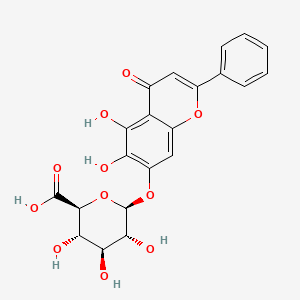
- Formula
- C21H18O11
- Weight
- 446.4 Da
- PubChem CID
- 64982
- Exact Mass
- 446.0849 Da
- LogP
- 1.1
- TPSA
- 183 Ų
- H-Bond Donors
- 6
- H-Bond Acceptors
- 11
- Rotatable Bonds
- 4
- Complexity
- 748
Identifiers (SMILES, InChI)
InChI=1S/C21H18O11/c22-9-6-10(8-4-2-1-3-5-8)30-11-7-12(14(23)15(24)13(9)11)31-21-18(27)16(25)17(26)19(32-21)20(28)29/h1-7,16-19,21,23-27H,(H,28,29)/t16-,17-,18+,19-,21+/m0/s1
IKIIZLYTISPENI-ZFORQUDYSA-NReferences (8)
- [2]Baicalin reduces blood lipids and inflammation in patients with coronary artery disease and rheumatoid arthritis: a randomized, double-blind, placebo-controlled trial
→ Clinical trial of 374 patients found baicalin significantly reduced triglycerides, cholesterol, inflammatory markers (hs-CRP, CT-1), and improved EULAR response compared to placebo over 12 weeks.
- [3]Pharmacological effects of baicalin in lung diseases
→ Review summarizing baicalin's therapeutic benefits for COPD, asthma, pulmonary fibrosis, infections, and lung cancer through antioxidant, anti-inflammatory, immunomodulatory, and antiviral mechanisms.
- [4]Effects of a Dietary Supplement Composed of Baicalin, Bromelain and Escin for Venous Chronic Insufficiency Treatment
→ Retrospective study showed a combination supplement containing baicalin improved symptoms and Venous Clinical Severity Score in patients with chronic venous insufficiency.
- [5]Short-term feeding of baicalin inhibits age-associated NF-kappaB activation
→ Animal study demonstrated baicalin effectively suppressed age-related NF-κB activation and reduced expression of inflammatory genes (iNOS, COX-2, HO-1) in kidney tissue of old rats.
- [6]Baicalin, a flavone, induces the differentiation of cultured osteoblasts: an action via the Wnt/beta-catenin signaling pathway
→ In vitro research found baicalin significantly increased osteoblastic mineralization and bone differentiation markers through activation of the Wnt/β-catenin pathway, independent of estrogenic activity.
- [7]Baicalin Attenuates Oxidative Stress in a Tissue-Engineered Liver Model of NAFLD by Scavenging Reactive Oxygen Species
→ Study demonstrated baicalin's protective effects against non-alcoholic fatty liver disease by reducing oxidative stress and scavenging reactive oxygen species in liver tissue models.
- [8]Study of the Effect of Baicalin from Scutellaria baicalensis on the Gastrointestinal Tract Normoflora and Helicobacter pylori
→ Research evaluated baicalin's antimicrobial properties against H. pylori while preserving beneficial gut bacteria, suggesting potential for targeted gastrointestinal applications.
- [1]The Pharmacological Efficacy of Baicalin in Inflammatory Diseases
→ Comprehensive review demonstrating baicalin's effectiveness in reducing inflammation through multiple pathways, with particular benefits for various inflammatory conditions and immune modulation.
Continue researching Baicalin
Keep scientific evidence separate from commercial availability. Review how claims are evaluated, explore question-led research paths, or inspect disclosed source records without changing the editorial conclusions on this page.