Arginine (L-Arginine)
A conditionally essential amino acid that serves as the primary precursor for nitric oxide synthesis, playing a central role in cardiovascular function, immune response, and wound healing.
Evidence-led profile
Research snapshot
- Evidence stage
- Emerging research
- References
- 8 linked sources
- Research coverage
- 1 area
- Editorial review
- Mar 8, 2026
Published by the PepGuide Editorial Team using our research methodology.
Overview
L-Arginine is a conditionally essential amino acid that plays a central role in numerous physiological processes. While the body can synthesize arginine endogenously, supplementation may be beneficial during periods of illness, injury, or rapid growth when demand exceeds production. Its most significant biological function is serving as the sole substrate for nitric oxide synthase (NOS) enzymes, which convert L-arginine into nitric oxide (NO) — a critical signaling molecule that regulates vasodilation, blood flow, and vascular homeostasis. L-arginine is found in protein-rich foods including red meat, poultry, fish, dairy, nuts, and legumes.
The cardiovascular applications of L-arginine supplementation have been the most extensively studied. Nitric oxide produced in the vascular endothelium by endothelial NOS promotes smooth muscle relaxation, contributing to blood pressure regulation and improved arterial function. Clinical evidence suggests modest reductions in both systolic and diastolic blood pressure in hypertensive adults. L-arginine has also shown benefit in peripheral arterial disease by improving blood flow and walking distance, and may support endothelial function in individuals with coronary artery disease. Beyond cardiovascular health, L-arginine supports immune function, stimulates growth hormone release, aids wound healing, and plays a role in ammonia detoxification through the urea cycle.
Important caveats apply to L-arginine supplementation. It is not recommended for individuals who have recently experienced a heart attack, as one study indicated potential harm in this context. In healthy individuals with normal levels of asymmetric dimethylarginine (ADMA), acute supplementation may not increase nitric oxide production, suggesting benefits may be most pronounced in those with existing cardiovascular risk factors or endothelial dysfunction. Typical supplemental doses range from 2 to 6 grams daily, and interactions with blood pressure medications, anticoagulants, and diabetes drugs should be considered. Consultation with a healthcare provider is advised before beginning supplementation.
Research
Reported Effects
Bioavailability Issues:: Users and research consistently note that oral L-arginine has poor absorption due to first-pass metabolism in the gut and liver, limiting effectiveness. Citrulline Superior:: Strong consensus that L-citrulline (which converts to arginine) is more effective for raising arginine levels and achieving desired nitric oxide effects. Individual Variation:: Effectiveness appears highly dependent on baseline health status, metabolic condition, and whether arginine metabolism is impaired. Combination Benefits:: Some users report better results when stacking with other supplements like zinc, magnesium, or in pre-formulated nitric oxide boosters
Safety and Limitations
Common Side Effects
- Gastrointestinal disturbances: nausea, abdominal cramping, bloating, diarrhea
- Bitter or metallic taste (especially with L-arginine hydrochloride forms)
- Headache and flushing (related to nitric oxide-mediated vasodilation)
- Hypotension at high oral doses (>10 g/day)
- Worsening of asthma symptoms in some individuals
Serious Concerns
- Post-myocardial infarction: The VINTAGE-MI trial demonstrated increased mortality in post-MI patients supplementing with L-arginine. Supplementation is contraindicated in this population.
- Anaphylaxis with IV arginine (rare but documented in arginine stimulation tests)
- May reactivate latent herpes simplex virus (arginine promotes viral replication)
- Hyperkalemia risk with IV administration, particularly in renal impairment
Contraindications
- Recent myocardial infarction (per VINTAGE-MI trial findings)
- Active herpes simplex infection
- Severe hypotension or hemodynamic instability
- Guanidinoacetate methyltransferase (GAMT) deficiency
- Known hypersensitivity to arginine
Drug Interactions
- Antihypertensives (ACE inhibitors, ARBs, nitrates): Additive blood pressure lowering via NO pathway
- PDE5 inhibitors (sildenafil, tadalafil): Potentiated vasodilation; risk of severe hypotension
- Anticoagulants/antiplatelets: Arginine may have mild antiplatelet activity
- Potassium-sparing diuretics: Risk of hyperkalemia with IV arginine
- Isoproterenol and other sympathomimetics: Altered hemodynamic response
Special Populations
- Pediatric: Used in arginine stimulation tests under medical supervision; supplement use not well-studied
- Pregnancy: Category B equivalent; used clinically for pre-eclampsia in some studies but not standard of care
- Renal impairment: Increased risk of hyperkalemia and altered nitrogen metabolism
Monitoring
- Blood pressure monitoring, especially when combined with antihypertensives
- Electrolytes (potassium) with IV use or high-dose oral supplementation
- Monitor for herpes reactivation in susceptible individuals
Common Side Effects
- Viral Outbreaks:: Frequent reports of triggering cold sores, shingles, and HPV warts due to arginine fueling viral replication in those with dormant infections
- Gastrointestinal Issues:: Users report stomach upset, nausea, and digestive discomfort, particularly at higher doses
- Acne:: Some users experience breakouts with excessive arginine intake, potentially related to hormonal effects
- Limited Duration:: Effects tend to be short-lived and may diminish with continued use, suggesting tolerance development
Mechanism of Action
Nitric Oxide Synthesis — The L-Arginine-NO Pathway
L-Arginine is a semi-essential amino acid that serves as the sole substrate for nitric oxide synthase (NOS) enzymes. The three NOS isoforms — neuronal (nNOS/NOS1), inducible (iNOS/NOS2), and endothelial (eNOS/NOS3) — catalyze the five-electron oxidation of L-arginine's guanidinium group, producing nitric oxide (NO) and L-citrulline in a reaction requiring NADPH, O₂, BH4, FAD, and FMN as cofactors (PMID: 9790900).
Vascular & Hemodynamic Effects
eNOS-derived NO diffuses to adjacent vascular smooth muscle cells, where it activates soluble guanylyl cyclase (sGC), increasing cGMP levels. cGMP activates protein kinase G (PKG), which reduces intracellular calcium and promotes myosin light chain dephosphorylation, causing vasodilation. This pathway underlies arginine's effects on blood pressure regulation, exercise performance (enhanced blood flow), and erectile function (PMID: 15735066).
Growth Hormone Secretagogue Activity
L-Arginine stimulates growth hormone (GH) release from the anterior pituitary by suppressing somatostatin secretion from the hypothalamus. Intravenous arginine is a standard clinical GH provocation test. The mechanism involves NO-mediated modulation of hypothalamic somatostatinergic neurons (PMID: 9063476).
Urea Cycle & Ammonia Detoxification
Arginine is an intermediate in the urea cycle, where arginase cleaves it to produce urea and ornithine. This pathway is the primary route for ammonia detoxification. Arginine deficiency impairs urea cycle function, leading to hyperammonemia (PMID: 14672804).
Immunomodulatory Functions
Arginine availability critically determines macrophage polarization: M1 macrophages metabolize arginine via iNOS to produce NO (antimicrobial), while M2 macrophages metabolize it via arginase to produce ornithine for collagen synthesis and tissue repair. T-cell proliferation is also arginine-dependent via mTOR signaling (PMID: 15748979).
Research protocol summary
- Typical Dose
- Most common dosing is 500-2000mg daily, with some users taking up to 3-6g split throughout the day
These values summarize cataloged research protocols. They are not personal dosing instructions or medical guidance.
Pharmacokinetic Profile
- Half-life
- 1.25 h
- Tmax
- 1.25 h
Molecular Structure
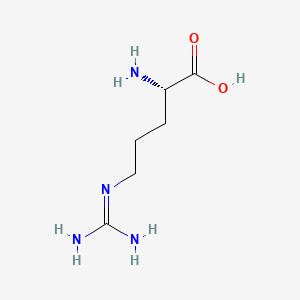
- Formula
- C6H14N4O2
- Weight
- 174.20 Da
- PubChem CID
- 6322
- Exact Mass
- 174.1117 Da
- LogP
- -4.2
- TPSA
- 128 Ų
- H-Bond Donors
- 4
- H-Bond Acceptors
- 4
- Rotatable Bonds
- 5
- Complexity
- 176
Identifiers (SMILES, InChI)
InChI=1S/C6H14N4O2/c7-4(5(11)12)2-1-3-10-6(8)9/h4H,1-3,7H2,(H,11,12)(H4,8,9,10)/t4-/m0/s1
ODKSFYDXXFIFQN-BYPYZUCNSA-NReferences (8)
- [6]Arginine supplementation and cardiometabolic risk
→ Review indicated that supplemental arginine could alleviate endothelial dysfunction and reduce type 2 diabetes risk, with effects varying by dosage, form, and metabolic status of the population.
- [7]Supplementation with Nitric Oxide Precursors for Strength Performance: A Review of the Current Literature
→ Review found that nitric oxide precursors including L-arginine may improve blood flow and mechanisms contributing to skeletal muscle performance, though L-citrulline appears more effective due to better bioavailability.
- [1]The Potential Role of Arginine Supplements on Erectile Dysfunction: A Systemic Review and Meta-Analysis
→ Meta-analysis found arginine supplements showed potential benefits for erectile dysfunction, particularly in combination with other substances, though effects were modest compared to phosphodiesterase inhibitors.
- [2]Dietary Arginine and Citrulline Supplements for Cardiovascular Health and Athletic Performance: A Narrative Review
→ Review found that arginine and citrulline supplementation can enhance cardiovascular health markers and athletic performance through improved nitric oxide production and blood flow.
- [3]L-Arginine supplementation in pregnancy: a systematic review of maternal and fetal outcomes
→ Systematic review showed L-arginine supplementation reduced pre-eclampsia development, decreased blood pressure, and reduced need for antihypertensive drugs in pregnant women with hypertension.
- [4]The use of oral and enteral tube-fed arginine supplementation in pressure injury care: A systematic review and meta-analysis
→ Meta-analysis demonstrated that arginine supplementation may support wound healing in pressure injuries, potentially due to enhanced protein synthesis and immune function.
- [8]Side effects of amino acid supplements
→ Comprehensive review highlighted that enhanced intake of amino acid supplements including arginine may cause detrimental side effects and requires further research on long-term safety, particularly regarding immune function and tumor growth.
- [5]L-arginine as dietary supplement for improving microvascular function
→ Study found that L-arginine ingestion improved endothelium-dependent vasodilation in young trained subjects, suggesting potential benefits for microvascular function in specific populations.
Continue researching Arginine (L-Arginine)
Keep scientific evidence separate from commercial availability. Review how claims are evaluated, explore question-led research paths, or inspect disclosed source records without changing the editorial conclusions on this page.